
Detention at His Majesty’s Pleasure is a term used in the United Kingdom for an indeterminate sentence where the offender is detained for an unspecified period. This kind of sentence is typically used for young offenders or those convicted of particularly serious crimes, where the length of detention is not fixed at the time of sentencing.
Detention during His Majesty’s Pleasure is a mandatory life sentence and will be imposed when a child or young person is convicted or pleads guilty to murder. Schedule 21 of the Sentencing Act 2020 states that the starting point for determining the minimum sentence where the offender is under 18 years of age is 12 years as opposed to 15 years for those over the age of 18.
Types of sentences for children and young people – Sentencing Council
- Purpose: The main idea is that the offender should be detained until they are no longer considered a threat to society or until they have been rehabilitated. This could theoretically mean detention for life, or until the offender’s behaviour and development indicate that release is appropriate.
- Who It Applies To: Historically, this sentence was often used for juveniles convicted of serious crimes like murder, where an adult would receive a life sentence. However, it can also apply to adults in certain contexts, particularly where mental health issues are involved. The Mental Health Act 1983 allows for the detention of individuals who have committed offenses but are also suffering from mental disorders. When someone is detained at His Majesty’s Pleasure, especially under a mental health context, it’s often because they’ve been found not guilty by reason of insanity or unfit to plead, or they’ve been convicted of an offense where a psychiatric disposal is deemed more appropriate than a penal sentence.
- Legal Framework: The phrase “at His Majesty’s Pleasure” reflects the historical power of the monarch to detain subjects. In modern times, this power is exercised through the Home Office or relevant judicial or parole boards who decide when it’s safe to release the individual.
- Review and Release: The detention period is subject to periodic review. Decisions regarding release are based on assessments of risk, rehabilitation progress, and changes in the offender’s maturity and mental state.
- Differences from Life Sentences: Unlike a life sentence with a tariff (a minimum term to be served before parole can be considered), detention at His Majesty’s Pleasure doesn’t set a minimum term upfront, although in practice, a minimum term might be recommended by the judge.
- Criticism and Reform: This type of sentencing has faced criticism for its uncertainty, which can be psychologically challenging for detainees. There have been calls for reform to provide more clarity or to set tariffs in a way similar to life sentences but tailored to the developmental needs of young offenders.
- International Perspective: The concept is somewhat unique to the UK legal system, though other countries have similar provisions for indefinite detention for the purposes of rehabilitation or public protection, particularly for juvenile offenders or those with mental health issues.
In 2002 the then The Lord Chief Justice of England and Wales Baron Woolf published a statement Review of Minimum Terms set for Young Offenders detained at her Majesty’s Pleasure.
King Charles III, formerly known as The Prince of Wales, became King on the death of his mother Queen Elizabeth II on 8 September 2022.
Image of King Charles III created by Grok-3
The Ministry of Injustice is not the Ministry of Justice nor is it affiliated in any way with the justice system, legal profession, police or any other law enforcement agencies.
“Publicity is the very soul of justice. . . . It keeps the judge himself, while trying, under trial….Where there is no publicity there is no justice”
Jeremy Bentham – Mr Justice Cobb: ‘Justice must be seen to be done’
Latest Articles ↓
- Presumption of Innocence
 The presumption of innocence is a basic principle of the… Read more: Presumption of Innocence
 - His Honour Judge Daniel Sawyer
 Judge Daniel Sawyer, known as His Honour Judge Daniel Sawyer,… Read more: His Honour Judge Daniel Sawyer
 - UK National Centre for Information Defence
 Prime Minister Andy Burnham used his first United Nations General… Read more: UK National Centre for Information Defence
 - Judges Behaving Badly and His Honour Judge Simon Oliver
 On the 27th August 2026 the Crown Prosecution Service announced… Read more: Judges Behaving Badly and His Honour Judge Simon Oliver
 - Jo Morris Barrister
 Jo Morris is a practising criminal barrister of Drystone Chambers… Read more: Jo Morris Barrister
 - Good Law Project
 The Good Law Project is a UK campaigning organisation that… Read more: Good Law Project
 - Police Federation of England and Wales (PFEW)
 The Police Federation of England and Wales (PFEW) is the… Read more: Police Federation of England and Wales (PFEW)
 - What is the Criminal Justice System (CJS) Common Platform ?
 The Criminal Justice System Common Platform (also known as HMCTS… Read more: What is the Criminal Justice System (CJS) Common Platform ?
 - Strategic Lawsuit Against Public Participation (SLAPPs)
 Strategic Lawsuits Against Public Participation, or SLAPPs, are legal actions… Read more: Strategic Lawsuit Against Public Participation (SLAPPs)
 - His Honour Judge Tony Baumgartner – Recorder of Westminster
 Judge Tony Alan Walter Baumgartner, known as His Honour Judge… Read more: His Honour Judge Tony Baumgartner – Recorder of Westminster
 - New Protocol for Legal Professionals to Raise Informal Concerns About Judges Behaviour
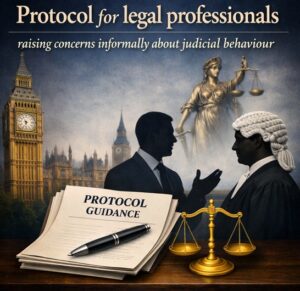 On the 8th July 2026, the Courts and Tribunals Judiciary… Read more: New Protocol for Legal Professionals to Raise Informal Concerns About Judges Behaviour
 - The Policing Performance System
 In April 2026, His Majesty’s Inspectorate of Constabulary and Fire… Read more: The Policing Performance System
Most Popular ↓
You should always seek formal legal advice from a qualified and reputable lawyer (solicitor or barrister).
There are a number of links to Free and Paid For Legal Resources and Legal Organisations on the Free Legal Advice , Legal Aid and Pro Bono pages.
[post_title] was last updated on the 15th October 2026
