Prime Minister Andy Burnham used his first United Nations General Assembly speech to announce a new UK body aimed at detecting, attributing and disrupting foreign information attacks. The UK National Centre for Information Defence will focus on hostile-state disinformation and AI-enabled deepfakes that the government says damage British interests and social cohesion.
The announcement was made in New York on the 22nd September 2026. Andy Burnham said security chiefs had been tasked to begin the work.
The UK National Centre for Information Defence will initially sit in the Prime Minister’s Office and Cabinet Office and is expected to work with the intelligence agencies, government departments, the police and social media companies.
Remit of the UK National Centre for Information Defence
According to the government, the UK National Centre for Information Defence will:
- Detect, attribute and disrupt information attacks by foreign powers, many of them enabled by artificial intelligence
- Build defensive capability against information warfare
- Help communities identify and counter disinformation
- Prevent what ministers call a “distorted and untrue” narrative about the United Kingdom
Andy Burnham framed the threat as an “insidious campaign that reaches into people’s homes and twists what they feel about their own country and community – creating a narrative of decline, stoking division and sowing despair.” He added that national security depends on a “strong, cohesive society.”
Why Russia was singled out
The prime minister named Russia as a principal actor. He said the Kremlin spends around £1.3 billion a year on information manipulation and has used “every means at their disposal to spread lies and disinformation and prey on people’s fears.”
Examples cited in the speech and subsequent reporting included:
- Bots and fake websites
- Falsified newspaper articles
- Forged branding of 28 British organisations, including universities and the BBC
- Amplification of far-right narratives
- Alleged attempts to interfere in the 2019 general election
- Efforts to stoke tensions after major incidents
Andy Burnham also said people struggling with the cost of living, and young people not in education, employment or training, may be more vulnerable to this kind of influence. The UK intends to share its experience with other countries; Moldova was mentioned as a previous example of UK support against Russian election interference.
Who are the “security chiefs”?
Andy Burnham did not name individuals. In Whitehall language, “security chiefs” usually means the senior national-security and intelligence leadership rather than a newly published board.
That group typically includes:
- The National Security Adviser (Jonathan Powell remained in post after Burnham became prime minister)
- The heads of MI5, SIS/MI6 and GCHQ
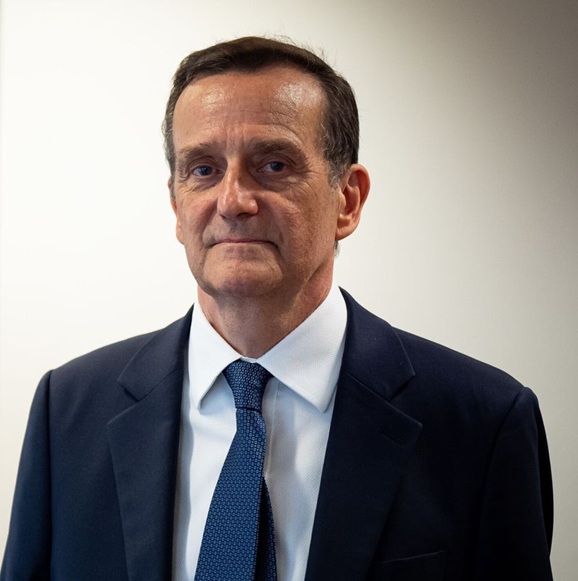
- Often the Chief of Defence Intelligence (Lieutenant General Matthew Jones) and, depending on the issue, the Chief of the Defence Staff
The National Centre for Information Defence is described as a coordinating and operational effort that will sit with those agencies and other partners. No public organogram or named leadership team has been released; the announcement is only hours old.
Political and free-speech reaction
Supporters, including Foreign Affairs Committee chair Emily Thornberry, have called the centre a response to a previously “disjointed” government approach to disinformation.
Critics have warned of an “Orwellian” quango that could slide from countering foreign operations into policing domestic narratives.
We already have NSOIT, the Government Communication Service, the Media Monitoring Unit, RICU, the Defending Democracy Taskforce, the Joint Election Security and Preparedness Unit, the FCDO’s Information Threats and Influence Directorate, 77th Brigade, NCSC/GCHQ, the National Cyber Force and the Social Cohesion Taskforce.
Is that not enough?
The Free Speech Union
Labour has said the focus is hostile-state activity and that free speech will not be the target.
What is not yet known about the UK National Centre for Information Defence ?
Because the body has only just been announced, there is still no official website, budget figure, statutory basis, staffing plan or detailed operating model.
Check out our related articles on the Free Speech and the Law, Free Speech Union, Rule of Law, Open Justice, Policing by Consent, Is the Law Black and White ? and the highly questionable Sussex Family Justice Board.
The Ministry of Injustice is not the Ministry of Justice nor is it affiliated in any way with the justice system, legal profession, police or any other law enforcement agencies.
“Publicity is the very soul of justice. . . . It keeps the judge himself, while trying, under trial….Where there is no publicity there is no justice”
Jeremy Bentham – Mr Justice Cobb: ‘Justice must be seen to be done’
Latest Articles ↓
- Presumption of Innocence
 The presumption of innocence is a basic principle of the… Read more: Presumption of Innocence
 - His Honour Judge Daniel Sawyer
 Judge Daniel Sawyer, known as His Honour Judge Daniel Sawyer,… Read more: His Honour Judge Daniel Sawyer
 - UK National Centre for Information Defence
 Prime Minister Andy Burnham used his first United Nations General… Read more: UK National Centre for Information Defence
 - Judges Behaving Badly and His Honour Judge Simon Oliver
 On the 27th August 2026 the Crown Prosecution Service announced… Read more: Judges Behaving Badly and His Honour Judge Simon Oliver
 - Jo Morris Barrister
 Jo Morris is a practising criminal barrister of Drystone Chambers… Read more: Jo Morris Barrister
 - Good Law Project
 The Good Law Project is a UK campaigning organisation that… Read more: Good Law Project
 - Police Federation of England and Wales (PFEW)
 The Police Federation of England and Wales (PFEW) is the… Read more: Police Federation of England and Wales (PFEW)
 - What is the Criminal Justice System (CJS) Common Platform ?
 The Criminal Justice System Common Platform (also known as HMCTS… Read more: What is the Criminal Justice System (CJS) Common Platform ?
 - Strategic Lawsuit Against Public Participation (SLAPPs)
 Strategic Lawsuits Against Public Participation, or SLAPPs, are legal actions… Read more: Strategic Lawsuit Against Public Participation (SLAPPs)
 - His Honour Judge Tony Baumgartner – Recorder of Westminster
 Judge Tony Alan Walter Baumgartner, known as His Honour Judge… Read more: His Honour Judge Tony Baumgartner – Recorder of Westminster
 - New Protocol for Legal Professionals to Raise Informal Concerns About Judges Behaviour
 On the 8th July 2026, the Courts and Tribunals Judiciary… Read more: New Protocol for Legal Professionals to Raise Informal Concerns About Judges Behaviour
 - The Policing Performance System
 In April 2026, His Majesty’s Inspectorate of Constabulary and Fire… Read more: The Policing Performance System
Most Popular ↓
You should always seek formal legal advice from a qualified and reputable lawyer (solicitor or barrister).
There are a number of links to Free and Paid For Legal Resources and Legal Organisations on the Free Legal Advice , Legal Aid and Pro Bono pages.