Categories
Criminal Justice Legal Analysis Police

What is Two Tier Policing ?

The BBC describes so-called “two-tier policing” as where right-wing protests are considered to be dealt with more harshly than left-wing ones by the police. This explanation is simply not true.

The most simplistic and accurate explanation of two tier policing is that there’s one rule for one person and another rule for another. The publicly shown bias and discrimination by the Police is manifesting itself irrespective of politics, sexuality, race or colour.

The police should and must operate independently under the law without fear or favour. The Rule of Law applies to everyone regardless of who they are. Policing in this country and around the world is by consent. There should no bias by the police or by anyone in the justice system.

The debate over two-tiered policing has significant implications for public trust in law enforcement. If the perception of biased policing persists, it can erode confidence in the police and exacerbate social divisions. On the other hand, dismissing legitimate concerns about unequal treatment can also harm community relations and hinder efforts to address systemic issues within law enforcement.

Two-tiered policing remains a contentious issue, with strong arguments on both sides. While some see it as a reflection of systemic biases within law enforcement, others view it as a necessary differentiation based on the nature of the protests or other lawlessness.

Regardless of where one stands on the issue, it is crucial to continue scrutinising police practices to ensure fairness and accountability in all aspects of law enforcement.

The State of Policing Report 2022 and the Loss of Public Trust by HMICFRS said amongst other things “The public’s trust and confidence are unacceptably low. The fundamental principle of policing by consent, upon which the service is built, is at risk.”

The discussion of #TwoTierPolicing #TwoTierJustice and #TwoTierKeir along with Free Speech is very much alive on X.

Sir Keir Starmer stated there is no two-tier policing and said it is a “non-issue”.

Elon Musk calls out Sir Keir Starmer as #TwoTierKeir

Metropolitan Police Commissioner Sir Mark Rowley has called accusations of two-tier policing “complete nonsense”.

They are hardly going to agree that there is Two Tier Policing ?! Maybe the Independent Office for Police Conduct (IOPC) should investigate ? Is the accusation of Police bias worthy of Judicial Review ?

Do you have evidence of two tier policing by the Met Police, West Midlands Police or any other UK police forces ? Contact Us

Met Police Commissioner Sir Mark Rowley demonstrates violent thuggery and Two Tiered Policing without Fear or Favour.
Superintendent Emlyn Richards of West Midlands Police explains Two Tier Policing in simple language.
The Guardian have been telling people about two-tier policing based on race and sexuality for decades

Check out our related articles on Policing by Consent, Thought Police, Sussex Police, Met Police, Chief Constable Jo Shiner Sussex Police, , What is a Police and Crime Commissioner and a Police and Crime Panel ?, Rule of Law, Open Justice, Innocent until Proven Guilty, R v Sussex Justices and the highly questionable Sussex Family Justice Board.


The Ministry of Injustice is not the Ministry of Justice nor is it affiliated in any way with the justice system, legal profession, police or any other law enforcement agencies.


Latest Articles


Most Popular


You should always seek formal legal advice from a qualified and reputable lawyer (solicitor or barrister).

There are a number of links to Free and Paid For Legal Resources and Legal Organisations on the Free Legal Advice , Legal Aid and Pro Bono pages.

Categories
Criminal Justice Judiciary Legal Professionals

His Honour Judge Nicholas Rowland

Judge Nicholas Edward Rowland, known as His Honour Judge Nicholas Rowland, is a long-serving Circuit Judge of England and Wales who is assigned to the South West Circuit.

His Honour Judge Nicholas Edward Rowland was called to the Bar in 1988 and practised as a barrister for over 25 years before becoming a full-time judge.

He was appointed a Recorder (part-time judge) in 2005 and sat at Southampton Crown Court, before being appointed a Circuit Judge on the 23rd June 2014 on the South West Circuit, where he has served as a permanent judge based at Southampton Combined Court Centre ever since.

We are pleased to announce that His Honour Judge Nicholas Rowland, a former member, has been appointed to the Crown Court bench to be based in Southampton.

3PB Barristers Autumn 2014 News

Detailed public records on Judge Rowland’s pre-appointment professional background (such as whether he practiced as a barrister or solicitor, chambers affiliation (3 Paper Buildings (3PB) is one of the UK’s oldest chambers), year of call to the Bar, or areas of specialization) are limited.

Unlike some judges whose biographies appear on chambers websites, judicial profiles, or in appointment announcements with full career histories, Judge Rowland’s pre-bench career is not extensively documented in open sources.

HHJ Rowland is shown on the List of Circuit Judges published on the Courts and Tribunal Judiciary website.

His Honour Judge Nicholas Edward RowlandSouth West23-06-2014
List of Circuit Judges

Judge Rowland Legal Controversy – Judge Praises Behaviour of Teenage Rapists

A gang of three teenage boys from the traveller community in Hampshire have avoided custodial sentences after being convicted of multiple rapes against two schoolgirls in separate attacks in Fordingbridge.

In November 2024, two boys aged 14 lured a 15-year-old girl via Snapchat to a riverside underpass, where they raped her while laughing and filming the assault on their phones. Just two months later, the same pair, joined by a 13-year-old boy, subjected a 14-year-old girl to a knife-point gang rape in a park, again recording the attack and encouraging each other to degrade her further.

On the 5th March 2026, following a five-week trial at Southampton Crown Court, the three boys were convicted. The two older boys, now aged 15, were found guilty of multiple counts of rape and taking indecent images of a child. The youngest boy, now aged 14, was convicted of two counts of rape. They were sentenced on the 21st May 2026.

Despite the seriousness of the offences which included filming and the use of a knife in one attack, His Honour Judge Nicholas Rowland sentenced all three to youth rehabilitation orders rather than prison. The two older boys received three-year orders with intensive supervision, while the youngest received an 18-month order.

Judge Rowland cited the defendants’ young age, low intellectual capacity, ADHD issues, vulnerability to peer pressure and limited understanding of consent as key mitigating factors.

Judge Rowland told them: “None of you need to go to prison today,” and praised their good behaviour during the trial “You have all done very well with the restrictions put in place throughout the trial. (The second boy) and (the third boy) your problems are quite bad. stating he wished to avoid “criminalising these children unnecessarily” and focus on their rehabilitation.

Judge Rowland’s lenient sentence has sparked significant public outrage and political criticism, with senior politicians describing it as “soft justice” and calling for tougher penalties for such serious sexual offences against children.

The full transcript of judge Nicholas Rowlands sentencing remarks were made publicly available after the BBC requested they be transcribed.

The case has reignited debate over the sentencing of young offenders in England and Wales, particularly in cases involving extreme violence and the filming of sexual assaults.

On Friday 22nd May 2026, a government spokesperson said that the Attorney General’s office had received “multiple” requests for the sentences to be reviewed under the Unduly Lenient Sentence (ULS) scheme.

The Unduly Lenient Sentence (ULS) scheme allows anyone to ask for certain Crown Court sentences to be reviewed by the Attorney General’s Office (AGO) if they think the sentence is too lenient. 

The review is ultimately conducted by the Law Officers (Attorney General or Solicitor General) and if they consider the sentence appears unduly lenient, they can ask the Court of Appeal to review the sentence.

On Tuesday 26th May 2026, the Prime Minister Sir Keir Starmer announced that the sentences will be referred to the Court of Appeal.

On the 12th June 2026 the BBC published Boys’ sentences for rape to be reviewed in July

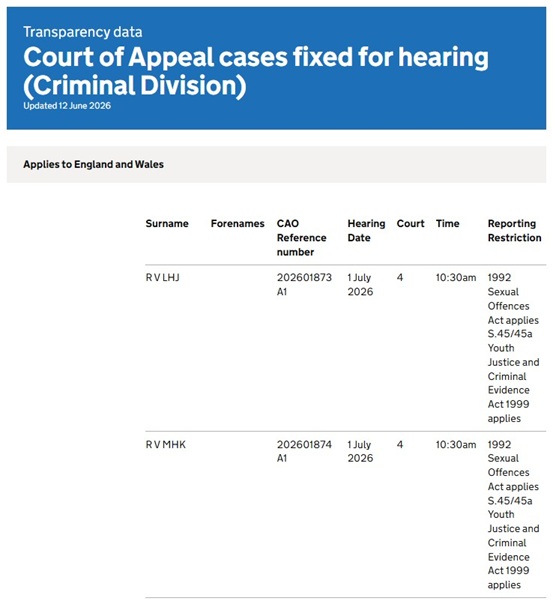
The sentences of three teenage boys who were spared custody over the rape of two girls will now be considered by senior judges at the Court of Appeal during a two-day hearing starting on 1st July 2026.

Court of Appeal cases fixed for hearing (Criminal Division)

Authorisation to sit as a High Court Judge

HHJ Rowland may be authorised to sit as a High Court Judge by s9(1) of the Senior Courts Act as amended by the Crime and Courts Act 2013.

According to CRIMINAL PRACTICE DIRECTIONS 2015 DIVISION XII His Honour Judge Rowland should be addressed as “My Lord” in court.

Modes of Address B.1 – The following judges, when sitting in court, should be addressed as ‘My Lord’ or ‘My Lady’

(b) any Circuit Judge sitting as a judge of the Court of Appeal (Criminal Division) or the High Court under section 9(1) of the Senior Courts Act 1981;
(d) any Senior Circuit Judge who is an Honorary Recorder.

Description B.3 – In cause lists, forms and orders members of the judiciary should be described as follows:

(a) Circuit Judges, as ‘His [or Her] Honour Judge A’. When the judge is sitting as a judge of the High Court under section 9(1) of the Senior Courts Act 1981, the words ‘sitting as a judge of the High Court’ should be added;

The three key values which are central to the role of judicial office holders (JOHs) in England and Wales are:
• Independence
• Impartiality
• Integrity

“Publicity is the very soul of justice. . . . It keeps the judge himself, while trying, under trial….Where there is no publicity there is no justice”

Jeremy BenthamMr Justice Cobb: ‘Justice must be seen to be done’

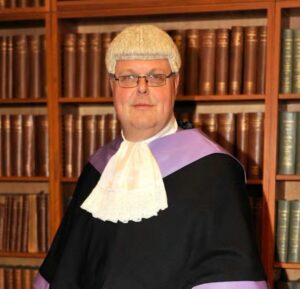
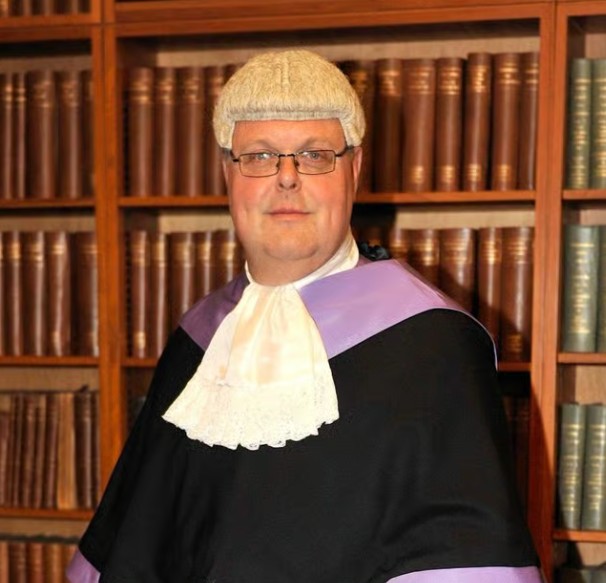
Image of HHJ Rowland : Microsoft Copilot

The High Court Judge that never was – His Honour Judge Melbourne Inman KC

Check out our articles on Rule of Law, Open Justice, Judges Salaries and Fees, Dodgy JudgesMr Justice Williams, His Honour Now His Dishonour, His Honour Judge Stuart Farquhar, Do you Have to Bow to a Judge ?, Can you Email a Judge ?, Can you Criticise a Judge ? and the highly dubious Sussex Family Justice Board.


The Ministry of Injustice is not the Ministry of Justice nor is it affiliated in any way with the justice system, legal profession, police or any other law enforcement agencies.


Latest Articles


Most Popular


You should always seek formal legal advice from a qualified and reputable lawyer (solicitor or barrister).

There are a number of links to Free and Paid For Legal Resources and Legal Organisations on the Free Legal Advice , Legal Aid and Pro Bono pages.

Categories
Civil Justice Criminal Justice Family Law Legal Professionals

What is a Court Legal Adviser ?

In magistrates’ courts across England and Wales, lay justices (magistrates who are not legally qualified), deal with the overwhelming majority of criminal cases. Magistrates’ courts handle approximately 90-95% of all criminal cases in England and Wales.

To ensure proceedings are conducted lawfully, fairly and efficiently, lay justices are supported by justices’ legal advisers (also known as court legal advisers).

Court Legal advisers are qualified lawyers, either solicitors or barristers, who provide expert assistance to the court on all matters of procedure, evidence and sentencing law.

Alternative job titles for a Court Legal advisers include Court clerk or assistant to justices’ clerk.

We are HMCTS – Legal Adviser

Statutory Basis: Section 28 of the Courts Act 2003

The fundamental legal framework for the role is provided by Section 28 of the Courts Act 2003 (Function of giving legal advice to justices of the peace).

Under Section 28(1), the Lady Chief Justice may authorise a person:

  • (a) to give advice to justices of the peace about matters of law (including procedure and practice) on questions arising in connection with the discharge of their functions, including when the adviser is not personally attending on them; and
  • (b) to bring to the attention of justices of the peace any point of law (including procedure and practice) that is or may be relevant.

Authorisation is limited to suitably qualified court staff and carries statutory protection of independence.

Core Duties in Criminal and Youth Courts

In criminal and youth courts consisting of lay justices, the detailed duties of justices’ legal advisers are set out in Rule 2.12 of the Criminal Procedure Rules 2025.

A justices’ legal adviser must provide the court with any legal advice it needs (whether or not the court asks for it), including advice on:

  • questions of law and mixed questions of law and fact
  • matters of practice and procedure
  • relevant judicial decisions that bind the court
  • the process to be followed to reach a decision
  • the law relating to sentencing
  • the range of penalties and orders available, taking into account any applicable sentencing guidelines
  • any other matter relevant to the case

(5) In performing the functions for which these Rules provide a justices’ legal adviser―

(a) must avoid the appearance of advocacy for a party;

(b) must adhere to the same principles that apply to courts of independence, impartiality, integrity, propriety, competence, diligence and ensuring fair treatment; and

(c) may consult with other justices’ legal advisers.

Rule 2.12 (5) of the Criminal Procedure Rules 2025

Key requirements include:

  • Allowing parties an opportunity to make representations on the advice given
  • Being permitted to ask questions of parties or witnesses to clarify evidence
  • Assisting the court in drafting and recording reasons for its decisions
  • Supporting unrepresented defendants
  • Maintaining strict impartiality at all times

(3) To provide the legal advice required by paragraph (2)(a) a justices’ legal adviser must―

(a) if necessary, attend the members of the court outside the courtroom; and

(b) in that event, inform the parties, if present, of any such advice given there.

Rule 2.12 (3) of the Criminal Procedure Rules 2025

Advisers may not announce verdicts, sentences, or allocation/sending decisions.

Role Beyond Criminal Courts

While their primary and most extensive work is in criminal courts, justices’ legal advisers also support lay justices in family proceedings (under Family Procedure Rules Practice Direction 2C) and certain civil matters in magistrates’ courts.

However, the criminal jurisdiction remains the largest part of their caseload.

Skills and knowledge

As a Courts Legal Advisor , you’ll need:

  • legal knowledge including court procedures and government regulations
  • to be thorough and pay attention to detail
  • persistence and determination
  • analytical thinking skills
  • excellent verbal communication skills
  • the ability to think clearly using logic and reasoning
  • concentration skills
  • the ability to learn through your work
  • to be able to use a computer and the main software packages confidently

Qualifications and Employment

Justices’ legal advisers are employed by His Majesty’s Courts and Tribunals Service (HMCTS). Entry typically requires completion of the academic stage of solicitor or barrister qualification. Candidates may join through the two-year HMCTS trainee legal adviser programme or by direct application if already fully qualified.

Starting salaries are around £32,000, rising to £53,000 or more with experience. The role demands excellent legal knowledge, strong analytical skills, clear communication, attention to detail and the ability to remain calm and impartial under pressure.

Career path and progression

After qualifying, you’ll become as a Tier 1 legal adviser. With more experience, you can move on to be a Tier 2 adviser, working on more complex cases and with more responsibility. For instance, reviewing casework and mentoring trainees.

As your career as a legal advisor develops, and with further training, you can move up in stages to become:

  • a legal adviser team manager in a court
  • an area or regional manager
  • a justices’ clerk, if you have over 5 years’ experience
  • barristercrown prosecutor or judge

Check out our articles on Rule of Law, Open Justice, Judges Salaries and Fees, Dodgy JudgesMagistrates, Chief Magistrate, Do you Have to Bow to a Judge ?, Can you Email a Judge ?, Can you Criticise a Judge ?, Crown Prosecution Service, Director of Public Prosecutions (DPP) and the highly dubious Sussex Family Justice Board.


The Ministry of Injustice is not the Ministry of Justice nor is it affiliated in any way with the justice system, legal profession, police or any other law enforcement agencies.


Latest Articles


Most Popular


You should always seek formal legal advice from a qualified and reputable lawyer (solicitor or barrister).

There are a number of links to Free and Paid For Legal Resources and Legal Organisations on the Free Legal Advice , Legal Aid and Pro Bono pages.

Categories
Civil Justice Criminal Justice Family Law Law Legal Professionals

What is a Skeleton Argument ?

A skeleton argument is a concise written document prepared by a party (or their legal representative) and submitted to the court in advance of a hearing. It summarises the key factual and legal issues in dispute, sets out the main arguments that will be advanced, and identifies the authorities (cases, statutes, or other materials) that will be relied upon.

It acts as a “roadmap” for the judge and the advocate, helping to focus oral submissions and save valuable court time. Skeleton arguments (or their equivalent, such as position statements) are now a standard feature of litigation in England and Wales.

Purpose and Benefits of a Skeleton Argument

The primary purpose of a skeleton argument is to assist the court by clearly and concisely setting out the arguments on which a party intends to rely. A well-drafted skeleton:

  • Defines and narrows the real issues in dispute
  • Allows the judge to pre-read the case efficiently
  • Provides a clear structure for oral advocacy
  • Promotes efficiency in hearings

Judges frequently read skeletons before the hearing. A strong, well-structured skeleton can significantly influence the outcome by framing the case in advance.

Skeleton arguments are generally not required in the Magistrates’ Court unless the court specifically directs for one (e.g. for a complex legal issue).

Skeleton Arguments in Civil Proceedings (CPR)

In civil cases, skeleton arguments are governed by the Civil Procedure Rules 1998 (CPR) and the associated Practice Directions. The most important guidance is contained in Practice Direction 52A (Appeals), Section V, which sets out the requirements for skeleton arguments and is widely followed as best practice in first-instance hearings as well.

Key requirements include:

  • Must be concise, clear and focused
  • Set out in numbered paragraphs
  • Clearly define the areas of controversy
  • Contain cross-references to the relevant documents in the court bundle
  • Be self-contained (no incorporation by reference to earlier documents)
  • For each authority cited, state the proposition of law it supports and give specific page or paragraph references
  • Avoid lengthy quotations from cases or documents

Failure to comply with these requirements may result in costs sanctions or adverse comments from the court.

Skeleton Arguments in Criminal Proceedings (CrimPR)

In criminal cases, skeleton arguments are governed by the Criminal Procedure Rules 2025 (CrimPR) and the Criminal Practice Directions 2023 (as amended Nov 2025).

They are commonly required in the Crown Court for contested applications, trials involving significant legal argument, complex sentence hearings, and all appeals to the Court of Appeal (Criminal Division).

Key requirements include:

  • Strong emphasis on brevity and clarity
  • Must clearly identify the real issues
  • Proper citation of authorities (proposition of law + pinpoint reference)
  • Must comply with any page limits or other directions set by the court
  • Must be filed and served in accordance with any timetable set by the court

Non-compliance may lead to the skeleton being rejected, costs orders, or adjournment of the hearing.

Skeleton Arguments in Family Proceedings (FPR)

In family law cases, the Family Procedure Rules 2010 (FPR) and Practice Direction 27A (Court Bundles and Position Statements) apply. The terminology differs slightly from civil and criminal litigation.

In financial remedy proceedings, the term “position statement” is commonly used, and this includes what would otherwise be a skeleton argument. Strict page limits apply:

  • First Appointment: maximum 6 pages
  • Other interim hearings: maximum 8 pages
  • FDR appointment: maximum 12 pages
  • Final hearing: maximum 15 pages (excluding agreed documents)

In children and other non-financial family cases, a separate skeleton argument may be filed where appropriate (generally not exceeding 20 pages).

For appeals in family proceedings, see FPR PD 30A, which requires a skeleton argument to accompany or follow the appellant’s notice.

Common requirements across family cases include:

  • Numbered paragraphs
  • Cross-references to the court bundle
  • Clear propositions of law for each authority cited
  • No new evidence or factual allegations
  • Emphasis on the welfare of the child (where relevant) or the s.25 factors in financial cases

Recommended Structure for a Skeleton Argument / Position Statement

  1. Introduction – The order or relief sought and the party’s position
  2. The Issues – A clear numbered list of the matters the court must decide
  3. Factual Background – Short neutral chronology or agreed facts
  4. Legal Framework – Relevant statutes and case law
  5. Submissions – Arguments on each issue, clearly linked to the facts and law
  6. Conclusion – Summary of the relief requested

Published Skeleton Argument Templates and Examples

Several official and professional templates are publicly available:

  • Official GOV.UK TemplateForm AC014 (Skeleton Argument) – ideal for appeals and tribunals
  • SRA Guidance Template
  • Many barristers’ chambers and law firms publish precedent skeletons for specific applications (e.g. summary judgment, interim injunctions, family financial remedies)

While using a template is helpful, always tailor it to the specific requirements of your court, hearing type and any individual directions from the judge.

Best Practice Tips

  • Use short sentences, clear headings, and numbered paragraphs
  • Use 12-point font with 1.5 line spacing
  • Avoid footnotes where possible
  • File and exchange by the court deadline (usually the day before the hearing)
  • Always comply with any specific directions from the judge

Comparison Table

AreaGoverning RulesDocument NameTypical LengthMandatory?
CivilCPR + PD 52A (Section V)Skeleton ArgumentConcise (often up to 25 pages on appeal)Usually yes, especially on appeals
CriminalCrimPR + Practice Directions 2023Skeleton ArgumentSubject to court directionsCommon in complex/contested cases
Family (Financial)FPR PD 27APosition Statement (incl. skeleton)6–15 pages (stage dependent)Yes for most hearings
Family (Children/Other)FPR PD 27A + PD 30APosition Statement / SkeletonUp to 20 pagesIf appropriate

Conclusion

The skeleton argument (or position statement in family cases) is an essential bridge between written statements and oral advocacy in the UK courts. Whether in civil, criminal, or family proceedings, the golden rules remain the same: clarity, brevity, and precision.

A well-crafted skeleton or position statement does not merely summarise the case, it persuades the court before a single word is spoken in the hearing.

Check out the related articles on the Attorney General, Solicitor General, Lady Chief Justice, Master of the Rolls, Lord Chancellor, Justice Secretary, Rule of Law, Open Justice, Law, Is the Law Black and White ?, Government Legal Department, Crown Prosecution Service (CPS), Abuse of Process, Government Legal Department (GLD), What Does Lady Justice Symbolise ?, McKenzie Friend, Can a Judge Direct a Jury to Find a Defendant Not Guilty ?,Law Society, Law Commission, McKenzie Friend Right of Audience, Solicitors, Solicitors Regulation Authority, Barristers, Bar Council of England and Wales, Bar Standards Board, R v Sussex Justices, Police Impartiality and the highly questionable Sussex Family Justice Board.


The Ministry of Injustice is not the Ministry of Justice nor is it affiliated in any way with the justice system, legal profession, police or any other law enforcement agencies.


Latest Articles


Most Popular


You should always seek formal legal advice from a qualified and reputable lawyer (solicitor or barrister).

There are a number of links to Free and Paid For Legal Resources and Legal Organisations on the Free Legal Advice , Legal Aid and Pro Bono pages.
Categories
Criminal Justice Government Law Legal Analysis Legal Professionals

Director of Public Prosecutions (DPP)

The Director of Public Prosecutions (DPP) is the head of the Crown Prosecution Service (CPS). The Director of Public Prosecutions is responsible for the independent prosecution of criminal cases investigated by the police and other agencies.

This role ensures that decisions to prosecute are taken fairly, free from political interference and guided solely by the evidence and the public interest. Established over a century ago, the office has evolved into one of the most influential positions in British law, overseeing hundreds of thousands of cases each year.

Thank you for contacting the Private Office of the Director of Public Prosecutions and the Chief Operating Officer, at the Crown Prosecution Service (CPS). Your email has been received.

The Director of Public Prosecutions (DPP) email is [email protected]

Historical Background

The office dates back to the Prosecution of Offences Act 1879, which created the DPP to advise police and handle serious cases. The first holder, Sir John Maule QC, assumed the post in 1880 but operated with limited powers.

After a brief merger with the Treasury Solicitor in 1884, the role regained full independence under the Prosecution of Offences Act 1908. Significant modernisation occurred between 1944 and 1964 under Sir Theobald Mathew QC, who updated regulations, introduced new technology, and expanded staff numbers.

The pivotal moment came in 1986 with the launch of the Crown Prosecution Service (CPS) under the Prosecution of Offences Act 1985. This transformed the DPP from leading a small department into the chief executive of a national prosecution service.

Role and Responsibilities

The Director of Public Prosecutions is the third most senior public prosecutor, ranking below the Attorney General and Solicitor General. The holder bears personal responsibility for approximately 7,000 CPS staff and around 800,000 prosecutions annually.

Key duties include applying the Full Code Test to decide whether cases should proceed, advising police during investigations, setting charges in complex matters, and issuing legal guidance and policies. The DPP also presents cases in court where necessary and supports victims and witnesses. Crucially, the role demands strict independence; prosecutorial decisions cannot be directed by government.

The DPP reports to the Attorney General, who accounts for the CPS in Parliament, but day-to-day operations remain free from ministerial control.

The Code for Crown Prosecutors (the Code) is issued by the Director of Public Prosecutions (DPP) under section 10 of the Prosecution of Offences Act 1985. This is the eighth edition of the Code and replaces all earlier versions and was published on the 26th October 2018. Almost 8 years without an update is quite a long time.

Appointment and Current Leadership

The DPP is appointed by the Attorney General for an initial five-year term following an open competition overseen by the Civil Service Commission. The process emphasises integrity, legal expertise, and leadership.

The current Director of Public Prosecutions is Stephen Parkinson, who took office on the 1st November 2023. A University College London law graduate, Parkinson qualified as a barrister in 1980 and later as a solicitor in 2005.

He began as a junior prosecutor in 1984, rose through CPS ranks, and held senior government posts, including Deputy Head of the Attorney General’s Office. For two decades he practised as a defence solicitor at Kingsley Napley, becoming Senior Partner in 2018. His unique experience on both sides of the courtroom equips him to lead the service effectively.

Stephen Parkinson has been announced as the new Director of Public Prosecutions and head of the Crown Prosecution Service. It is expected that he will take up the appointment in November 2023 for an initial term of five years. He will succeed the outgoing DPP, Max Hill KC.

Chair of the Bar Council, Nick Vineall KC, said: “The Bar Council would like to congratulate and welcome Stephen Parkinson as the new Director of Public Prosecutions and head of the Crown Prosecution Service.  Mr Parkinson practised as a barrister for over 20 years and then qualified as a solicitor and has had a distinguished career in both the public and the private sectors. We very much look forward to meeting and engaging with the new DPP on areas of mutual concern, at a time when the criminal justice sector is under unprecedented pressure, and Crown Court backlogs are at record levels.

“The Bar Council would also like to record its sincere thanks to the outgoing DPP, Max Hill KC, who steered the CPS through the Covid crisis and has always sought to ensure that remuneration for those involved in prosecuting on behalf of the CPS was on a par with criminal defence fees.” 

New DPP Stephen Parkinson announced – Bar Council comment

Stephen Parkinson Legal Experience

Challenges and Future Outlook

Today’s DPP operates under intense pressure. Backlogs, rising caseloads, and high-profile events such as civil disturbances test resources and impartiality.

Maintaining public trust while improving efficiency, supporting victims more effectively, and embracing digital transformation are key priorities. DPP Stephen Parkinson has emphasised collaborative working across the criminal justice system to reduce delays and deliver fair outcomes.

Charlies Prosecution Service (CPS)
Coming Soon at https://cpsgov.uk – Charlie’s Prosecution Service

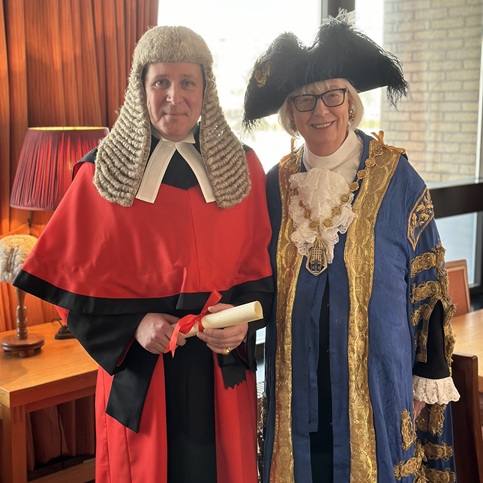
Image of Stephen Parkinson : PA

Check out our related articles on the Crown Prosecution Service (CPS), Crown Prosecution Service (CPS) Complaints and Feedback, HM Crown Prosecution Service Inspectorate (HMCPSI), Rule of Law, Open Justice, Victims’ Right to Review (VRR), Is the Law Black and White ?, Abuse of Process, What Does Lady Justice Symbolise ?, McKenzie Friend, Can a Judge Direct a Jury to Find a Defendant Not Guilty ?,Law Society, Law Commission, McKenzie Friend Right of Audience, Solicitors, Solicitors Regulation Authority, Barristers, Bar Council of England and Wales, Bar Standards Board, Contra Mundum, R v Sussex Justices, Police Impartiality and the highly questionable Sussex Family Justice Board.


The Ministry of Injustice is not the Ministry of Justice nor is it affiliated in any way with the justice system, legal profession, police or any other law enforcement agencies.


Latest Articles


Most Popular


You should always seek formal legal advice from a qualified and reputable lawyer (solicitor or barrister).

There are a number of links to Free and Paid For Legal Resources and Legal Organisations on the Free Legal Advice , Legal Aid and Pro Bono pages.

Categories
Civil Justice Criminal Justice Judiciary

Dodgy Magistrates (JP)

The Judicial Conduct Investigations Office (JCIO) investigates complaints against judicial office holders in England and Wales, including lay magistrates known as Justices of the Peace (JPs).

A “fee-paid magistrate” is usually a Deputy District Judge, which is a different, legally qualified role compared to a Lay Magistrate (JP). 

When misconduct is substantiated, sanctions are imposed by the Lord Chancellor (with agreement from the Lady Chief Justice or delegate) and published as statements on the JCIO website.

Misconduct means personal misbehaviour which is serious enough to require the Lord Chancellor and the Lady Chief Justice to take formal disciplinary action.

As of the 12th February 2026, in the 2025/2026 period, the JCIO issued 83 disciplinary statements in total. Of these, 47 involved Magistrates/Justices of the Peace (JPs) (identified by “JP” in the listings; the remainder include judges, coroners, and tribunal members).

The primary reason for JP discipline is failure, without reasonable excuse, to meet minimum sitting requirements (at least 13 full days or 26 half-days per year, often over three consecutive years), leading to removal via summary process.

Other cases involve social media misuse, failure to report personal legal involvement/convictions, inappropriate conduct/comments, misuse of judicial status, driving offences and other breaches.

Sanctions range from formal advice (mildest; visible 2 years) to formal warning (4 years), reprimand (6 years), or removal from office (5 years for sittings failures; indefinite otherwise).

Some note “would have been removed” if not resigned first.

Below is the complete list of all 47 JP cases, in the order they appear on the JCIO page (most recent first). Each includes the JCIO reference, name (linked to the official statement page), misconduct summary, sanction, and key notes/mitigating factors (based on statement content).

Disciplined Magistrates (2025/2026) as of 12th Feb 2026

  • JCIO 83/25 – Mr Adrian Kermode JP
    Misconduct: Liked a politically sensitive LinkedIn post (August 2025), risking impartiality and reputational harm.
    Sanction: Formal advice.
    Notes: Accepted responsibility, apologised, promptly unliked, provided future conduct assurances; single passive engagement.
  • JCIO 82/25 – Mr Morris Suckall JP
    Misconduct: Three inappropriate Facebook posts (2017) showing bias/ill will toward political figure and minority group.
    Sanction: Formal warning.
    Notes: Historic posts; 13 years unblemished service; no sustained pattern but limited insight.
  • JCIO 80/25 – Ms Michelle Bevan-Margetts JP
    Misconduct: Election leaflet included unauthorised comments on government policy and judiciary effectiveness.
    Sanction: Formal advice.
    Notes: Additions without knowledge; voluntary mitigation; incomplete insight.
  • JCIO 76/25 – Mr Lascelles Haughton JP
    Misconduct: Failure to meet minimum sittings for three years; disengagement and no contact.
    Sanction: Removal from office.
    Notes: No reasonable excuse; work commitments cited but insufficient for prior years.
  • JCIO 75/25 – Mr David Whitehead JP
    Misconduct: Called into LBC radio identifying as magistrate and criticising government policy on deportation.
    Sanction: Formal warning.
    Notes: Claimed private capacity; limited insight into breach of impartiality standards.
  • JCIO 73/25 – Mr John Parfitt JP
    Misconduct: Irregularities in managing bench social fund (inaccurate records, personal account use).
    Sanction: Formal warning.
    Notes: 16-year unblemished record; full responsibility; rectified with payments; personal challenges.
  • JCIO 72/25 – Mrs Roberta Hall JP
    Misconduct: Failure to meet sittings for three consecutive years.
    Sanction: Formal warning.
    Notes: Reasonable excuse for one year; 33 years service including chair roles; improved sittings.
  • JCIO 71/25 – Mr Steven Kinchington JP
    Misconduct: Used position to obtain case information not involved in.
    Sanction: Formal advice.
    Notes: Full responsibility; apologised; basic enquiry for acquaintance; no prior misconduct.
  • JCIO 70/25 – Mrs Nicola Walker JP
    Misconduct: No sittings or training since June 2022 appointment.
    Sanction: Removal from office.
    Notes: Unforeseen circumstances; no engagement with contacts.
  • JCIO 69/25 – Mrs Rebecca Reeves JP
    Misconduct: Failure to meet sittings and complete required training since April 2023.
    Sanction: Removal from office.
    Notes: Personal reasons for postponements; no response to rescheduling.
  • JCIO 68/25 – Mr Sarfraz Uddin JP
    Misconduct: Failure to meet minimum sittings for three years (from April 2022).
    Sanction: Removal from office.
    Notes: No response to requests; no reasonable excuse.
  • JCIO 67/25 – Miss Jennifer Reay JP
    Misconduct: Failure to meet sittings since April 2022.
    Sanction: Removal from office.
    Notes: No response provided.
  • JCIO 65/25 – Miss Angela Cahill JP
    Misconduct: Failure to meet sittings for two years; disengagement.
    Sanction: Removal from office.
    Notes: No response; no prospect of meeting requirements.
  • JCIO 64/25 – Mr Mark Lenderyou JP
    Misconduct: Shouting at court officer; unprofessional conduct.
    Sanction: Formal advice.
    Notes: Accepted unprofessional; apologised; personal factors affected note-taking.
  • JCIO 61/25 – Mr Nick Johnston JP
    Misconduct: Failed to promptly report convictions resulting in nine penalty points.
    Sanction: Formal advice.
    Notes: Full responsibility; ashamed; commitment to role.
  • JCIO 59/25 – Craig Rydqvist JP
    Misconduct: Failure to meet minimum sittings in 2024/25; delayed training.
    Sanction: Reprimand.
    Notes: Training delays; committed to reducing work; on track for current year.
  • JCIO 58/25 – Clive Powell JP
    Misconduct: Disruptive behaviour in training (aggressive criticism, raised voice).
    Sanction: Formal advice.
    Notes: Personal experiences; no contrition but long service.
  • JCIO 57/25 – Evelyn McCann JP
    Misconduct: Failure to meet sittings for three years (2022/23-2024/25).
    Sanction: Reprimand.
    Notes: Genuine mistake for one year; apologised; work/personal issues; unblemished since 2007.
  • JCIO 56/25 – Mrs Jill Clarke JP
    Misconduct: Belatedly reported providing police statement (2019) and accidental JP suffix in reference.
    Sanction: Formal advice.
    Notes: Apologised; resubmitted without suffix; long unblemished service.
  • JCIO 53/25 – Mrs Madeleine Bonser JP
    Misconduct: Requested case papers for mentee despite policy prohibition.
    Sanction: Formal warning.
    Notes: Assumed policy changed; 18-year unblemished record.
  • JCIO 52/25 – Mrs Jane Taylor JP
    Misconduct: Shared YouTube video with potentially transphobic commentary in WhatsApp group.
    Sanction: Reprimand.
    Notes: Defended as non-transphobic; political motivation claimed.
  • JCIO 50/25 – Ms Susan Kelly JP
    Misconduct: Failure to meet sittings for three consecutive years from April 2022.
    Sanction: Removal from office.
    Notes: Representations not accepted as reasonable excuse; personal circumstances; long service.
  • JCIO 49/25 – Ms Kate Waghorn JP
    Misconduct: Inappropriate racially insensitive comment about probation officer.
    Sanction: Formal warning.
    Notes: No malice; remorse; apologised; 30-year record.
  • JCIO 48/25 – Ms Gillian Sebright JP
    Misconduct: Inappropriate accusatory tone to staff; insensitive remark on religious beliefs.
    Sanction: Formal advice.
    Notes: 20-year unblemished record; sincere apology; no intentional offence.
  • JCIO 47/25 – Dr Amy Delicate JP
    Misconduct: Inappropriate behaviour in hearing (desk banging, sighing, swearing).
    Sanction: Formal advice.
    Notes: Stress from bundles; qualified apology; 5-year unblemished record.
  • JCIO 46/25 – Mr Michael Muldoon JP
    Misconduct: Speeding offence (six points); failed to report exceeding six points.
    Sanction: Formal advice.
    Notes: Prompt self-report; regret; clean licence otherwise.
  • JCIO 45/25 – Mr John Garforth JP
    Misconduct: Failure to report internal employment investigation.
    Sanction: Formal advice.
    Notes: Misunderstanding; not deliberate; took responsibility.
  • JCIO 44/25 – Ms Nicola Baldwin JP
    Misconduct: Failed to inform of co-defendant in civil proceedings; used JP status on website/email/social media.
    Sanction: Formal advice.
    Notes: Accepted facts; removed references; no intent to gain; no prior since 2006.
  • JCIO 43/25 – Mr Andrew Dawson JP
    Misconduct: Used magistrate status in election leaflet (“17 years keeping streets safe”).
    Sanction: Formal advice.
    Notes: Intended for campaign; apologised; genuine error.
  • JCIO 42/25 – Mrs Marisa Austin-Knowles JP
    Misconduct: Failure to report involvement in proceedings; mentioned status in court.
    Sanction: Formal warning.
    Notes: Undisputed; misunderstood reporting; apologised.
  • JCIO 38/25 – Mr Ramesh Nayak JP
    Misconduct: Obtained colleague’s medical records without consent.
    Sanction: Formal advice.
    Notes: Intended to help; remorseful; good faith.
  • JCIO 34/25 – Mr David Armitage JP
    Misconduct: Disclosed victim-identifying information from proceedings to organisation.
    Sanction: Removal from office.
    Notes: Unaware of anonymity; best intentions; remorseful.
  • JCIO 33/25 – Mr Joe Bangudu JP
    Misconduct: Failed to promptly report involvement in proceedings (three-month delay).
    Sanction: Reprimand.
    Notes: Serious misconduct; personally affected; remorse; no prior.
  • JCIO 32/25 – Mrs Angela Bradshaw JP
    Misconduct: Offensive comment overgeneralising a cultural group.
    Sanction: Formal advice.
    Notes: Ill-advised; accepted responsibility; direct apology.
  • JCIO 30/25 – Miss Linda Hill JP
    Misconduct: Failure to meet sittings for three years from April 2022; no engagement.
    Sanction: Reprimand.
    Notes: Work/personal commitments; felt unsupported; unblemished since 2007.
  • JCIO 29/25 – Mr Martin Dominique JP
    Misconduct: Rude, aggressive towards litigant; abuse of authority.
    Sanction: Formal warning.
    Notes: Admitted remarks; single instance.
  • JCIO 28/25 – Mrs Shirley Holmes JP
    Misconduct: Conditional caution for altercation (removing headset); breached respect for law.
    Sanction: Formal warning.
    Notes: Provocation; regretful; personal challenges; no prior.
  • JCIO 26/25 – Mr Edmund Sutton JP
    Misconduct: Failure to meet sittings for four years; no engagement.
    Sanction: Removal from office.
    Notes: No response to contacts.
  • JCIO 25/25 – Mr Alfred Bean JP
    Misconduct: Loud, rude complaint about parking; aggressive rant to staff.
    Sanction: Formal advice.
    Notes: Frustration; regret; attempted apology; 12-year record.
  • JCIO 24/25 – Mr Terry Regan JP
    Misconduct: Failed to report motoring convictions timely; multiple offences (nine points, ban).
    Sanction: Formal warning.
    Notes: Misinterpretation; remedial actions; long-serving.
  • JCIO 23/25 – Mr Peter Chapman JP
    Misconduct: Failure to complete five essential e-module trainings.
    Sanction: Formal advice.
    Notes: Claimed completed; not intentional avoidance.
  • JCIO 22/25 – Mrs Sharanjit Sandhu JP
    Misconduct: Rude to magistrate/staff; derogatory emails; car park breach.
    Sanction: Formal warning.
    Notes: Denied rudeness; retaliatory complaint; some complaints dismissed.
  • JCIO 21/25 – Mrs Fiona Jones JP
    Misconduct: Failed to meet minimum sittings (30 half-days for dual jurisdictions) in 2024; repeated failures.
    Sanction: Reprimand.
    Notes: Work/personal; 30 years committed; improving in 2025.
  • JCIO 20/25 – Ms Amie Canham JP
    Misconduct: Adverse findings in civil proceedings not declared; failure to report involvement.
    Sanction: Would have been removed (resigned).
    Notes: Gross misconduct; difficult circumstances; no prior.
  • JCIO 19/25 – Mr Robert Walker JP
    Misconduct: Stern, belittling, intimidating tone to staff.
    Sanction: Formal advice.
    Notes: Negative reception; intended to help; long service.
  • JCIO 14/25 – Ms Abiola Onatade JP
    Misconduct: Failure to report exceeding six penalty points (10 points from speedings).
    Sanction: Formal advice.
    Notes: Responsibility; impact recognition; long record.
  • JCIO 13/25 – Mrs Karen Earnshaw JP
    Misconduct: Accessed court database for relative’s case; mentioned status in call.
    Sanction: Reprimand.
    Notes: Serious misconduct; accepted facts; apologised.
  • JCIO 12/25 – Mrs Jane Greasley JP
    Misconduct: Neglected to report family member’s court involvement.
    Sanction: Formal advice.
    Notes: Misunderstanding of requirements; accepted responsibility; no prior since 2006.
  • JCIO 10/25 – Mrs Susanna Craig JP
    Misconduct: Failure to complete minimum annual sittings (15 days for dual jurisdictions) for last three years; no response to contacts.
    Sanction: Removal from office.
    Notes: Summary process; no reasonable excuse provided; no mitigating factors mentioned.
  • JCIO 08/25 – Dr Charles Jumbo JP
    Misconduct: Expressed personal views on homosexuality during retiring room discussion, offending colleagues and raising impartiality concerns.
    Sanction: Reprimand.
    Notes: Long unblemished record; assurance of fair decisions; entitled to views but must avoid undermining magistracy; lesser sanction than recommended removal.
  • JCIO 06/25 – Mr Anderson Jordan JP
    Misconduct: Failure to complete minimum sittings despite prior warning; failed to access email/rota.
    Sanction: Would have been removed (resigned).
    Notes: Accepted failure, apologised, cited personal difficulties; but explanations insufficient; gross misconduct.
  • JCIO 05/25 – Mrs Christine Parry JP
    Misconduct: Acted rudely and dismissively towards staff member, causing emotional upset.
    Sanction: Formal advice.
    Notes: No malice; reckless rather than intentional; tensions acknowledged.
  • JCIO 04/25 – Mr Andrew York JP
    Misconduct: Failed to report involvement as complainant in criminal trial, leading to abortion due to conflict.
    Sanction: Formal warning.
    Notes: Full responsibility, apologised; informed police/court staff but not bench chair; unblemished record; personal circumstances.

Statistical Breakdown (47 Magistrate Cases in 2025/2026) as of 12th Feb 2026

  • Sanctions Distribution
    • Formal advice: 20 (≈43%) — Common for mitigated or low-harm breaches.
    • Formal warning: 10 (≈21%) — For moderate reputational risks.
    • Reprimand: 8 (≈17%) — For serious but non-removal misconduct.
    • Removal from office: 7 (≈15%) — Mostly sittings failures.
    • Would-have-been-removed (resigned): 2 (≈4%) — Confirmed for JCIO 20/25 and JCIO 06/25.
  • Primary Reasons
    • Failure to meet minimum sittings: 15 (≈32%) — Leads to most removals.
    • Failure to report incidents/convictions/proceedings: 10 (≈21%).
    • Inappropriate conduct/comments: 10 (≈21%).
    • Social media/online misuse: 4 (≈9%).
    • Misuse of judicial status/position: 5 (≈11%).
    • Driving-related offences: 3 (≈6%).
  • Additional Insights
    • Gender: Balanced (≈50% female, 50% male, inferred from names).
    • Mitigation factors: Long service (10–30+ years), remorse, quick correction often cited to reduce severity.
    • Trends: Sittings shortfalls cluster in recent statements; increasing focus on social media and reporting.

Magistrates Disciplined by the JCIO after 12th Feb 2026 (Last updated 23rd June 2026)

The High Court Judge that never was – His Honour Judge Melbourne Inman KC

Check out our articles on Chief Magistrate, Rule of Law, Open Justice, Judges Salaries and Fees, Dodgy JudgesMr Justice Williams, His Honour Now His Dishonour, His Honour Judge Stuart Farquhar, Do you Have to Bow to a Judge ?, Can you Email a Judge ?, Can you Criticise a Judge ? and the highly dubious Sussex Family Justice Board.


The Ministry of Injustice is not the Ministry of Justice nor is it affiliated in any way with the justice system, legal profession, police or any other law enforcement agencies.


Latest Articles


Most Popular


You should always seek formal legal advice from a qualified and reputable lawyer (solicitor or barrister).

There are a number of links to Free and Paid For Legal Resources and Legal Organisations on the Free Legal Advice , Legal Aid and Pro Bono pages.

Categories
Civil Justice Criminal Justice Judiciary Law Legal Professionals

United Kingdom Supreme Court Judicial Assistant Recruitment 2026

The UK Supreme Court is currently recruiting Judicial Assistants for the 2026/27 legal year, offering a prestigious and intellectually demanding opportunity for talented lawyers and legal researchers.

UK Supreme Court – Judicial Assistant Recruitment 202627 – Job Description – Final.pdf

Up to 11 positions are available, providing successful candidates with unparalleled close-quarters experience supporting the Justices of the Supreme Court of the United Kingdom and the Judicial Committee of the Privy Council (JCPC).

Judicial Assistants online information event 2026-27

A Unique Role at the Apex of the UK Legal System

The Supreme Court hears cases of the greatest public or constitutional importance affecting the whole population andJudicial Assistants play a vital part in the Court’s day-to-day operations.

Assigned typically to one or more Justices, they engage in high-level legal work that directly contributes to some of the most significant cases in the country.

Core responsibilities include:

  • Undertaking detailed legal research on appeals and applications for permission to appeal.
  • Drafting bench memoranda that summarise applications for permission to appeal.
  • Attending appeal hearings and participating in discussions with the Justices.
  • Preparing plain English press summaries of judgments, which are published on the Court’s website.
  • Responding to enquiries from international judicial networks and comparative law bodies.
  • Providing general assistance to Justices, including support for extra-judicial activities such as speeches, articles, and publications.

Beyond supporting individual Justices, Judicial Assistants contribute to the broader work of the Court. This can involve helping the Registrar with permission applications and appeals, as well as participating in the Court’s educational and outreach programmes.

The role is fixed-term, running from Monday 14 September 2026 to Friday 30 July 2027. It is based at the iconic Middlesex Guildhall building in Parliament Square, London.

Who Should Apply?

The Supreme Court welcomes applications from a diverse range of backgrounds. Whilst many past Judicial Assistants have been qualified solicitors, barristers, or advocates with some practical experience, the Court emphasises that the most important quality is exceptional intellectual ability.

Applications are actively encouraged from candidates who may not yet be qualified to practise but who possess outstanding academic knowledge of the UK legal system and advanced legal research skills.

Competition remains fierce, and all applicants must meet the essential criteria set out in the official Job Description.

A fundamental requirement is that candidates must have the right to work in the UK; the Court does not sponsor visas or work permits.

The full Job Description, which details the person specification and essential criteria, is available to download from the recruitment page.

Why Consider This Opportunity?

Working as a Judicial Assistant at the Supreme Court offers a rare window into the highest level of judicial decision-making in the United Kingdom. It provides:

  • Direct exposure to landmark cases and the reasoning of the country’s most senior judges.
  • The chance to hone advanced legal research, analysis, and writing skills in a demanding yet supportive environment.
  • Valuable insight that is highly regarded by future employers.
Being a Judicial Assistant – 2026

Alumni of the scheme have gone on to enjoy successful careers at the Bar, in leading City law firms, in academia, within the Government Legal Department, and in policy roles across the public and private sectors.For further insight, the Court recommends listening to podcasts featuring current or former Judicial Assistants, which offer behind-the-scenes perspectives on life at the Court.

How to Apply

Applications for the 2026/27 legal year are open now. Interested candidates should visit the dedicated Judicial Assistant recruitment page.

To apply:

  • Review the Job Description carefully to confirm eligibility.
  • Complete the online application form via the “Apply Now” link.

The closing date is midnight on Thursday 26th February 2026. Late applications will not be considered.

Interviews are expected to take place in person at the Court during the week commencing 20th April 2026.

The Court also hosts a free online information event for the 2026/27 recruitment round; registration details are available on the recruitment page.

For any queries, contact the recruitment team at [email protected]

Check out our related articles on Rule of Law, Open Justice, Do you Have to Bow to a Judge ?, Can you Email a Judge ?, Can you Criticise a Judge ?, What is Law, Is the Law Black and White ?, Branches of Law, Bullying, Harassment and Discrimination at the Bar, The Secret Barrister, Barristers, Direct Access Barrister, Barristers Behaving Badly, Inns of Court, Council of the Inns of Court, Bar Standards Board, Bar Tribunal and Adjudication Services, Bar Council, Innocent until Proven Guilty and the highly questionable Sussex Family Justice Board.


The Ministry of Injustice is not the Ministry of Justice nor is it affiliated in any way with the justice system, legal profession, police or any other law enforcement agencies.


Latest Articles


Most Popular


You should always seek formal legal advice from a qualified and reputable lawyer (solicitor or barrister).

There are a number of links to Free and Paid For Legal Resources and Legal Organisations on the Free Legal Advice , Legal Aid and Pro Bono pages.

Categories
Criminal Justice Judiciary Legal Professionals

His Honour Judge Amjad Nawaz

Judge Amjad Nawaz, known as His Honour Judge Amjad Nawaz, is a long-serving Circuit Judge of England and Wales who is assigned to the South East Circuit.

Judge Nawaz was appointed to the Circuit bench on October 24th 2008 (with the formal announcement made by HM The Queen on the advice of the Lord Chancellor).

Detailed public records on Judge Nawaz’s pre-appointment professional background (such as whether he practiced as a barrister or solicitor, chambers affiliation, year of call to the Bar, or areas of specialization) are limited.

Unlike some judges whose biographies appear on chambers websites, judicial profiles, or in appointment announcements with full career histories, Judge Nawaz’s pre-bench career is not extensively documented in open sources.

Beyond his core judicial duties in England and Wales, Judge Nawaz has undertaken additional roles that reflect his engagement in international judicial matters.

Judge Nawaz has been appointed as a Senior Judge of the Senior Judges’ Court in the Sovereign Base Areas of Akrotiri and Dhekelia (British Overseas Territories in Cyprus).

HHJ Nawaz has also participated in judicial exchanges and collaborations. In 2023, he joined discussions and visits (often alongside Her Honour Judge Azmat Nisa) to Nigeria, invited for talks on judicial case management, digitalization of court processes, paperless trials, and exchange programs.

Similar engagements have included visits to the UAE to discuss judicial decision-making, international arbitration, and legal traditions.

HHJ Nawaz is shown on the List of Circuit Judges published on the Courts and Tribunal Judiciary website.

His Honour Judge NawazSouth East24-10-2008
List of Circuit Judges
Judge Amjad Nawaz

Judge Nawaz Legal Controversy – Chaudhry Zaman spared jail for sexually assaulting 12 year old girl

In February 2026, a sentencing decision by His Honour Judge Amjad Nawaz at Reading Crown Court sparked widespread public outrage and debate over judicial leniency, cultural biases and the protection of child victims in the UK justice system.

Migrant, 70, told 12-year-old girl to ‘cover her head’ during sexual assault – Telegraph

Migrant, 70, who told girl, 12, to ‘cover her head’ before sexually assaulting her on way home from school is spared jail – Daily Mail

The case involved 70-year-old Chaudhry Zaman, a migrant living in Berkshire, who was convicted of sexually assaulting a 12-year-old girl in Slough. What began as a straightforward criminal proceeding quickly escalated into a broader controversy, fuelled by media coverage, social media backlash, and accusations of favouritism.

On the 2nd February 2026 Judge Nawaz handed down a nine-month prison sentence, suspended for 18 months. Additional penalties included 80 hours of unpaid community work, a five-year restraining order barring Zaman from approaching within 200 meters of the girl’s school, and a 10-year registration on the sex offenders’ register.

In his remarks, Judge Nawaz acknowledged the victim’s suffering, stating: “The victim has lost her self-esteem, lost her confidence and lost her friends and that is all down to your actions… That has caused a breakup of friendships which she regrets.”

Judge Nawaz also addressed Zaman directly about the CCTV evidence and the girl’s account of the forced hand-holding and kiss.

Judge Amjad Nawaz justified the suspended sentence by agreeing with the pre-sentence report that Zaman’s risk could be “managed in the community,” considering his age, remorse (despite denying guilt) and assurances it would “never happen again.”

It has prompted calls for reviews of sentencing guidelines for child sexual assaults, particularly when offenders cite age or cultural factors. Supporters of the decision point to the pre-sentence report and overcrowding in UK prisons as practical considerations, but detractors see it as prioritizing the perpetrator over the victim.

This controversy highlights ongoing tensions in the UK over immigration, cultural integration and judicial accountability. While some view the outrage as racially tinged, others insist it’s about ensuring justice for vulnerable children. The debate continues online, with thousands of views and shares amplifying demands for stricter penalties in similar cases.

Authorisation to sit as a High Court Judge

HHJ Nawaz may be authorised to sit as a High Court Judge by s9(1) of the Senior Courts Act as amended by the Crime and Courts Act 2013.

According to CRIMINAL PRACTICE DIRECTIONS 2015 DIVISION XII His Honour Judge Nawaz should be addressed as “My Lord” in court.

Modes of Address B.1 – The following judges, when sitting in court, should be addressed as ‘My Lord’ or ‘My Lady’

(b) any Circuit Judge sitting as a judge of the Court of Appeal (Criminal Division) or the High Court under section 9(1) of the Senior Courts Act 1981;
(d) any Senior Circuit Judge who is an Honorary Recorder.

Description B.3 – In cause lists, forms and orders members of the judiciary should be described as follows:

(a) Circuit Judges, as ‘His [or Her] Honour Judge A’. When the judge is sitting as a judge of the High Court under section 9(1) of the Senior Courts Act 1981, the words ‘sitting as a judge of the High Court’ should be added;

The three key values which are central to the role of judicial office holders (JOHs) in England and Wales are:
• Independence
• Impartiality
• Integrity

“Publicity is the very soul of justice. . . . It keeps the judge himself, while trying, under trial….Where there is no publicity there is no justice”

Jeremy BenthamMr Justice Cobb: ‘Justice must be seen to be done’

Image of HHJ Nawaz : @BasilTheGreat

The High Court Judge that never was – His Honour Judge Melbourne Inman KC

Check out our articles on Rule of Law, Open Justice, Judges Salaries and Fees, Dodgy JudgesMr Justice Williams, His Honour Now His Dishonour, His Honour Judge Stuart Farquhar, Do you Have to Bow to a Judge ?, Can you Email a Judge ?, Can you Criticise a Judge ? and the highly dubious Sussex Family Justice Board.


The Ministry of Injustice is not the Ministry of Justice nor is it affiliated in any way with the justice system, legal profession, police or any other law enforcement agencies.


Latest Articles


Most Popular


You should always seek formal legal advice from a qualified and reputable lawyer (solicitor or barrister).

There are a number of links to Free and Paid For Legal Resources and Legal Organisations on the Free Legal Advice , Legal Aid and Pro Bono pages.

Categories
Criminal Justice Law Police

National Firearms Amnesty

Police forces across the country are taking part in a four-week Firearms Amnesty for five types of BRUNI-manufactured side / top-venting blank firers  (TVBFs) which are now illegal to possess following testing by the National Crime Agency and policing.  

The amnesty takes place between February 2nd and 27th 2026, after which anyone in possession of one of the specified TVBFs could be subject to prosecution and up to 10 years’ imprisonment.  

Owners of these TVBFs are being forewarned ahead of the law change, however, and will be given the chance to surrender these weapons to the police without fear of prosecution. 

During the amnesty period, those handing in a BRUNI TVBFs will not face prosecution for the illegal possession and will not have to give their details. However, the history of any live firearms handed in will be checked for evidence  of its use in crime. 

What are TVBFs? 

Top/side venting blank firers (TVBFs) are legal to buy in the UK without a licence by over 18s unless they are readily convertible. Tests by the National Crime Agency and policing have shown that the following BRUNI models are readily convertible and are therefore illegal:  

  • 8mm PAK Bruni BBM New Police blank firing self-loading pistol 
  • 8mm PAK Bruni BBM Model 96 blank firing self-loading pistol 
  • 8mm PAK Bruni BBM Model ‘GAP’ blank firing self-loading pistol 
  • .380R (9mmK) PAK Bruni BBM ME Ranger single-action blank firing revolver 

In their original state TVBFs have a fully blocked barrel designed to discharge only blank cartridges. When discharged, combustion gases vent from the top of the weapon. TVBFs are sold with at least 50 per cent of their visible surface painted a bright colour. However, as well as converting them from blank firers to live firearms, criminals may also paint them black, so they look like an original lethal purpose (OLP) weapon. 

Check out the article on the Firearms Amnesty 2025

Why the Amnesty?

The primary aim of this amnesty is to remove these potentially dangerous weapons from the public domain, reducing the risk they pose when falling into the wrong hands. According to the NPCC, while gun crime in the UK remains relatively low compared to other countries, the conversion of these blank-firing guns into lethal weapons presents a significant emerging threat. Since 2021, over 800 converted TVBFs have been recovered in criminal circumstances, highlighting the urgency of this initiative.

How the Gun Amnesty Works

During the amnesty period, individuals who possess any of these four models can surrender them at local police stations without facing prosecution for the illegal possession of these now-banned firearms. This leniency is intended to encourage those who might have these guns for legitimate, non-criminal purposes to hand them over.

The guns will not only be removed from circulation but will also be analysed to see if they have been involved in previous criminal acts, thereby potentially aiding in ongoing investigations.

Public Response and Implications

The response from the public has been cautiously optimistic. Many see this amnesty as a chance to rectify unintended possession of these newly classified illegal firearms. There’s an acknowledgment among communities that while these guns might have been bought legally or even as souvenirs from trips, their potential for misuse is now too significant to ignore.

Law enforcement officials, including Assistant Chief Constable Tim Metcalfe, the NPCC Lead for the Criminal Use of Firearms, have stressed the importance of public cooperation. “This initiative is about protecting our communities by ensuring these firearms don’t end up being used for criminal intent,” Metcalfe stated. “We urge anyone with these weapons to do the responsible thing and surrender them.”

Legal Implications Post Amnesty

Post-amnesty, the possession of these TVBFs will be strictly prohibited, with severe penalties including up to 10 years in prison for those caught with one. This crackdown is part of broader efforts by UK law enforcement to control the proliferation of firearms and reduce gun-related crimes.

The amnesty also serves as a reminder of the broader issue of firearm conversion in the UK, prompting discussions on the need for tighter regulations on the import and sale of blank-firing guns and other similar devices.

Check out our articles on Policing, Police News, Policing by Consent, Two Tiered Policing, Wasting Police Time, Met Police, Sussex Police, R v Sussex Justices and the highly questionable Sussex Family Justice Board.


The Ministry of Injustice is not the Ministry of Justice nor is it affiliated in any way with the justice system, legal profession, police or any other law enforcement agencies.


Latest Articles


Most Popular


You should always seek formal legal advice from a qualified and reputable lawyer (solicitor or barrister).

There are a number of links to Free and Paid For Legal Resources and Legal Organisations on the Free Legal Advice , Legal Aid and Pro Bono pages.

Categories
Criminal Justice Judiciary Legal Professionals

Her Honour Judge Nirmal Shant KC

Judge Nirmal Shant, known as Her Honour Judge Nirmal Shant KC, is a Senior Circuit Judge and Resident Judge based at Nottingham Crown Court

Interview with Her Honour Judge Nirmal Shant

The Lord Chief Justice of England and Wales, the Right Honourable The Lord Burnett of Maldon has appointed Her Honour Judge Nirmal Shant QC to be a Senior Circuit Judge, Resident Judge based at Nottingham Crown Court, with effect from 1 September 2022.

Senior Circuit Judge, Resident Judge Appointment: Nirmal Shant KC

HHJ Shant is shown on the List of Circuit Judges published on the Courts and Tribunal Judiciary website.

Her Honour Judge Shant KCMidlands30-03-2015
List of Circuit Judges

HHJ Shant is shown on the Resident Judges list published on the Courts and Tribunal Judiciary website.

CircuitCourtJudgesDate of appointment
 MidlandNottingham Crown CourtHHJ Nirmal Shant KC01-09-22
Resident Judges

Her Honour Judge Shant KC Bio

Born in India, Her Honour Judge Shant migrated to the United Kingdom at the age of two with her family. The family later returned to India for much of her early childhood before settling permanently in the UK when she was 11.

Read the article on the website Sikhs in Law entitled Spirituality and Success: Judge Shant KC

Despite facing limited expectations at school, where a careers advisor once suggested she apply for a job at Woolworths rather than pursue law, she remained determined.

In 1979, she enrolled to study law at the University of Leicester, graduating and being called to the Bar in 1984.

Judge Shant began her career as a junior criminal barrister, building a strong practice in the East Midlands and beyond. She secured tenancy at the respected 1 High Pavement Chambers in Nottingham, where she prosecuted and defended cases in Crown Courts for over three decades.

Her expertise in criminal law, including fraud, led to her appointment as Queen’s Counsel in 2006 (some sources note 2007 or 2008), making her one of the first women to take silk in the Midlands and among the early black and minority ethnic barristers to achieve this prestigious rank in the region.

In 2001, she was appointed a Recorder, marking her entry into the judiciary. She became one of the first Asian Recorders in the area. In 2015, she was appointed a full Circuit Judge by the Judicial Appointments Commission and assigned to Derby Crown Court.

The following year, in 2016, she was promoted to Resident Judge at Derby Crown Court, a leadership position where she not only presided over serious criminal cases but also managed court administration, case listing, and the welfare of staff and fellow judges. She served as the first female Honorary Recorder of Derby.

Her Honour Judge Nirmal Shant KC was awarded Honorary Doctor of the University (HonDUniv) in July 2022 by the University of Derby in recognition of her outstanding contribution to promoting justice within Derby and Derbyshire, and her support for Derby Law School.

In August 2022, the Lord Chief Justice appointed her as a Senior Circuit Judge and Resident Judge at Nottingham Crown Court, effective from 1st September 2022. She also assumed the role of Honorary Recorder of Nottingham, the highest judicial position in the city and county.

Legal Controversy – The Sheraz Malik Rape Case Reporting Restriction

In late 2025 and early 2026, HHJ Shant attracted media attention and criticism in connection with her handling of a pre-trial hearing in the case of Sheraz Malik, a 28-year-old Pakistani national charged with raping an 18-year-old woman in Sutton Lawn park, Sutton-in-Ashfield, Nottinghamshire, on 29 June 2025.

At a hearing in September 2025 at Nottingham Crown Court, Judge Shant imposed a reporting restriction under the Contempt of Court Act 1981, postponing publication of Malik’s immigration status as an asylum seeker until the conclusion of his trial. She cited a “substantial risk of prejudice to the administration of justice” if the information were made public prematurely, in line with standard judicial guidance designed to protect jury impartiality by limiting exposure to potentially inflammatory or irrelevant details.

The trial venue was also moved from Nottingham to Birmingham Crown Court after social media comments by Reform UK MP Lee Anderson (MP for Ashfield) risked prejudicing local jurors; Judge Shant wrote to the MP requesting removal of the posts to safeguard a fair trial.

Malik was convicted on 26th January 2026 at Birmingham Crown Court of two counts of rape (unanimous verdicts) and acquitted on a third.

The restriction was lifted post-verdict, allowing media to report that Malik was an asylum seeker born in Pakistan who had previously lived in Italy, Germany, and France before arriving in the UK.

The decision drew criticism from some quarters, including MP Anderson and outlets such as The Sun, Daily Mail, and GB News, who argued it limited public transparency and that the information should have been available earlier. Critics portrayed it as a “gagging order” that concealed relevant context, particularly given the offence’s location in Anderson’s constituency and broader debates on immigration and crime.

However, the ruling aligned with established UK legal principles prioritising fair trial rights over immediate public disclosure of non-essential facts. No appeal, formal complaint, or disciplinary action against Judge Shant arose from the case, and mainstream coverage (e.g., BBC, Nottingham Post) presented it as a procedural measure rather than misconduct.

Public and media reactions reflected wider societal divisions on such issues, but nothing indicates systemic criticism of her judicial conduct.

JUDGE SHANT KC STOPPED JURY AND PUBLIC FROM LEARNING THAT RAPIST WAS ILLEGAL MIGRANT

Authorisation to sit as a High Court Judge

HHJ Shan KC may be authorised to sit as a High Court Judge by s9(1) of the Senior Courts Act as amended by the Crime and Courts Act 2013.

According to CRIMINAL PRACTICE DIRECTIONS 2015 DIVISION XII Her Honour Judge Shant should be addressed as “My Lady” in court.

Modes of Address B.1 – The following judges, when sitting in court, should be addressed as ‘My Lord’ or ‘My Lady’

(b) any Circuit Judge sitting as a judge of the Court of Appeal (Criminal Division) or the High Court under section 9(1) of the Senior Courts Act 1981;
(d) any Senior Circuit Judge who is an Honorary Recorder.

Description B.3 – In cause lists, forms and orders members of the judiciary should be described as follows:

(a) Circuit Judges, as ‘His [or Her] Honour Judge A’. When the judge is sitting as a judge of the High Court under section 9(1) of the Senior Courts Act 1981, the words ‘sitting as a judge of the High Court’ should be added;

The three key values which are central to the role of judicial office holders (JOHs) in England and Wales are:
• Independence
• Impartiality
• Integrity

“Publicity is the very soul of justice. . . . It keeps the judge himself, while trying, under trial….Where there is no publicity there is no justice”

Jeremy BenthamMr Justice Cobb: ‘Justice must be seen to be done’

Image of HHJ Shant KC : Nottinghamshire Live

The High Court Judge that never was – His Honour Judge Melbourne Inman KC

Check out our articles on Rule of Law, Open Justice, Judges Salaries and Fees, Dodgy JudgesMr Justice Williams, His Honour Now His Dishonour, His Honour Judge Stuart Farquhar, Do you Have to Bow to a Judge ?, Can you Email a Judge ?, Can you Criticise a Judge ? and the highly dubious Sussex Family Justice Board.


The Ministry of Injustice is not the Ministry of Justice nor is it affiliated in any way with the justice system, legal profession, police or any other law enforcement agencies.


Latest Articles


Most Popular


You should always seek formal legal advice from a qualified and reputable lawyer (solicitor or barrister).

There are a number of links to Free and Paid For Legal Resources and Legal Organisations on the Free Legal Advice , Legal Aid and Pro Bono pages.
Rule of Law - Open Justice - Policing By Consent