A coroner is an independent judicial officer responsible for investigating sudden, violent or unexplained deaths.
The office of the coroner was formally established in 1194, originally as a form of tax gatherer. In the centuries since this has evolved and now the role of the Coroner is to investigate deaths if they have reason to suspect that;
Coroners – Courts & Tribunals Judiciary
- The death was violent or unnatural; or
- The cause of death is unknown; or
- The deceased died while in state detention.
Governed by the Coroners and Justice Act 2009 overseen by the Chief Coroner, their work meticulously establishes who died, how, when, and where, without assigning blame. This preventive role aids in avoiding future incidents and provides closure to bereaved families.
Operating across 74 local areas, coroners blend legal and medical expertise to maintain public trust. They also conduct Treasure inquests under the Treasure Act 1996, safeguarding archaeological heritage.
Each coroner area is led by a Senior Coroner. Some local authorities also appoint one or more Area Coroners to support the Senior Coroner in addition to the appointment of a number of Assistant Coroners.
The Ministry of Justice (MoJ) publish Annual National Statistics on deaths reported to coroners, including inquests and post-mortems held, inquest conclusions recorded and finds reported to coroners under treasure legislation.
Also published by the MoJ is the Guide to coroners statistics which provides a background overview of coroners, focusing on concepts and definitions published in Ministry of Justice statistics. It also covers policy background and changes, statistical publication revision policies, data sources, quality and dissemination.
In July 2026, the Protocol for Legal Professionals Wishing to Raise Concerns Informally About Coroner Behaviour was issued by the Chief Coroner of England and Wales.
The Chief Coroner’s Role
The Chief Coroner Her Honour Judge Alexia Durran is the judicial head of the coroner system, providing national leadership for coroners in England and Wales. The role of Chief Coroner was only established in 2009 and the first appointment in 2010.
The appointment of the Chief Coroner is made by the Lady Chief Justice in consultation with the Lord Chancellor.
Key duties of the Chief Coroner :-
- Provide support, leadership and guidance for coroners in England and Wales;
- In conjunction with the Judicial College, put in place suitable training arrangements for coroners and coroners’ officers;
- Approve coroner appointments;
- Keep a register of coroner investigations lasting more than 12 months;
- Publish Prevention of Future Death reports and responses;
- Monitor investigations into the deaths of service personnel;
- Exercise global case management powers (including directing transfers of inquests between coroner areas in certain circumstances, and requesting the Lord Chief Justice and Lord Chancellor to appoint judges in certain high-profile or complex inquests); Provide an annual report on the coroner system to the Lord Chancellor, to be laid before Parliament;
- By convention, the Chief Coroner also sits in the High Court hearing some of the most important judicial and statutory review cases concerning coroners.
Appointment and Qualifications
Coroners are appointed by their local authority, with consent from the Lord Chancellor and Chief Coroner. These permanent roles last until age 75, ensuring stability and independence from external influences.
Candidates require at least five years’ experience as solicitors, barristers, or registered medical practitioners specialising in pathology or forensics. This expertise enables effective navigation of legal-medical intersections. The Chief Coroner’s oversight guarantees selections prioritise integrity and competence.
The Investigation Process
Investigations start with the coroner assuming temporary custody of the body, ordering a post-mortem—often forensic for suspected unnatural causes—to establish the medical facts. Family input on cultural sensitivities is sought, with non-invasive options like CT/MRI scans available to lessen distress.
An inquest follows if required: a public hearing, ideally within six months, reviewing evidence from witnesses, reports, and experts.
Article 2(2) of the European Convention of Human Rights (ECHR) inquests are enhanced inquests held in cases where the State or ‘its agents’ have ‘failed to protect the deceased against a human threat or other risk’ or where there has been a death in custody. Cases where the deceased has been under the care or responsibility of social services or healthcare professionals are also often included in this category of inquest.
‘Jamieson’ and ‘Middleton’ inquests as they are sometimes known, consider neglect on the part on of an individual, and system neglect, under Article 2, respectively.
Juries are used in custody deaths, notifiable accidents, or police actions, issuing verdicts like ‘accidental’, ‘misadventure’, ‘unlawful killing’, or narratives without blame.
Treasure inquests similarly assemble experts to verify criteria, notifying the British Museum for preservation.
Powers and Impact
Coroners possess extensive statutory powers to ensure thorough and transparent investigations. They can summon witnesses to give evidence under oath, compel the production of documents or objects, and even enter premises if necessary for inquiries.
Inquests may be suspended or adjourned pending criminal proceedings, public inquiries, or the gathering of evidence from abroad, preventing overlap and preserving evidential integrity.
Practical support includes issuing interim death certificates to facilitate urgent administrative needs, such as insurance claims or funerals, while full registration awaits conclusion. Delays in investigations, those surpassing 12 months, are reported to the Chief Coroner, who can intervene to expedite processes and maintain efficiency.
The Ministry of Justice have produced ‘A Guide to Coroner Services for Bereaved People’
Contact the Chief Coroner’s Office
Royal Courts of Justice
London
WC2A 2LL
Email: [email protected]
Coroners’ Society of England & Wales
The Coroners’ Society of England and Wales is the principal professional association and representative body for coroners operating in England and Wales.
Membership is primarily restricted to serving coroners, area coroners, and assistant coroners with corresponding membership open to equivalent judicial office-holders abroad.
Check out the related articles on the Government Legal Department (GLD), Attorney General, Solicitor General, Lady Chief Justice, Lord Chancellor, Justice Secretary, Rule of Law, Open Justice, Law, Is the Law Black and White ?, Government Legal Department, Crown Prosecution Service (CPS), Abuse of Process, What Does Lady Justice Symbolise ?, McKenzie Friend, Can a Judge Direct a Jury to Find a Defendant Not Guilty ?,Law Society, Law Commission, McKenzie Friend Right of Audience, Solicitors, Solicitors Regulation Authority, Barristers, Bar Council of England and Wales, Bar Standards Board, R v Sussex Justices, Police Impartiality and the highly questionable Sussex Family Justice Board.
The Ministry of Injustice is not the Ministry of Justice nor is it affiliated in any way with the justice system, legal profession, police or any other law enforcement agencies.
“Publicity is the very soul of justice. . . . It keeps the judge himself, while trying, under trial….Where there is no publicity there is no justice”
Jeremy Bentham – Mr Justice Cobb: ‘Justice must be seen to be done’
Latest Articles ↓
- His Honour Judge Daniel Sawyer
 Judge Daniel Sawyer, known as His Honour Judge Daniel Sawyer,… Read more: His Honour Judge Daniel Sawyer
 - UK National Centre for Information Defence
 Prime Minister Andy Burnham used his first United Nations General… Read more: UK National Centre for Information Defence
 - Judges Behaving Badly and His Honour Judge Simon Oliver
 On the 27th August 2026 the Crown Prosecution Service announced… Read more: Judges Behaving Badly and His Honour Judge Simon Oliver
 - Jo Morris Barrister
 Jo Morris is a practising criminal barrister of Drystone Chambers… Read more: Jo Morris Barrister
 - Good Law Project
 The Good Law Project is a UK campaigning organisation that… Read more: Good Law Project
 - Police Federation of England and Wales (PFEW)
 The Police Federation of England and Wales (PFEW) is the… Read more: Police Federation of England and Wales (PFEW)
 - What is the Criminal Justice System (CJS) Common Platform ?
 The Criminal Justice System Common Platform (also known as HMCTS… Read more: What is the Criminal Justice System (CJS) Common Platform ?
 - Strategic Lawsuit Against Public Participation (SLAPPs)
 Strategic Lawsuits Against Public Participation, or SLAPPs, are legal actions… Read more: Strategic Lawsuit Against Public Participation (SLAPPs)
 - His Honour Judge Tony Baumgartner – Recorder of Westminster
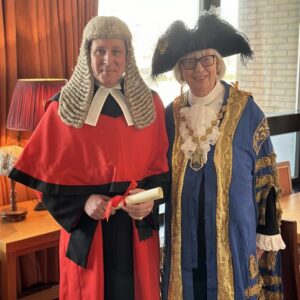 Judge Tony Alan Walter Baumgartner, known as His Honour Judge… Read more: His Honour Judge Tony Baumgartner – Recorder of Westminster
 - New Protocol for Legal Professionals to Raise Informal Concerns About Judges Behaviour
 On the 8th July 2026, the Courts and Tribunals Judiciary… Read more: New Protocol for Legal Professionals to Raise Informal Concerns About Judges Behaviour
 - The Policing Performance System
 In April 2026, His Majesty’s Inspectorate of Constabulary and Fire… Read more: The Policing Performance System
 - What is the Judicial College ?
 The Judicial College serves as the central pillar of professional… Read more: What is the Judicial College ?
Most Popular ↓
You should always seek formal legal advice from a qualified and reputable lawyer (solicitor or barrister).
There are a number of links to Free and Paid For Legal Resources and Legal Organisations on the Free Legal Advice , Legal Aid and Pro Bono pages.
[post_title] was last updated on the 6th October 2026
