Categories
Family Law Judiciary

President of the Family Division

The President of the Family Division is a highly esteemed position in the United Kingdom’s judicial system.

It is a role responsible for overseeing and presiding over family-related cases in England and Wales. In this article, we will delve into the history of the position and provide details on the current holder. The salary of the President of the Family Division is £280,311.

History

The President of the Family Division is a judicial office in England and Wales, established in 1873 by the Judicature Act, which reformed the court system in England and Wales.

The Act created a single Supreme Court of Judicature consisting of the High Court of Justice and the Court of Appeal. This replaced the previously separate court systems of common law and equity, and it also established several new judicial positions, including the President of the Probate, Divorce and Admiralty Division.

The Family Division was created in 1971 when Admiralty and contentious probate cases were removed from its predecessor, the Probate, Divorce and Admiralty Division.

Selection Process for President of the Family Division

Selection for President of the Family Division is run under the relevant sections of the Constitutional Reform Act 2005 as amended by the Crime and Courts Act 2013.

In accordance with section 70 of the Constitutional Reform Act 2005, as amended by the Crime and Courts Act 2013, a panel determined the selection process to be followed.  As required by the Crime and Courts Act 2013, the Lord Chancellor is consulted as part of the selection process.

In accordance with s.10(3) of the Senior Courts Act 1981, the selection exercise was open to all applicants who satisfy the judicial-appointment eligibility condition on a 7-year basis, or are judges of the Supreme Court of the United Kingdom, Court of Appeal, or High Court.

Current and Former Presidents of the Family Division

On the 23rd April 2026, His Majesty The King was pleased to approve the appointment of The Rt Hon Lord Justice Stephen Cobb as the President of the Family Division. This appointment follows the retirement of Sir Andrew McFarlane on 13 April 2026.

The Rt Hon Lord Justice Stephen Cobb was called to the Bar, Inner Temple, in 1985 and took Silk in 2003. He started his judicial career as a Recorder in 2004 and was authorised to hear cases under section 9(1) of the Senior Courts Act 1981 in 2009. He was appointed as a High Court Judge in 2013 and was assigned to the Family Division; he also sat in the Administrative Court of the Kings Bench Division and was a nominated judge of the Court of Protection. He was appointed to the Court of Appeal in June 2024, and took his place in 2025. He served as a Family Presiding Judge (North Eastern Circuit) between 2015 and 2021.

Sir Andrew McFarlane was the President of the Family Division and Head of Family Justice in England and Wales from July 2018 until his retirement on the 13th April 2026.

Sir Andrew succeeded Sir James Munby.

As well as being the President, The Rt Hon Lord Justice Stephen Cobb is the Head of the Family Division of the High Court of Justice and may sit as of right in the Court of Appeal, the High Court and the Family Court either alone or as part of a panel.

Lord Justice Stephen Cobb is also Head of Family Justice, Head of Probate, President of the Court of Protection and chairs both the Family Procedure Rule Committee and Family Justice Council.

The Family Division of the High Court consists of 19 High Court Judges. It deals with:

  • Divorce, including disputes over children, property or money;
  • Adoption, wardship and other matters involving children; and
  • Judgments on behalf of those who are unable to make decisions for themselves, such as persistent vegetative state victims.

The Family Division also deals with undisputed matters of probate – the legal recognition of the validity of a will – in the Probate Registry of the Family Division in London, and the 11 probate registries in England and Wales.

Image of the Rt Hon Lord Justice Stephen Cobb : Photoshot

Check out our articles on Rule of Law, Open Justice, Judges Salaries and Fees, Dodgy JudgesDo you Have to Bow to a Judge ?, Can you Email a Judge ?, Can you Criticise a Judge ? and the highly dubious Sussex Family Justice Board.


The Ministry of Injustice is not the Ministry of Justice nor is it affiliated in any way with the justice system, legal profession, police or any other law enforcement agencies.


Latest Articles


Most Popular


You should always seek formal legal advice from a qualified and reputable lawyer (solicitor or barrister).

There are a number of links to Free and Paid For Legal Resources and Legal Organisations on the Free Legal Advice , Legal Aid and Pro Bono pages.


Categories
Civil Justice Criminal Justice Family Law Legal Professionals

What is a Court Legal Adviser ?

In magistrates’ courts across England and Wales, lay justices (magistrates who are not legally qualified), deal with the overwhelming majority of criminal cases. Magistrates’ courts handle approximately 90-95% of all criminal cases in England and Wales.

To ensure proceedings are conducted lawfully, fairly and efficiently, lay justices are supported by justices’ legal advisers (also known as court legal advisers).

Court Legal advisers are qualified lawyers, either solicitors or barristers, who provide expert assistance to the court on all matters of procedure, evidence and sentencing law.

Alternative job titles for a Court Legal advisers include Court clerk or assistant to justices’ clerk.

We are HMCTS – Legal Adviser

Statutory Basis: Section 28 of the Courts Act 2003

The fundamental legal framework for the role is provided by Section 28 of the Courts Act 2003 (Function of giving legal advice to justices of the peace).

Under Section 28(1), the Lady Chief Justice may authorise a person:

  • (a) to give advice to justices of the peace about matters of law (including procedure and practice) on questions arising in connection with the discharge of their functions, including when the adviser is not personally attending on them; and
  • (b) to bring to the attention of justices of the peace any point of law (including procedure and practice) that is or may be relevant.

Authorisation is limited to suitably qualified court staff and carries statutory protection of independence.

Core Duties in Criminal and Youth Courts

In criminal and youth courts consisting of lay justices, the detailed duties of justices’ legal advisers are set out in Rule 2.12 of the Criminal Procedure Rules 2025.

A justices’ legal adviser must provide the court with any legal advice it needs (whether or not the court asks for it), including advice on:

  • questions of law and mixed questions of law and fact
  • matters of practice and procedure
  • relevant judicial decisions that bind the court
  • the process to be followed to reach a decision
  • the law relating to sentencing
  • the range of penalties and orders available, taking into account any applicable sentencing guidelines
  • any other matter relevant to the case

(5) In performing the functions for which these Rules provide a justices’ legal adviser―

(a) must avoid the appearance of advocacy for a party;

(b) must adhere to the same principles that apply to courts of independence, impartiality, integrity, propriety, competence, diligence and ensuring fair treatment; and

(c) may consult with other justices’ legal advisers.

Rule 2.12 (5) of the Criminal Procedure Rules 2025

Key requirements include:

  • Allowing parties an opportunity to make representations on the advice given
  • Being permitted to ask questions of parties or witnesses to clarify evidence
  • Assisting the court in drafting and recording reasons for its decisions
  • Supporting unrepresented defendants
  • Maintaining strict impartiality at all times

(3) To provide the legal advice required by paragraph (2)(a) a justices’ legal adviser must―

(a) if necessary, attend the members of the court outside the courtroom; and

(b) in that event, inform the parties, if present, of any such advice given there.

Rule 2.12 (3) of the Criminal Procedure Rules 2025

Advisers may not announce verdicts, sentences, or allocation/sending decisions.

Role Beyond Criminal Courts

While their primary and most extensive work is in criminal courts, justices’ legal advisers also support lay justices in family proceedings (under Family Procedure Rules Practice Direction 2C) and certain civil matters in magistrates’ courts.

However, the criminal jurisdiction remains the largest part of their caseload.

Skills and knowledge

As a Courts Legal Advisor , you’ll need:

  • legal knowledge including court procedures and government regulations
  • to be thorough and pay attention to detail
  • persistence and determination
  • analytical thinking skills
  • excellent verbal communication skills
  • the ability to think clearly using logic and reasoning
  • concentration skills
  • the ability to learn through your work
  • to be able to use a computer and the main software packages confidently

Qualifications and Employment

Justices’ legal advisers are employed by His Majesty’s Courts and Tribunals Service (HMCTS). Entry typically requires completion of the academic stage of solicitor or barrister qualification. Candidates may join through the two-year HMCTS trainee legal adviser programme or by direct application if already fully qualified.

Starting salaries are around £32,000, rising to £53,000 or more with experience. The role demands excellent legal knowledge, strong analytical skills, clear communication, attention to detail and the ability to remain calm and impartial under pressure.

Career path and progression

After qualifying, you’ll become as a Tier 1 legal adviser. With more experience, you can move on to be a Tier 2 adviser, working on more complex cases and with more responsibility. For instance, reviewing casework and mentoring trainees.

As your career as a legal advisor develops, and with further training, you can move up in stages to become:

  • a legal adviser team manager in a court
  • an area or regional manager
  • a justices’ clerk, if you have over 5 years’ experience
  • barristercrown prosecutor or judge

Check out our articles on Rule of Law, Open Justice, Judges Salaries and Fees, Dodgy JudgesMagistrates, Chief Magistrate, Do you Have to Bow to a Judge ?, Can you Email a Judge ?, Can you Criticise a Judge ?, Crown Prosecution Service, Director of Public Prosecutions (DPP) and the highly dubious Sussex Family Justice Board.


The Ministry of Injustice is not the Ministry of Justice nor is it affiliated in any way with the justice system, legal profession, police or any other law enforcement agencies.


Latest Articles


Most Popular


You should always seek formal legal advice from a qualified and reputable lawyer (solicitor or barrister).

There are a number of links to Free and Paid For Legal Resources and Legal Organisations on the Free Legal Advice , Legal Aid and Pro Bono pages.

Categories
Civil Justice Criminal Justice Family Law Law Legal Professionals

What is a Skeleton Argument ?

A skeleton argument is a concise written document prepared by a party (or their legal representative) and submitted to the court in advance of a hearing. It summarises the key factual and legal issues in dispute, sets out the main arguments that will be advanced, and identifies the authorities (cases, statutes, or other materials) that will be relied upon.

It acts as a “roadmap” for the judge and the advocate, helping to focus oral submissions and save valuable court time. Skeleton arguments (or their equivalent, such as position statements) are now a standard feature of litigation in England and Wales.

Purpose and Benefits of a Skeleton Argument

The primary purpose of a skeleton argument is to assist the court by clearly and concisely setting out the arguments on which a party intends to rely. A well-drafted skeleton:

  • Defines and narrows the real issues in dispute
  • Allows the judge to pre-read the case efficiently
  • Provides a clear structure for oral advocacy
  • Promotes efficiency in hearings

Judges frequently read skeletons before the hearing. A strong, well-structured skeleton can significantly influence the outcome by framing the case in advance.

Skeleton arguments are generally not required in the Magistrates’ Court unless the court specifically directs for one (e.g. for a complex legal issue).

Skeleton Arguments in Civil Proceedings (CPR)

In civil cases, skeleton arguments are governed by the Civil Procedure Rules 1998 (CPR) and the associated Practice Directions. The most important guidance is contained in Practice Direction 52A (Appeals), Section V, which sets out the requirements for skeleton arguments and is widely followed as best practice in first-instance hearings as well.

Key requirements include:

  • Must be concise, clear and focused
  • Set out in numbered paragraphs
  • Clearly define the areas of controversy
  • Contain cross-references to the relevant documents in the court bundle
  • Be self-contained (no incorporation by reference to earlier documents)
  • For each authority cited, state the proposition of law it supports and give specific page or paragraph references
  • Avoid lengthy quotations from cases or documents

Failure to comply with these requirements may result in costs sanctions or adverse comments from the court.

Skeleton Arguments in Criminal Proceedings (CrimPR)

In criminal cases, skeleton arguments are governed by the Criminal Procedure Rules 2025 (CrimPR) and the Criminal Practice Directions 2023 (as amended Nov 2025).

They are commonly required in the Crown Court for contested applications, trials involving significant legal argument, complex sentence hearings, and all appeals to the Court of Appeal (Criminal Division).

Key requirements include:

  • Strong emphasis on brevity and clarity
  • Must clearly identify the real issues
  • Proper citation of authorities (proposition of law + pinpoint reference)
  • Must comply with any page limits or other directions set by the court
  • Must be filed and served in accordance with any timetable set by the court

Non-compliance may lead to the skeleton being rejected, costs orders, or adjournment of the hearing.

Skeleton Arguments in Family Proceedings (FPR)

In family law cases, the Family Procedure Rules 2010 (FPR) and Practice Direction 27A (Court Bundles and Position Statements) apply. The terminology differs slightly from civil and criminal litigation.

In financial remedy proceedings, the term “position statement” is commonly used, and this includes what would otherwise be a skeleton argument. Strict page limits apply:

  • First Appointment: maximum 6 pages
  • Other interim hearings: maximum 8 pages
  • FDR appointment: maximum 12 pages
  • Final hearing: maximum 15 pages (excluding agreed documents)

In children and other non-financial family cases, a separate skeleton argument may be filed where appropriate (generally not exceeding 20 pages).

For appeals in family proceedings, see FPR PD 30A, which requires a skeleton argument to accompany or follow the appellant’s notice.

Common requirements across family cases include:

  • Numbered paragraphs
  • Cross-references to the court bundle
  • Clear propositions of law for each authority cited
  • No new evidence or factual allegations
  • Emphasis on the welfare of the child (where relevant) or the s.25 factors in financial cases

Recommended Structure for a Skeleton Argument / Position Statement

  1. Introduction – The order or relief sought and the party’s position
  2. The Issues – A clear numbered list of the matters the court must decide
  3. Factual Background – Short neutral chronology or agreed facts
  4. Legal Framework – Relevant statutes and case law
  5. Submissions – Arguments on each issue, clearly linked to the facts and law
  6. Conclusion – Summary of the relief requested

Published Skeleton Argument Templates and Examples

Several official and professional templates are publicly available:

  • Official GOV.UK TemplateForm AC014 (Skeleton Argument) – ideal for appeals and tribunals
  • SRA Guidance Template
  • Many barristers’ chambers and law firms publish precedent skeletons for specific applications (e.g. summary judgment, interim injunctions, family financial remedies)

While using a template is helpful, always tailor it to the specific requirements of your court, hearing type and any individual directions from the judge.

Best Practice Tips

  • Use short sentences, clear headings, and numbered paragraphs
  • Use 12-point font with 1.5 line spacing
  • Avoid footnotes where possible
  • File and exchange by the court deadline (usually the day before the hearing)
  • Always comply with any specific directions from the judge

Comparison Table

AreaGoverning RulesDocument NameTypical LengthMandatory?
CivilCPR + PD 52A (Section V)Skeleton ArgumentConcise (often up to 25 pages on appeal)Usually yes, especially on appeals
CriminalCrimPR + Practice Directions 2023Skeleton ArgumentSubject to court directionsCommon in complex/contested cases
Family (Financial)FPR PD 27APosition Statement (incl. skeleton)6–15 pages (stage dependent)Yes for most hearings
Family (Children/Other)FPR PD 27A + PD 30APosition Statement / SkeletonUp to 20 pagesIf appropriate

Conclusion

The skeleton argument (or position statement in family cases) is an essential bridge between written statements and oral advocacy in the UK courts. Whether in civil, criminal, or family proceedings, the golden rules remain the same: clarity, brevity, and precision.

A well-crafted skeleton or position statement does not merely summarise the case, it persuades the court before a single word is spoken in the hearing.

Check out the related articles on the Attorney General, Solicitor General, Lady Chief Justice, Master of the Rolls, Lord Chancellor, Justice Secretary, Rule of Law, Open Justice, Law, Is the Law Black and White ?, Government Legal Department, Crown Prosecution Service (CPS), Abuse of Process, Government Legal Department (GLD), What Does Lady Justice Symbolise ?, McKenzie Friend, Can a Judge Direct a Jury to Find a Defendant Not Guilty ?,Law Society, Law Commission, McKenzie Friend Right of Audience, Solicitors, Solicitors Regulation Authority, Barristers, Bar Council of England and Wales, Bar Standards Board, R v Sussex Justices, Police Impartiality and the highly questionable Sussex Family Justice Board.


The Ministry of Injustice is not the Ministry of Justice nor is it affiliated in any way with the justice system, legal profession, police or any other law enforcement agencies.


Latest Articles


Most Popular


You should always seek formal legal advice from a qualified and reputable lawyer (solicitor or barrister).

There are a number of links to Free and Paid For Legal Resources and Legal Organisations on the Free Legal Advice , Legal Aid and Pro Bono pages.

Categories
Civil Justice Criminal Justice Family Law Law Legal Analysis Legal Professionals

Art of Law

Art of Law is a Youtube channel run by Alan Robertshaw who is an experienced barrister of England and Wales.

This channel provides you with free legal guidance and explains different aspects of law, legal principles, and, procedures for media and art law. Legal advice can be very expensive and you will usually have no knowledge when you encounter a legal problem.

Art of Law

Alan Robertshaw was Called to the Bar in October 1997 (Middle Temple). He has Full Rights of Audience and his areas of practice are Defamation, Intellectual property, Other and Other common law.

Alan is authorised by the Bar Standards Board to accept direct public access work and to conduct litigation.

Alan was formerly at 1 Dr Johnson’s Buildings and then Goldsmith Chambers where he still remains a door tenant.

Art of Law should should not be confused with The BlackBelt Barrister or the Secret Barrister.

Art of Law is not a replacement for formal legal advice but it is highly informative and may help you to understand more about the law.

Highly Recommended ★★★★★

Latest Art of Law YouTube Videos

Read the reviews of Junior Sussex Barrister Gavin Howe and Legal 500 Junior Barrister Eleanor Battie.

Check out our related articles on Rule of Law, Open Justice, What is Law, Is the Law Black and White ?, Branches of Law, Bullying, Harassment and Discrimination at the Bar, The Secret Barrister, Barristers, Direct Access Barrister, Barristers Behaving Badly, Inns of Court, Council of the Inns of Court, Bar Standards Board, Bar Tribunal and Adjudication Services, Bar Council, Innocent until Proven Guilty and the highly questionable Sussex Family Justice Board.


The Ministry of Injustice is not the Ministry of Justice nor is it affiliated in any way with the justice system, legal profession, police or any other law enforcement agencies.


Latest Articles


Most Popular


You should always seek formal legal advice from a qualified and reputable lawyer (solicitor or barrister).

There are a number of links to Free and Paid For Legal Resources and Legal Organisations on the Free Legal Advice , Legal Aid and Pro Bono pages.

Categories
Civil Justice Criminal Justice Family Law Judiciary Legal Professionals

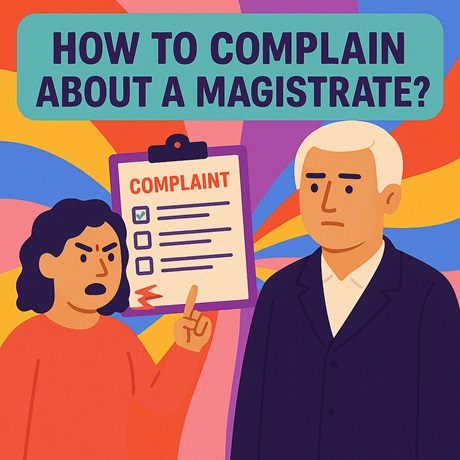
How to Complain about a Magistrate ?

Magistrates (justice of the peace or JP) are essential to the UK’s justice system and preside over cases in magistrates’ courts.

Magistrates hear less serious criminal cases (summary offence and some either-way offences) like minor assaults, motoring offenses, theft, and minor criminal damage but they can also hear civil cases such as those involving council tax and child maintenance, and family court proceedings. Magistrates deal with the majority of criminal cases.

If you believe a magistrate’s conduct was inappropriate, you can make a complaint. The process is governed by specific legislation and rules, ensuring total transparency and accountability.

Members of the judiciary should seek to be courteous, patient, tolerant and punctual and should respect the dignity of all. They should ensure that no one is exposed to any display of bias or prejudice on grounds which include but are not to be limited to “race, colour, sex, religion, national origin, caste, disability, age, marital status, sexual orientation, social and economic status and other like causes

Guide to Judicial Conduct

This article provides a comprehensive guide to complaining about lay magistrates and district judges (magistrates’ courts) in the UK.

The Role of Magistrates

Magistrates include lay magistrates and district judges. Lay magistrates, per the Courts Act 2003, are unpaid community volunteers trained to handle minor criminal, family and civil cases.

District judges, appointed under the same Act, are salaried, legally qualified professionals managing complex cases full-time.

Complaints typically address conduct, not judicial decisions, which are subject to appeal under the Criminal Justice Act 2003 or Magistrates’ Courts Act 1980 etc.

Grounds for a Complaint

The Judicial Conduct (Magistrates) Rules 2023 govern lay magistrate conduct, while district judges, as judicial officeholders, are subject to the Judicial Conduct Rules 2023 and the Judicial Discipline (Prescribed Procedures) Regulations 2023.

Both must adhere to the Guide to Judicial Conduct (revised July 2023), which sets ethical standards like impartiality and integrity. Complaints about either can include:

  • Rudeness, unprofessionalism, or dismissive behaviour in court breaching the Guide’s principles.
  • Apparent bias, prejudice, or discriminatory remarks potentially violating the Equality Act 2010.
  • Inappropriate personal conduct during hearings, such as failing to maintain decorum.
  • For district judges, additional concerns may include misuse of judicial authority or failure to uphold the professional standards in the Judicial Conduct Rules 2023.

Complaints about judicial decisions or case outcomes are not permitted; these require appeals to higher courts, such as the Crown Court or High Court, under the Magistrates’ Courts Act 1980 or Senior Courts Act 1981.

Complaints Process

Step 1: Gather Evidence

A robust complaint requires:

  • Details of the incident (date, time, court location).
  • The magistrate’s name (lay or district judge) or description.
  • A factual account of the behaviour.
  • Witness names and contact details.

The need for clear evidence aligns with guidelines from the Judicial Conduct Investigations Office (JCIO) and Advisory Committees.

Step 2: Submit to the Correct Authority

The complaints process varies by magistrate type, per the Constitutional Reform Act 2005.

  • Lay Magistrates: Complaints go to the local Advisory Committee under the Judicial Conduct (Magistrates) Rules 2023. Find contact details via the magistrates’ court or gov.uk. Submit a formal letter or email with your name, contact details, incident description, evidence, and desired outcome (e.g., investigation or apology). Complaints should be lodged within three months.
  • District Judges: Complaints are submitted directly to the JCIO under the Judicial Conduct Rules 2023 and Judicial Discipline (Prescribed Procedures) Regulations 2023, via their online portal (complaints.judicialconduct.gov.uk) or post, with the same detailed requirements.

Ensure submissions are polite and concise.

Step 3: Investigation Process

For lay magistrates, the Advisory Committee investigates under the Judicial Conduct (Magistrates) Rules 2023, reviewing records and interviewing parties confidentially.

For district judges, the JCIO investigates under the Judicial Conduct Rules 2023.

Outcomes, which may include retraining or removal, are authorised by the Lord Chancellor and Lord Chief Justice under the Constitutional Reform Act 2005.

Step 4: Escalating the Complaint

For lay magistrates, if dissatisfied with the Advisory Committee’s response, request a JCIO review within 28 days (or sooner if the process exceeds six months), per the Judicial Conduct (Magistrates) Rules 2023. You should submit prior correspondence via the JCIO’s portal.

For district judges, the JCIO’s decision is final, though clarification can be sought.

Additionally, if you believe the JCIO mishandled the process (e.g., procedural errors, delays, or failure to follow the Regulations), you can escalate to the Judicial Appointments and Conduct Ombudsman (JACO) within 28 days of the JCIO’s decision.

Step 5: Seek Legal Advice

For complex issues or case outcome impacts, consult a solicitor about appeals or judicial review under the Magistrates’ Courts Act 1980 or Senior Courts Act 1981.

Judicial Complaints Disciplinary Outcomes

The Judicial Conduct Investigations Office (JCIO) publishes statements on its website when a disciplinary sanction is issued to a judicial office holder. 

Complaints about lay magistrates from 2025/2026 are below (as of 21st October 2025).

For other judicial holders and up to date disciplinary statements visit the JCIO Disciplinary Statements page or the Dodgy Judges article on this site.

Summary

Complaints about lay magistrates follow the Judicial Conduct (Magistrates) Rules 2023, while district judge complaints adhere to the Judicial Conduct Rules 2023 and Judicial Discipline (Prescribed Procedures) Regulations 2023, with both guided by the Guide to Judicial Conduct.

Submit lay magistrate complaints to the Advisory Committee and district judge complaints to the JCIO. Provide clear evidence and act promptly. Check gov.uk or the JCIO website for details.

Check out our related articles on Chief Magistrate, Judiciary, Dodgy Magistrates, Rule of Law, Open Justice, Is the Law Black and White ?, Abuse of Process, What Does Lady Justice Symbolise ?, McKenzie Friend, Law Society, Law Commission, McKenzie Friend Right of Audience, Solicitors, Solicitors Regulation Authority, Barristers, Bar Council of England and Wales, Bar Standards Board, R v Sussex Justices, Police Impartiality and the highly questionable Sussex Family Justice Board.


The Ministry of Injustice is not the Ministry of Justice nor is it affiliated in any way with the justice system, legal profession, police or any other law enforcement agencies.


Latest Articles


Most Popular


You should always seek formal legal advice from a qualified and reputable lawyer (solicitor or barrister).

There are a number of links to Free and Paid For Legal Resources and Legal Organisations on the Free Legal Advice , Legal Aid and Pro Bono pages.

Categories
Civil Justice Criminal Justice Family Law Law Legal Analysis Legal Professionals

What is a Wasted Costs Order ?

In the legal system of England and Wales, a wasted costs order is a mechanism used by courts to address improper, unreasonable, or negligent conduct by legal representatives that results in unnecessary costs in criminal, civil or family proceedings.

This article explains what a wasted costs order is, how it applies and its significance in ensuring fairness and efficiency in the judicial process.

Definition of a Wasted Costs Order

A wasted costs order is a court order that requires a legal representative—such as a solicitor, barrister, or other advocate—to personally bear the costs incurred due to their improper, unreasonable, or negligent conduct.

These costs may be payable to the opposing party, their own client, or, in criminal cases, sometimes to public funds (e.g., the Legal Aid Agency).

The concept is governed by Section 19A of the Prosecution of Offences Act 1985 for criminal cases, Section 51(6) of the Senior Courts Act 1981 for civil cases and family cases.

Further guidance provided by the Criminal Procedure Rules 2010 (CrimPR 45.8 and CrimPR 45.9), Civil Procedure Rules (CPR 46.8 and Practice Direction 46) and Family Procedure Rules (FPR 28.1), which incorporate CPR 46.8.

“Wasted costs” refer to expenses incurred unnecessarily as a direct result of a legal representative’s conduct, which could have been avoided had they acted appropriately.

This distinguishes wasted costs orders from standard cost orders, which typically arise from the outcome of a case rather than the behaviour of legal professionals.

When Can a Wasted Costs Order Be Made ?

The court has discretion to issue a wasted costs order in both civil and criminal proceedings, but it must satisfy a strict two-stage test, as established in Ridehalgh v Horsefield [1994] Ch 205 for civil cases and reflected in criminal case law such as R v P [2011] EWCA Crim 1130. The two stages are:

  1. Improper, Unreasonable, or Negligent Conduct: The court must determine that the legal representative’s actions were improper, unreasonable, or negligent. For example:
    • Improper conduct includes dishonest or unethical behaviour, such as deliberately misleading the court or pursuing a baseless case.
    • Unreasonable conduct involves actions that are vexatious or misguided, such as persisting with a hopeless defence or prosecution in a criminal case.
    • Negligent conduct refers to failing to meet the standard of care expected of a competent legal professional, such as missing court deadlines or failing to prepare adequately.
  2. Causation of Wasted Costs: The court must be satisfied that the conduct directly caused unnecessary costs. For instance, if a barrister’s failure to advise a defendant properly in a criminal case leads to an unnecessary hearing, the costs of that hearing may be deemed “wasted.”

Courts exercise significant caution when issuing wasted costs orders due to their serious professional and financial implications for legal representatives. The burden of proof lies with the party seeking the order (or the court, if acting on its own initiative), and the threshold for proving misconduct is high.

Making an Application in Criminal, Civil and Family Proceedings

Criminal Proceedings

In criminal cases, wasted costs orders are addressed under Section 19A of the Prosecution of Offences Act 1985 and CrimPR 45.8 (which covers costs resulting from unnecessary or improper acts or omissions) and CrimPR 45.9 (which specifically deals with applications for wasted costs orders against legal representatives). These orders can apply to both prosecution and defence counsel and may involve costs payable to the opposing party, the client, or public funds (e.g., legal aid). Examples of conduct leading to wasted costs in criminal cases include:

  • A prosecution lawyer pursuing a case without sufficient evidence, causing unnecessary court hearings.
  • A defence lawyer failing to advise a client properly, leading to a trial that could have been avoided through a guilty plea or withdrawal.
  • Missing procedural deadlines, resulting in wasted court time or resources.

For instance, in R v Farooqi [2013] EWCA Crim 1649, the Court of Appeal considered a wasted costs order against a barrister whose conduct was deemed improper, though the order was ultimately not imposed due to procedural issues.

The Criminal Procedure Rule Committee and Ministry of Justice publish the Application for a wasted, etc. costs order under CrimPR 45.8, 45.9 or 45.10 form which must be served on the court and other parties.

Civil Proceedings

In civil cases, wasted costs orders are governed by CPR 46.8 and Section 51(6) of the Senior Courts Act 1981. They are typically sought by the opposing party who has incurred unnecessary costs due to the other side’s legal representative’s conduct or by a client against their own lawyer. Examples include pursuing a claim with no reasonable prospect of success or failing to comply with court orders, leading to adjournments.

  • A party can apply for a wasted costs order by filing an application notice in accordance with Part 23 of the CPR or by making an oral application during a hearing.
  • The court can also make a wasted costs order of its own initiative. 
Family Proceedings

There is no specific form titled “Application for a Wasted Costs Order” for family proceedings, just as in civil proceedings. Instead, applications are made under FPR Part 18 (Applications in Family Proceedings), which mirrors CPR Part 23.

In family proceedings, the Form C2 is typically used for applications within existing proceedings (e.g., children’s cases), while Form N244 (the standard civil application form) is used for financial remedy proceedings or where no specific family form applies.

Who Can Apply for a Wasted Costs Order ?

A wasted costs order can be sought by:

  • The opposing party in criminal, civil or family proceedings, who has incurred unnecessary costs due to the other side’s legal representative’s conduct.
  • The legal representative’s own client, if they have suffered financial loss as a result of their lawyer’s actions (e.g., wasted legal fees or costs of unnecessary proceedings).
  • The court itself, which can initiate a wasted costs order on its own motion (suo motu) if it identifies egregious conduct during proceedings.

In criminal cases, the court may also consider the impact on public funds, particularly where legal aid is involved.

The court may require written submissions or a hearing to determine whether the order is justified. Appeals against wasted costs orders in criminal proceedings follow CrimPR Part 34 (for magistrates’ courts to the Crown Court) or CrimPR Part 39 (for Crown Court to the Court of Appeal).

Examples of Conduct Leading to Wasted Costs Orders

Some examples of conduct that might lead to a wasted costs order in civil or criminal proceedings include:

  • Pursuing a case (civil or criminal) with no realistic prospect of success, such as a baseless civil claim or a criminal defence lacking any evidential foundation.
  • Failing to comply with court orders or procedural rules, leading to adjournments or additional hearings.
  • Providing misleading information to the court or failing to disclose relevant facts, such as withholding key evidence in a criminal trial.
  • Acting in a way that unnecessarily prolongs proceedings, such as making frivolous applications or failing to prepare adequately for trial.

Implications and Considerations

Wasted costs orders serve as a deterrent against poor professional conduct and promote fairness and efficiency in both civil and criminal proceedings. They protect parties from bearing the financial burden of their opponent’s or their own lawyer’s misconduct and, in criminal cases, safeguard public funds.

However, courts are cautious about issuing such orders for several reasons:

  • Professional Consequences: A wasted costs order can harm a lawyer’s reputation and financial standing, so courts ensure the evidence is robust and the conduct sufficiently serious.
  • Access to Justice: Courts avoid discouraging lawyers from taking on challenging cases or acting fearlessly, particularly in criminal defence work, where robust advocacy is essential.
  • Proportionality: The costs claimed must be proportionate to the misconduct, and minor errors or oversights are unlikely to justify an order.

Legal representatives are typically given an opportunity to respond to allegations of misconduct before an order is made, ensuring fairness and due process. In criminal cases, the court may also consider the public interest and the impact on legal aid budgets.

Conclusion

In England and Wales, a wasted costs order is a vital tool to address improper, unreasonable, or negligent conduct by legal representatives in criminal, civil and proceedings.

Governed by statute and procedural rules, these orders ensure accountability, protect parties from unnecessary costs, and uphold the integrity of the judicial process.

While rarely used due to their high threshold and significant implications, wasted costs orders play a crucial role in maintaining professionalism and efficiency in the legal system. Legal representatives must act with diligence and integrity to avoid the serious consequences of such an order.

Check out our related articles on Defendant’s Costs Order, Norwich Pharmacal Orders, Public Spaces Protection Order (PSPO), Rule of Law, Open Justice, Is the Law Black and White ?, Abuse of Process, What Does Lady Justice Symbolise ?, McKenzie Friend, Can a Judge Direct a Jury to Find a Defendant Not Guilty ?,Law Society, Law Commission, McKenzie Friend Right of Audience, Solicitors, Solicitors Regulation Authority, Barristers, Bar Council of England and Wales, Bar Standards Board, Contra Mundum, R v Sussex Justices, Police Impartiality and the highly questionable Sussex Family Justice Board.


The Ministry of Injustice is not the Ministry of Justice nor is it affiliated in any way with the justice system, legal profession, police or any other law enforcement agencies.


Latest Articles


Most Popular


You should always seek formal legal advice from a qualified and reputable lawyer (solicitor or barrister).

There are a number of links to Free and Paid For Legal Resources and Legal Organisations on the Free Legal Advice , Legal Aid and Pro Bono pages.

Categories
Family Law Judiciary Law Legal Analysis Legal Professionals

HM Courts and Tribunals Service (HMCTS) Dishonest Coverup ?

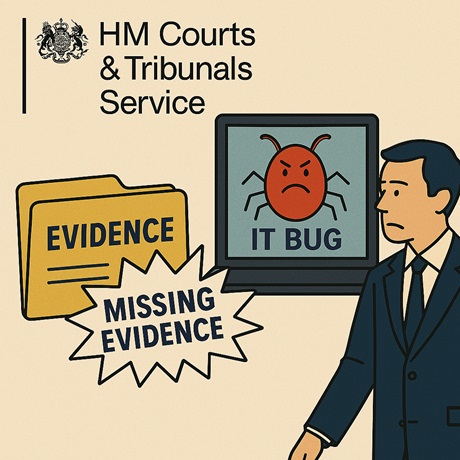
A serious IT glitch in the HM Courts & Tribunals Service (HMCTS) system in England and Wales has sparked allegations of a cover-up, raising concerns about the integrity of judicial rulings.

The software – known variously as Judicial Case Manager, MyHMCTS or CCD – is used to manage evidence and track cases before the courts. It is used by judges, lawyers, case workers and members of the public.

Courts service HMCTS ‘covered up’ IT bug that caused evidence to go missing – BBC

A leaked internal report revealed that a software flaw, present for several years before its discovery in 2023, caused critical evidence to go missing, be overwritten, or appear lost in civil, family, and tribunal courts.

This issue, which potentially affected thousands of cases, has led to accusations that HMCTS failed to act promptly or transparently, leaving judges to make rulings based on incomplete evidence. The scandal has drawn sharp criticism from legal experts and raised fears of widespread miscarriages of justice, particularly in sensitive family court cases involving child protection.

A briefing prepared for the chief executive of HMCTS (Nick Goodwin)- dated March 2024 – reveals the risk to proceedings was initially categorised as “high” with the possibility of court outcomes being adversely affected assessed as “very likely”, resulting in “severe reputational impact to HMCTS“.

Courts service HMCTS ‘covered up’ IT bug that caused evidence to go missing – BBC

Specific details about the development team or external contractors involved in the the case-management software, referred to as Judicial Case Manager, MyHMCTS, or Common Components Division (CCD)are not publicly disclosed or available.

Sources

HMCTS Bug and Coverup

The IT bug, embedded in software introduced in 2018, was not addressed until 2023, despite internal awareness of data loss issues. Sources within HMCTS, as reported by the BBC, claim that HMCTS did not inform judges or lawyers about the fault, even after it was identified.

One alarming instance highlighted in the report involved over 4,000 documents vanishing from hundreds of public family law cases, including those related to child protection.

The failure to disclose the issue has fuelled allegations of a deliberate cover-up, with one HMCTS source stating, “There is a culture of cover-ups. They’re not worried about risk to the public, they’re worried about people finding out about the risk to the public.”

The internal report, obtained by the BBC, revealed that HMCTS did not conduct a comprehensive investigation into the extent of the data corruption or its impact on case outcomes.

Of the 609 cases identified with potential issues, only 109 were selected for further review, with just one deemed to have a “potentially significant impact.”

Critics, including Sir James Munby, former President of the Family Division, have called the incident “shocking” and “a scandal,” arguing that the lack of a thorough investigation undermines trust in the judicial system. Munby emphasised that the absence of a formal legal review of affected cases makes it impossible to confidently assert that no miscarriages of justice occurred.

The software’s flawed design has also come under scrutiny. Sources described it as “not designed properly or robustly,” with a history of data loss that was inadequately addressed. This has led to broader concerns about the reliability of digital systems in critical public services.

The irony of HMCTS’s claim that its internal investigation found “no evidence” of affected case outcomes was not lost on commentators, with some, like a user on Singletrack World Magazine, noting the darkly humorous implication of an evidence-losing system finding no evidence of harm.

HMCTS has since stated that the IT bug was fixed in 2023, though specific details about the timeline of the fix or the measures taken to prevent future issues remain sparse. HMCTS maintains that its internal investigation found no significant impact on case outcomes, but this claim has been met with scepticism due to the limited scope of the review.

Miscarriage of Justice ? – Art of Law

Conclusion

The fallout from this scandal has broader implications for public trust in the UK’s judicial system. Social media platforms have seen users express dismay, with one stating, “There seems to be a chronic lack of accountability in the UK state at the moment. And if you can’t trust the courts, where do you even start?” The incident has also reignited discussions about the risks of over-reliance on digital infrastructure in critical sectors, particularly when systems are not rigorously tested or maintained.

Families and individuals affected by the data loss may face significant challenges in seeking justice. Researching Reform, a legal advocacy group, noted that many families had previously complained about missing evidence in their cases, suggesting that the IT bug may have contributed to wrongful rulings. As calls grow for a formal inquiry, the HMCTS scandal serves as a stark reminder of the need for transparency, accountability, and robust technological systems in the administration of justice.

The High Court Judge that never was – His Honour Judge Melbourne Inman KC !

Check out our related articles on Rule of Law, Open Justice, Is the Law Black and White ?, What Does Lady Justice Symbolise ?, Can a Judge Direct a Jury to Find a Defendant Not Guilty ?, Law Society, Law Commission, Solicitors, Solicitors Regulation Authority, Barristers, Bar Council of England and Wales, Bar Standards Board, Contra Mundum, R v Sussex Justices, Police Impartiality and the highly questionable Sussex Family Justice Board.


The Ministry of Injustice is not the Ministry of Justice nor is it affiliated in any way with the justice system, legal profession, police or any other law enforcement agencies.


Latest Articles


Most Popular


You should always seek formal legal advice from a qualified and reputable lawyer (solicitor or barrister).

There are a number of links to Free and Paid For Legal Resources and Legal Organisations on the Free Legal Advice , Legal Aid and Pro Bono pages.

Categories
Criminal Justice Family Law Law

The Courts of England and Wales

The jurisdiction of the courts in England and Wales refers to the legal authority or power that they have to hear and determine certain types of legal cases. The jurisdiction of the courts is determined by a combination of legislation, legal precedent, and court rules.

In England and Wales, there are several levels of courts with varying degrees of jurisdiction. These include:

Magistrates’ Courts: These are the lowest level of courts in England and Wales and they have jurisdiction over a wide range of criminal offenses, such as minor assaults, theft, and driving offenses. They also have limited jurisdiction in civil cases, such as small claims and some family law matters.

County Courts: These courts have jurisdiction over a wider range of civil cases, including contract disputes, personal injury claims, and landlord-tenant disputes. They also have some limited jurisdiction in family law matters, such as divorce and child custody.

Crown Court: This court has jurisdiction over the most serious criminal offenses, such as murder, rape, and drug trafficking. It also has some limited jurisdiction over civil cases.

High Court: This is the highest level of court in England and Wales, and it has jurisdiction over the most complex civil and criminal cases. The High Court has several divisions, including the Family Division, the Chancery Division, and the King’s Bench Division.

The Supreme Court: This is the final court of appeal in the UK for civil cases, and for criminal cases from England, Wales and Northern Ireland

In addition to these courts, there are also specialist courts in England and Wales, such as the Employment Tribunal, the Immigration and Asylum Tribunal, and the Mental Health Tribunal, which have jurisdiction over specific areas of law.

It is important to understand the jurisdiction of the courts in England and Wales when bringing a legal case, as it determines which court has the power to hear and determine your case. It is advisable to seek legal advice if you are unsure about which court has jurisdiction over your case.

Find contact details and information on courts and tribunals in England and Wales, and some non-devolved tribunals in Scotland.

Check out our related articles on Judiciary, Law Society, Solicitors, Barristers, Bar Council of England and Wales, Bar Standards Board, Solicitors Regulation Authority, Rule of Law, Open Justice and the highly questionable Sussex Family Justice Board.


The Ministry of Injustice is not the Ministry of Justice nor is it affiliated in any way with the justice system, legal profession, police or any other law enforcement agencies.


Latest Articles


Most Popular


You should always seek formal legal advice from a qualified and reputable lawyer (solicitor or barrister).

There are a number of links to Free and Paid For Legal Resources and Legal Organisations on the Free Legal Advice , Legal Aid and Pro Bono pages.

Categories
Criminal Justice Family Law Law Legal Analysis Legal Professionals

BlackBelt Barrister

Daniel ShenSmith is a practising Barrister and Mediator who is also known as the BlackBelt Barrister.

blackbelt barrister youtube

“I am a Barrister of England and Wales who helps you understand law”

Daniel ShenSmith BlackBelt Barrister Youtube

The BlackBeltBarrister YouTube channel provides free legal guidance and explains the different aspects of law, legal principles, and procedures. As of the 26th January 2026, the Black Belt Barrister has 905k subscribers and 2.6k videos.

The BlackBelt Barrister should not be confused with the Secret Barrister.

Black Belt Barrister is not a replacement for formal legal advice but it is highly informative and may help you to understand more about the law.

BlackBeltBarrister is a registered trademark.

Highly Recommended ★★★★★

Latest BlackBelt Barrister YouTube Videos

Check out our related articles on Rule of Law, Open Justice, What is Law, Is the Law Black and White ?, Branches of Law, Bullying, Harassment and Discrimination at the Bar, The Secret Barrister, Barristers, Direct Access Barrister, Barristers Behaving Badly, Inns of Court, Council of the Inns of Court, Bar Standards Board, Bar Tribunal and Adjudication Services, Bar Council, Innocent until Proven Guilty and the highly questionable Sussex Family Justice Board.


The Ministry of Injustice is not the Ministry of Justice nor is it affiliated in any way with the justice system, legal profession, police or any other law enforcement agencies.


Latest Articles


Most Popular


You should always seek formal legal advice from a qualified and reputable lawyer (solicitor or barrister).

There are a number of links to Free and Paid For Legal Resources and Legal Organisations on the Free Legal Advice , Legal Aid and Pro Bono pages.
Categories
Family Law

What is the Family Justice Board ?

The Family Justice Board in England and Wales plays a crucial role in shaping the family justice system and ensuring positive outcomes for children. Here are the key points:

  1. Purpose and Role:
    • The Family Justice Board aims to improve the performance of the family justice system.
    • It ensures the best possible outcomes for children who interact with the system.
    • The Board takes a cross-system approach and is jointly chaired by Ministers from the Ministry of Justice and the Department for Education.
  2. Membership:
  3. Sub-Groups:
    • The Board has sub-groups:
      • Family Justice Council: Provides independent expert advice.
      • FJYPB: Represents young people’s perspectives.
      • Performance Improvement Sub-Group: Analyzes performance data and recommends improvements.
  4. Open Letters:
  5. Monitoring and Direction:

For more details, you can refer to the official GOV.UK page.

Relationship with the Family Justice Council

The Family Justice Council operates independently of the Family Justice Board. As a critical friend to the Family Justice Board it provide it with expert advice, from an inter-disciplinary perspective, on the operation and reform of the family justice system in England and Wales.

Members

The Family Justice Board in England and Wales comprises senior stakeholders from across the family justice system. Here are some of the current members as of 28th June 2024:

  1. Lord Bellamy KC (Parliamentary Under Secretary of State at the Ministry of Justice) – Co-Chair
  2. David Johnston MP (Minister for Children and Families) – Co-Chair
  3. Nigel Brown (Chief Executive, Cafcass Cymru)
  4. Nick Goodwin (Chief Executive, HMCTS)
  5. Albert Heaney (Director, Social Services, Welsh Government)
  6. Sally Jenkins (Head of Children’s Services, Association of Directors of Social Services Cymru)
  7. Sophie Langdale and Fram Oram (Director, Children’s Social Care – Practice and Workforce, DfE)
  8. Ed Lidington (Director, Court Recovery, Criminal and Family Justice, MOJ)
  9. Helen Lincoln (Executive Director for Children, Families & Education, Essex County Council)
  10. Yvette Stanley (National Director, Social Care, Ofsted)
  11. Jacky Tiotto (Chief Executive, Cafcass)
  12. Isabelle Trowler (Chief Social Worker for Children and Families)
  13. Sir Andrew McFarlane (President of the Family Division) – Observer
  14. A representative from the Family Justice Young People’s Board also participates.

Please note that this list includes key members, and there may be additional stakeholders involved.

Local Family Justice Boards (LFJB)

There are several Local Family Justice Boards (LFJB) including the Sussex Family Justice Board which is the largest. A highly dubious family justice cartel that operates in Sussex.

Local Family Justice Boards (LFJB) were established to support the work of the Family Justice Board by bringing together the key local agencies, including decision makers and front-line staff, to achieve significant improvement in the performance of the family justice system in their local areas.

To contact an LFJB or for more information, please email LFJB Enquiries.

Family Justice Board

Minutes of the Family Justice Board

Check out our related articles on Rule of Law, Open Justice, Is the Law Black and White ?, Civil Justice Council, Youth Justice Board, Abuse of Process, What Does Lady Justice Symbolise ?, McKenzie Friend, Wasted Costs Order, Can a Judge Direct a Jury to Find a Defendant Not Guilty ?, Law Society, Law Commission, McKenzie Friend Right of Audience, Solicitors, Solicitors Regulation Authority, Barristers, Bar Council of England and Wales, Bar Standards Board, Contra Mundum, R v Sussex Justices, Police Impartiality and the highly questionable Sussex Family Justice Board.


The Ministry of Injustice is not the Ministry of Justice nor is it affiliated in any way with the justice system, legal profession, police or any other law enforcement agencies.


Latest Articles


Most Popular


You should always seek formal legal advice from a qualified and reputable lawyer (solicitor or barrister).

There are a number of links to Free and Paid For Legal Resources and Legal Organisations on the Free Legal Advice , Legal Aid and Pro Bono pages.

Rule of Law - Open Justice - Policing By Consent