
A solicitor is a qualified legal professional who plays a crucial role in the legal system of England and Wales. Let’s explore what solicitors do, their qualifications and the essential skills.
Role of a Solicitor
- Legal Advice and Representation:
- Solicitors provide specialist legal advice across various areas of law.
- They represent and defend clients’ legal interests.
- Clients can be individuals, groups, public sector organizations, or private companies.
- Client Liaison:
- As a solicitor, you work closely with clients and are often their first point of contact.
- You take instructions from clients and advise them on necessary legal actions.
- Diverse Areas of Practice:
- Solicitors handle a wide range of issues:
- Personal matters: Wills, divorces, and family law.
- Commercial work: Mergers, acquisitions, and business transactions.
- Solicitors handle a wide range of issues:
- Work Settings:
- Once qualified, solicitors can work in various settings:
- Private practice: Running their own law firms.
- In-house: Advising commercial or industrial organizations.
- Government: Local or central government roles.
- Court service: Participating in legal proceedings.
- Once qualified, solicitors can work in various settings:
Qualifications for Becoming a Solicitor
- Solicitors Qualifying Exam (SQE):
- Introduced in September 2021, the SQE is the new centralized assessment for solicitor qualification.
- It replaces the traditional Legal Practice Course (LPC) route.
- The SQE consists of four stages:
- Degree: Obtain a degree (or equivalent) in any subject.
- SQE1 and SQE2 assessments: Pass these assessments.
- Qualifying Work Experience (QWE): Complete a minimum of two years of relevant work experience.
- Character and suitability: Demonstrate satisfactory character.
- Non-Law Graduates:
- Non-law graduates acquire foundational legal knowledge through conversion courses:
- Postgraduate Diploma in Law (PGDL).
- Master of Arts in Law (MA Law Conversion).
- Master of Arts in Law (MA Law SQE1).
- SQE Law Essentials Online.
- Non-law graduates acquire foundational legal knowledge through conversion courses:
Essential Skills for Solicitors
- Professionalism:
- Approach work with integrity and respect for confidentiality.
- Problem-Solving:
- Analyse complex legal issues and find practical solutions.
- Research and Analysis:
- Conduct thorough legal research to support cases.
- Communication:
- Excellent written and oral communication skills are vital.
The Solicitors Regulation Authority (SRA) regulates solicitors in England and Wales.
In summary, solicitors are legal professionals who combine legal expertise with client-focused service, ensuring justice and legal protection for individuals and organizations alike
Check out our articles on Solicitors Regulation Authority, Solicitors Disciplinary Tribunal (SDT), Mayo Wynne Baxter Solicitors, Law Society of England and Wales, Barristers, Direct Access Barristers, Bar Standards Board, Bar Council, Rule of Law and the highly questionable Sussex Family Justice Board.
The Ministry of Injustice is not the Ministry of Justice nor is it affiliated in any way with the justice system, legal profession, police or any other law enforcement agencies.
“Publicity is the very soul of justice. . . . It keeps the judge himself, while trying, under trial….Where there is no publicity there is no justice”
Jeremy Bentham – Mr Justice Cobb: ‘Justice must be seen to be done’
Latest Articles ↓
- Presumption of Innocence
 The presumption of innocence is a basic principle of the… Read more: Presumption of Innocence
 - His Honour Judge Daniel Sawyer
 Judge Daniel Sawyer, known as His Honour Judge Daniel Sawyer,… Read more: His Honour Judge Daniel Sawyer
 - UK National Centre for Information Defence
 Prime Minister Andy Burnham used his first United Nations General… Read more: UK National Centre for Information Defence
 - Judges Behaving Badly and His Honour Judge Simon Oliver
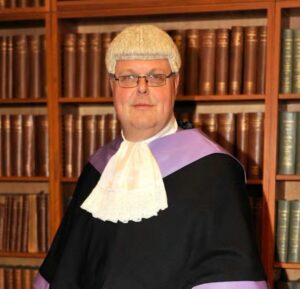 On the 27th August 2026 the Crown Prosecution Service announced… Read more: Judges Behaving Badly and His Honour Judge Simon Oliver
 - Jo Morris Barrister
 Jo Morris is a practising criminal barrister of Drystone Chambers… Read more: Jo Morris Barrister
 - Good Law Project
 The Good Law Project is a UK campaigning organisation that… Read more: Good Law Project
 - Police Federation of England and Wales (PFEW)
 The Police Federation of England and Wales (PFEW) is the… Read more: Police Federation of England and Wales (PFEW)
 - What is the Criminal Justice System (CJS) Common Platform ?
 The Criminal Justice System Common Platform (also known as HMCTS… Read more: What is the Criminal Justice System (CJS) Common Platform ?
 - Strategic Lawsuit Against Public Participation (SLAPPs)
 Strategic Lawsuits Against Public Participation, or SLAPPs, are legal actions… Read more: Strategic Lawsuit Against Public Participation (SLAPPs)
 - His Honour Judge Tony Baumgartner – Recorder of Westminster
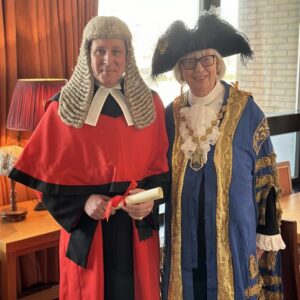 Judge Tony Alan Walter Baumgartner, known as His Honour Judge… Read more: His Honour Judge Tony Baumgartner – Recorder of Westminster
 - New Protocol for Legal Professionals to Raise Informal Concerns About Judges Behaviour
 On the 8th July 2026, the Courts and Tribunals Judiciary… Read more: New Protocol for Legal Professionals to Raise Informal Concerns About Judges Behaviour
 - The Policing Performance System
 In April 2026, His Majesty’s Inspectorate of Constabulary and Fire… Read more: The Policing Performance System
Most Popular ↓
You should always seek formal legal advice from a qualified and reputable lawyer (solicitor or barrister).
There are a number of links to Free and Paid For Legal Resources and Legal Organisations on the Free Legal Advice , Legal Aid and Pro Bono pages.
[post_title] was last updated on the 15th October 2026
