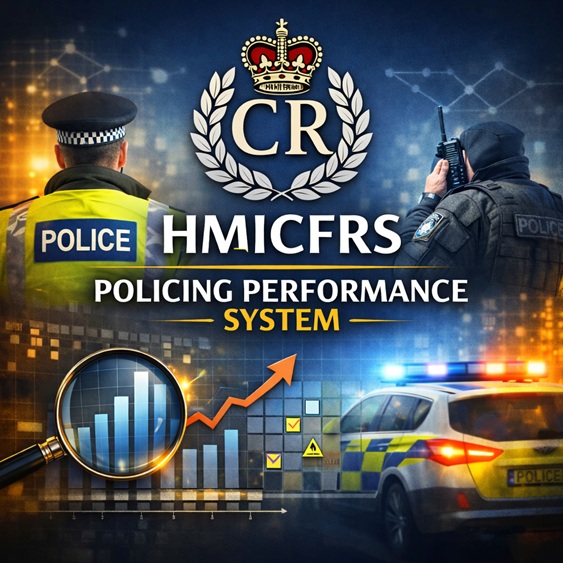
In April 2026, His Majesty’s Inspectorate of Constabulary and Fire & Rescue Services (HMICFRS) has introduced the Policing Performance System (PPS) to strengthen how police performance is monitored and improved across England and Wales.
The Policing Performance System is a joint approach between the policing sector and government to assess, support and improve police performance across England and Wales. It provides transparent, consistent assessment and enables earlier support where improvement is needed, helping forces achieve better outcomes for communities.
Latest police performance levels – HMICFRS
Background
The PPS forms part of the government’s January 2026 white paper From local to national: a new model for policing. It replaces the previous HMICFRS “Scan” and “Engage” monitoring arrangements and works alongside the new Police Performance Framework.
The goal is to identify issues early, offer targeted support and ensure sustainable progress rather than relying solely on reactive inspections.
How the Policing Performance System Works ?
Every one of the 43 police forces in England and Wales is assigned to one of four performance levels. Assignment reflects a force’s current performance, the extent of support required, and its expected engagement with improvement processes.
Forces are continually assessed, with all encouraged to engage proactively with support tools. The system draws on PEEL inspections, force management statements, and other data sources to promote consistency and early intervention.
The Four Performance Levels
Police forces are assigned to one of four performance levels. Each level has associated degrees of support and intervention. The level assigned to a police force reflects:
- its current performance;
- the extent of support required; and
- the expected level of interaction with the support and intervention process.
Level One is the default position for most forces. It applies where there is an overall positive trajectory, even with minor, mitigated concerns. No formal intervention is required, although chief constables and police and crime commissioners may request local support.
Level Two provides enhanced support to prevent deterioration. This level suits forces with enduring low-level, non-systemic issues, receding problems needing oversight, or multiple minor concerns. Forces can self-access or request additional help.
Level Three involves targeted support and intervention. It applies to forces facing a single critical and lasting issue, widespread or systemic concerns, or insufficient progress on existing problems. Chief constables must develop improvement plans and receive bespoke assistance, often from the College of Policing. Lincolnshire Police was placed in Level Three in the first assessments due to issues with call attendance times and child abuse investigations.
Level Four (Special Measures) is the highest level of concern. It is reserved for very serious failings where there is insufficient confidence in current improvement efforts. Forces face statutory requirements to follow HMICFRS recommendations and may be subject to Home Secretary intervention powers.
Oversight and Monitoring
All levels are overseen by the Policing Performance Monitoring Group (PPMG). Chaired by His Majesty’s Chief Inspector of Constabulary, the group includes senior representatives from the Home Office, HMICFRS, the College of Policing, the Association of Police and Crime Commissioners, the National Police Chiefs’ Council and the Independent Office for Police Conduct.
The PPMG meets regularly to review performance, hold forces to account, identify good practice, and ensure consistent decision-making. Forces in higher levels are typically required to conduct root cause analysis and share improvement plans.
Latest Developments
On the 16th July 2026, HMICFRS published the first police performance levels under the new system.
While the majority of forces were placed in Level One, a small number received Level Two. Lincolnshire Police was placed in Level Three of the Policing Performance System.
This initial rollout highlights the system’s emphasis on proportionate and supportive intervention.
Check out our articles on Policing by Consent, Police Professional Standards, Police Misconduct Hearings, Police Impartiality, Police Leadership Commission, Police Surveillance, Are the Police for Hire ?, Independent Office for Police Conduct (IOPC),Police Public Confidence and Engagement, Crime Reporting, What is a Police and Crime Commissioner ?, Sussex Police, Policing, Police News, Two Tiered Policing, Thought Police, Wasting Police Time, Police Community Support Officers (PCSO), Met Police, Chief Constable Jo Shiner, R v Sussex Justices and the highly questionable Sussex Family Justice Board.
The Ministry of Injustice is not the Ministry of Justice nor is it affiliated in any way with the justice system, legal profession, police or any other law enforcement agencies.
“Publicity is the very soul of justice. . . . It keeps the judge himself, while trying, under trial….Where there is no publicity there is no justice”
Jeremy Bentham – Mr Justice Cobb: ‘Justice must be seen to be done’
Latest Articles ↓
- Presumption of Innocence
 The presumption of innocence is a basic principle of the… Read more: Presumption of Innocence
 - His Honour Judge Daniel Sawyer
 Judge Daniel Sawyer, known as His Honour Judge Daniel Sawyer,… Read more: His Honour Judge Daniel Sawyer
 - UK National Centre for Information Defence
 Prime Minister Andy Burnham used his first United Nations General… Read more: UK National Centre for Information Defence
 - Judges Behaving Badly and His Honour Judge Simon Oliver
 On the 27th August 2026 the Crown Prosecution Service announced… Read more: Judges Behaving Badly and His Honour Judge Simon Oliver
 - Jo Morris Barrister
 Jo Morris is a practising criminal barrister of Drystone Chambers… Read more: Jo Morris Barrister
 - Good Law Project
 The Good Law Project is a UK campaigning organisation that… Read more: Good Law Project
 - Police Federation of England and Wales (PFEW)
 The Police Federation of England and Wales (PFEW) is the… Read more: Police Federation of England and Wales (PFEW)
 - What is the Criminal Justice System (CJS) Common Platform ?
 The Criminal Justice System Common Platform (also known as HMCTS… Read more: What is the Criminal Justice System (CJS) Common Platform ?
 - Strategic Lawsuit Against Public Participation (SLAPPs)
 Strategic Lawsuits Against Public Participation, or SLAPPs, are legal actions… Read more: Strategic Lawsuit Against Public Participation (SLAPPs)
 - His Honour Judge Tony Baumgartner – Recorder of Westminster
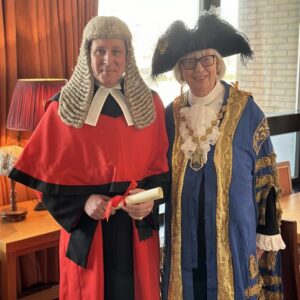 Judge Tony Alan Walter Baumgartner, known as His Honour Judge… Read more: His Honour Judge Tony Baumgartner – Recorder of Westminster
 - New Protocol for Legal Professionals to Raise Informal Concerns About Judges Behaviour
 On the 8th July 2026, the Courts and Tribunals Judiciary… Read more: New Protocol for Legal Professionals to Raise Informal Concerns About Judges Behaviour
 - The Policing Performance System
 In April 2026, His Majesty’s Inspectorate of Constabulary and Fire… Read more: The Policing Performance System
Most Popular ↓
You should always seek formal legal advice from a qualified and reputable lawyer (solicitor or barrister).
There are a number of links to Free and Paid For Legal Resources and Legal Organisations on the Free Legal Advice , Legal Aid and Pro Bono pages.
[post_title] was last updated on the 15th October 2026
