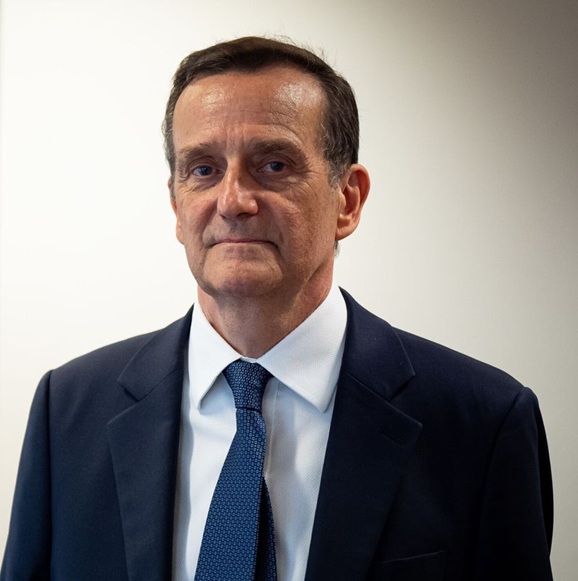
The Director of Public Prosecutions (DPP) is the head of the Crown Prosecution Service (CPS). The Director of Public Prosecutions is responsible for the independent prosecution of criminal cases investigated by the police and other agencies.
This role ensures that decisions to prosecute are taken fairly, free from political interference and guided solely by the evidence and the public interest. Established over a century ago, the office has evolved into one of the most influential positions in British law, overseeing hundreds of thousands of cases each year.
Thank you for contacting the Private Office of the Director of Public Prosecutions and the Chief Operating Officer, at the Crown Prosecution Service (CPS). Your email has been received.
The Director of Public Prosecutions (DPP) email is [email protected]
Historical Background
The office dates back to the Prosecution of Offences Act 1879, which created the DPP to advise police and handle serious cases. The first holder, Sir John Maule QC, assumed the post in 1880 but operated with limited powers.
After a brief merger with the Treasury Solicitor in 1884, the role regained full independence under the Prosecution of Offences Act 1908. Significant modernisation occurred between 1944 and 1964 under Sir Theobald Mathew QC, who updated regulations, introduced new technology, and expanded staff numbers.
The pivotal moment came in 1986 with the launch of the Crown Prosecution Service (CPS) under the Prosecution of Offences Act 1985. This transformed the DPP from leading a small department into the chief executive of a national prosecution service.
Role and Responsibilities
The Director of Public Prosecutions is the third most senior public prosecutor, ranking below the Attorney General and Solicitor General. The holder bears personal responsibility for approximately 7,000 CPS staff and around 800,000 prosecutions annually.
Key duties include applying the Full Code Test to decide whether cases should proceed, advising police during investigations, setting charges in complex matters, and issuing legal guidance and policies. The DPP also presents cases in court where necessary and supports victims and witnesses. Crucially, the role demands strict independence; prosecutorial decisions cannot be directed by government.
The DPP reports to the Attorney General, who accounts for the CPS in Parliament, but day-to-day operations remain free from ministerial control.
The Code for Crown Prosecutors (the Code) is issued by the Director of Public Prosecutions (DPP) under section 10 of the Prosecution of Offences Act 1985. This is the eighth edition of the Code and replaces all earlier versions and was published on the 26th October 2018. Almost 8 years without an update is quite a long time.
Appointment and Current Leadership
The DPP is appointed by the Attorney General for an initial five-year term following an open competition overseen by the Civil Service Commission. The process emphasises integrity, legal expertise, and leadership.
The current Director of Public Prosecutions is Stephen Parkinson, who took office on the 1st November 2023. A University College London law graduate, Parkinson qualified as a barrister in 1980 and later as a solicitor in 2005.
He began as a junior prosecutor in 1984, rose through CPS ranks, and held senior government posts, including Deputy Head of the Attorney General’s Office. For two decades he practised as a defence solicitor at Kingsley Napley, becoming Senior Partner in 2018. His unique experience on both sides of the courtroom equips him to lead the service effectively.
Stephen Parkinson has been announced as the new Director of Public Prosecutions and head of the Crown Prosecution Service. It is expected that he will take up the appointment in November 2023 for an initial term of five years. He will succeed the outgoing DPP, Max Hill KC.
Chair of the Bar Council, Nick Vineall KC, said: “The Bar Council would like to congratulate and welcome Stephen Parkinson as the new Director of Public Prosecutions and head of the Crown Prosecution Service. Mr Parkinson practised as a barrister for over 20 years and then qualified as a solicitor and has had a distinguished career in both the public and the private sectors. We very much look forward to meeting and engaging with the new DPP on areas of mutual concern, at a time when the criminal justice sector is under unprecedented pressure, and Crown Court backlogs are at record levels.
“The Bar Council would also like to record its sincere thanks to the outgoing DPP, Max Hill KC, who steered the CPS through the Covid crisis and has always sought to ensure that remuneration for those involved in prosecuting on behalf of the CPS was on a par with criminal defence fees.”
New DPP Stephen Parkinson announced – Bar Council comment
Stephen Parkinson Legal Experience
- Senior Partner, Kingsley Napley LLP 2018 – 2023
- Head of Criminal Litigation Practice Area, Kingsley Napley 2006 – 2018
- Deputy Legal Secretary (SCS, Grade 3) 1999 – 2003
- Government Legal Department, Group Head, Litigation Division 1996-1999
- Department of Trade and Industry – Assistant Solicitor 1992-1996
- Crown Prosecution Service – Head of International Co-operation Unit 1991-1992
Challenges and Future Outlook
Today’s DPP operates under intense pressure. Backlogs, rising caseloads, and high-profile events such as civil disturbances test resources and impartiality.
Maintaining public trust while improving efficiency, supporting victims more effectively, and embracing digital transformation are key priorities. DPP Stephen Parkinson has emphasised collaborative working across the criminal justice system to reduce delays and deliver fair outcomes.
Image of Stephen Parkinson : PA
Check out our related articles on the Crown Prosecution Service (CPS), Crown Prosecution Service (CPS) Complaints and Feedback, HM Crown Prosecution Service Inspectorate (HMCPSI), Rule of Law, Open Justice, Victims’ Right to Review (VRR), Is the Law Black and White ?, Abuse of Process, What Does Lady Justice Symbolise ?, McKenzie Friend, Can a Judge Direct a Jury to Find a Defendant Not Guilty ?,Law Society, Law Commission, McKenzie Friend Right of Audience, Solicitors, Solicitors Regulation Authority, Barristers, Bar Council of England and Wales, Bar Standards Board, Contra Mundum, R v Sussex Justices, Police Impartiality and the highly questionable Sussex Family Justice Board.
The Ministry of Injustice is not the Ministry of Justice nor is it affiliated in any way with the justice system, legal profession, police or any other law enforcement agencies.
“Publicity is the very soul of justice. . . . It keeps the judge himself, while trying, under trial….Where there is no publicity there is no justice”
Jeremy Bentham – Mr Justice Cobb: ‘Justice must be seen to be done’
Latest Articles ↓
- His Honour Judge Daniel Sawyer
 Judge Daniel Sawyer, known as His Honour Judge Daniel Sawyer,… Read more: His Honour Judge Daniel Sawyer
 - UK National Centre for Information Defence
 Prime Minister Andy Burnham used his first United Nations General… Read more: UK National Centre for Information Defence
 - Judges Behaving Badly and His Honour Judge Simon Oliver
 On the 27th August 2026 the Crown Prosecution Service announced… Read more: Judges Behaving Badly and His Honour Judge Simon Oliver
 - Jo Morris Barrister
 Jo Morris is a practising criminal barrister of Drystone Chambers… Read more: Jo Morris Barrister
 - Good Law Project
 The Good Law Project is a UK campaigning organisation that… Read more: Good Law Project
 - Police Federation of England and Wales (PFEW)
 The Police Federation of England and Wales (PFEW) is the… Read more: Police Federation of England and Wales (PFEW)
 - What is the Criminal Justice System (CJS) Common Platform ?
 The Criminal Justice System Common Platform (also known as HMCTS… Read more: What is the Criminal Justice System (CJS) Common Platform ?
 - Strategic Lawsuit Against Public Participation (SLAPPs)
 Strategic Lawsuits Against Public Participation, or SLAPPs, are legal actions… Read more: Strategic Lawsuit Against Public Participation (SLAPPs)
 - His Honour Judge Tony Baumgartner – Recorder of Westminster
 Judge Tony Alan Walter Baumgartner, known as His Honour Judge… Read more: His Honour Judge Tony Baumgartner – Recorder of Westminster
 - New Protocol for Legal Professionals to Raise Informal Concerns About Judges Behaviour
 On the 8th July 2026, the Courts and Tribunals Judiciary… Read more: New Protocol for Legal Professionals to Raise Informal Concerns About Judges Behaviour
 - The Policing Performance System
 In April 2026, His Majesty’s Inspectorate of Constabulary and Fire… Read more: The Policing Performance System
 - What is the Judicial College ?
 The Judicial College serves as the central pillar of professional… Read more: What is the Judicial College ?
Most Popular ↓
You should always seek formal legal advice from a qualified and reputable lawyer (solicitor or barrister).
There are a number of links to Free and Paid For Legal Resources and Legal Organisations on the Free Legal Advice , Legal Aid and Pro Bono pages.
[post_title] was last updated on the 12th October 2026
