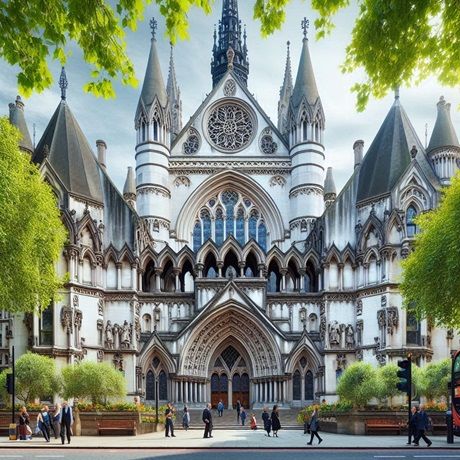
The jurisdiction of the courts in England and Wales refers to the legal authority or power that they have to hear and determine certain types of legal cases. The jurisdiction of the courts is determined by a combination of legislation, legal precedent, and court rules.
In England and Wales, there are several levels of courts with varying degrees of jurisdiction. These include:
Magistrates’ Courts: These are the lowest level of courts in England and Wales and they have jurisdiction over a wide range of criminal offenses, such as minor assaults, theft, and driving offenses. They also have limited jurisdiction in civil cases, such as small claims and some family law matters.
County Courts: These courts have jurisdiction over a wider range of civil cases, including contract disputes, personal injury claims, and landlord-tenant disputes. They also have some limited jurisdiction in family law matters, such as divorce and child custody.
Crown Court: This court has jurisdiction over the most serious criminal offenses, such as murder, rape, and drug trafficking. It also has some limited jurisdiction over civil cases.
High Court: This is the highest level of court in England and Wales, and it has jurisdiction over the most complex civil and criminal cases. The High Court has several divisions, including the Family Division, the Chancery Division, and the King’s Bench Division.
The Supreme Court: This is the final court of appeal in the UK for civil cases, and for criminal cases from England, Wales and Northern Ireland
In addition to these courts, there are also specialist courts in England and Wales, such as the Employment Tribunal, the Immigration and Asylum Tribunal, and the Mental Health Tribunal, which have jurisdiction over specific areas of law.
It is important to understand the jurisdiction of the courts in England and Wales when bringing a legal case, as it determines which court has the power to hear and determine your case. It is advisable to seek legal advice if you are unsure about which court has jurisdiction over your case.
Find contact details and information on courts and tribunals in England and Wales, and some non-devolved tribunals in Scotland.
Check out our related articles on Judiciary, Law Society, Solicitors, Barristers, Bar Council of England and Wales, Bar Standards Board, Solicitors Regulation Authority, Rule of Law, Open Justice and the highly questionable Sussex Family Justice Board.
The Ministry of Injustice is not the Ministry of Justice nor is it affiliated in any way with the justice system, legal profession, police or any other law enforcement agencies.
“Publicity is the very soul of justice. . . . It keeps the judge himself, while trying, under trial….Where there is no publicity there is no justice”
Jeremy Bentham – Mr Justice Cobb: ‘Justice must be seen to be done’
Latest Articles ↓
- His Honour Judge Daniel Sawyer
 Judge Daniel Sawyer, known as His Honour Judge Daniel Sawyer,… Read more: His Honour Judge Daniel Sawyer
 - UK National Centre for Information Defence
 Prime Minister Andy Burnham used his first United Nations General… Read more: UK National Centre for Information Defence
 - Judges Behaving Badly and His Honour Judge Simon Oliver
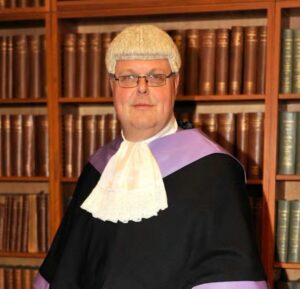 On the 27th August 2026 the Crown Prosecution Service announced… Read more: Judges Behaving Badly and His Honour Judge Simon Oliver
 - Jo Morris Barrister
 Jo Morris is a practising criminal barrister of Drystone Chambers… Read more: Jo Morris Barrister
 - Good Law Project
 The Good Law Project is a UK campaigning organisation that… Read more: Good Law Project
 - Police Federation of England and Wales (PFEW)
 The Police Federation of England and Wales (PFEW) is the… Read more: Police Federation of England and Wales (PFEW)
 - What is the Criminal Justice System (CJS) Common Platform ?
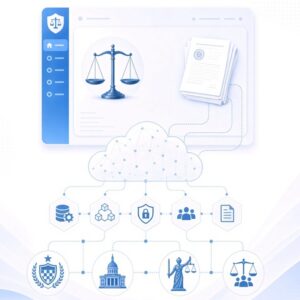 The Criminal Justice System Common Platform (also known as HMCTS… Read more: What is the Criminal Justice System (CJS) Common Platform ?
 - Strategic Lawsuit Against Public Participation (SLAPPs)
 Strategic Lawsuits Against Public Participation, or SLAPPs, are legal actions… Read more: Strategic Lawsuit Against Public Participation (SLAPPs)
 - His Honour Judge Tony Baumgartner – Recorder of Westminster
 Judge Tony Alan Walter Baumgartner, known as His Honour Judge… Read more: His Honour Judge Tony Baumgartner – Recorder of Westminster
 - New Protocol for Legal Professionals to Raise Informal Concerns About Judges Behaviour
 On the 8th July 2026, the Courts and Tribunals Judiciary… Read more: New Protocol for Legal Professionals to Raise Informal Concerns About Judges Behaviour
 - The Policing Performance System
 In April 2026, His Majesty’s Inspectorate of Constabulary and Fire… Read more: The Policing Performance System
 - What is the Judicial College ?
 The Judicial College serves as the central pillar of professional… Read more: What is the Judicial College ?
Most Popular ↓
You should always seek formal legal advice from a qualified and reputable lawyer (solicitor or barrister).
There are a number of links to Free and Paid For Legal Resources and Legal Organisations on the Free Legal Advice , Legal Aid and Pro Bono pages.
[post_title] was last updated on the 12th October 2026
