
The police barred and advisory lists, which are managed by the College of Policing, were introduced under the Police Barred List and Police Advisory List Regulations 2017. They record officers, special constables, and police staff who have been dismissed for serious misconduct or performance failings.
These Regulations are made under Part 4A of the Police Act 1996 (the “1996 Act”), which was inserted by section 30 of, and Schedule 8 to, the Policing and Crime Act 2017. Part 4A of the 1996 Act requires the College of Policing to maintain two lists; the police barred list (see section 88B) and the police advisory list (see section 88J). These Regulations are made under various powers in Part 4A to make provision supplementing the regime established under that Part.
Explanatory Note – Police Barred List and Police Advisory List Regulations 2017
Working alongside the advisory list, it prevents unsuitable individuals from re-entering policing roles while enhancing transparency and public trust.
Purpose and Background
The barred and advisory lists were established as part of the government’s commitment to raising standards in policing. They increase accountability for those dismissed and make the discipline system more transparent by publishing details where appropriate.
Both lists are administered by the College of Policing, which receives reports from forces following dismissals under the Police (Conduct) Regulations 2020 and Police (Performance) Regulations 2020.
Individuals remain on the barred list indefinitely unless they successfully appeal their dismissal or have their case reviewed after the minimum waiting period. This framework deters poor behaviour and supports a culture of high professional standards.
What the Police Barred List Contains
The barred list includes all officers, special constables, and staff dismissed after formal investigations. For public entries – primarily conduct-related dismissals of warranted officers and special constables – the College publishes the individual’s name, former force, rank, number, date of dismissal, and reason for dismissal.
Police staff and PCSOs appear on an internal version but are not published publicly. The College decides on publication after considering national security, ongoing investigations, or potential harm to individuals. In the vast majority of cases, details are made public.
Public Access and Updates
The police public barred list is searchable and updated monthly, with new names added by the end of the month following dismissal. Entries remain visible for five years from the date of publication before automatic removal from the public version (though the internal record continues).
Dismissals for gross incompetence follow a three-year public visibility period in some contexts, aligned with review rules.
The Advisory List
The advisory list covers individuals who resigned, retired, or left during an investigation, or before allegations came to light. It also includes volunteers whose designated status was withdrawn for conduct or performance reasons. There is no public access to this list.
Forces must consult the advisory list during vetting. While it does not automatically bar employment, hiring organisations must carefully consider the information as part of the recruitment and vetting process.
How the Lists Are Used
All Home Office police forces in England and Wales, Offices of Police and Crime Commissioners, His Majesty’s Inspectorate of Constabulary and Fire & Rescue Services, and the Independent Office for Police Conduct are required to check both lists before appointing or employing anyone.
Anyone on the barred list must not be employed in policing roles.
Reviews and Removal from the Barred List
Barred individuals may apply for a review after three years for gross incompetence dismissals or five years for gross misconduct dismissals. Applications are submitted by email to the College of Policing with supporting evidence. The relevant force provides a recommendation, but the College makes the final decision.
Reviews consider the individual’s current suitability, the original circumstances, and the potential impact on public confidence. A successful review does not guarantee re-employment; the applicant must still apply for a role and pass full vetting. The process does not re-examine the original dismissal.
Impact on Policing
By publicly recording dismissals and preventing re-entry of unsuitable personnel, the barred list plays a significant role in maintaining discipline and rebuilding public confidence. Annual statistics published by the College show hundreds of officers added each year, demonstrating the system’s active use.
Overall, the barred and advisory lists represent a balanced approach with firm accountability combined with a structured route for rehabilitation where appropriate.
Check out our articles on Policing by Consent, Police Professional Standards, Police Misconduct Hearings, Police Impartiality, Police Surveillance, Are the Police for Hire ?, Independent Office for Police Conduct (IOPC),Police Public Confidence and Engagement, Crime Reporting, What is a Police and Crime Commissioner ?, Sussex Police, Policing, Police News, Two Tiered Policing, Thought Police, Wasting Police Time, Police Community Support Officers (PCSO), Met Police, Chief Constable Jo Shiner, R v Sussex Justices and the highly questionable Sussex Family Justice Board.
The Ministry of Injustice is not the Ministry of Justice nor is it affiliated in any way with the justice system, legal profession, police or any other law enforcement agencies.
“Publicity is the very soul of justice. . . . It keeps the judge himself, while trying, under trial….Where there is no publicity there is no justice”
Jeremy Bentham – Mr Justice Cobb: ‘Justice must be seen to be done’
Latest Articles ↓
- His Honour Judge Daniel Sawyer
 Judge Daniel Sawyer, known as His Honour Judge Daniel Sawyer,… Read more: His Honour Judge Daniel Sawyer
 - UK National Centre for Information Defence
 Prime Minister Andy Burnham used his first United Nations General… Read more: UK National Centre for Information Defence
 - Judges Behaving Badly and His Honour Judge Simon Oliver
 On the 27th August 2026 the Crown Prosecution Service announced… Read more: Judges Behaving Badly and His Honour Judge Simon Oliver
 - Jo Morris Barrister
 Jo Morris is a practising criminal barrister of Drystone Chambers… Read more: Jo Morris Barrister
 - Good Law Project
 The Good Law Project is a UK campaigning organisation that… Read more: Good Law Project
 - Police Federation of England and Wales (PFEW)
 The Police Federation of England and Wales (PFEW) is the… Read more: Police Federation of England and Wales (PFEW)
 - What is the Criminal Justice System (CJS) Common Platform ?
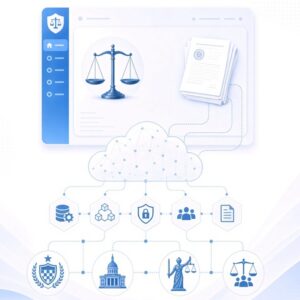 The Criminal Justice System Common Platform (also known as HMCTS… Read more: What is the Criminal Justice System (CJS) Common Platform ?
 - Strategic Lawsuit Against Public Participation (SLAPPs)
 Strategic Lawsuits Against Public Participation, or SLAPPs, are legal actions… Read more: Strategic Lawsuit Against Public Participation (SLAPPs)
 - His Honour Judge Tony Baumgartner – Recorder of Westminster
 Judge Tony Alan Walter Baumgartner, known as His Honour Judge… Read more: His Honour Judge Tony Baumgartner – Recorder of Westminster
 - New Protocol for Legal Professionals to Raise Informal Concerns About Judges Behaviour
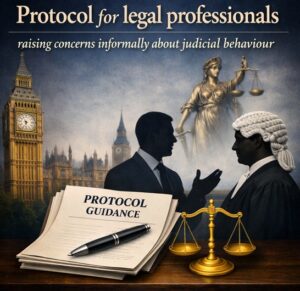 On the 8th July 2026, the Courts and Tribunals Judiciary… Read more: New Protocol for Legal Professionals to Raise Informal Concerns About Judges Behaviour
 - The Policing Performance System
 In April 2026, His Majesty’s Inspectorate of Constabulary and Fire… Read more: The Policing Performance System
 - What is the Judicial College ?
 The Judicial College serves as the central pillar of professional… Read more: What is the Judicial College ?
Most Popular ↓
You should always seek formal legal advice from a qualified and reputable lawyer (solicitor or barrister).
There are a number of links to Free and Paid For Legal Resources and Legal Organisations on the Free Legal Advice , Legal Aid and Pro Bono pages.
[post_title] was last updated on the 6th October 2026
