
A Legal Executive in the UK is a qualified legal professional who provides specialist legal advice and representation, similar to solicitors but with a different training and qualification pathway.
As the legal sector evolves there’s a growing demand for a new kind of lawyer – a specialist lawyer. Trained differently and qualifying as specialists from the start, specialist lawyers are the future of law.
Thousands of highly skilled legal professionals are starting to transform the UK legal sector as CILEX Lawyers, and forging a rewarding career for themselves at the same time. You could become one of them.
Chartered Institute of Legal Executives
- Role and Responsibilities: Legal Executives often specialise in particular areas of law, offering expert advice and services. They can work in private practice, for the government, or as in-house counsel for companies. Their role might involve legal drafting, client advice, court representation, and other legal services, though there are some restrictions on “reserved legal activities” unless they are under the supervision of a solicitor or in certain authorized settings.
- Qualification Pathway: Unlike solicitors or barristers, becoming a Legal Executive involves qualifications through the Chartered Institute of Legal Executives (CILEx). This route includes the CILEX Professional Qualification (CPQ), which can be pursued by graduates or non-graduates, offering a less competitive and potentially less expensive path to becoming a qualified legal professional. The training is more practical and job-focused, often requiring part-time study alongside work.
- Regulation and Status: Legal Executives are recognized under the Legal Services Act 2007, which outlines what activities they can perform. They must adhere to professional standards set by CILEX, including continuing professional development (CPD). They can become Chartered Legal Executives, which signifies their status and competence in legal practice.
- Comparative Role: While Legal Executives can perform many of the same tasks as solicitors, there are distinctions, particularly in the scope of “reserved legal activities” like conducting litigation in court, which might require them to work under a solicitor’s supervision or within certain regulatory frameworks.
- Professional Recognition: They are one of the three main branches of the legal profession in England and Wales, alongside solicitors and barristers, each having distinct roles but with overlapping functions in practice.
CILEX has over 17,000 members, made up of paralegals, CILEX Lawyers and other specialist legal professionals in England and Wales. Making Justice Better.
In 2012, the institute was granted a Royal Charter by the Privy Council on behalf of Her Majesty Queen Elizabeth II. The Charter recognises CILEX’s role as an Approved Regulator under the Legal Services Act 2007, a professional membership association and qualification Awarding Body.
About Us – Chartered Institute of Legal Executives
Check out our articles on Solicitors Regulation Authority, Solicitors Disciplinary Tribunal (SDT), Mayo Wynne Baxter Solicitors, Law Society, Barristers, Direct Access Barristers, Bar Standards Board, Bar Council, Rule of Law, Gavin Howe, Eleanor Battie and the highly questionable Sussex Family Justice Board.
The Ministry of Injustice is not the Ministry of Justice nor is it affiliated in any way with the justice system, legal profession, police or any other law enforcement agencies.
“Publicity is the very soul of justice. . . . It keeps the judge himself, while trying, under trial….Where there is no publicity there is no justice”
Jeremy Bentham – Mr Justice Cobb: ‘Justice must be seen to be done’
Latest Articles ↓
- His Honour Judge Daniel Sawyer
 Judge Daniel Sawyer, known as His Honour Judge Daniel Sawyer,… Read more: His Honour Judge Daniel Sawyer
 - UK National Centre for Information Defence
 Prime Minister Andy Burnham used his first United Nations General… Read more: UK National Centre for Information Defence
 - Judges Behaving Badly and His Honour Judge Simon Oliver
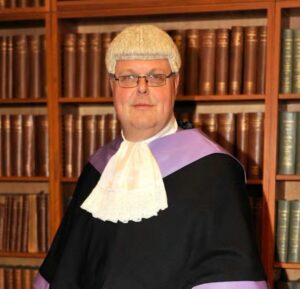 On the 27th August 2026 the Crown Prosecution Service announced… Read more: Judges Behaving Badly and His Honour Judge Simon Oliver
 - Jo Morris Barrister
 Jo Morris is a practising criminal barrister of Drystone Chambers… Read more: Jo Morris Barrister
 - Good Law Project
 The Good Law Project is a UK campaigning organisation that… Read more: Good Law Project
 - Police Federation of England and Wales (PFEW)
 The Police Federation of England and Wales (PFEW) is the… Read more: Police Federation of England and Wales (PFEW)
 - What is the Criminal Justice System (CJS) Common Platform ?
 The Criminal Justice System Common Platform (also known as HMCTS… Read more: What is the Criminal Justice System (CJS) Common Platform ?
 - Strategic Lawsuit Against Public Participation (SLAPPs)
 Strategic Lawsuits Against Public Participation, or SLAPPs, are legal actions… Read more: Strategic Lawsuit Against Public Participation (SLAPPs)
 - His Honour Judge Tony Baumgartner – Recorder of Westminster
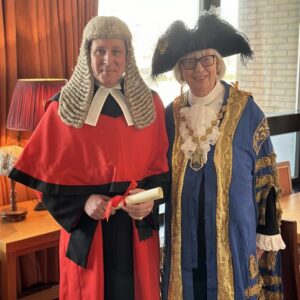 Judge Tony Alan Walter Baumgartner, known as His Honour Judge… Read more: His Honour Judge Tony Baumgartner – Recorder of Westminster
 - New Protocol for Legal Professionals to Raise Informal Concerns About Judges Behaviour
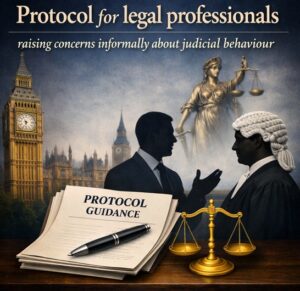 On the 8th July 2026, the Courts and Tribunals Judiciary… Read more: New Protocol for Legal Professionals to Raise Informal Concerns About Judges Behaviour
 - The Policing Performance System
 In April 2026, His Majesty’s Inspectorate of Constabulary and Fire… Read more: The Policing Performance System
 - What is the Judicial College ?
 The Judicial College serves as the central pillar of professional… Read more: What is the Judicial College ?
Most Popular ↓
You should always seek formal legal advice from a qualified and reputable lawyer (solicitor or barrister).
There are a number of links to Free and Paid For Legal Resources and Legal Organisations on the Free Legal Advice , Legal Aid and Pro Bono pages.
[post_title] was last updated on the 5th October 2026
