The concept of “innocent until proven guilty” is a fundamental principle of the justice system in many countries around the world. The principle is that an individual is considered innocent until proven guilty in a court of law. It is also known as “The presumption of innocence”.
This principle is enshrined in the Human Rights Act 1998 and the United Nations Declaration of Human Rights.
What is the concept of innocent until proven guilty ?
The concept of innocent until proven guilty dates back to ancient Roman law. It is a cornerstone of the justice system in many countries around the world. The principle is based on the idea that an individual is presumed innocent until the prosecution proves otherwise. This principle is essential because it protects the rights of the accused and ensures that justice is served.
The Human Rights Act 1998
The Human Rights Act 1998 is a piece of legislation in the United Kingdom that incorporates the European Convention on Human Rights into UK law. The act is intended to protect the rights and freedoms of individuals in the UK. One of the most important rights protected by the Human Rights Act 1998 is the right to a fair trial.
The right to a fair trial includes the right to be presumed innocent until proven guilty. This means that the prosecution must prove the guilt of the accused beyond a reasonable doubt. The right to a fair trial also includes the right to legal representation, the right to examine witnesses, and the right to a public trial.
(1) In the determination of his civil rights and obligations or of any criminal charge against him, everyone is entitled to a fair and public hearing within a reasonable time by an independent and impartial tribunal established by law. Judgment shall be pronounced publicly but the press and public may be excluded from all or part of the trial in the interest of morals, public order or national security in a democratic society, where the interests of juveniles or the protection of the private life of the parties so require, or to the extent strictly necessary in the opinion of the court in special circumstances where publicity would prejudice the interests of justice.
(2) Everyone charged with a criminal offence shall be presumed innocent until proved guilty according to law.
(3) Everyone charged with a criminal offence has the following minimum rights:
(a)to be informed promptly, in a language which he understands and in detail, of the nature and cause of the accusation against him;
(b)to have adequate time and facilities for the preparation of his defence;
(c)to defend himself in person or through legal assistance of his own choosing or, if he has not sufficient means to pay for legal assistance, to be given it free when the interests of justice so require;
(d)to examine or have examined witnesses against him and to obtain the attendance and examination of witnesses on his behalf under the same conditions as witnesses against him;
(e)to have the free assistance of an interpreter if he cannot understand or speak the language used in court.
Right to a Fair Trial Article 6 Human Rights Act 1998
The United Nations Declaration of Human Rights
The United Nations Declaration of Human Rights is a document adopted by the United Nations General Assembly in 1948. The declaration sets out a range of fundamental human rights that should be protected around the world. The declaration includes the right to a fair trial.
Article 11 of the declaration states that “Everyone charged with a penal offence has the right to be presumed innocent until proved guilty according to law in a public trial at which he has had all the guarantees necessary for his defence.” This article emphasizes the importance of the presumption of innocence and the right to a fair trial.
Trial by media
The issue of trial by media has become increasingly prevalent in recent years. Trial by media refers to the situation where an individual is tried and convicted in the court of public opinion before they have had a chance to defend themselves in a court of law. This situation is often exacerbated by sensationalist media coverage and the use of social media.
Trial by media can have a significant impact on the accused, including damage to their reputation and public humiliation. In some cases, trial by media can even lead to the denial of a fair trial.
Examples of trial by media
One example of trial by media occurred in the case of Amanda Knox, an American student who was accused of murdering her roommate in Italy in 2007. The case received extensive media coverage, with many media outlets portraying Knox as guilty before the trial even began. Knox was eventually acquitted, but the media coverage had a significant impact on her reputation.
Another example of trial by media occurred in the case of Barry George, who was accused of murdering British television presenter Jill Dando in 1999. The media coverage of the case was highly sensationalised, and George was portrayed as guilty before the trial even began. George was eventually acquitted, but the media coverage had a lasting impact on his reputation.
In conclusion, the principle of innocent until proven guilty is a fundamental aspect of the justice system in many countries around the world. It is essential to protect the rights of the accused and ensure that justice is served.
The issue of trial by media must be addressed to ensure that individuals are not unfairly tried and convicted in the court of public opinion. The media has a responsibility to report fairly and objectively on legal proceedings, and individuals have the right to a fair trial, including the right to be presumed innocent until proven guilty.
The Ministry of Injustice is not the Ministry of Justice nor is it affiliated in any way with the justice system, legal profession, police or any other law enforcement agencies.
“Publicity is the very soul of justice. . . . It keeps the judge himself, while trying, under trial….Where there is no publicity there is no justice”
Jeremy Bentham – Mr Justice Cobb: ‘Justice must be seen to be done’
Latest Articles ↓
- His Honour Judge Daniel Sawyer
 Judge Daniel Sawyer, known as His Honour Judge Daniel Sawyer,… Read more: His Honour Judge Daniel Sawyer
 - UK National Centre for Information Defence
 Prime Minister Andy Burnham used his first United Nations General… Read more: UK National Centre for Information Defence
 - Judges Behaving Badly and His Honour Judge Simon Oliver
 On the 27th August 2026 the Crown Prosecution Service announced… Read more: Judges Behaving Badly and His Honour Judge Simon Oliver
 - Jo Morris Barrister
 Jo Morris is a practising criminal barrister of Drystone Chambers… Read more: Jo Morris Barrister
 - Good Law Project
 The Good Law Project is a UK campaigning organisation that… Read more: Good Law Project
 - Police Federation of England and Wales (PFEW)
 The Police Federation of England and Wales (PFEW) is the… Read more: Police Federation of England and Wales (PFEW)
 - What is the Criminal Justice System (CJS) Common Platform ?
 The Criminal Justice System Common Platform (also known as HMCTS… Read more: What is the Criminal Justice System (CJS) Common Platform ?
 - Strategic Lawsuit Against Public Participation (SLAPPs)
 Strategic Lawsuits Against Public Participation, or SLAPPs, are legal actions… Read more: Strategic Lawsuit Against Public Participation (SLAPPs)
 - His Honour Judge Tony Baumgartner – Recorder of Westminster
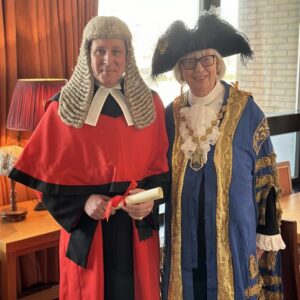 Judge Tony Alan Walter Baumgartner, known as His Honour Judge… Read more: His Honour Judge Tony Baumgartner – Recorder of Westminster
 - New Protocol for Legal Professionals to Raise Informal Concerns About Judges Behaviour
 On the 8th July 2026, the Courts and Tribunals Judiciary… Read more: New Protocol for Legal Professionals to Raise Informal Concerns About Judges Behaviour
 - The Policing Performance System
 In April 2026, His Majesty’s Inspectorate of Constabulary and Fire… Read more: The Policing Performance System
 - What is the Judicial College ?
 The Judicial College serves as the central pillar of professional… Read more: What is the Judicial College ?
Most Popular ↓
You should always seek formal legal advice from a qualified and reputable lawyer (solicitor or barrister).
There are a number of links to Free and Paid For Legal Resources and Legal Organisations on the Free Legal Advice , Legal Aid and Pro Bono pages.
[post_title] was last updated on the 5th October 2026
