
A Freedom of Information (FOI) request in the UK is a right provided by the Freedom of Information Act 2000, which allows members of the public to request access to information held by public authorities.
Impact: FOI requests have led to significant disclosures, influencing public debate, policy-making, and sometimes leading to changes in how public bodies operate due to increased scrutiny.
Purpose: The Act aims to promote transparency and accountability in public bodies by making information more accessible to the public.
Who Can Make a Request: Anyone, whether a UK resident or not, can make an FOI request.
What Can Be Requested: Information can be requested from any public authority, which includes government departments, local authorities, the NHS, schools, and police forces. The information must be recorded in some form (e.g., documents, emails, data).
Exemptions: Not all information will be released. There are various exemptions where information can be withheld, such as:
- National security
- Personal information (which might fall under the Data Protection Act)
- Information intended for future publication
- Information that could prejudice the effective conduct of public affairs
Fees: Requests are usually free, but there might be charges for things like photocopying or if the request involves a significant amount of work.
Appeals: If a request is refused or you’re unsatisfied with the response, there’s a process for internal review. If still not satisfied, you can appeal to the Information Commissioner’s Office (ICO), which can enforce compliance.
Organisations you can ask for information
You can request information from some public authorities, such as:
- government departments, devolved administrations, other public bodies and committees
- local councils
- schools, colleges and universities
- the NHS – including hospitals, GPs, dentists, pharmacists and opticians
- publicly owned companies
- publicly funded museums, galleries and theatres
- the police and fire services
How to make an FOI request
You must make a Freedom of Information (FOI) request in writing. You can do it by:
- letter
- social media
- online form – check the organisation’s website or the government department’s page to see if they have an online form
- Use the excellent What Do They Know website to make and publicise your FOI request.
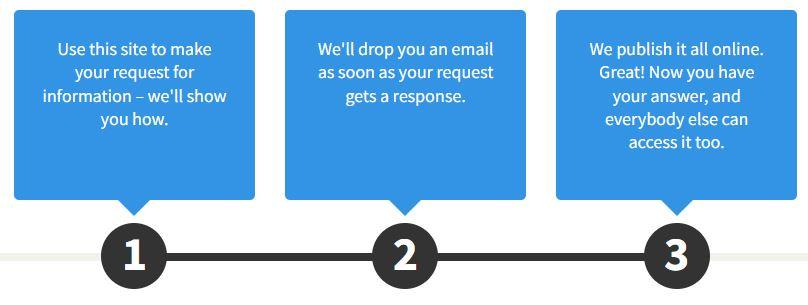
You need to describe the information you want as specifically as possible.
Response Time: Public authorities have 20 working days to respond to a request. They can extend this period in certain circumstances.
Before you make a request
You might not need to make a Freedom of Information (FOI) request if the organisation has:
- already published the information
- previously responded to an FOI request
Check their website for responses to previous FOI requests. This is sometimes known as a ‘disclosure log’. You can search for published responses to FOI requests from government departments, agencies and arms length bodies.
You can also email or phone the organisation to ask if they’ve already published the information or responded to an FOI request.
What to include
You should give:
- your name (not needed if you’re asking for environmental information)
- a contact postal or email address
- a detailed description of the information you want – for example, you might want all information held on a subject, or just a summary
You can ask for information in a particular format, such as:
- paper or electronic copies of information
- audio format
- large print
When you’ll get a response
The organisation should send you the information within 20 working days of receiving your request. Some schools are allowed more time during school holidays.
In Scotland, you should allow 6 extra days if you send your request by post.
The organisation will tell you when to expect the information if they need more time.
When your information will be shared
If you’ve sent an FOI request to several government departments, they may share your name and request between them. This is to help deal with your enquiry more effectively.
No other details will be shared and your information will not be used for any other purpose.
The Ministry of Injustice is not the Ministry of Justice nor is it affiliated in any way with the justice system, legal profession, police or any other law enforcement agencies.
“Publicity is the very soul of justice. . . . It keeps the judge himself, while trying, under trial….Where there is no publicity there is no justice”
Jeremy Bentham – Mr Justice Cobb: ‘Justice must be seen to be done’
Latest Articles ↓
- Presumption of Innocence
 The presumption of innocence is a basic principle of the… Read more: Presumption of Innocence
 - His Honour Judge Daniel Sawyer
 Judge Daniel Sawyer, known as His Honour Judge Daniel Sawyer,… Read more: His Honour Judge Daniel Sawyer
 - UK National Centre for Information Defence
 Prime Minister Andy Burnham used his first United Nations General… Read more: UK National Centre for Information Defence
 - Judges Behaving Badly and His Honour Judge Simon Oliver
 On the 27th August 2026 the Crown Prosecution Service announced… Read more: Judges Behaving Badly and His Honour Judge Simon Oliver
 - Jo Morris Barrister
 Jo Morris is a practising criminal barrister of Drystone Chambers… Read more: Jo Morris Barrister
 - Good Law Project
 The Good Law Project is a UK campaigning organisation that… Read more: Good Law Project
 - Police Federation of England and Wales (PFEW)
 The Police Federation of England and Wales (PFEW) is the… Read more: Police Federation of England and Wales (PFEW)
 - What is the Criminal Justice System (CJS) Common Platform ?
 The Criminal Justice System Common Platform (also known as HMCTS… Read more: What is the Criminal Justice System (CJS) Common Platform ?
 - Strategic Lawsuit Against Public Participation (SLAPPs)
 Strategic Lawsuits Against Public Participation, or SLAPPs, are legal actions… Read more: Strategic Lawsuit Against Public Participation (SLAPPs)
 - His Honour Judge Tony Baumgartner – Recorder of Westminster
 Judge Tony Alan Walter Baumgartner, known as His Honour Judge… Read more: His Honour Judge Tony Baumgartner – Recorder of Westminster
 - New Protocol for Legal Professionals to Raise Informal Concerns About Judges Behaviour
 On the 8th July 2026, the Courts and Tribunals Judiciary… Read more: New Protocol for Legal Professionals to Raise Informal Concerns About Judges Behaviour
 - The Policing Performance System
 In April 2026, His Majesty’s Inspectorate of Constabulary and Fire… Read more: The Policing Performance System
Most Popular ↓
You should always seek formal legal advice from a qualified and reputable lawyer (solicitor or barrister).
There are a number of links to Free and Paid For Legal Resources and Legal Organisations on the Free Legal Advice , Legal Aid and Pro Bono pages.
[post_title] was last updated on the 15th October 2026
