
The Justice Committee is a cross-party group of MPs appointed by the House of Commons to examine the policies and spending of the Ministry of Justice and associated public bodies.
This includes the courts, legal aid, prisons, probation and the rule of law. It also advises on sentencing guidelines. The Justice Committee is chaired by Andy Slaughter.
Role of the Justice Committee
Sir Bob Neill MP, former Chair of the Justice Committee, explained the role of the Justice Committee and how to get involved in the Committee’s work
The Justice Committee was appointed by the House of Commons to examine the expenditure, administration and policy of the Ministry of Justice and associated public bodies, (to include the work of staff provided for the administrative work of courts and tribunals, but excluding consideration of individual cases and appointments, and excluding the work of the Scotland and Wales Offices and of the Advocate General for Scotland); and administration and expenditure of the Attorney General’s Office, the Treasury Solicitor’s Department, the Crown Prosecution Service and the Serious Fraud Office (but excluding individual cases and appointments and advice given within government by Law Officers).
The Justice Committee is one of the 19 Select Committees related to Government Departments, established by the House of Commons under Standing Order No. 152.
Role of the Justice Committee – Parliament Website
Subjects of Inquiry
The Justice Committee chooses its own subjects of inquiry.
Depending on the subject, external deadlines, and the amount of oral evidence the Committee decides to take, an inquiry may last for several months and give rise to a report to the House; other inquiries may simply consist of a single day’s oral evidence which the Committee may publish without making a report.
When the Committee has chosen an inquiry it normally issues a press notice outlining the main themes of inquiry and inviting interested parties to submit written evidence. It may also identify possible witnesses and issue specific invitations to them to submit written evidence.
Role of the Justice Committee – Parliament Website
Inquiries
Inquiries allow committees to consider oral and written evidence on a particular topic. They usually result in the publication of a report.
All inquires of the Justice Committee past and present are published and can be searched for on the Parliament website.
Contact the Justice Commitee
- Email: [email protected]
- Phone: (General Enquiries) 020 7219 7005 (Media Enquiries) 07842 601500
- Address: House of Commons, London SW1A 0AA
The Ministry of Injustice is not the Ministry of Justice nor is it affiliated in any way with the justice system, legal profession, police or any other law enforcement agencies.
“Publicity is the very soul of justice. . . . It keeps the judge himself, while trying, under trial….Where there is no publicity there is no justice”
Jeremy Bentham – Mr Justice Cobb: ‘Justice must be seen to be done’
Latest Articles ↓
- His Honour Judge Daniel Sawyer
 Judge Daniel Sawyer, known as His Honour Judge Daniel Sawyer,… Read more: His Honour Judge Daniel Sawyer
 - UK National Centre for Information Defence
 Prime Minister Andy Burnham used his first United Nations General… Read more: UK National Centre for Information Defence
 - Judges Behaving Badly and His Honour Judge Simon Oliver
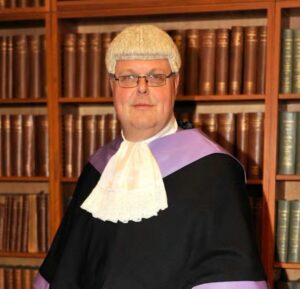 On the 27th August 2026 the Crown Prosecution Service announced… Read more: Judges Behaving Badly and His Honour Judge Simon Oliver
 - Jo Morris Barrister
 Jo Morris is a practising criminal barrister of Drystone Chambers… Read more: Jo Morris Barrister
 - Good Law Project
 The Good Law Project is a UK campaigning organisation that… Read more: Good Law Project
 - Police Federation of England and Wales (PFEW)
 The Police Federation of England and Wales (PFEW) is the… Read more: Police Federation of England and Wales (PFEW)
 - What is the Criminal Justice System (CJS) Common Platform ?
 The Criminal Justice System Common Platform (also known as HMCTS… Read more: What is the Criminal Justice System (CJS) Common Platform ?
 - Strategic Lawsuit Against Public Participation (SLAPPs)
 Strategic Lawsuits Against Public Participation, or SLAPPs, are legal actions… Read more: Strategic Lawsuit Against Public Participation (SLAPPs)
 - His Honour Judge Tony Baumgartner – Recorder of Westminster
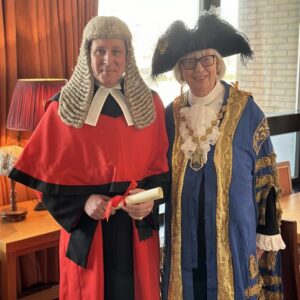 Judge Tony Alan Walter Baumgartner, known as His Honour Judge… Read more: His Honour Judge Tony Baumgartner – Recorder of Westminster
 - New Protocol for Legal Professionals to Raise Informal Concerns About Judges Behaviour
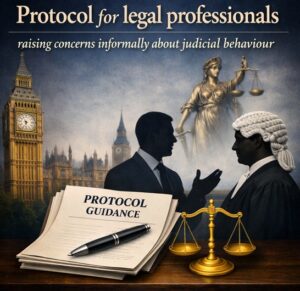 On the 8th July 2026, the Courts and Tribunals Judiciary… Read more: New Protocol for Legal Professionals to Raise Informal Concerns About Judges Behaviour
 - The Policing Performance System
 In April 2026, His Majesty’s Inspectorate of Constabulary and Fire… Read more: The Policing Performance System
 - What is the Judicial College ?
 The Judicial College serves as the central pillar of professional… Read more: What is the Judicial College ?
Most Popular ↓
You should always seek formal legal advice from a qualified and reputable lawyer (solicitor or barrister).
There are a number of links to Free and Paid For Legal Resources and Legal Organisations on the Free Legal Advice , Legal Aid and Pro Bono pages.
[post_title] was last updated on the 23rd September 2026
