The Good Law Project is a UK campaigning organisation that uses litigation, investigations and public mobilisation to challenge government decisions and other concentrations of power.
We use the law to stop hate and bring hope – injustice is not inevitable
Good Law Project
Founded in January 2017 by tax barrister Jolyon Maugham KC, the Good Law Project Limited was established as a company limited by guarantee under English law (Company Registration Number 10556197). The Registered office address is 3 East Point High Street, Seal, Sevenoaks, Kent, United Kingdom, TN15 0EG
The Good Law Project is a not-for-profit company that has never been a registered charity. Jo Maugham deliberately chose this form to secure the public-interest features of a charity with no ability to pay dividends and an asset lock preventing assets being transferred at undervalue whilst remaining outside the regulatory reach of the Charity Commission, which the organisation has described as imposing “moving political guardrails.”
The Good Law Project is widely regarded as left-wing / progressive in orientation.
Jolyon Maugham KC
Jolyon Toby Dennis Maugham KC (born 1st July 1971) is the founder and executive director. Born in London and raised largely in New Zealand, he attended Wellington High School before returning to the UK. He graduated with a first-class LLB in European Legal Studies from Durham University (Hatfield College) in 1995, studied at KU Leuven in Belgium, and later completed an MA at Birkbeck, University of London.
Jo Maugham specialised in taxation law, practised from Devereux Chambers, and was appointed Queen’s Counsel in 2015. He has advised both Labour and Conservative politicians on tax policy and written for national newspapers.
In 2023 he published the Sunday Times bestseller Bringing Down Goliath. He left full-time practice at the Bar around the end of 2020 to focus on the organisation and has stated that his salary is capped at the level of a backbench MP.
He is an Honorary Professor at the University of Durham and remains the dominant public face of the group. Supporters view him as a determined advocate for accountability; critics regard him as a polarising campaigner whose messaging about case outcomes has sometimes drawn formal complaints.
Mission and Methods
The Good Law Project stated aims are to hold power to account, protect the environment and ensure “no one is left behind.” In practice this has involved judicial reviews, procurement challenges, environmental cases and campaigns on issues including protest rights, media regulation and transgender healthcare.
The organisation combines court action with investigative work and crowdfunding-driven public campaigns.
The 2026 Move to Jersey
On the 8th May 2026 the Good Law Project changed its ownership structure. The GLP announced that Jo Maugham had been replaced as owner by a Jersey “purpose” trust holding the membership interest in the UK company.
The operating company remains registered in England (still company 10556197), UK-resident for tax purposes, subject to the same articles and asset lock, and still unable to declare dividends.
The stated reason was that English law does not recognise non-charitable purpose trusts, while Jersey law does. The change was presented as completing the original design by making the organisation exist for a purpose rather than being owned by an individual and also allowing a future multi-trustee board.
In the short term the sole trustee is a company owned by Jo Maugham, who remains the person with significant control.
Controversies Around the Jersey Restructuring
The move attracted accusations of hypocrisy. The organisation and Maugham had previously criticised offshore arrangements and tax havens. Critics highlighted the optics of using a Jersey structure while campaigning against secrecy and elite financial arrangements.
The group maintains there is no tax advantage and that the purpose is structural and regulatory.
Funding and Financials
The vast majority of funding of the Good Law Project comes from regular and one-off donations by members of the public, which the organisation says keeps it independent. It also receives grants and high-value donations from supporters including the Joseph Rowntree Reform Trust, Lund Trust, Avaaz, 38 Degrees, Necessity and Dale Vince (Ecotricity).
For the year ended 31 January 2025, total income was approximately £4.44 million (down slightly from £4.65 million the previous year). Roughly 70–80% came from regular and general donations, with the balance from crowdfunding, grants and other sources.
Expenditure was around £4.67 million, producing a modest deficit. Cash at bank stood at about £4.25 million and net assets at roughly £4.20 million.
The Good Law Project maintains a Legal Defence Fund (around £850,000 at that date) to cover potential adverse costs. Staff costs form a significant part of spending; average headcount has been in the mid-30s in recent years. As a non-profit company limited by guarantee it does not pay corporation tax on its core activities. Full accounts and filings are available via the Companies House page for company 10556197.
Success Rate and Criticisms
The Good Law Project claims a positive outcome, defined as a full or partial legal win or a useful campaigning result in more than two-thirds of its cases. Its own assessments have typically shown roughly 45 per cent legal wins, around 20 per cent mixed results and 35 per cent losses among classifiable legal outcomes.
Independent observers have challenged these figures. Government data showed the organisation winning fewer matters than it lost or withdrew and paying substantially more in costs than it received. Critics argue that many claimed “wins” are minor procedural points or cases spun after clear defeats.
Analyses in The Critic, The Times and elsewhere have accused the group of exaggerating its record.
Bad Law Project? – The good, the bad, and the ugly of crowdfunding legal cases. The miseries of Maugham – What is the Good Law Project accomplishing?
Landmark Cases
Several Landmark Case are listed on the “Our Story” page of the Good Law Project.
In 2019 the Good Law Project supported the successful Supreme Court challenge to Boris Johnson’s prorogation of Parliament. Earlier Brexit litigation (Miller on Article 50 and Wightman on revocation) established important constitutional principles.
During the pandemic it litigated the “VIP lane” for PPE contracts; the High Court ruled the lane itself unlawful. Environmental work produced a High Court win (with Friends of the Earth and ClientEarth) requiring the government to revise its net-zero strategy, plus a Supreme Court intervention on water-company sewage liability.
Later cases on Partygate, tax policy and transgender rights have been more mixed or unsuccessful.
Good Law Project and Professor Jason Arday
In July 2026 the Good Law Project published and promoted an open letter and petition in support of Cambridge University sociology professor Jason Arday, who faced allegations of plagiarism in his PhD thesis and other academic work, as well as questions about aspects of his personal biography and achievements.
The organisation described the claims as a “vile” or “right-wing smear campaign” and gathered thousands of signatures, including from politicians, academics and public figures (some of whom later withdrew their names).
Jason Arday resigned from Cambridge and Jesus College on the 5th August 2026; the Good Law Project hosted and published his resignation statement on its website.
After Jason Arday’s death on the 14th August 2026, the group launched a further campaign and petition calling for a public inquiry into alleged media harassment, arguing that intense press scrutiny had contributed to the tragedy and that racism played a role.
The Good Law Project has maintained that universities and journals had cleared Json Arday of wrongdoing, while critics have pointed to substantial evidence of textual overlap and disputed biographical claims, and questioned the Good Law Project’s involvement and framing of the case.
Summary
The Good Law Project has grown from a one-person crowdfunding vehicle into a professionally staffed organisation with multi-million-pound annual income and substantial cash reserves.
Its highest-profile successes remain the 2019 prorogation judgment and the PPE VIP-lane ruling.
The Good Law Project continues to attract strong support from donors who share its priorities and sharp criticism from those who question its methods, messaging, financial transparency and governance choices.
Check out our related articles on Rule of Law, Open Justice, Is the Law Black and White ?, What Does Lady Justice Symbolise ?, Can a Judge Direct a Jury to Find a Defendant Not Guilty ?,Law Society, Law Commission, Solicitors, Solicitors Regulation Authority, Barristers, Bar Council of England and Wales, Bar Standards Board, Contra Mundum, R v Sussex Justices, Police Impartiality and the highly questionable Sussex Family Justice Board.
The Ministry of Injustice is not the Ministry of Justice nor is it affiliated in any way with the justice system, legal profession, police or any other law enforcement agencies.
“Publicity is the very soul of justice. . . . It keeps the judge himself, while trying, under trial….Where there is no publicity there is no justice”
Jeremy Bentham – Mr Justice Cobb: ‘Justice must be seen to be done’
Latest Articles ↓
- Good Law Project
 The Good Law Project is a UK campaigning organisation that… Read more: Good Law Project
 - Police Federation of England and Wales (PFEW)
 The Police Federation of England and Wales (PFEW) is the… Read more: Police Federation of England and Wales (PFEW)
 - What is the Criminal Justice System (CJS) Common Platform ?
 The Criminal Justice System Common Platform (also known as HMCTS… Read more: What is the Criminal Justice System (CJS) Common Platform ?
 - Strategic Lawsuit Against Public Participation (SLAPPs)
 Strategic Lawsuits Against Public Participation, or SLAPPs, are legal actions… Read more: Strategic Lawsuit Against Public Participation (SLAPPs)
 - His Honour Judge Tony Baumgartner – Recorder of Westminster
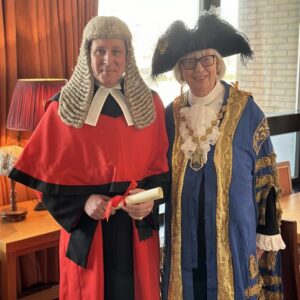 Judge Tony Alan Walter Baumgartner, known as His Honour Judge… Read more: His Honour Judge Tony Baumgartner – Recorder of Westminster
 - New Protocol for Legal Professionals to Raise Informal Concerns About Judges Behaviour
 On the 8th July 2026, the Courts and Tribunals Judiciary… Read more: New Protocol for Legal Professionals to Raise Informal Concerns About Judges Behaviour
 - The Policing Performance System
 In April 2026, His Majesty’s Inspectorate of Constabulary and Fire… Read more: The Policing Performance System
 - What is the Judicial College ?
 The Judicial College serves as the central pillar of professional… Read more: What is the Judicial College ?
 - Police Leadership Commission Report
 An independent review by the Police Leadership Commission has concluded… Read more: Police Leadership Commission Report
 - Repeal a Law
 Repealing a law in the United Kingdom does not mean… Read more: Repeal a Law
 - What are Judges Lodgings ?
 The provision of judges’ lodgings is a longstanding feature of… Read more: What are Judges Lodgings ?
 - What is Two Tier Policing ?
 The BBC describes so-called “two-tier policing” as where right-wing protests… Read more: What is Two Tier Policing ?
Most Popular ↓
You should always seek formal legal advice from a qualified and reputable lawyer (solicitor or barrister).
There are a number of links to Free and Paid For Legal Resources and Legal Organisations on the Free Legal Advice , Legal Aid and Pro Bono pages.
[post_title] was last updated on the 26th August 2026
