
The presumption of innocence is a basic principle of the criminal justice system in the United Kingdom. It means that anyone charged with a crime must be treated as innocent until proven guilty by a court. The prosecution has to prove the case, and any reasonable doubt should go in the accused person’s favour.
In 1935 the House of Lords in Woolmington v DPP confirmed a core rule of English criminal law. Viscount Sankey LC described it as the “golden thread” running through the criminal law: it is always the duty of the prosecution to prove the accused’s guilt beyond reasonable doubt.
The accused does not have to prove their innocence. If, at the end of the case, there is a reasonable doubt, the person must be acquitted.
People sometimes say the presumption of innocence goes back to Magna Carta (1215). That is only partly true. Magna Carta’s famous Clause 39 says that no free man shall be imprisoned or punished “except by the lawful judgment of his equals or by the law of the land.”
This was an important early statement of due process based on the idea that the king could not simply lock people up on a whim.
However, Magna Carta does not say that a person is presumed innocent, nor does it place the burden of proof on the prosecution.
How the Human Rights Act 1998 Protects the Presumption of Innocence
The Human Rights Act 1998 requires public bodies and the courts to respect the rights in the European Convention on Human Rights. Article 6 of the Convention (set out in Schedule 1 to the Human Rights Act) guarantees the right to a fair trial.
A key part of Article 6 is the presumption of innocence: everyone charged with a criminal offence must be presumed innocent until proved guilty according to law.
Courts must try to interpret laws in a way that fits with this right, and public authorities (including the police and prosecutors) must not act in a way that breaks it. This means the presumption is not just a traditional rule but is a legal right under Article 6 that people can rely on in the UK.
What the European Court of Human Rights Says
The European Court of Human Rights has decided many cases about the presumption of innocence. A useful summary of the current approach is available in the Court’s own Knowledge Sharing document Article 6 (criminal limb) Presumption of innocence. The Court sees the right as having two main parts.
First, it protects people during the criminal trial itself. Judges must not start from the assumption that the defendant is guilty. The prosecution must prove the case.
Any legal shortcuts or assumptions about guilt must stay within fair limits, and people must not be forced to incriminate themselves. Courts and other public bodies must also avoid saying or doing things that make it look as though guilt has already been decided.
Second, the right can continue after a case has ended. If someone has been found not guilty, or if the case against them has been dropped, public authorities should not treat them as if they were guilty.
This protection sometimes overlaps with the right to private and family life. Later proceedings (for example, claims for compensation or confiscation of assets) can also raise issues if they are closely linked to the earlier criminal case and suggest that the person was really guilty all along.
What Officials Say About a Case
Problems often arise from what public officials say in public. Police officers, prosecutors, ministers and other officials can undermine the presumption of innocence if their comments encourage people to believe that a suspect is already guilty.
The European Court looks at the difference between two kinds of statement. Saying that someone is “suspected of” an offence, or that “an investigation is under way,” is usually fine. Saying that the person “is guilty,” “has committed the crime,” or using similarly definite language is not.
The overall context matters. One careless phrase does not automatically break the right if the rest of the process stays fair and a higher court later corrects any wrong impression.
Officials are still allowed to tell the public what is happening in an investigation, but they must choose their words carefully so they do not prejudge the outcome. UK courts apply these standards under the Human Rights Act 1998 when looking at statements made by the police, prosecutors or other public bodies.
Conclusion
The presumption of innocence therefore works at two levels: as a long-standing feature of UK law and as a right protected by the Human Rights Act 1998. It influences how trials are run, what public officials can say and how people are treated after a case has finished.
The European Court’s case-law gives a clear guide to the standards that apply. Together with the Human Rights Act 1998, it helps protect people from being treated as guilty before (or without) a proper finding by a court.
Check out our related articles on Rule of Law, Open Justice, Is the Law Black and White ?, What Does Lady Justice Symbolise ?, Can a Judge Direct a Jury to Find a Defendant Not Guilty ?,Law Society, Law Commission, Solicitors, Solicitors Regulation Authority, Barristers, Bar Council of England and Wales, Bar Standards Board, Contra Mundum, R v Sussex Justices, Police Impartiality and the highly questionable Sussex Family Justice Board.
The Ministry of Injustice is not the Ministry of Justice nor is it affiliated in any way with the justice system, legal profession, police or any other law enforcement agencies.
“Publicity is the very soul of justice. . . . It keeps the judge himself, while trying, under trial….Where there is no publicity there is no justice”
Jeremy Bentham – Mr Justice Cobb: ‘Justice must be seen to be done’
Latest Articles ↓
- Presumption of Innocence
 The presumption of innocence is a basic principle of the… Read more: Presumption of Innocence
 - His Honour Judge Daniel Sawyer
 Judge Daniel Sawyer, known as His Honour Judge Daniel Sawyer,… Read more: His Honour Judge Daniel Sawyer
 - UK National Centre for Information Defence
 Prime Minister Andy Burnham used his first United Nations General… Read more: UK National Centre for Information Defence
 - Judges Behaving Badly and His Honour Judge Simon Oliver
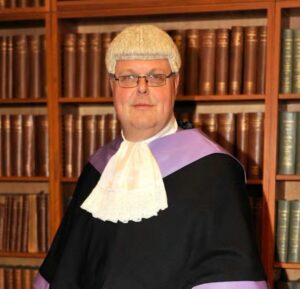 On the 27th August 2026 the Crown Prosecution Service announced… Read more: Judges Behaving Badly and His Honour Judge Simon Oliver
 - Jo Morris Barrister
 Jo Morris is a practising criminal barrister of Drystone Chambers… Read more: Jo Morris Barrister
 - Good Law Project
 The Good Law Project is a UK campaigning organisation that… Read more: Good Law Project
 - Police Federation of England and Wales (PFEW)
 The Police Federation of England and Wales (PFEW) is the… Read more: Police Federation of England and Wales (PFEW)
 - What is the Criminal Justice System (CJS) Common Platform ?
 The Criminal Justice System Common Platform (also known as HMCTS… Read more: What is the Criminal Justice System (CJS) Common Platform ?
 - Strategic Lawsuit Against Public Participation (SLAPPs)
 Strategic Lawsuits Against Public Participation, or SLAPPs, are legal actions… Read more: Strategic Lawsuit Against Public Participation (SLAPPs)
 - His Honour Judge Tony Baumgartner – Recorder of Westminster
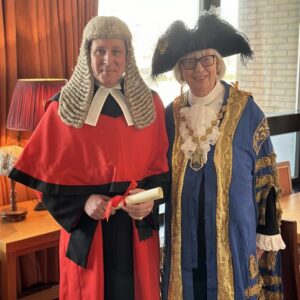 Judge Tony Alan Walter Baumgartner, known as His Honour Judge… Read more: His Honour Judge Tony Baumgartner – Recorder of Westminster
 - New Protocol for Legal Professionals to Raise Informal Concerns About Judges Behaviour
 On the 8th July 2026, the Courts and Tribunals Judiciary… Read more: New Protocol for Legal Professionals to Raise Informal Concerns About Judges Behaviour
 - The Policing Performance System
 In April 2026, His Majesty’s Inspectorate of Constabulary and Fire… Read more: The Policing Performance System
Most Popular ↓
You should always seek formal legal advice from a qualified and reputable lawyer (solicitor or barrister).
There are a number of links to Free and Paid For Legal Resources and Legal Organisations on the Free Legal Advice , Legal Aid and Pro Bono pages.
[post_title] was last updated on the 15th October 2026
