According to ChatGPT Artificial Intelligence (AI) when asked the following question about rogue family lawyers including rogue solicitors and barristers :-
“Write 500 words about rogue family lawyers in the UK“
Family law can be a complex and emotionally charged area, which makes it all the more important for clients to find a competent and trustworthy lawyer to represent their interests.
Unfortunately, there have been instances of rogue family lawyers in the UK who engage in unethical or illegal behavior, thereby causing harm to their clients and damaging the reputation of the legal profession.
One common issue is that of lawyers who fail to properly manage their clients’ cases, leading to significant delays and resulting in their clients losing out on a fair resolution. This can happen when lawyers do not keep their clients informed about the progress of their case, or neglect to file necessary documents on time, or when they provide poor quality legal representation. These types of rogue lawyers can cause serious harm to their clients, who may be left without the financial or emotional support they need during a difficult time.
Another issue is that of rogue lawyers who charge exorbitant fees for services that are not provided or performed to a satisfactory standard. This can be particularly problematic in the area of family law, where clients are often going through a stressful and emotional time, and may not be in a position to carefully scrutinize the fees being charged by their lawyer. Rogue lawyers may take advantage of this vulnerability by charging unreasonable fees for services that are not provided, or by adding hidden charges to their bills.
In addition to these types of unethical behavior, there have also been instances of rogue family lawyers who engage in illegal activities such as fraud or embezzlement. This can occur when lawyers misuse funds from their clients’ accounts, or when they provide false information to clients about their financial situation or the status of their case. These types of rogue lawyers can cause serious financial harm to their clients, and can also damage the reputation of the legal profession.
To protect clients from rogue family lawyers, the UK has several regulatory bodies, such as the Solicitors Regulation Authority (SRA) and the Bar Standards Board (BSB), which are responsible for monitoring the conduct of lawyers and taking disciplinary action against those who engage in unethical or illegal behavior. Clients who feel they have been the victim of a rogue family lawyer can also make a complaint to these bodies, who will investigate the matter and take appropriate action.
In conclusion, while the majority of family lawyers in the UK are competent and professional, there are instances of rogue lawyers who engage in unethical or illegal behavior, causing harm to their clients and damaging the reputation of the legal profession.
It is important for clients to do their due diligence and choose a reputable lawyer, and for regulatory bodies to enforce high standards of conduct for all family lawyers in the UK.
The Legal Ombudsman was set up by the Office for Legal Complaints (OLC) and established under the Legal Services Act 2007. Their job is to help resolve disputes between consumers and legal service providers.
The Legal Services Act 2007 allows the OLC to publish reports of investigations or Ombudsman decisions if it considers it “appropriate to do so in any particular case”
Click here to see if your family lawyer or family law firm is listed
The Ministry of Injustice is not the Ministry of Justice nor is it affiliated in any way with the justice system, legal profession, police or any other law enforcement agencies.
“Publicity is the very soul of justice. . . . It keeps the judge himself, while trying, under trial….Where there is no publicity there is no justice”
Jeremy Bentham – Mr Justice Cobb: ‘Justice must be seen to be done’
Latest Articles ↓
- Presumption of Innocence
 The presumption of innocence is a basic principle of the… Read more: Presumption of Innocence
 - His Honour Judge Daniel Sawyer
 Judge Daniel Sawyer, known as His Honour Judge Daniel Sawyer,… Read more: His Honour Judge Daniel Sawyer
 - UK National Centre for Information Defence
 Prime Minister Andy Burnham used his first United Nations General… Read more: UK National Centre for Information Defence
 - Judges Behaving Badly and His Honour Judge Simon Oliver
 On the 27th August 2026 the Crown Prosecution Service announced… Read more: Judges Behaving Badly and His Honour Judge Simon Oliver
 - Jo Morris Barrister
 Jo Morris is a practising criminal barrister of Drystone Chambers… Read more: Jo Morris Barrister
 - Good Law Project
 The Good Law Project is a UK campaigning organisation that… Read more: Good Law Project
 - Police Federation of England and Wales (PFEW)
 The Police Federation of England and Wales (PFEW) is the… Read more: Police Federation of England and Wales (PFEW)
 - What is the Criminal Justice System (CJS) Common Platform ?
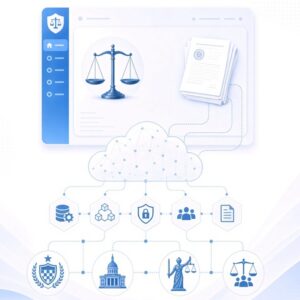 The Criminal Justice System Common Platform (also known as HMCTS… Read more: What is the Criminal Justice System (CJS) Common Platform ?
 - Strategic Lawsuit Against Public Participation (SLAPPs)
 Strategic Lawsuits Against Public Participation, or SLAPPs, are legal actions… Read more: Strategic Lawsuit Against Public Participation (SLAPPs)
 - His Honour Judge Tony Baumgartner – Recorder of Westminster
 Judge Tony Alan Walter Baumgartner, known as His Honour Judge… Read more: His Honour Judge Tony Baumgartner – Recorder of Westminster
 - New Protocol for Legal Professionals to Raise Informal Concerns About Judges Behaviour
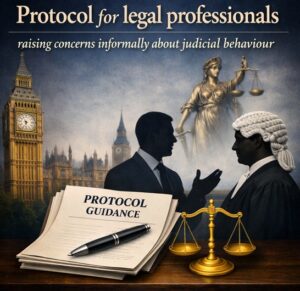 On the 8th July 2026, the Courts and Tribunals Judiciary… Read more: New Protocol for Legal Professionals to Raise Informal Concerns About Judges Behaviour
 - The Policing Performance System
 In April 2026, His Majesty’s Inspectorate of Constabulary and Fire… Read more: The Policing Performance System
Most Popular ↓
You should always seek formal legal advice from a qualified and reputable lawyer (solicitor or barrister).
There are a number of links to Free and Paid For Legal Resources and Legal Organisations on the Free Legal Advice , Legal Aid and Pro Bono pages.