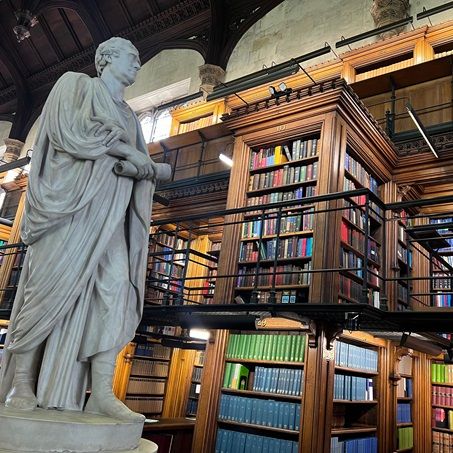
The British Library and the other legal deposit libraries are entitled to copy UK published material from the internet for archiving under legal deposit.
If you publish anything in the UK and Ireland, you need to give one copy to the British Library. This system, called legal deposit, has existed in English law since 1662. It was updated in 2013 to include electronic publications.
British Library – Legal Deposit
Legal deposit libraries in the United Kingdom are also known as “copyright libraries” or “legal deposit institutions” Here are the six legal deposit libraries:
- The British Library – Located in London, it is the national library of the United Kingdom and one of the largest libraries in the world.
- Bodleian Library – Part of the University of Oxford, it is one of the oldest libraries in Europe.
- Cambridge University Library – The central library of the University of Cambridge, known for its extensive collections.
- National Library of Scotland – Located in Edinburgh, it serves as Scotland’s legal deposit library.
- National Library of Wales (Llyfrgell Genedlaethol Cymru) – Situated in Aberystwyth, it holds the national collection of Welsh and Welsh-related materials.
- Trinity College Library, Dublin – Although located in Ireland, it was included in the legal deposit system when Ireland was part of the United Kingdom. This arrangement continues post-independence for works published in the UK.
These libraries are protected by law to ensure that there is a complete collection of the UK’s published output preserved for posterity.
The Legal Deposit Libraries Act 2003 extended the legal deposit requirement to include non-print works, such as websites, blogs, and other digital and multimedia publications ensuring that modern forms of publication are also archived.
Archiving of UK websites is governed by legal deposit law:
- Deposit Libraries Act 2003
- Deposit Libraries (Non-Print Works) Regulations 2013
- DCMS Guidance on the Legal Deposit Libraries (Non-Print Works) Regulations 2013 (PDF, 0.5mb)
The legal deposit libraries use web crawling software wherever possible, especially when collecting for the UK Web Archive. Web crawling is an automated process used to collect content and metadata that is available without access restriction on the open web. Crawled websites and material are preserved in the legal deposit libraries’ web archive. We may also use manual or other methods of downloading content and metadata when necessary.
Legal deposit and web archiving – British Library
The UK Web Archive is a collection of archived UK websites created by the Legal Deposit libraries in the UK as part of their commitment to preserve web resources permanently for future researchers.
The UK Government Web Archive captures, preserves and make accessible UK central government information published on the web. The Web Archive includes videos, tweets, images and websites dating from 1996 to the present day.
There are a number of other internet archives including The Wayback Machine which is a digital archive of the global World Wide Web and other information on the Internet. It was created by the Internet Archive, a non-profit organization based in San Francisco.
“What goes on the internet, stays on the internet forever !”
Check out our related articles on Rule of Law, Open Justice, What is Law, Is the Law Black and White ?, Abuse of Process, What Does Lady Justice Symbolise ?, McKenzie Friend, Can a Judge Direct a Jury to Find a Defendant Not Guilty ?, Law Society, Law Commission, McKenzie Friend Right of Audience, Solicitors, Solicitors Regulation Authority, Barristers, Bar Council of England and Wales, Bar Standards Board, Contra Mundum, R v Sussex Justices, Police Impartiality and the highly questionable Sussex Family Justice Board.
The Ministry of Injustice is not the Ministry of Justice nor is it affiliated in any way with the justice system, legal profession, police or any other law enforcement agencies.
“Publicity is the very soul of justice. . . . It keeps the judge himself, while trying, under trial….Where there is no publicity there is no justice”
Jeremy Bentham – Mr Justice Cobb: ‘Justice must be seen to be done’
Latest Articles ↓
- Presumption of Innocence
 The presumption of innocence is a basic principle of the… Read more: Presumption of Innocence
 - His Honour Judge Daniel Sawyer
 Judge Daniel Sawyer, known as His Honour Judge Daniel Sawyer,… Read more: His Honour Judge Daniel Sawyer
 - UK National Centre for Information Defence
 Prime Minister Andy Burnham used his first United Nations General… Read more: UK National Centre for Information Defence
 - Judges Behaving Badly and His Honour Judge Simon Oliver
 On the 27th August 2026 the Crown Prosecution Service announced… Read more: Judges Behaving Badly and His Honour Judge Simon Oliver
 - Jo Morris Barrister
 Jo Morris is a practising criminal barrister of Drystone Chambers… Read more: Jo Morris Barrister
 - Good Law Project
 The Good Law Project is a UK campaigning organisation that… Read more: Good Law Project
 - Police Federation of England and Wales (PFEW)
 The Police Federation of England and Wales (PFEW) is the… Read more: Police Federation of England and Wales (PFEW)
 - What is the Criminal Justice System (CJS) Common Platform ?
 The Criminal Justice System Common Platform (also known as HMCTS… Read more: What is the Criminal Justice System (CJS) Common Platform ?
 - Strategic Lawsuit Against Public Participation (SLAPPs)
 Strategic Lawsuits Against Public Participation, or SLAPPs, are legal actions… Read more: Strategic Lawsuit Against Public Participation (SLAPPs)
 - His Honour Judge Tony Baumgartner – Recorder of Westminster
 Judge Tony Alan Walter Baumgartner, known as His Honour Judge… Read more: His Honour Judge Tony Baumgartner – Recorder of Westminster
 - New Protocol for Legal Professionals to Raise Informal Concerns About Judges Behaviour
 On the 8th July 2026, the Courts and Tribunals Judiciary… Read more: New Protocol for Legal Professionals to Raise Informal Concerns About Judges Behaviour
 - The Policing Performance System
 In April 2026, His Majesty’s Inspectorate of Constabulary and Fire… Read more: The Policing Performance System
Most Popular ↓
You should always seek formal legal advice from a qualified and reputable lawyer (solicitor or barrister).
There are a number of links to Free and Paid For Legal Resources and Legal Organisations on the Free Legal Advice , Legal Aid and Pro Bono pages.
[post_title] was last updated on the 15th October 2026
