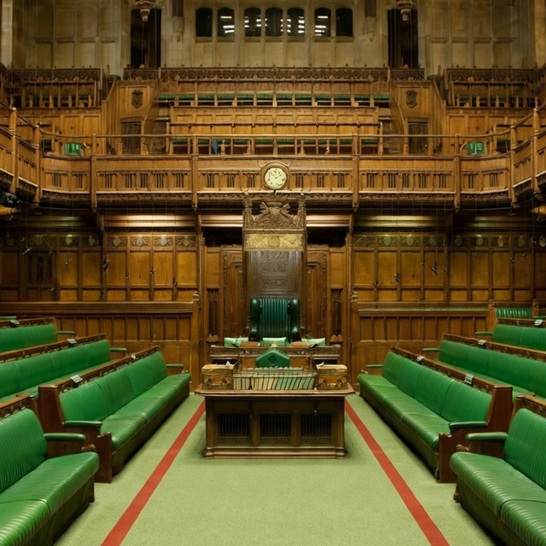
A statutory instrument is the most common form of secondary or delegated legislation in the United Kingdom. It allows Ministers or other authorised bodies to make detailed rules, regulations, orders, or other provisions under the authority of an Act of Parliament (primary legislation), without Parliament having to pass a completely new Act for every technical or updating measure.
Primary vs Secondary Legislation
Acts of Parliament (primary legislation) set out the broad framework and principles of the law. They are fully debated and passed by both Houses of Parliament before receiving Royal Assent.
Many Acts are intentionally framework-style, leaving detailed implementation such as technical standards, fee levels, commencement dates or procedural rules to be filled in later by secondary legislation. Statutory instruments made under these powers have the full force of law, but they derive their authority from the “parent” or “enabling” Act.
Why Use Statutory Instruments?
Parliament relies on SIs for practical reasons:
- Efficiency — Primary legislation would otherwise become overloaded with technical detail.
- Flexibility — Governments can respond quickly to changing circumstances (for example, updating penalty levels for inflation or implementing new safety standards).
- Volume — Between 1,500 and 2,000 SIs are typically made each year in the UK.
SIs govern a wide range of everyday matters, from traffic regulations and immigration rules to environmental standards and tax exemptions.
How Statutory Instruments Are Made
The process is straightforward and governed by the Statutory Instruments Act 1946:
- The parent Act grants a specific power to a Minister (or occasionally another body) to make regulations on defined matters.
- Government lawyers draft the SI, often following public consultation.
- The Minister signs (“makes”) the instrument.
- It is numbered in the annual series (e.g., SI 2026/123) and published on the official legislation website.
Parliamentary Scrutiny: Affirmative, Negative and Other Procedures
The level of parliamentary oversight is set by the parent Act:
- Negative procedure (most common): The SI is laid before Parliament and comes into force automatically after 40 sitting days unless either House passes a motion to annul it (“pray against”). Successful annulments are rare.
- Affirmative procedure: The SI (often laid in draft) must be actively approved by resolution of both Houses (or the Commons alone for certain financial matters) before it can be made or come into force.
- No procedure (or “made negative” in some cases): Many technical or minor instruments, such as simple commencement orders, require no further parliamentary step.
All SIs that are subject to procedure are accompanied by an Explanatory Memorandum in plain English. They are scrutinised on technical grounds by the Joint Committee on Statutory Instruments (JCSI).
Judicial Oversight and Challenges
While Parliament provides the primary political check on SIs, the courts play an important constitutional role through judicial review. Unlike primary legislation (which cannot be struck down by the courts), secondary legislation such as statutory instruments can be declared invalid if it is found to be unlawful.
The main grounds for judicial review of an SI include:
- Ultra vires (lack of vires / illegality): The instrument goes beyond the powers granted by the parent Act. Courts interpret enabling powers strictly, especially so-called Henry VIII clauses (powers allowing Ministers to amend or repeal primary legislation).
- Procedural impropriety: Failure to follow mandatory consultation, laying procedures, or other rules set by the parent Act or the Statutory Instruments Act 1946.
- Irrationality / unreasonableness: The decision is so unreasonable that no reasonable Minister could have made it (applied cautiously).
- Uncertainty: The instrument is so unclear or vague that it cannot be understood or applied.
- Incompatibility with Convention rights under the Human Rights Act 1998 (where the parent Act does not prevent removal of the incompatibility).
If a court finds an SIs unlawful, the usual remedy is a quashing order that renders the instrument void from the outset. Parliamentary approval does not prevent judicial review.
Examples of Statutory Instruments
Common examples include regulations updating driving licence rules, housing standards or environmental protections; orders setting or amending penalty levels; and commencement regulations that bring sections of a new Act into force.
In October 2013, the Treasury laid before Parliament a short statutory instrument, in relation to Sir Keir Starmer.
Officially known as The Pensions Increase (Pension Scheme for Keir Starmer QC) Regulations 2013, the measure came into force on the 31st October 2013.
Where to Find Statutory Instruments
You can browse current and historical SIs on the official UK legislation database and Parliament’s dedicated Find a Statutory Instrument website.
Further Reading
- UK Parliament Statutory Instruments (SIs)
- House of Commons Information Office Statutory Instruments Factsheet
- Public Law Project What is a Statutory Instrument ?
Summary
Statutory instruments are a vital and routine part of the UK legislative system. They enable detailed and responsive law-making while remaining grounded in parliamentary authority.
Although they receive less public attention than primary Acts, they constitute the bulk of the rules that affect daily life. They remain subject to both parliamentary scrutiny and judicial oversight to ensure they stay within lawful bounds.
Check out the related articles on the Attorney General, Solicitor General, Lady Chief Justice, Master of the Rolls, Lord Chancellor, Justice Secretary, Rule of Law, Open Justice, Law, Is the Law Black and White ?, Government Legal Department, Crown Prosecution Service (CPS), Abuse of Process, Government Legal Department (GLD), What Does Lady Justice Symbolise ?, McKenzie Friend, Can a Judge Direct a Jury to Find a Defendant Not Guilty ?,Law Society, Law Commission, McKenzie Friend Right of Audience, Solicitors, Solicitors Regulation Authority, Barristers, Bar Council of England and Wales, Bar Standards Board, R v Sussex Justices, Police Impartiality and the highly questionable Sussex Family Justice Board.
The Ministry of Injustice is not the Ministry of Justice nor is it affiliated in any way with the justice system, legal profession, police or any other law enforcement agencies.
“Publicity is the very soul of justice. . . . It keeps the judge himself, while trying, under trial….Where there is no publicity there is no justice”
Jeremy Bentham – Mr Justice Cobb: ‘Justice must be seen to be done’
Latest Articles ↓
- Presumption of Innocence
 The presumption of innocence is a basic principle of the… Read more: Presumption of Innocence
 - His Honour Judge Daniel Sawyer
 Judge Daniel Sawyer, known as His Honour Judge Daniel Sawyer,… Read more: His Honour Judge Daniel Sawyer
 - UK National Centre for Information Defence
 Prime Minister Andy Burnham used his first United Nations General… Read more: UK National Centre for Information Defence
 - Judges Behaving Badly and His Honour Judge Simon Oliver
 On the 27th August 2026 the Crown Prosecution Service announced… Read more: Judges Behaving Badly and His Honour Judge Simon Oliver
 - Jo Morris Barrister
 Jo Morris is a practising criminal barrister of Drystone Chambers… Read more: Jo Morris Barrister
 - Good Law Project
 The Good Law Project is a UK campaigning organisation that… Read more: Good Law Project
 - Police Federation of England and Wales (PFEW)
 The Police Federation of England and Wales (PFEW) is the… Read more: Police Federation of England and Wales (PFEW)
 - What is the Criminal Justice System (CJS) Common Platform ?
 The Criminal Justice System Common Platform (also known as HMCTS… Read more: What is the Criminal Justice System (CJS) Common Platform ?
 - Strategic Lawsuit Against Public Participation (SLAPPs)
 Strategic Lawsuits Against Public Participation, or SLAPPs, are legal actions… Read more: Strategic Lawsuit Against Public Participation (SLAPPs)
 - His Honour Judge Tony Baumgartner – Recorder of Westminster
 Judge Tony Alan Walter Baumgartner, known as His Honour Judge… Read more: His Honour Judge Tony Baumgartner – Recorder of Westminster
 - New Protocol for Legal Professionals to Raise Informal Concerns About Judges Behaviour
 On the 8th July 2026, the Courts and Tribunals Judiciary… Read more: New Protocol for Legal Professionals to Raise Informal Concerns About Judges Behaviour
 - The Policing Performance System
 In April 2026, His Majesty’s Inspectorate of Constabulary and Fire… Read more: The Policing Performance System
Most Popular ↓
You should always seek formal legal advice from a qualified and reputable lawyer (solicitor or barrister).
There are a number of links to Free and Paid For Legal Resources and Legal Organisations on the Free Legal Advice , Legal Aid and Pro Bono pages.
[post_title] was last updated on the 15th October 2026
