
The President of the Family Division is a highly esteemed position in the United Kingdom’s judicial system.
It is a role responsible for overseeing and presiding over family-related cases in England and Wales. In this article, we will delve into the history of the position and provide details on the current holder. The salary of the President of the Family Division is £290,122.
History
The President of the Family Division is a judicial office in England and Wales, established in 1873 by the Judicature Act, which reformed the court system in England and Wales.
The Act created a single Supreme Court of Judicature consisting of the High Court of Justice and the Court of Appeal. This replaced the previously separate court systems of common law and equity, and it also established several new judicial positions, including the President of the Probate, Divorce and Admiralty Division.
The Family Division was created in 1971 when Admiralty and contentious probate cases were removed from its predecessor, the Probate, Divorce and Admiralty Division.
Selection Process for President of the Family Division
Selection for President of the Family Division is run under the relevant sections of the Constitutional Reform Act 2005 as amended by the Crime and Courts Act 2013.
In accordance with section 70 of the Constitutional Reform Act 2005, as amended by the Crime and Courts Act 2013, a panel determined the selection process to be followed. As required by the Crime and Courts Act 2013, the Lord Chancellor is consulted as part of the selection process.
In accordance with s.10(3) of the Senior Courts Act 1981, the selection exercise was open to all applicants who satisfy the judicial-appointment eligibility condition on a 7-year basis, or are judges of the Supreme Court of the United Kingdom, Court of Appeal, or High Court.
Current and Former Presidents of the Family Division
On the 23rd April 2026, His Majesty The King was pleased to approve the appointment of The Rt Hon Lord Justice Stephen Cobb as the President of the Family Division. This appointment follows the retirement of Sir Andrew McFarlane on 13 April 2026.
The Rt Hon Lord Justice Stephen Cobb was called to the Bar, Inner Temple, in 1985 and took Silk in 2003. He started his judicial career as a Recorder in 2004 and was authorised to hear cases under section 9(1) of the Senior Courts Act 1981 in 2009. He was appointed as a High Court Judge in 2013 and was assigned to the Family Division; he also sat in the Administrative Court of the Kings Bench Division and was a nominated judge of the Court of Protection. He was appointed to the Court of Appeal in June 2024, and took his place in 2025. He served as a Family Presiding Judge (North Eastern Circuit) between 2015 and 2021.
Sir Andrew McFarlane was the President of the Family Division and Head of Family Justice in England and Wales from July 2018 until his retirement on the 13th April 2026.
Sir Andrew succeeded Sir James Munby.
As well as being the President, The Rt Hon Lord Justice Stephen Cobb is the Head of the Family Division of the High Court of Justice and may sit as of right in the Court of Appeal, the High Court and the Family Court either alone or as part of a panel.
Lord Justice Stephen Cobb is also Head of Family Justice, Head of Probate, President of the Court of Protection and chairs both the Family Procedure Rule Committee and Family Justice Council.
The Family Division of the High Court consists of 19 High Court Judges. It deals with:
- Divorce, including disputes over children, property or money;
- Adoption, wardship and other matters involving children; and
- Judgments on behalf of those who are unable to make decisions for themselves, such as persistent vegetative state victims.
The Family Division also deals with undisputed matters of probate – the legal recognition of the validity of a will – in the Probate Registry of the Family Division in London, and the 11 probate registries in England and Wales.
Image of the Rt Hon Lord Justice Stephen Cobb : Photoshot
Check out our articles on Rule of Law, Open Justice, Judges Salaries and Fees, Dodgy Judges, Do you Have to Bow to a Judge ?, Can you Email a Judge ?, Can you Criticise a Judge ? and the highly dubious Sussex Family Justice Board.
The Ministry of Injustice is not the Ministry of Justice nor is it affiliated in any way with the justice system, legal profession, police or any other law enforcement agencies.
“Publicity is the very soul of justice. . . . It keeps the judge himself, while trying, under trial….Where there is no publicity there is no justice”
Jeremy Bentham – Mr Justice Cobb: ‘Justice must be seen to be done’
Latest Articles ↓
- Presumption of Innocence
 The presumption of innocence is a basic principle of the… Read more: Presumption of Innocence
 - His Honour Judge Daniel Sawyer
 Judge Daniel Sawyer, known as His Honour Judge Daniel Sawyer,… Read more: His Honour Judge Daniel Sawyer
 - UK National Centre for Information Defence
 Prime Minister Andy Burnham used his first United Nations General… Read more: UK National Centre for Information Defence
 - Judges Behaving Badly and His Honour Judge Simon Oliver
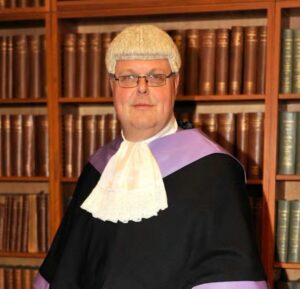 On the 27th August 2026 the Crown Prosecution Service announced… Read more: Judges Behaving Badly and His Honour Judge Simon Oliver
 - Jo Morris Barrister
 Jo Morris is a practising criminal barrister of Drystone Chambers… Read more: Jo Morris Barrister
 - Good Law Project
 The Good Law Project is a UK campaigning organisation that… Read more: Good Law Project
 - Police Federation of England and Wales (PFEW)
 The Police Federation of England and Wales (PFEW) is the… Read more: Police Federation of England and Wales (PFEW)
 - What is the Criminal Justice System (CJS) Common Platform ?
 The Criminal Justice System Common Platform (also known as HMCTS… Read more: What is the Criminal Justice System (CJS) Common Platform ?
 - Strategic Lawsuit Against Public Participation (SLAPPs)
 Strategic Lawsuits Against Public Participation, or SLAPPs, are legal actions… Read more: Strategic Lawsuit Against Public Participation (SLAPPs)
 - His Honour Judge Tony Baumgartner – Recorder of Westminster
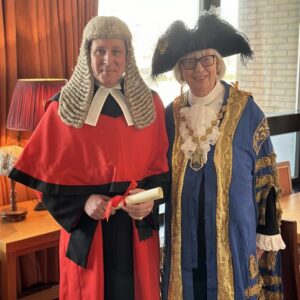 Judge Tony Alan Walter Baumgartner, known as His Honour Judge… Read more: His Honour Judge Tony Baumgartner – Recorder of Westminster
 - New Protocol for Legal Professionals to Raise Informal Concerns About Judges Behaviour
 On the 8th July 2026, the Courts and Tribunals Judiciary… Read more: New Protocol for Legal Professionals to Raise Informal Concerns About Judges Behaviour
 - The Policing Performance System
 In April 2026, His Majesty’s Inspectorate of Constabulary and Fire… Read more: The Policing Performance System
Most Popular ↓
You should always seek formal legal advice from a qualified and reputable lawyer (solicitor or barrister).
There are a number of links to Free and Paid For Legal Resources and Legal Organisations on the Free Legal Advice , Legal Aid and Pro Bono pages.
[post_title] was last updated on the 15th October 2026
