
A chief officer of police may, at the request of any individual or entity, provide special police services at specific premises or within any locality in the force’s jurisdiction, subject to charges set by the police authority on a scale determined by that authority. So yes the Police are available for hire !
Police forces have historically recovered costs for “special police services”. These services include policing events like football matches, concerts, or private functions where organisers request additional police presence beyond standard public duties.
Drawing on key documents from UK Parliament, National Police Chiefs’ Council (NPCC) and HM Revenue & Customs (HMRC), this article explores the legal framework, implications, and controversies surrounding charging for police services.
Legislative Framework: The Foundation of Charging
The legal basis for charging for police services is rooted in Section 25 of the Police Act 1996 which allows police authorities to provide “special police services” at the request of any person, subject to payment. These services encompass additional policing beyond core public duties, such as securing commercial events like football matches, concerts, or private functions.
Section 26 of the Police Act 1996 applies similar requirements to the provision of police services overseas.
The 2008-09 UK Parliament report by the Home Affairs Committee details how this provision enables forces to recover costs for deploying officers, vehicles, and equipment.
Section 25, however, is not prescriptive about which events should incur charges or how fees should be calculated, leading to significant variation across forces. The Parliament report highlights cases where event organisers faced unexpected costs due to inconsistent application.
To address this, Section 15 of the Police Reform and Social Responsibility Act 2011 later clarified the role of Police and Crime Commissioners (PCCs) in overseeing charging policies, ensuring greater accountability.
NPCC Guidelines: Standardising the Approach
The NPCC’s National Policing Guidelines on Charging for Police Services aim to standardise practices across England and Wales. The guidelines categorise chargeable services into three types: special police services (e.g., policing commercial events like music festivals), mutual aid (where one force assists another), and additional services (e.g., training or consultancy for external organisations).
Charges are based on the full economic cost, including officer salaries, overtime, vehicles, and administrative overheads.
For example, policing a large-scale event like Glastonbury Festival could cost organisers tens of thousands of pounds, calculated by officer hours and resources deployed.
The guidelines emphasise transparency, requiring forces to publish charging rates and consult with event organisers in advance. They also allow exemptions for non-commercial events, such as charitable fundraisers, if they serve the public interest.
However, the discretion granted to individual forces can lead to inconsistencies. A small community group organising a charity run might face charges for road closures in one force area but not another, raising concerns about fairness.
Special Police Services Costs
As an example, in the Fees and Charges for the Supply of Goods & Services 2025 document published by Sussex Police, on page 14 they publish the costs for special police services.
| Surrey | Sussex | ||||
| Uniform and CID 2025 Rates | Hourly Rates | Daily Rates | Hourly Rates | Daily Rates | |
| £ | £ | £ | £ | ||
| Chief Superintendent | NORMAL | 165.91 | 1,202.85 | 164.91 | 1,195.58 |
| BANK HOLIDAY | N/A | N/A | N/A | N/A | |
| BH < 8 days’ notice | N/A | N/A | N/A | N/A | |
| Superintendent | NORMAL | 144.54 | 1,047.93 | 143.54 | 1,040.66 |
| BANK HOLIDAY | N/A | N/A | N/A | N/A | |
| BH < 8 days’ notice | N/A | N/A | N/A | N/A | |
| Chief Inspector | NORMAL | 117.12 | 849.08 | 116.11 | 841.81 |
| BANK HOLIDAY | N/A | N/A | N/A | N/A | |
| BH < 8 days’ notice | N/A | N/A | N/A | N/A | |
| Inspector | NORMAL | 110.47 | 800.94 | 109.47 | 793.67 |
| BANK HOLIDAY | N/A | N/A | N/A | N/A | |
| BH < 8 days’ notice | N/A | N/A | N/A | N/A | |
| Sergeant | NORMAL | 114.34 | 828.99 | 113.34 | 821.72 |
| BANK HOLIDAY | 139.54 | 1,011.65 | 138.54 | 1,004.38 | |
| BH < 8 days’ notice | 181.84 | 1,318.36 | 180.84 | 1,311.09 | |
| Constable | NORMAL | 91.10 | 660.45 | 90.09 | 653.18 |
| BANK HOLIDAY | 111.33 | 807.15 | 110.33 | 799.88 | |
| BH < 8 days’ notice | 143.72 | 1,041.93 | 142.71 | 1,034.66 | |
Please refer to the Fees and Charges for the Supply of Goods & Services 2025 for all fees and charges for special police services.
Sussex Police also publish an Income Generation and Charging Policy.
This policy is required to ensure there is a consistent and transparent method for calculating the appropriate fees for the use of police services and/or goods that are provided by Sussex Police to outside agencies so that the ‘users’ of the service have a clear understanding of how the charges have been calculated.
Income Generation and Charging Policy (490/2024) – Sussex Police
The amount of money Brighton and Hove Albion paid to Sussex Police for special police services from 2015 to 2024 was obtained via a Freedom of Information request by Richard Lemmer.
Further to a FOI request about the provision of Metropolitan Police officers under private hire arrangements such as those specified under S.25 of the Police Act 1996, The Met Police Published the response Private hire or provision of officers under special services provisions of Police Act 1996
Football clubs are currently only legally obliged to pay for the policing on their “footprint”, usually inside the stadium and surrounding car parks; the provision of “consequential policing” outside a football match, for example at a railway station or in the city centre, is currently the responsibility of the police and is provided at their discretion and at a cost to them.
The Cost of Policing Football Matches – Home Affairs Committee
HMRC and VAT
HMRC’s VATGPB5270 guidance clarifies the tax implications of charging for police services. Core policing duties, such as responding to emergencies or maintaining public order, are classified as non-business activities and exempt from VAT, reflecting their status as statutory obligations.
In contrast, special police services provided to commercial entities, such as policing a corporate event, are considered business activities and subject to VAT.
This ensures forces recover costs without generating profit. For example, a private company hiring police for a product launch would pay the full cost plus VAT, while a community event might qualify for an exemption if deemed non-commercial.
This distinction aligns with HMRC’s broader aim to balance fiscal responsibility with the principle that core policing remains a public good.
However, the complexity of determining which services are VAT-liable could create administrative burdens for forces, particularly when dealing with mixed-purpose events.
Implications and Controversies
The “police for hire” model, grounded in the Police Act 1996 and refined by the NPCC guidelines, reflects a pragmatic response to financial pressures. Yet, it raises profound questions about the nature of policing in a resource-constrained era.
Charging for police services has practical benefits but also significant drawbacks. Charging allows forces to prioritise public safety while recouping costs from those who directly benefit, such as commercial event organisers.
However, critics argue that this practice risks creating a two-tier policing system, where wealthier organisations or individuals can afford enhanced protection, while smaller groups struggle.
This raises ethical concerns about whether access to police services is being commodified, undermining the principle of policing by consent established by Sir Robert Peel. Moreover, inconsistent application of charges across forces can erode public trust.
The NPCC guidelines aim to mitigate this, but their reliance on local discretion leaves room for variation.
Check out our articles on Policing by Consent, Police Impartiality, Police Public Confidence and Engagement, Police Professional Standards Department, IOPC, Crime Reporting, What is a Police and Crime Commissioner ?, Policing, Police News, Two Tiered Policing, Thought Police, Police Digital Service, Knowledge Hub – Police Digital Service, What is the National Police Coordination Centre (NPoCC) ?, Wasting Police Time, Police Community Support Officers (PCSO), Met Police, Sussex Police, Chief Constable Jo Shiner, R v Sussex Justices and the highly questionable Sussex Family Justice Board.
The Ministry of Injustice is not the Ministry of Justice nor is it affiliated in any way with the justice system, legal profession, police or any other law enforcement agencies.
“Publicity is the very soul of justice. . . . It keeps the judge himself, while trying, under trial….Where there is no publicity there is no justice”
Jeremy Bentham – Mr Justice Cobb: ‘Justice must be seen to be done’
Latest Articles ↓
- Presumption of Innocence
 The presumption of innocence is a basic principle of the… Read more: Presumption of Innocence
 - His Honour Judge Daniel Sawyer
 Judge Daniel Sawyer, known as His Honour Judge Daniel Sawyer,… Read more: His Honour Judge Daniel Sawyer
 - UK National Centre for Information Defence
 Prime Minister Andy Burnham used his first United Nations General… Read more: UK National Centre for Information Defence
 - Judges Behaving Badly and His Honour Judge Simon Oliver
 On the 27th August 2026 the Crown Prosecution Service announced… Read more: Judges Behaving Badly and His Honour Judge Simon Oliver
 - Jo Morris Barrister
 Jo Morris is a practising criminal barrister of Drystone Chambers… Read more: Jo Morris Barrister
 - Good Law Project
 The Good Law Project is a UK campaigning organisation that… Read more: Good Law Project
 - Police Federation of England and Wales (PFEW)
 The Police Federation of England and Wales (PFEW) is the… Read more: Police Federation of England and Wales (PFEW)
 - What is the Criminal Justice System (CJS) Common Platform ?
 The Criminal Justice System Common Platform (also known as HMCTS… Read more: What is the Criminal Justice System (CJS) Common Platform ?
 - Strategic Lawsuit Against Public Participation (SLAPPs)
 Strategic Lawsuits Against Public Participation, or SLAPPs, are legal actions… Read more: Strategic Lawsuit Against Public Participation (SLAPPs)
 - His Honour Judge Tony Baumgartner – Recorder of Westminster
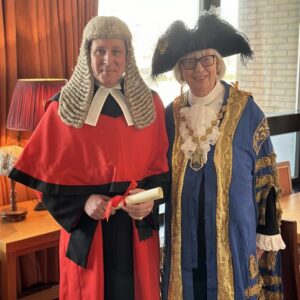 Judge Tony Alan Walter Baumgartner, known as His Honour Judge… Read more: His Honour Judge Tony Baumgartner – Recorder of Westminster
 - New Protocol for Legal Professionals to Raise Informal Concerns About Judges Behaviour
 On the 8th July 2026, the Courts and Tribunals Judiciary… Read more: New Protocol for Legal Professionals to Raise Informal Concerns About Judges Behaviour
 - The Policing Performance System
 In April 2026, His Majesty’s Inspectorate of Constabulary and Fire… Read more: The Policing Performance System
Most Popular ↓
You should always seek formal legal advice from a qualified and reputable lawyer (solicitor or barrister).
There are a number of links to Free and Paid For Legal Resources and Legal Organisations on the Free Legal Advice , Legal Aid and Pro Bono pages.
[post_title] was last updated on the 15th October 2026
