
The Chancellor of the High Court is head of the Chancery Division and is the judge with day to day responsibility for the Business and Property Courts.
The Chancellor of the High Court is based in the Rolls Building in the City of London along with seven centres in major cities in England and Wales, the Business and Property Courts, including the Chancery Division, deal with the resolution of business disputes and cases involving property in all its forms.
This important work includes commercial, competition, financial, insolvency and companies, technology, digital assets, intellectual property, trusts, partnerships, mortgages and land law.
Current Chancellor of the High Court
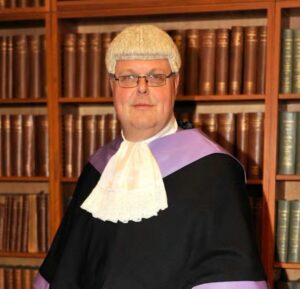
The latest Chancellor of the High Court, Sir Colin Birss, was sworn in, by the Lady Chief Justice, at a ceremony in the Royal Courts of Justice on Monday 3 November.
I am – we all are – delighted to welcome Colin as he takes up appointment. The Chancery Division is in extremely safe and able hands. I am in no doubt that he will make a fine Chancellor… With the utmost warmth we wish him well as he takes up his important duties.
Lady Chief Justice
The Rt Hon Lord Justice Colin Birss was called to the Bar in 1990 and took Silk in 2008.
He started his judicial career as a Deputy Chairman of the Copyright Tribunal in 2009.
He was later appointed as a Senior Circuit Judge in 2010, as a High Court Judge assigned to the Chancery Division in 2013 and as a Judge of the Court of Appeal in 2021.
He became the Deputy Head of Civil Justice in 2020 and is currently Lead Judge for Artificial Intelligence.
I am honoured to be sworn in as Chancellor of the High Court and I am excited to bring the experience I have gained as Deputy Head of Civil Justice to this unique role. I look forward to working with all the judges of the Business and Property Courts to provide access to justice and ensure timely and fair resolution of the disputes in these courts, promoting the rule of law.
Chancellor of the High Court Sir Colin Birss
Historical Development
The position originated in the medieval Court of Chancery, established in the 14th century to provide equitable remedies beyond common law limitations, such as trusts and specific performance. The Lord Chancellor led this court, but inefficiencies led to reforms.
The Chancery Act 1851 created vice-chancellors to assist. The Judicature Acts 1873–1875 merged law and equity into the High Court, abolishing the separate Chancery court.
The role revived in 1971 as Vice-Chancellor under the Administration of Justice Act 1970. The Senior Courts Act 1981 designated it vice-president of the Chancery Division. The Constitutional Reform Act 2005 renamed it Chancellor of the High Court, effective 1st October 2005, to enhance judicial independence.
Responsibilities
The Chancellor manages the Chancery Division, which handles civil cases in business, property, intellectual property, probate, trusts, insolvency, and competition law.
Principal duties:
- Administrative oversight: Case allocation and policy with the Lord Chief Justice.
- Judicial functions: Hearing appeals in the Court of Appeal (Civil Division) requiring Chancery expertise.
- Governance: Participation as a Privy Counsellor.
Appointments are made by the King on Prime Minister’s advice from Court of Appeal judges.
| Case Category | Examples |
|---|---|
| Business & Commercial | Shareholder disputes, partnerships |
| Property | Mortgages, land boundaries |
| Intellectual Property | Patents, trademarks |
| Trusts & Insolvency | Wills, bankruptcies |
Notable Former Chancellors of the High Court
- Sir Raymond Evershed (1971–1977): Former Master of the Rolls.
- Sir Robert Megarry (1977–1985): Author of property law texts.
- Sir Richard Scott (1994–2000): Led arms-to-Iraq inquiry.
- Sir Andrew Morritt (2000–2011): Managed digital reforms.
- Sir Geoffrey Vos (2016–2021): Introduced online resolution; later Master of the Rolls.
- Sir Julian Flaux (2021–2025): Retired 1 November 2025.
Image of Chancellor of the High Court Sir Colin Birss – Courts and Tribunals Judiciary
Check out the related articles on the Attorney General, Solicitor General, Lady Chief Justice, Master of the Rolls, Lord Chancellor, Justice Secretary, Rule of Law, Open Justice, Law, Is the Law Black and White ?, Government Legal Department, Crown Prosecution Service (CPS), Abuse of Process, Government Legal Department (GLD), What Does Lady Justice Symbolise ?, McKenzie Friend, Can a Judge Direct a Jury to Find a Defendant Not Guilty ?,Law Society, Law Commission, McKenzie Friend Right of Audience, Solicitors, Solicitors Regulation Authority, Barristers, Bar Council of England and Wales, Bar Standards Board, R v Sussex Justices, Police Impartiality and the highly questionable Sussex Family Justice Board.
The Ministry of Injustice is not the Ministry of Justice nor is it affiliated in any way with the justice system, legal profession, police or any other law enforcement agencies.
“Publicity is the very soul of justice. . . . It keeps the judge himself, while trying, under trial….Where there is no publicity there is no justice”
Jeremy Bentham – Mr Justice Cobb: ‘Justice must be seen to be done’
Latest Articles ↓
- His Honour Judge Daniel Sawyer
 Judge Daniel Sawyer, known as His Honour Judge Daniel Sawyer,… Read more: His Honour Judge Daniel Sawyer
 - UK National Centre for Information Defence
 Prime Minister Andy Burnham used his first United Nations General… Read more: UK National Centre for Information Defence
 - Judges Behaving Badly and His Honour Judge Simon Oliver
 On the 27th August 2026 the Crown Prosecution Service announced… Read more: Judges Behaving Badly and His Honour Judge Simon Oliver
 - Jo Morris Barrister
 Jo Morris is a practising criminal barrister of Drystone Chambers… Read more: Jo Morris Barrister
 - Good Law Project
 The Good Law Project is a UK campaigning organisation that… Read more: Good Law Project
 - Police Federation of England and Wales (PFEW)
 The Police Federation of England and Wales (PFEW) is the… Read more: Police Federation of England and Wales (PFEW)
 - What is the Criminal Justice System (CJS) Common Platform ?
 The Criminal Justice System Common Platform (also known as HMCTS… Read more: What is the Criminal Justice System (CJS) Common Platform ?
 - Strategic Lawsuit Against Public Participation (SLAPPs)
 Strategic Lawsuits Against Public Participation, or SLAPPs, are legal actions… Read more: Strategic Lawsuit Against Public Participation (SLAPPs)
 - His Honour Judge Tony Baumgartner – Recorder of Westminster
 Judge Tony Alan Walter Baumgartner, known as His Honour Judge… Read more: His Honour Judge Tony Baumgartner – Recorder of Westminster
 - New Protocol for Legal Professionals to Raise Informal Concerns About Judges Behaviour
 On the 8th July 2026, the Courts and Tribunals Judiciary… Read more: New Protocol for Legal Professionals to Raise Informal Concerns About Judges Behaviour
 - The Policing Performance System
 In April 2026, His Majesty’s Inspectorate of Constabulary and Fire… Read more: The Policing Performance System
 - What is the Judicial College ?
 The Judicial College serves as the central pillar of professional… Read more: What is the Judicial College ?
Most Popular ↓
You should always seek formal legal advice from a qualified and reputable lawyer (solicitor or barrister).
There are a number of links to Free and Paid For Legal Resources and Legal Organisations on the Free Legal Advice , Legal Aid and Pro Bono pages.
[post_title] was last updated on the 6th October 2026
