The Deputy Head of Civil Justice is a senior judicial leadership post responsible for the strategic direction, reform and day-to-day administration of civil justice in England and Wales.
The role works closely with the Head of Civil Justice (currently Sir Geoffrey Vos, who holds that position ex officio as Master of the Rolls and President of the Court of Appeal Civil Division).
Current Holder
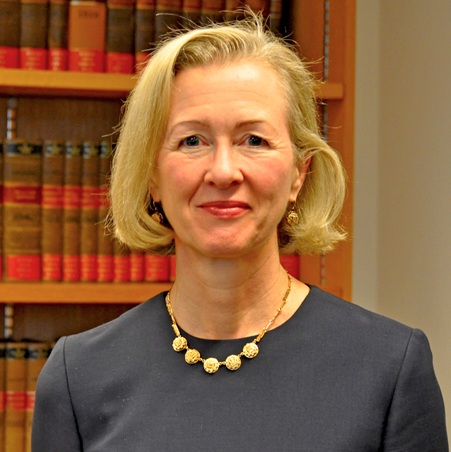
The Lady Chief Justice, following consultation with the Lord Chancellor duly appointed Mrs Justice Cockerill as the new Deputy Head of Civil Justice. Her appointment took effect from the 1st November 2025 for a term of three years.
Lady Justice Cockerill was called to the Bar (Lincoln’s Inn) in 1990 and took silk in 2011. She specialised in commercial law from 1990 to 2017.
She was appointed a Deputy High Court Judge in 2016, and a High Court Judge in the-then Queen’s Bench Division in 2017. From 2020 to 2022, she served as the Judge in Charge of the Commercial Court.
Lady Justice Sara Cockerill was sworn in as a Lady Justice of the Court of Appeal in October 2025.
The Salary of the Deputy Head of Civil Justice from from 1st April 2026 to 31st March 2027 is £275,885.
Statutory Basis and Appointment Process
The office of Deputy Head of Civil Justice was established by the Courts Act 2003 (section 62), which amended the Senior Courts Act 1981 to create structured leadership roles for civil justice. The key provisions are as follows:
- The Lord Chief Justice appoints the Deputy Head of Civil Justice, following consultation with the Lord Chancellor (now the Secretary of State for Justice).
- Eligible appointees are typically a puisne judge of the High Court or a Lord/Lady Justice of Appeal.
- The appointment is for a fixed term (usually three years) and on terms agreed at the time of appointment.
- It is not tied automatically to any other judicial office, such as the Vice-Presidency of the King’s Bench Division.
This contrasts with the Head of Civil Justice, which is held automatically by the Master of the Rolls as President of the Court of Appeal (Civil Division).
Principal Responsibilities
The Deputy Head of Civil Justice has a broad and influential remit, including:
- Providing judicial leadership for civil justice policy and reform across the County Court, High Court, and specialist lists.
- Co-chairing (with the Head of Civil Justice) the Civil Justice Council.
- Leading judicial input into the Civil Procedure Rule Committee (CPRC) in practice, though the Master of the Rolls remains the statutory chair.
- Overseeing major HMCTS reform projects, including the Damages Claims Portal, Online Civil Money Claims, and broader court digitisation.
- Acting as the primary judicial liaison with government and HMCTS on civil justice operational matters.
- Contributing to judicial deployment and welfare in the civil jurisdiction.
Former Deputy Head of Civil Justice
- Lord Justice Birss (2022 – Oct 2025)
- Dame Victoria Sharp DBE (2020 – 2022) – also served as Vice-President of the QB/KB Division concurrently, which created temporary overlap
- Mr Justice Foskett (2016 – 2020)
Image of Lady Justice Cockerill – HM Courts and Tribunals Judiciary
Check out the related articles on the Attorney General, Solicitor General, Lady Chief Justice, Lord Chancellor, Chancellor of the High Court,Justice Secretary, Rule of Law, Open Justice, Law, Is the Law Black and White ?, Government Legal Department, Crown Prosecution Service (CPS), Government Legal Department (GLD), Abuse of Process, What Does Lady Justice Symbolise ?, McKenzie Friend, Can a Judge Direct a Jury to Find a Defendant Not Guilty ?,Law Society, Law Commission, McKenzie Friend Right of Audience, Solicitors, Solicitors Regulation Authority, Barristers, Bar Council of England and Wales, Bar Standards Board, R v Sussex Justices, Police Impartiality and the highly questionable Sussex Family Justice Board.
The Ministry of Injustice is not the Ministry of Justice nor is it affiliated in any way with the justice system, legal profession, police or any other law enforcement agencies.
“Publicity is the very soul of justice. . . . It keeps the judge himself, while trying, under trial….Where there is no publicity there is no justice”
Jeremy Bentham – Mr Justice Cobb: ‘Justice must be seen to be done’
Latest Articles ↓
- His Honour Judge Daniel Sawyer
 Judge Daniel Sawyer, known as His Honour Judge Daniel Sawyer,… Read more: His Honour Judge Daniel Sawyer
 - UK National Centre for Information Defence
 Prime Minister Andy Burnham used his first United Nations General… Read more: UK National Centre for Information Defence
 - Judges Behaving Badly and His Honour Judge Simon Oliver
 On the 27th August 2026 the Crown Prosecution Service announced… Read more: Judges Behaving Badly and His Honour Judge Simon Oliver
 - Jo Morris Barrister
 Jo Morris is a practising criminal barrister of Drystone Chambers… Read more: Jo Morris Barrister
 - Good Law Project
 The Good Law Project is a UK campaigning organisation that… Read more: Good Law Project
 - Police Federation of England and Wales (PFEW)
 The Police Federation of England and Wales (PFEW) is the… Read more: Police Federation of England and Wales (PFEW)
 - What is the Criminal Justice System (CJS) Common Platform ?
 The Criminal Justice System Common Platform (also known as HMCTS… Read more: What is the Criminal Justice System (CJS) Common Platform ?
 - Strategic Lawsuit Against Public Participation (SLAPPs)
 Strategic Lawsuits Against Public Participation, or SLAPPs, are legal actions… Read more: Strategic Lawsuit Against Public Participation (SLAPPs)
 - His Honour Judge Tony Baumgartner – Recorder of Westminster
 Judge Tony Alan Walter Baumgartner, known as His Honour Judge… Read more: His Honour Judge Tony Baumgartner – Recorder of Westminster
 - New Protocol for Legal Professionals to Raise Informal Concerns About Judges Behaviour
 On the 8th July 2026, the Courts and Tribunals Judiciary… Read more: New Protocol for Legal Professionals to Raise Informal Concerns About Judges Behaviour
 - The Policing Performance System
 In April 2026, His Majesty’s Inspectorate of Constabulary and Fire… Read more: The Policing Performance System
 - What is the Judicial College ?
 The Judicial College serves as the central pillar of professional… Read more: What is the Judicial College ?
Most Popular ↓
You should always seek formal legal advice from a qualified and reputable lawyer (solicitor or barrister).
There are a number of links to Free and Paid For Legal Resources and Legal Organisations on the Free Legal Advice , Legal Aid and Pro Bono pages.
[post_title] was last updated on the 6th October 2026
