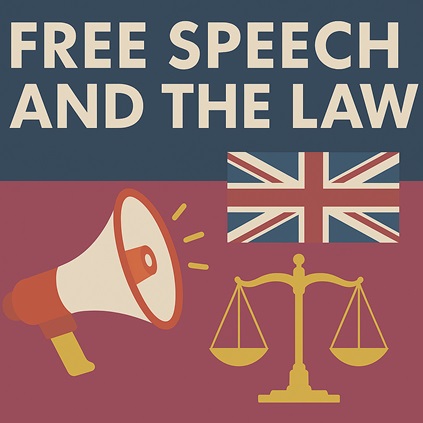
Freedom of speech is a fundamental human right that allows individuals and communities to express their opinions, ideas, and information without fear of retaliation, censorship, or punishment particularly from government authorities.
In England and Wales, this right is enshrined in law but operates within a framework of balances and restrictions. Unlike the absolute protections in some jurisdictions, UK free speech is a qualified right.
The primary safeguard for free speech in England and Wales is Article 10 of the European Convention on Human Rights (ECHR), incorporated via the Human Rights Act 1998.
Article 10 of the Human Rights Act 1998 gives the right to freedom of expression. “This right shall include freedom to hold opinions and to receive and impart information and ideas without interference by public authority and regardless of frontiers.”
The Higher Education (Freedom of Speech) Act 2023 mandates that universities uphold free speech for students, academics, and guest speakers, countering “cancel culture” and deplatforming.
Education Providers must ensure lawful events proceed without undue hindrance, with the Office for Students empowered to investigate complaints and impose fines.
The Free Speech Union is a non-partisan, mass membership public interest body that stands up for the speech rights of its members and campaigns for free speech more widely. We champion the right of people from all walks of life to express themselves without fear of punishment or persecution. We often come to the defence of our members who get into trouble for exercising their right to lawful free speech, whether in the workplace, at university or on social media.
The Free Speech Union
Origins of Free Speech
The concept of free speech traces its roots to ancient Athens in the late 6th or early 5th century BCE, where democracy fostered the principle of parrhesia, the right to speak candidly about politics, religion, and government without fear of retaliation. This allowed philosophers, playwrights, and citizens to criticise leaders openly, though it was limited to certain public forums and did not extend to slaves or women.
In contrast, ancient Rome had more restricted speech under laws like the Lex Julia Majestatis which punished insults to the emperor.
During the Middle Ages, speech was heavily controlled by the Catholic Church and monarchies with censorship intensifying after the invention of the Gutenberg printing press around 1440.
The 18th century saw philosophical defences of free speech as essential for progress and governance. John Locke advocated toleration (excluding atheists), Baruch Spinoza pushed for universal expression, and Voltaire praised England’s relative freedoms in his 1733 Letters on the English, coining the spirit of “I disapprove of what you say, but I will defend to the death your right to say it” (attributed later by biographer Evelyn Beatrice Hall).
Modern Free Speech
Globally, Free Speech is recognised in Article 19 of the Universal Declaration of Human Rights (1948) : “Everyone has the right to freedom of opinion and expression; this right includes freedom to hold opinions without interference and to seek, receive and impart information and ideas through any media and regardless of frontiers.“
In the United States, Free Speech is enshrined in the First Amendment to the Constitution, which states : “Congress shall make no law respecting an establishment of religion, or prohibiting the free exercise thereof; or abridging the freedom of speech, or of the press; or the right of the people peaceably to assemble, and to petition the Government for a redress of grievances.“
Limitations and Challenges
Free speech in England and Wales is curtailed where it veers into hate speech. The Public Order Act 1986 and related laws prohibit expressions intended or likely to stir up hatred based on race, religion, or sexual orientation with penalties up to seven years’ imprisonment.
Legal action remains a potent tool for silencing critics, through the Defamation Act 2013.
Section 2 of the Defamation Act 2013 sets out the defence of truth. Section 3 of the Defamation Act 2013 sets out the defence of honest opinion. Section 4 of the Defamation Act 2013 sets out the defence of public interest. Section 8 of the Defamation Act 2013 sets out the single publication rule.
Online platforms face pressures under the Online Safety Act 2023 to remove harmful content, raising fears of over-censorship.
Anti-protest legislation, including bans on demonstrations in abortion buffer zones punishable by fines or imprisonment, adds further restrictions.
Cases like comedian Graham Linehan’s September 2025 arrest for tweets alleged to incite violence against trans individuals underscore chilling effects. With over 12,000 annual arrests for speech-related offences in England and Wales, enforcement remains contentious.
Case Law
“Free speech encompasses the right to offend, and indeed to abuse another.” – Para 43 Scottow v CPS [2020] EWHC 3421 (Admin)
“Free speech is a fundamental common law right” – Para 21 R v Shayler [2002] UKHL 11 [2003] 1 AC 247 per Lord Bingham and Para 42 Phillips -v- Secretary of State for Foreign, Commonwealth and Development Affairs [2024] EWHC 32 (Admin)
We live in a liberal democracy. One of the precious rights that affords us is to express our own views and read, hear and consider ideas without the state intervening to stop us doing so.
The price we pay for that is having to allow others to exercise the same rights, even if that upsets, offends or shocks us.
Mr Justice Bennathan – Southwark Crown Court 10th October 2025
Check out our related articles on the Free Speech Union, Judiciary, Rule of Law, Open Justice, Is the Law Black and White ?, Abuse of Process, What Does Lady Justice Symbolise ?, McKenzie Friend, Law Society, Law Commission, McKenzie Friend Right of Audience, Solicitors, Solicitors Regulation Authority, Barristers, Bar Council of England and Wales, Bar Standards Board, R v Sussex Justices, Police Impartiality and the highly questionable Sussex Family Justice Board.
The Ministry of Injustice is not the Ministry of Justice nor is it affiliated in any way with the justice system, legal profession, police or any other law enforcement agencies.
“Publicity is the very soul of justice. . . . It keeps the judge himself, while trying, under trial….Where there is no publicity there is no justice”
Jeremy Bentham – Mr Justice Cobb: ‘Justice must be seen to be done’
Latest Articles ↓
- Presumption of Innocence
 The presumption of innocence is a basic principle of the… Read more: Presumption of Innocence
 - His Honour Judge Daniel Sawyer
 Judge Daniel Sawyer, known as His Honour Judge Daniel Sawyer,… Read more: His Honour Judge Daniel Sawyer
 - UK National Centre for Information Defence
 Prime Minister Andy Burnham used his first United Nations General… Read more: UK National Centre for Information Defence
 - Judges Behaving Badly and His Honour Judge Simon Oliver
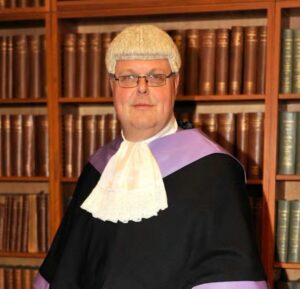 On the 27th August 2026 the Crown Prosecution Service announced… Read more: Judges Behaving Badly and His Honour Judge Simon Oliver
 - Jo Morris Barrister
 Jo Morris is a practising criminal barrister of Drystone Chambers… Read more: Jo Morris Barrister
 - Good Law Project
 The Good Law Project is a UK campaigning organisation that… Read more: Good Law Project
 - Police Federation of England and Wales (PFEW)
 The Police Federation of England and Wales (PFEW) is the… Read more: Police Federation of England and Wales (PFEW)
 - What is the Criminal Justice System (CJS) Common Platform ?
 The Criminal Justice System Common Platform (also known as HMCTS… Read more: What is the Criminal Justice System (CJS) Common Platform ?
 - Strategic Lawsuit Against Public Participation (SLAPPs)
 Strategic Lawsuits Against Public Participation, or SLAPPs, are legal actions… Read more: Strategic Lawsuit Against Public Participation (SLAPPs)
 - His Honour Judge Tony Baumgartner – Recorder of Westminster
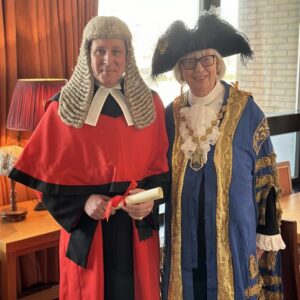 Judge Tony Alan Walter Baumgartner, known as His Honour Judge… Read more: His Honour Judge Tony Baumgartner – Recorder of Westminster
 - New Protocol for Legal Professionals to Raise Informal Concerns About Judges Behaviour
 On the 8th July 2026, the Courts and Tribunals Judiciary… Read more: New Protocol for Legal Professionals to Raise Informal Concerns About Judges Behaviour
 - The Policing Performance System
 In April 2026, His Majesty’s Inspectorate of Constabulary and Fire… Read more: The Policing Performance System
Most Popular ↓
You should always seek formal legal advice from a qualified and reputable lawyer (solicitor or barrister).
There are a number of links to Free and Paid For Legal Resources and Legal Organisations on the Free Legal Advice , Legal Aid and Pro Bono pages.
[post_title] was last updated on the 15th October 2026
