
A Crown Servant, in the United Kingdom, is an individual who is employed by the Crown or works within the civil service of the government.
The term “Crown servant” is not used in Scotland, where the equivalent term is “public servant”.
Crown Servants encompass a diverse range of professionals. They work across different government departments and agencies, contributing their expertise and skills to the functioning of the state.
Here are some examples of crown servants :-
- Civil servants: Civil servants are employed by the government to carry out a variety of tasks, such as running government departments, providing public services, and advising ministers.
- Police officers: Police officers are employed by the government to uphold the law and protect the public.
- Members of the armed forces: Members of the armed forces are employed by the government to defend the country from attack.
- Judges: Judges are employed by the government to preside over court cases.
- Crown prosecutors: Crown prosecutors are employed by the government to prosecute criminal cases.
- Diplomats: Diplomats are crown servants, and they represent the UK on the international stage. They negotiate treaties, build relationships with other countries, and promote UK interests abroad.
It’s important to note that although judges are employed by the government, they are separate from the executive branch of government, which includes the Prime Minister, Cabinet, and other government officials. This separation of powers helps to safeguard the integrity and impartiality of the judiciary.
One of the fundamental principles guiding the work of Crown Servants is their commitment to impartiality.
They are expected to perform their duties without bias or favouritism, treating all individuals and groups fairly and equitably. This principle of impartiality ensures that government decisions are made in the best interest of the public rather than personal or political interests.
Integrity is another core value upheld by Crown Servants.
They are expected to act ethically, demonstrating honesty, transparency, and accountability in their work. Maintaining the public’s trust is of utmost importance, and Crown Servants must adhere to high standards of conduct and behaviour.
Crown Servants serve at the pleasure of the Crown.
This means their employment can be terminated at the discretion of the Crown or its representatives. This authority provides flexibility in the management of the civil service, allowing the government to ensure that Crown Servants remain aligned with the goals and objectives of the administration.
The principle of Crown servants serving at the pleasure of the Crown is based on the idea that the Crown is the ultimate source of authority in the UK. This principle dates back to the days of absolute monarchy, when the King or Queen had absolute power over their subjects.
Although the UK is now a constitutional monarchy, the principle of Crown servants serving “at the pleasure of the Crown” has been retained.
Some people argue that serving at the pleasure of the Crown is an outdated and undemocratic principle that gives the government too much power. Others argue that it is an essential principle that helps to ensure the stability of the government and the country.
Crown Servants are expected to be politically neutral in their roles.
This ensures that their decisions and actions are not influenced by personal political beliefs. It is important to note that Crown Servants are distinct from political appointees or ministers who are chosen by the government
The role of Crown Servants in the United Kingdom is crucial in maintaining stability, efficiency, and continuity in the governance of the country.
Crown servants work tirelessly behind the scenes, implementing legislation, managing public services, providing legal advice, conducting diplomacy, and upholding law and order.
Crown servants provide impartial advice and support to government ministers, so that they can deliver public services in a fair and impartial way.
The UK has a long and proud tradition of public service, and Crown servants play a vital role in upholding this tradition.
The Ministry of Injustice is not the Ministry of Justice nor is it affiliated in any way with the justice system, legal profession, police or any other law enforcement agencies.
“Publicity is the very soul of justice. . . . It keeps the judge himself, while trying, under trial….Where there is no publicity there is no justice”
Jeremy Bentham – Mr Justice Cobb: ‘Justice must be seen to be done’
Latest Articles ↓
- Presumption of Innocence
 The presumption of innocence is a basic principle of the… Read more: Presumption of Innocence
 - His Honour Judge Daniel Sawyer
 Judge Daniel Sawyer, known as His Honour Judge Daniel Sawyer,… Read more: His Honour Judge Daniel Sawyer
 - UK National Centre for Information Defence
 Prime Minister Andy Burnham used his first United Nations General… Read more: UK National Centre for Information Defence
 - Judges Behaving Badly and His Honour Judge Simon Oliver
 On the 27th August 2026 the Crown Prosecution Service announced… Read more: Judges Behaving Badly and His Honour Judge Simon Oliver
 - Jo Morris Barrister
 Jo Morris is a practising criminal barrister of Drystone Chambers… Read more: Jo Morris Barrister
 - Good Law Project
 The Good Law Project is a UK campaigning organisation that… Read more: Good Law Project
 - Police Federation of England and Wales (PFEW)
 The Police Federation of England and Wales (PFEW) is the… Read more: Police Federation of England and Wales (PFEW)
 - What is the Criminal Justice System (CJS) Common Platform ?
 The Criminal Justice System Common Platform (also known as HMCTS… Read more: What is the Criminal Justice System (CJS) Common Platform ?
 - Strategic Lawsuit Against Public Participation (SLAPPs)
 Strategic Lawsuits Against Public Participation, or SLAPPs, are legal actions… Read more: Strategic Lawsuit Against Public Participation (SLAPPs)
 - His Honour Judge Tony Baumgartner – Recorder of Westminster
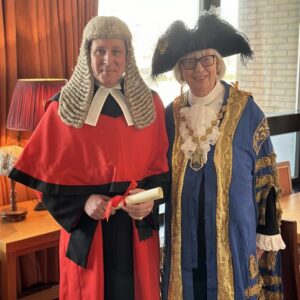 Judge Tony Alan Walter Baumgartner, known as His Honour Judge… Read more: His Honour Judge Tony Baumgartner – Recorder of Westminster
 - New Protocol for Legal Professionals to Raise Informal Concerns About Judges Behaviour
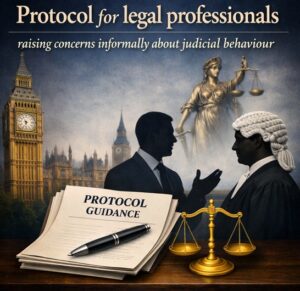 On the 8th July 2026, the Courts and Tribunals Judiciary… Read more: New Protocol for Legal Professionals to Raise Informal Concerns About Judges Behaviour
 - The Policing Performance System
 In April 2026, His Majesty’s Inspectorate of Constabulary and Fire… Read more: The Policing Performance System
Most Popular ↓
You should always seek formal legal advice from a qualified and reputable lawyer (solicitor or barrister).
There are a number of links to Free and Paid For Legal Resources and Legal Organisations on the Free Legal Advice , Legal Aid and Pro Bono pages.
[post_title] was last updated on the 15th October 2026
