The Judicial Appointments and Conduct Ombudsman (JACO) is a UK government organisation that provides an independent review of complaints about the conduct of judicial office holders and the judicial appointments process.
JACO works with the Ministry of Justice and can look into complaints about how investigating bodies have handled allegations of misconduct by judicial office holders, as well as complaints about the judicial appointments process1.
Here’s what JACO does:-
Judicial Conduct Complaints
If someone is not satisfied with how a complaint about a judge, magistrate, tribunal member, or coroner was handled, they can apply to JACO. The complaint must have already been considered by the Judicial Conduct Investigations Office, tribunal president, or magistrates’ advisory committee.
For judicial conduct investigations process complaints, the JACO are responsible for:
- considering complaints about the judicial conduct investigations process
- asking the Judicial Conduct Investigations Office, a tribunal president, or magistrates’ advisory committee to re-investigate a complaint where appropriate
- recommending changes to procedure in order to prevent the same issue from happening again
- proposing that compensation be paid if we believe that a complainant has suffered because of maladministration
JACO Judicial Conduct Complaint Form
Complete the JACO judicial conduct complaint form to ask the Judicial Appointments and Conduct Ombudsman to look into the handling of a complaint about judicial conduct.
Judicial Appointment Complaints
JACO also looks at how complaints about the judicial appointments process are handled.
For judicial appointment complaints, the JACO are responsible for:
- considering complaints about the judicial appointment process
- making suggestions to the Lord Chancellor and the Judicial Appointments Commission (JAC) on how to proceed when a complaint has been upheld
- recommending changes to procedure in order to prevent the same issues from happening again
JACO Judicial Appointment Complaint Form
Complete the JACO judicial appointment complaint form to ask the Judicial Appointments and Conduct Ombudsman to look into the handling of a complaint about judicial appointment.
Judicial Appointments and Conduct Ombudsman
The current Judicial Appointments and Conduct Ombudsman is Douglas Marshall. If you need to contact JACO, their email address is [email protected]
Office of the Judicial Appointments and Conduct Ombudsman
Postal Point 1.55
1st Floor, the Tower
102 petty France
London
SW1H 9AJ
United Kingdom
JACO Important Information
It’s important to note that JACO cannot help with a court or tribunal case, investigate a judicial office holder, or say whether their actions amount to misconduct. They also cannot reopen a court or tribunal case, review a judge’s decision, reprimand the office holder, remove them from office, or force anyone to pay compensation. However, they can recommend an apology, compensation for any loss suffered, or changes to the judicial complaint process.
JACO Decisions
The ombudsman’s decision is final and cannot be appealed against. For more detailed information, you can visit the official JACO website.
Check out our articles on HHJ Farquhar, HHJ Bedford and the highly questionable Sussex Family Justice Board.
The Ministry of Injustice is not the Ministry of Justice nor is it affiliated in any way with the justice system, legal profession, police or any other law enforcement agencies.
“Publicity is the very soul of justice. . . . It keeps the judge himself, while trying, under trial….Where there is no publicity there is no justice”
Jeremy Bentham – Mr Justice Cobb: ‘Justice must be seen to be done’
Latest Articles ↓
- Presumption of Innocence
 The presumption of innocence is a basic principle of the… Read more: Presumption of Innocence
 - His Honour Judge Daniel Sawyer
 Judge Daniel Sawyer, known as His Honour Judge Daniel Sawyer,… Read more: His Honour Judge Daniel Sawyer
 - UK National Centre for Information Defence
 Prime Minister Andy Burnham used his first United Nations General… Read more: UK National Centre for Information Defence
 - Judges Behaving Badly and His Honour Judge Simon Oliver
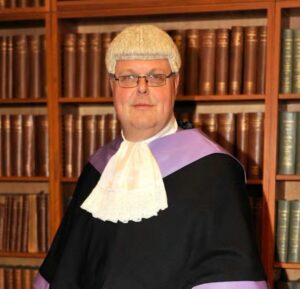 On the 27th August 2026 the Crown Prosecution Service announced… Read more: Judges Behaving Badly and His Honour Judge Simon Oliver
 - Jo Morris Barrister
 Jo Morris is a practising criminal barrister of Drystone Chambers… Read more: Jo Morris Barrister
 - Good Law Project
 The Good Law Project is a UK campaigning organisation that… Read more: Good Law Project
 - Police Federation of England and Wales (PFEW)
 The Police Federation of England and Wales (PFEW) is the… Read more: Police Federation of England and Wales (PFEW)
 - What is the Criminal Justice System (CJS) Common Platform ?
 The Criminal Justice System Common Platform (also known as HMCTS… Read more: What is the Criminal Justice System (CJS) Common Platform ?
 - Strategic Lawsuit Against Public Participation (SLAPPs)
 Strategic Lawsuits Against Public Participation, or SLAPPs, are legal actions… Read more: Strategic Lawsuit Against Public Participation (SLAPPs)
 - His Honour Judge Tony Baumgartner – Recorder of Westminster
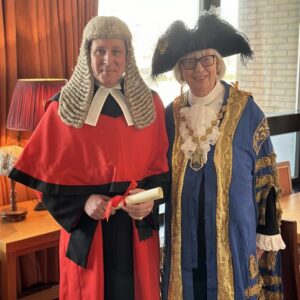 Judge Tony Alan Walter Baumgartner, known as His Honour Judge… Read more: His Honour Judge Tony Baumgartner – Recorder of Westminster
 - New Protocol for Legal Professionals to Raise Informal Concerns About Judges Behaviour
 On the 8th July 2026, the Courts and Tribunals Judiciary… Read more: New Protocol for Legal Professionals to Raise Informal Concerns About Judges Behaviour
 - The Policing Performance System
 In April 2026, His Majesty’s Inspectorate of Constabulary and Fire… Read more: The Policing Performance System
Most Popular ↓
You should always seek formal legal advice from a qualified and reputable lawyer (solicitor or barrister).
There are a number of links to Free and Paid For Legal Resources and Legal Organisations on the Free Legal Advice , Legal Aid and Pro Bono pages.
[post_title] was last updated on the 15th October 2026
