
The Ministry of Injustice have a number of domains names that can be used to access the MOI and other websites.
All domains are used for a lawful purpose in line with the relevant domain registry rules. The domains are clearly not being used to commit fraud or deceive the public.
A few of the MOI domain names have recently been temporarily suspended by Nominet and then reactivated having followed their verification process.
One particular domain name has been suspended and reactivated twice following a report to Nominet by the National Fraud Intelligence Bureau (NFIB).
I am told suspension is “Something you are just going to have to live with”.
Freedom of expression
1 Everyone has the right to freedom of expression. This right shall include freedom to hold opinions and to receive and impart information and ideas without interference by public authority and regardless of frontiers. This Article shall not prevent States from requiring the licensing of broadcasting, television or cinema enterprises.
2 The exercise of these freedoms, since it carries with it duties and responsibilities, may be subject to such formalities, conditions, restrictions or penalties as are prescribed by law and are necessary in a democratic society, in the interests of national security, territorial integrity or public safety, for the prevention of disorder or crime, for the protection of health or morals, for the protection of the reputation or rights of others, for preventing the disclosure of information received in confidence, or for maintaining the authority and impartiality of the judiciary.
Article 10 of the Human Rights Act
If the public authorities don’t like certain domain names being used, then why didn’t they register them for themselves ?
MOI domains
btppolice.uk
ci5.uk
cityoflondonpolice.uk
cjscp.uk
cjsm.uk
cpsgov.uk
hampshirepolice.uk
hertspolice.uk
judges.uk
justice.me.uk
met-police.uk
mi5gov.uk
mi6gov.uk
ministryofinjustice.co.uk
ministryofinjustice.com
ministryofinjustice.uk
moi.me.uk
roguelawyer.co.uk
royalcourtsofjustice.co.uk
royalcourtsofjustice.uk
unlawful.co.uk
sisgov.uk
sussexpolice.uk
sussex-police.uk
thesecretbarrister.co.uk
west-midlands-police.uk
Terms & Conditions of Domain Name Registration – The contract a Registrant enters into with Nominet when they register a .UK domain name.
Rules of Registration – The rules for the registration and use of domain names within the .UK domain and its sub-domains. These rules form part of our Terms & Conditions of Domain Name Registration and are part of the Registrant’s contract with Nominet.
Criminal Practices Policy – How we address criminal activity in .UK, .cymru and .wales. This policy is also available in Welsh.
DRS Policy – the rules and procedures governing our Dispute Resolution Service. Understanding these rules is vital.
List of .gov.uk domain names
A list of active .gov.uk domain names is updated once a year by the Central Digital and Data Office.
List of .gov.uk domain names as of 13th January 2025
For some reason this list was not updated in 2024 ?
Domain Squatting and Cyber Security ?
The Ministry of Injustice is not the Ministry of Justice nor is it affiliated in any way with the justice system, legal profession, police or any other law enforcement agencies.
“Publicity is the very soul of justice. . . . It keeps the judge himself, while trying, under trial….Where there is no publicity there is no justice”
Jeremy Bentham – Mr Justice Cobb: ‘Justice must be seen to be done’
Latest Articles ↓
- Presumption of Innocence
 The presumption of innocence is a basic principle of the… Read more: Presumption of Innocence
 - His Honour Judge Daniel Sawyer
 Judge Daniel Sawyer, known as His Honour Judge Daniel Sawyer,… Read more: His Honour Judge Daniel Sawyer
 - UK National Centre for Information Defence
 Prime Minister Andy Burnham used his first United Nations General… Read more: UK National Centre for Information Defence
 - Judges Behaving Badly and His Honour Judge Simon Oliver
 On the 27th August 2026 the Crown Prosecution Service announced… Read more: Judges Behaving Badly and His Honour Judge Simon Oliver
 - Jo Morris Barrister
 Jo Morris is a practising criminal barrister of Drystone Chambers… Read more: Jo Morris Barrister
 - Good Law Project
 The Good Law Project is a UK campaigning organisation that… Read more: Good Law Project
 - Police Federation of England and Wales (PFEW)
 The Police Federation of England and Wales (PFEW) is the… Read more: Police Federation of England and Wales (PFEW)
 - What is the Criminal Justice System (CJS) Common Platform ?
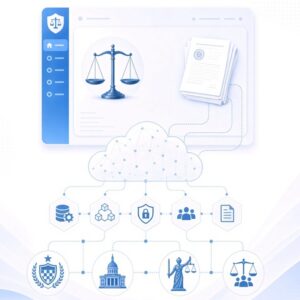 The Criminal Justice System Common Platform (also known as HMCTS… Read more: What is the Criminal Justice System (CJS) Common Platform ?
 - Strategic Lawsuit Against Public Participation (SLAPPs)
 Strategic Lawsuits Against Public Participation, or SLAPPs, are legal actions… Read more: Strategic Lawsuit Against Public Participation (SLAPPs)
 - His Honour Judge Tony Baumgartner – Recorder of Westminster
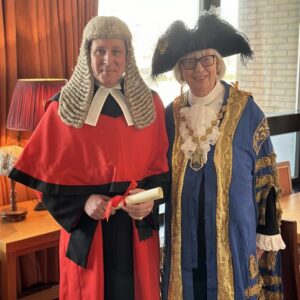 Judge Tony Alan Walter Baumgartner, known as His Honour Judge… Read more: His Honour Judge Tony Baumgartner – Recorder of Westminster
 - New Protocol for Legal Professionals to Raise Informal Concerns About Judges Behaviour
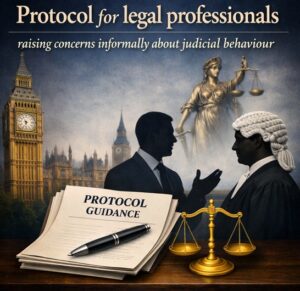 On the 8th July 2026, the Courts and Tribunals Judiciary… Read more: New Protocol for Legal Professionals to Raise Informal Concerns About Judges Behaviour
 - The Policing Performance System
 In April 2026, His Majesty’s Inspectorate of Constabulary and Fire… Read more: The Policing Performance System
Most Popular ↓
You should always seek formal legal advice from a qualified and reputable lawyer (solicitor or barrister).
There are a number of links to Free and Paid For Legal Resources and Legal Organisations on the Free Legal Advice , Legal Aid and Pro Bono pages.
[post_title] was last updated on the 15th October 2026
