His Majesty’s Inspectorate of Constabulary and Fire & Rescue Services (HMICFRS) independently assesses and reports, in the public interest, on the effectiveness and efficiency of police forces and fire & rescue services.
Sir Andy Marsh was appointed HM Chief Inspector of Constabulary and HM Inspector of Fire & Rescue Services in July 2026.
“Promoting improvements in policing and fire & rescue services to make everyone safer”
HMICFRS ask the questions that they believe the public wish to have answered, and publish their findings, conclusions and recommendations. HMICFRS use their expertise to interpret the evidence and make recommendations for improvement.
Police and crime commissioners are required to publish their comments on each HMICFRS report within 56 days of its publication, and must include an explanation of the steps to be taken in response to each HMICFRS recommendation or an explanation of why no action has been or is to be taken in that respect.
HMICFRS Powers
HMICFRS provide authoritative information to allow the public to compare the performance of their police force and fire & rescue service against others. HMICFRS also routinely monitor the performance of police forces in England and Wales.
HMICFRS inspects across England, Wales and Northern Ireland.
HMICFRS also inspect law enforcement arrangements in British Overseas Territories and Crown Dependencies, on invitation from the relevant government, as well as non-territorial services, specialist agencies and international police forces.
Read the latest HMICFRS inspection of Sussex Police and the Met Police.
History of HMICFRS
For over 160 years, His Majesty’s Inspectorate of Constabulary (HMIC) independently inspected and reported on the efficiency and effectiveness of police forces.
On the 150th anniversary of HMIC in July 2006, a book The History of Her Majesty’s Inspectorate of Constabulary, The First 150 Years was produced.
In the summer of 2017 HMIC took on the inspections of England’s fire and rescue services, inspecting and reporting on their efficiency, effectiveness and people.
To reflect this new role, HMIC changed their name to HM Inspectorate of Constabulary and Fire & Rescue Services (HMICFRS).
Public Interest
HMICFRS Police Inspections :-
HMICFRS’s annual inspection programme and framework for police forces in England and Wales is subject to the approval of the Home Secretary under the Police Act 1996.
The Home Secretary may also require HMICFRS to carry out further inspections of police forces, beyond the terms of the annual inspection programme. Local policing bodies may commission HMICFRS to do inspections in their force areas, although HMICFRS is not required to accept any such commission.
In devising its policing inspection programme and framework for the Home Secretary’s approval, HMICFRS considers the risks to the public, service quality, public concerns, the operating environment, the effect which inspection may have on a force, and the benefits to the public of improvements which may follow inspection.
HMICFRS may also carry out inspections of police forces on its own initiative if it considers that the performance or circumstances of a force merit it.
HMICFRS Public Interest
HMICFRS Fire & rescue service inspections :-
The Fire and Rescue Services Act 2004 provides that HMICFRS will inspect and report on the efficiency and effectiveness of fire & rescue authorities in England.
HMICFRS’s inspection programme and framework for fire and rescue authorities in England is subject to the approval of the Home Secretary.
The Home Secretary may also require HMICFRS to carry out further inspections of any or all fire and rescue services in England.
In its inspections, HMICFRS focuses on the efficiency and effectiveness of each English fire and rescue authority and how well it looks after its people. HMICFRS may also on its own initiative carry out an inspection not in its inspection programme and framework if it considers that the performance or circumstances of the fire and rescue authority merit it.
HMICFRS Public Interest
HMICFRS Powers
HMICFRS is an inspectorate, not a regulator. Inspectorates have powers to secure information, but no powers to give orders for change. Recommendations are not orders.
Regulators, on the other hand, have powers of intervention, direction and enforcement.
It is for chief constables (whose operational independence is a cornerstone of British policing), police and crime commissioners (with powers to set local priorities and budgets) and, in extreme cases, the Home Secretary (who has ultimate democratic responsibility for policing) to take action as a result of HMICFRS’s recommendations. The same applies to the fire & rescue service itself, and the fire & rescue authorities.
HMICFRS Powers
Recent HMICFRS Publications
- State of Policing Report 2022 and the Loss of Public Trust
- PEEL 2021/22 – An inspection of Sussex Police
Check out our articles on Sussex Police, What is Policing by Consent, Two Tier Policing, Wasting Police Time and the highly questionable Sussex Family Justice Board.
The Ministry of Injustice is not the Ministry of Justice nor is it affiliated in any way with the justice system, legal profession, police or any other law enforcement agencies.
“Publicity is the very soul of justice. . . . It keeps the judge himself, while trying, under trial….Where there is no publicity there is no justice”
Jeremy Bentham – Mr Justice Cobb: ‘Justice must be seen to be done’
Latest Articles ↓
- Presumption of Innocence
 The presumption of innocence is a basic principle of the… Read more: Presumption of Innocence
 - His Honour Judge Daniel Sawyer
 Judge Daniel Sawyer, known as His Honour Judge Daniel Sawyer,… Read more: His Honour Judge Daniel Sawyer
 - UK National Centre for Information Defence
 Prime Minister Andy Burnham used his first United Nations General… Read more: UK National Centre for Information Defence
 - Judges Behaving Badly and His Honour Judge Simon Oliver
 On the 27th August 2026 the Crown Prosecution Service announced… Read more: Judges Behaving Badly and His Honour Judge Simon Oliver
 - Jo Morris Barrister
 Jo Morris is a practising criminal barrister of Drystone Chambers… Read more: Jo Morris Barrister
 - Good Law Project
 The Good Law Project is a UK campaigning organisation that… Read more: Good Law Project
 - Police Federation of England and Wales (PFEW)
 The Police Federation of England and Wales (PFEW) is the… Read more: Police Federation of England and Wales (PFEW)
 - What is the Criminal Justice System (CJS) Common Platform ?
 The Criminal Justice System Common Platform (also known as HMCTS… Read more: What is the Criminal Justice System (CJS) Common Platform ?
 - Strategic Lawsuit Against Public Participation (SLAPPs)
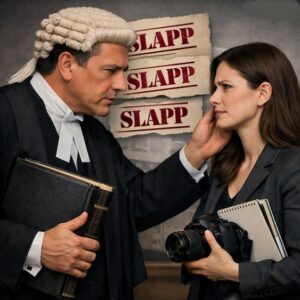 Strategic Lawsuits Against Public Participation, or SLAPPs, are legal actions… Read more: Strategic Lawsuit Against Public Participation (SLAPPs)
 - His Honour Judge Tony Baumgartner – Recorder of Westminster
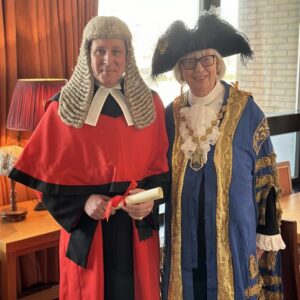 Judge Tony Alan Walter Baumgartner, known as His Honour Judge… Read more: His Honour Judge Tony Baumgartner – Recorder of Westminster
 - New Protocol for Legal Professionals to Raise Informal Concerns About Judges Behaviour
 On the 8th July 2026, the Courts and Tribunals Judiciary… Read more: New Protocol for Legal Professionals to Raise Informal Concerns About Judges Behaviour
 - The Policing Performance System
 In April 2026, His Majesty’s Inspectorate of Constabulary and Fire… Read more: The Policing Performance System
Most Popular ↓
You should always seek formal legal advice from a qualified and reputable lawyer (solicitor or barrister).
There are a number of links to Free and Paid For Legal Resources and Legal Organisations on the Free Legal Advice , Legal Aid and Pro Bono pages.
[post_title] was last updated on the 15th October 2026
