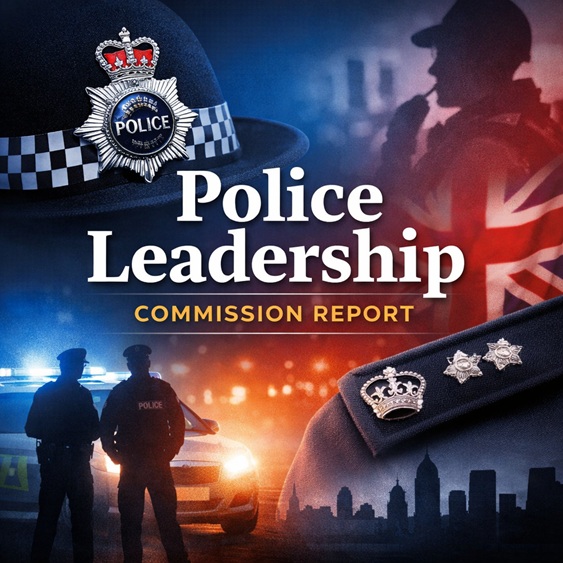
An independent review by the Police Leadership Commission has concluded that police leadership across England and Wales falls short of the consistently high standards the public and officers deserve, calling for a fundamental modernisation of how leaders are recruited, trained and promoted.
Titled Professionalism and performance – police leadership for the future, the report was published on the 6th July 2026 by the College of Policing.
The report was commissioned in October 2025 with Home Office support, and represents the most comprehensive examination of police leadership in England and Wales in a generation.
Key Findings
The report paints a concerning picture of inconsistent leadership standards. His Majesty’s Inspectorate of Constabulary, Fire and Rescue Services (HMICFRS) graded no force as “outstanding” for leadership, with nearly a third requiring improvement and two deemed inadequate.
Police leadership is not consistently of a high enough standard and requires a fundamental overhaul, a landmark independent review has warned.
The report by the Police Leadership Commission, published on Monday, found the system for identifying and developing leaders was too weak, with chief constable roles in England and Wales often attracting a single suitable candidate.
Police leadership needs fundamental overhaul, review finds – BBC
Frontline pressures are acute as almost a third of officers have fewer than five years’ experience, morale is low, and many cite resource shortages, excessive bureaucracy and risk-averse cultures that leave staff unsupported. Eight former or serving chief constables are currently subject to disciplinary investigations or awaiting outcomes.
Public confidence has also declined, with only 49% rating their local police as good or excellent in 2025, compared with 62% a decade earlier.
Central funding for leadership development currently accounts for just 0.02% of the overall police budget which is significantly lower than in other public services such as the NHS or the military.
Core Recommendations
The commission sets out 27 recommendations designed to reset the culture, raise standards and prepare policing for future challenges. Key proposals include:
- Establishing a National Academy of Police Leadership with a dedicated centre, digital platform and nationwide presence to deliver consistent, high-quality training.
- Introducing a new senior constable rank to recognise and reward experienced frontline officers who mentor colleagues and uphold standards.
- Creating a police leadership fast stream open to both internal talent and external candidates, with the aim of developing up to 400 future leaders a year towards superintendent level.
- Overhauling promotion processes to sergeant and inspector ranks, replacing the outdated examination with nationally accredited training and fairer, more transparent selection.
- Introducing mandatory annual performance reviews supported by digital professional passports, alongside routine secondments, targeted direct entry from other sectors, and equal development opportunities for police staff.
The complete list of recommendations presented in the police leadership commission report is published on the College of Policing Website.
The full report Professionalism and performance – police leadership for the future is also published on the College of Policing Website.
Reactions and Next Steps
Policing Minister Sarah Jones welcomed the findings, stating that the recommendations would inform the government’s broader police reform programme. She acknowledged that too many examples of leadership have failed to meet expected standards and emphasised the need for consistent, high-quality training and development for every officer.
Lord Blunkett highlighted the importance of an “ethical reset”, while Sir Andy Marsh, Chief Executive of the College of Policing, described the report as a once-in-a-generation opportunity to invest properly in the service’s people.
A Path Forward
The proposals align closely with the government’s white paper on police reform – From Local to National: A New Model for Policing and aim to create a more professional, ethical and inclusive leadership culture capable of tackling modern threats such as online crime and technological change.
While the report celebrates pockets of outstanding leadership, it makes clear that systemic weaknesses must be addressed if trust and effectiveness are to be rebuilt. Coordinated implementation by the Home Office, College of Policing and forces will be essential in the months ahead.
Check out our articles on Policing by Consent, Police Professional Standards, Police Misconduct Hearings, Police Impartiality, Police Surveillance, Are the Police for Hire ?, Independent Office for Police Conduct (IOPC),Police Public Confidence and Engagement, Crime Reporting, What is a Police and Crime Commissioner ?, Sussex Police, Policing, Police News, Two Tiered Policing, Thought Police, Wasting Police Time, Police Community Support Officers (PCSO), Met Police, Chief Constable Jo Shiner, R v Sussex Justices and the highly questionable Sussex Family Justice Board.
The Ministry of Injustice is not the Ministry of Justice nor is it affiliated in any way with the justice system, legal profession, police or any other law enforcement agencies.
“Publicity is the very soul of justice. . . . It keeps the judge himself, while trying, under trial….Where there is no publicity there is no justice”
Jeremy Bentham – Mr Justice Cobb: ‘Justice must be seen to be done’
Latest Articles ↓
- Judges Behaving Badly and His Honour Judge Simon Oliver
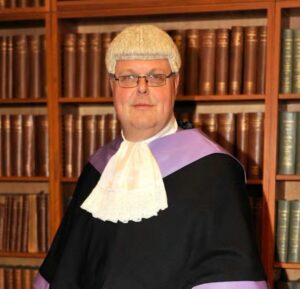 On the 27th August 2026 the Crown Prosecution Service announced… Read more: Judges Behaving Badly and His Honour Judge Simon Oliver
 - Jo Morris Barrister
 Jo Morris is a practising criminal barrister of Drystone Chambers… Read more: Jo Morris Barrister
 - Good Law Project
 The Good Law Project is a UK campaigning organisation that… Read more: Good Law Project
 - Police Federation of England and Wales (PFEW)
 The Police Federation of England and Wales (PFEW) is the… Read more: Police Federation of England and Wales (PFEW)
 - What is the Criminal Justice System (CJS) Common Platform ?
 The Criminal Justice System Common Platform (also known as HMCTS… Read more: What is the Criminal Justice System (CJS) Common Platform ?
 - Strategic Lawsuit Against Public Participation (SLAPPs)
 Strategic Lawsuits Against Public Participation, or SLAPPs, are legal actions… Read more: Strategic Lawsuit Against Public Participation (SLAPPs)
 - His Honour Judge Tony Baumgartner – Recorder of Westminster
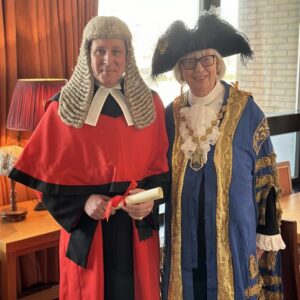 Judge Tony Alan Walter Baumgartner, known as His Honour Judge… Read more: His Honour Judge Tony Baumgartner – Recorder of Westminster
 - New Protocol for Legal Professionals to Raise Informal Concerns About Judges Behaviour
 On the 8th July 2026, the Courts and Tribunals Judiciary… Read more: New Protocol for Legal Professionals to Raise Informal Concerns About Judges Behaviour
 - The Policing Performance System
 In April 2026, His Majesty’s Inspectorate of Constabulary and Fire… Read more: The Policing Performance System
 - What is the Judicial College ?
 The Judicial College serves as the central pillar of professional… Read more: What is the Judicial College ?
 - Police Leadership Commission Report
 An independent review by the Police Leadership Commission has concluded… Read more: Police Leadership Commission Report
 - Repeal a Law
 Repealing a law in the United Kingdom does not mean… Read more: Repeal a Law
Most Popular ↓
You should always seek formal legal advice from a qualified and reputable lawyer (solicitor or barrister).
There are a number of links to Free and Paid For Legal Resources and Legal Organisations on the Free Legal Advice , Legal Aid and Pro Bono pages.
[post_title] was last updated on the 28th August 2026
