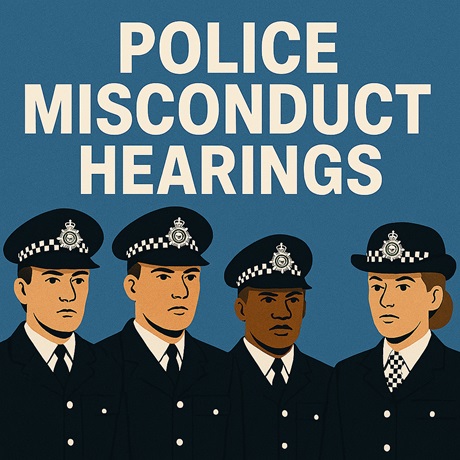
Across the United Kingdom, police forces strive to maintain public trust by upholding high standards of professionalism and integrity. A key mechanism for achieving this is the misconduct hearing process designed to address allegations of misconduct or gross misconduct by police officers and staff.
These hearings, detailed on police websites such as the Sussex Police misconduct hearings page, provide a transparent framework for accountability.
This article explores the purpose, structure, and public accessibility of police misconduct hearings across UK forces by highlighting their role in fostering trust and how the public can engage with the process.
Purpose and Structure of Misconduct Hearings
Misconduct hearings are convened when there is evidence that a police officer or staff member has breached the Standards of Professional Behaviour, a code governing police conduct detailed in The Police (Conduct) Regulations 2008.
These standards encompass principles such as honesty, integrity, respect, and the responsible use of authority. Misconduct hearings address less severe breaches, while gross misconduct hearings tackle actions serious enough to potentially warrant dismissal.
The process ensures allegations are thoroughly investigated, with the officer or staff member given an opportunity to explain their actions. Hearings are typically chaired by a senior police officer, such as a Chief Constable or Assistant Chief Constable (a requirement in many forces since May 2024 – The Police (Conduct) (Amendment) Regulations 2024), and include independent panel members, often with a legally qualified person to ensure impartiality.
The panel reviews evidence, hears from witnesses, and determines whether misconduct has occurred, with outcomes ranging from written warnings to dismissal without notice.
Transparency and Public Access
Transparency is a cornerstone of public confidence in UK policing.
Since the 1st May 2015, gross misconduct hearings for police officers are required to be held in public, unless there’s a compelling reason to exclude the public, a significant change brought about by the Police (Conduct) (Amendment) Regulations 2015 to improve transparency and public confidence in the police disciplinary system.
This openness allows the public to scrutinise how police forces handle allegations, reinforcing accountability. However, the Chair of a hearing may hold parts or all of a hearing in private if sensitive issues, such as national security, operational tactics, or personal confidentiality, are involved.
In such cases, the public may be temporarily excluded to ensure fairness and protect sensitive information, but these decisions are made carefully to balance transparency with operational needs. The commitment to public access demonstrates that police forces take breaches of conduct seriously and are willing to be held accountable.
How the Public Can Attend
Public attendance at misconduct hearings is actively encouraged across UK police forces, reflecting their commitment to openness. Members of the public aged 18 or over can attend as observers, though they cannot participate in the proceedings. The process for attending varies slightly between forces but generally involves registering in advance, often through an online form or by contacting the force’s Professional Standards Department.
For example, Sussex Police provides a dedicated section on their website listing upcoming hearings, including the officer’s name, hearing dates, and registration details.
Date(s): 15 – 19 September 2025
Time: 10:00
Location: Sussex Police Headquarters, Church Lane, Lewes, BN7 2DZ
It is alleged that PS Day, who was based at Brighton, sexually harassed a subordinate member of staff. If proved this matter would amount to gross misconduct.
The allegation amounts to a breach of the Standards of Professional Behaviour relating to (a) Authority, respect and courtesy; and (b) Discreditable conduct.
Public notification of misconduct hearing – Former PS Day – Sussex Police
Places are allocated on a first-come, first-served basis, with priority often given to complainants, other interested parties, and representatives of the Independent Office for Police Conduct (IOPC).
The media are also allocated seats to ensure public reporting, further enhancing transparency.
Practical Considerations for Attendees
To attend a hearing, prospective attendees should check their local police force’s website for details of upcoming hearings and registration processes. Forces typically publish hearing details at least five days in advance, though short-notice cancellations can occur due to legal or operational reasons. Attendees are advised to confirm arrangements with the force, as notifications of cancellations may not always be possible.
Most forces, like Sussex Police, note that they cannot cover travel or other expenses for attendees. Accessibility is prioritised, with venues chosen to accommodate attendees where possible, though public parking and refreshments are not always available. Attendees must adhere to conditions set by the Chair, such as prohibitions on recording or broadcasting to maintain the integrity of the process. Texting or using social media may be permitted unless specific restrictions are imposed.
Check out our articles on Police Professional Standards, Policing by Consent, Police Impartiality, Police Surveillance, Are the Police for Hire ?, Independent Office for Police Conduct (IOPC),Police Public Confidence and Engagement, Crime Reporting, What is a Police and Crime Commissioner ?, Sussex Police, Policing, Police News, Two Tiered Policing, Thought Police, Wasting Police Time, Police Community Support Officers (PCSO), Met Police, Chief Constable Jo Shiner, R v Sussex Justices and the highly questionable Sussex Family Justice Board.
The Ministry of Injustice is not the Ministry of Justice nor is it affiliated in any way with the justice system, legal profession, police or any other law enforcement agencies.
“Publicity is the very soul of justice. . . . It keeps the judge himself, while trying, under trial….Where there is no publicity there is no justice”
Jeremy Bentham – Mr Justice Cobb: ‘Justice must be seen to be done’
Latest Articles ↓
- His Honour Judge Daniel Sawyer
 Judge Daniel Sawyer, known as His Honour Judge Daniel Sawyer,… Read more: His Honour Judge Daniel Sawyer
 - UK National Centre for Information Defence
 Prime Minister Andy Burnham used his first United Nations General… Read more: UK National Centre for Information Defence
 - Judges Behaving Badly and His Honour Judge Simon Oliver
 On the 27th August 2026 the Crown Prosecution Service announced… Read more: Judges Behaving Badly and His Honour Judge Simon Oliver
 - Jo Morris Barrister
 Jo Morris is a practising criminal barrister of Drystone Chambers… Read more: Jo Morris Barrister
 - Good Law Project
 The Good Law Project is a UK campaigning organisation that… Read more: Good Law Project
 - Police Federation of England and Wales (PFEW)
 The Police Federation of England and Wales (PFEW) is the… Read more: Police Federation of England and Wales (PFEW)
 - What is the Criminal Justice System (CJS) Common Platform ?
 The Criminal Justice System Common Platform (also known as HMCTS… Read more: What is the Criminal Justice System (CJS) Common Platform ?
 - Strategic Lawsuit Against Public Participation (SLAPPs)
 Strategic Lawsuits Against Public Participation, or SLAPPs, are legal actions… Read more: Strategic Lawsuit Against Public Participation (SLAPPs)
 - His Honour Judge Tony Baumgartner – Recorder of Westminster
 Judge Tony Alan Walter Baumgartner, known as His Honour Judge… Read more: His Honour Judge Tony Baumgartner – Recorder of Westminster
 - New Protocol for Legal Professionals to Raise Informal Concerns About Judges Behaviour
 On the 8th July 2026, the Courts and Tribunals Judiciary… Read more: New Protocol for Legal Professionals to Raise Informal Concerns About Judges Behaviour
 - The Policing Performance System
 In April 2026, His Majesty’s Inspectorate of Constabulary and Fire… Read more: The Policing Performance System
 - What is the Judicial College ?
 The Judicial College serves as the central pillar of professional… Read more: What is the Judicial College ?
Most Popular ↓
You should always seek formal legal advice from a qualified and reputable lawyer (solicitor or barrister).
There are a number of links to Free and Paid For Legal Resources and Legal Organisations on the Free Legal Advice , Legal Aid and Pro Bono pages.
[post_title] was last updated on the 12th October 2026
