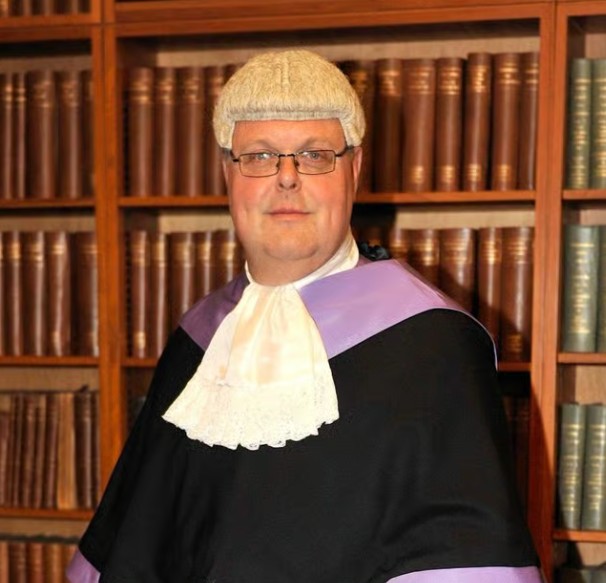
On the 27th August 2026 the Crown Prosecution Service announced in a post, More jail time for benefit cheat in prison for stalking judge, that Javed Shaikh had been sentenced to an additional three years’ imprisonment for housing-benefit fraud.
Javed Shaikh was already serving an eight-year sentence imposed in January 2024 for online stalking of circuit judge His Honour Judge Simon Oliver.
Housing Benefit Fraud
On the 17th August 2026, at Kingston-upon-Thames Crown Court, Javed Shaikh pleaded guilty to seven counts of fraud by false representation.
Between 2015 and 2022 he made 51 successful housing-benefit claims totalling £313,043 from 32 councils in England. He used the identities of nine people without their knowledge and also claimed in his own name money to which he was not entitled.
The largest payments came from Barnet (£44,471), Brent (£41,244), Islington (£28,242), Lambeth (£25,312), Hackney (£24,715), Ealing (£24,362) and Colchester (£22,806).The CPS said he used false documents, including birth certificates, tenancy agreements, benefit letters and bank statements, and had the money paid into accounts he controlled.
On arrest in 2022 he had £13,500 in cash and three bank cards in other names. A safety-deposit box searched in 2024 contained £200,000. Investigators also used cashpoint CCTV and files on his phone and laptop.
The Department for Work and Pensions investigated. The CPS charged him. Confiscation proceedings are to follow.
Online Stalking of HHJ Oliver
Javed Shaikh was a trainee cardiac physiologist at Harefield Hospital from March 2007 until his dismissal for gross misconduct in June 2009. An employment tribunal dismissed his claim in 2010.
The Independent Safeguarding Authority later placed him on the Adults’ Barred List and the Children’s Barred List. He appealed those decisions to the Upper Tribunal. Judge Oliver sat on that appeal with two specialist members in June 2014. The appeal was dismissed on 31 July 2014.
The courts later found that, after those challenges failed, Javed Shaikh ran an online campaign against Judge Oliver from 2016 to 2021 through a blog called Judges Behaving Badly which is archived online at the Internet Archive.
The blog Judges Behaving Badly published false allegations of bribery and corruption against Judge Oliver, photographs of his home and family, threats including an anthrax attack and the taking of hostages, and material about his private life.
In December 2019 Mr Justice Julian Knowles gave Judge Oliver summary judgment on a harassment claim and granted an injunction requiring specified material to be taken down. He described a “malicious and damaging vendetta.”
Javed Shaikh denied running the site. The courts rejected that denial. He did not obey the order.
On the 24 August 2020 after a hearing on the 27th July 2020 in Oliver v Shaikh, Mr Justice Nicklin found to the criminal standard that the injunction had been broken on twenty occasions. He called the denials false and the breaches “deliberate, calculated and flagrant.”
On the 26th August 2020, Legal Futures published an article Former trainee doctor in contempt for online campaign against judge
In January 2024, after a trial at Bristol Crown Court, he was convicted of aggravated stalking. On the 30th January 2024 Mr Justice Saini sentenced him to eight years and made an indefinite restraining order.
On the 31st January 2024, the Law Gazette published an article Judge’s online stalker sentenced to eight years in prison.
Judge Oliver came out as a gay man in 2015 and separated from his wife. The Blog heavily implied that, because of his sexual orientation, he used male prostitutes and was a paedophile. I will return to this point later.
Para 12 Sentencing remarks of the Honourable Mr Justice Saini At Bristol Crown Court On Tuesday 30 January 2024
Those facts entered the public record because the blog used his private life as a weapon. The same remarks describe the practical effects on the household: a panic alarm, police rapid-response listing, checking the street before leaving home, withdrawal from social media, and a request at a family wedding that guests not post photographs.
The court found that the allegations made against Judge Oliver were false and that the campaign went beyond lawful criticism of judicial decisions. The Court of Appeal refused permission to appeal.
HHJ Simon Oliver
Simon Jonathan Oliver was born on 9 May 1958 in Reading. He was educated at Reading School and read law at the University of Exeter. He joined Guildford Chambers in 1983, practising family and education law, and was Head of Chambers from 2002 to 2007.
Judge Oliver became a chairman of the Special Educational Needs Tribunal in 1994, sat on the Care Standards Tribunal from 2000, and was appointed a Recorder in 2002.
In 2007 he became Deputy President of the Care Standards Tribunal. Judge Oliver was appointed a circuit judge in 2010.
He first sat at Isleworth Crown Court and later sat mainly at the Central Family Court in London, while continuing to sit in crime.
He also sits as a visiting judge of the Upper Tribunal’s Administrative Appeals Chamber.
He joined the Worshipful Company of Founders in 1985 and later served as Master. He has written two books, Special Educational Needs and the Law and Enforcing Family Finance Orders.
HHJ Oliver is shown on the List of Circuit Judges published on the Courts and Tribunal Judiciary website.
| His Honour Judge Oliver | South East | 05-10-2010 |
Authorisation to sit as a High Court Judge
HHJ Oliver may be authorised to sit as a High Court Judge by s9(1) of the Senior Courts Act as amended by the Crime and Courts Act 2013.
According to CRIMINAL PRACTICE DIRECTIONS 2015 DIVISION XII His Honour Judge Oliver should be addressed as “My Lord” in court.
Modes of Address B.1 – The following judges, when sitting in court, should be addressed as ‘My Lord’ or ‘My Lady’
(b) any Circuit Judge sitting as a judge of the Court of Appeal (Criminal Division) or the High Court under section 9(1) of the Senior Courts Act 1981;
(d) any Senior Circuit Judge who is an Honorary Recorder.
Description B.3 – In cause lists, forms and orders members of the judiciary should be described as follows:
(a) Circuit Judges, as ‘His [or Her] Honour Judge A’. When the judge is sitting as a judge of the High Court under section 9(1) of the Senior Courts Act 1981, the words ‘sitting as a judge of the High Court’ should be added;
The three key values which are central to the role of judicial office holders (JOHs) in England and Wales are:
• Independence
• Impartiality
• Integrity
“Publicity is the very soul of justice. . . . It keeps the judge himself, while trying, under trial….Where there is no publicity there is no justice”
Jeremy Bentham – Mr Justice Cobb: ‘Justice must be seen to be done’
Image of HHJ Oliver : Photoshot
The High Court Judge that never was – His Honour Judge Melbourne Inman KC
Check out our articles on Rule of Law, Open Justice, Judges Salaries and Fees, Dodgy Judges, R v Sussex Justices, Mr Justice Williams, His Honour Now His Dishonour, His Honour Judge Stuart Farquhar, Do you Have to Bow to a Judge ?, Can you Email a Judge ?, Can you Criticise a Judge ? and the highly dubious Sussex Family Justice Board.
The Ministry of Injustice is not the Ministry of Justice nor is it affiliated in any way with the justice system, legal profession, police or any other law enforcement agencies.
“Publicity is the very soul of justice. . . . It keeps the judge himself, while trying, under trial….Where there is no publicity there is no justice”
Jeremy Bentham – Mr Justice Cobb: ‘Justice must be seen to be done’
Latest Articles ↓
- Judges Behaving Badly and His Honour Judge Simon Oliver
 On the 27th August 2026 the Crown Prosecution Service announced… Read more: Judges Behaving Badly and His Honour Judge Simon Oliver
 - Jo Morris Barrister
 Jo Morris is a practising criminal barrister of Drystone Chambers… Read more: Jo Morris Barrister
 - Good Law Project
 The Good Law Project is a UK campaigning organisation that… Read more: Good Law Project
 - Police Federation of England and Wales (PFEW)
 The Police Federation of England and Wales (PFEW) is the… Read more: Police Federation of England and Wales (PFEW)
 - What is the Criminal Justice System (CJS) Common Platform ?
 The Criminal Justice System Common Platform (also known as HMCTS… Read more: What is the Criminal Justice System (CJS) Common Platform ?
 - Strategic Lawsuit Against Public Participation (SLAPPs)
 Strategic Lawsuits Against Public Participation, or SLAPPs, are legal actions… Read more: Strategic Lawsuit Against Public Participation (SLAPPs)
 - His Honour Judge Tony Baumgartner – Recorder of Westminster
 Judge Tony Alan Walter Baumgartner, known as His Honour Judge… Read more: His Honour Judge Tony Baumgartner – Recorder of Westminster
 - New Protocol for Legal Professionals to Raise Informal Concerns About Judges Behaviour
 On the 8th July 2026, the Courts and Tribunals Judiciary… Read more: New Protocol for Legal Professionals to Raise Informal Concerns About Judges Behaviour
 - The Policing Performance System
 In April 2026, His Majesty’s Inspectorate of Constabulary and Fire… Read more: The Policing Performance System
 - What is the Judicial College ?
 The Judicial College serves as the central pillar of professional… Read more: What is the Judicial College ?
 - Police Leadership Commission Report
 An independent review by the Police Leadership Commission has concluded… Read more: Police Leadership Commission Report
 - Repeal a Law
 Repealing a law in the United Kingdom does not mean… Read more: Repeal a Law
Most Popular ↓
You should always seek formal legal advice from a qualified and reputable lawyer (solicitor or barrister).
There are a number of links to Free and Paid For Legal Resources and Legal Organisations on the Free Legal Advice , Legal Aid and Pro Bono pages.
[post_title] was last updated on the 28th August 2026
