
Chief constables are the most senior officers in the current 43 territorial police forces of England and Wales. Their role is defined by statute, secondary legislation and professional standards that govern both the exercise of police powers and the management of the force.
The Chief Constables’ Council is the senior operational decision-making body for the National Police Chiefs’ Council (NPCC). It brings together Chief Constables of police forces in the United Kingdom.
Legal Obligations of a Chief Constable
The current statutory provision is in Section 2(3) of the Police Reform and Social Responsibility Act 2011 : “A police force, and the civilian staff of a police force, are under the direction and control of the chief constable of the force”. The 2011 Act also sets the modern PCC–chief constable relationship.
Chief constables must have regard to the Police and Crime Plan issued by the local Police and Crime Commissioner (PCC) or mayoral equivalent, but they retain operational independence in day-to-day decision-making.
Chief Constables are also the employers of police staff and are personally accountable for the force’s performance, resources, and compliance with the law.
Every constable, including the chief constable, is bound by the declaration set out in Section 83 of the Police Reform Act 2002
I………………..of………………..do solemnly and sincerely declare and affirm that I will well and truly serve the Queen in the office of constable, with fairness, integrity, diligence and impartiality, upholding fundamental human rights and according equal respect to all people; and that I will, to the best of my power, cause the peace to be kept and preserved and prevent all offences against people and property; and that while I continue to hold the said office I will, to the best of my skill and knowledge, discharge all the duties thereof faithfully according to law.
Attestation of constables – Section 83 of the Police Reform Act 2002
The Police Regulations 2003 reinforce this by prohibiting any activity that is likely to interfere with the impartial discharge of duties or that is likely to give the public the impression that it may do so. Officers must not take an active part in politics.
The Equality Act 2010 imposes the public sector equality duty (PSED) on chief constables as public authorities. They must have due regard to the need to eliminate discrimination, advance equality of opportunity, and foster good relations.
However, as the High Court confirmed in R (Smith) v Chief Constable of Northumbria Police [2025] EWHC 1805 (Admin), the PSED is a process duty only. It cannot override or qualify the primary duty of impartiality.
In that case the court held that authorising uniformed officers, led by the chief constable, to march in a Pride event that promoted a contested political position on gender ideology was irrational and unlawful because it created a perception of institutional partiality.
Additional legal obligations arise under the Human Rights Act 1998, data-protection legislation, health-and-safety law and the various codes of practice issued under the Police and Criminal Evidence Act 1984.
Chief constables are also responsible for ensuring the force meets its duties in relation to public order, terrorism prevention, safeguarding and the protection of life.
Professional and Ethical Duties of a Chief Constable
The College of Policing’s Code of Ethics translates these legal obligations into professional standards of honesty, integrity, leadership, fairness, and respect. Chief constables are expected to model these standards and to create an organisational culture that embeds them. They must also comply with Authorised Professional Practice and national guidance issued by the National Police Chiefs’ Council (NPCC).
Accountability mechanisms are multi-layered. PCCs hold chief constables to account for the delivery of the Police and Crime Plan and can, in extreme cases, call on the chief constable to resign or retire.
His Majesty’s Inspectorate of Constabulary and Fire & Rescue Services (HMICFRS) inspects forces and can issue critical reports. The Independent Office for Police Conduct investigates serious complaints and misconduct. Chief constables themselves can be the subject of misconduct proceedings; the IOPC has conducted dozens of such investigations in recent years.
In practice, the most distinctive professional duty of a chief constable is the continuous balancing of operational independence with democratic accountability and the absolute requirement of impartiality.
Recent case law and inspectorate findings have underscored that visible institutional endorsement of contested political or advocacy causes can undermine public confidence.
Chief constables must therefore ensure that engagement with communities, attendance at events, and the expression of force values remain consistent with the duty to police without fear or favour.
These interlocking legal and professional obligations define the office. A chief constable is not merely a senior manager but the embodiment of the force’s commitment to lawful, impartial and effective policing.
Check out our articles on Policing by Consent, Police Professional Standards, Policing Performance System, Police Misconduct Hearings, Police Impartiality, Police Federation, Police Leadership Commission, Police Surveillance, Are the Police for Hire ?, Independent Office for Police Conduct (IOPC),Police Public Confidence and Engagement, Crime Reporting, What is a Police and Crime Commissioner ?, Sussex Police, Policing, Police News, Two Tiered Policing, Thought Police, Wasting Police Time, Police Community Support Officers (PCSO), Met Police, Chief Constable Jo Shiner, R v Sussex Justices and the highly questionable Sussex Family Justice Board.
The Ministry of Injustice is not the Ministry of Justice nor is it affiliated in any way with the justice system, legal profession, police or any other law enforcement agencies.
“Publicity is the very soul of justice. . . . It keeps the judge himself, while trying, under trial….Where there is no publicity there is no justice”
Jeremy Bentham – Mr Justice Cobb: ‘Justice must be seen to be done’
Latest Articles ↓
- Chief Constables – Legal and Professional Duties
 Chief constables are the most senior officers in the current… Read more: Chief Constables – Legal and Professional Duties
- Presumption of Innocence
 The presumption of innocence is a basic principle of the… Read more: Presumption of Innocence
- His Honour Judge Daniel Sawyer
 Judge Daniel Sawyer, known as His Honour Judge Daniel Sawyer,… Read more: His Honour Judge Daniel Sawyer
- UK National Centre for Information Defence
 Prime Minister Andy Burnham used his first United Nations General… Read more: UK National Centre for Information Defence
- Judges Behaving Badly and His Honour Judge Simon Oliver
 On the 27th August 2026 the Crown Prosecution Service announced… Read more: Judges Behaving Badly and His Honour Judge Simon Oliver
- Jo Morris Barrister
 Jo Morris is a practising criminal barrister of Drystone Chambers… Read more: Jo Morris Barrister
- Good Law Project
 The Good Law Project is a UK campaigning organisation that… Read more: Good Law Project
- Police Federation of England and Wales (PFEW)
 The Police Federation of England and Wales (PFEW) is the… Read more: Police Federation of England and Wales (PFEW)
- What is the Criminal Justice System (CJS) Common Platform ?
 The Criminal Justice System Common Platform (also known as HMCTS… Read more: What is the Criminal Justice System (CJS) Common Platform ?
- Strategic Lawsuit Against Public Participation (SLAPPs)
 Strategic Lawsuits Against Public Participation, or SLAPPs, are legal actions… Read more: Strategic Lawsuit Against Public Participation (SLAPPs)
- His Honour Judge Tony Baumgartner – Recorder of Westminster
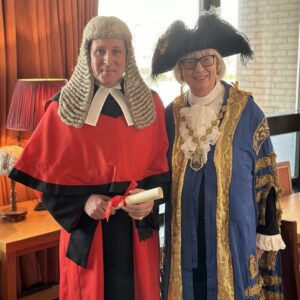 Judge Tony Alan Walter Baumgartner, known as His Honour Judge… Read more: His Honour Judge Tony Baumgartner – Recorder of Westminster
- New Protocol for Legal Professionals to Raise Informal Concerns About Judges Behaviour
 On the 8th July 2026, the Courts and Tribunals Judiciary… Read more: New Protocol for Legal Professionals to Raise Informal Concerns About Judges Behaviour
Most Popular ↓
You should always seek formal legal advice from a qualified and reputable lawyer (solicitor or barrister).
There are a number of links to Free and Paid For Legal Resources and Legal Organisations on the Free Legal Advice , Legal Aid and Pro Bono pages.
[post_title] was last updated on the 10th November 2026
