The United Kingdom has long been hailed as a cornerstone of democratic values but recent trends in policing suggest a troubling erosion of free speech. This concern is explored in a Spiked Online 43-minute documentary, Think Before You Post which was released on the 27th October 2025.
The film investigates how the UK has increasingly criminalised online speech over the past six decades, using personal accounts and expert commentary to illustrate the impact. It focuses on the aftermath of the 2024 riots, where social media posts led to arrests without direct incitement to violence.
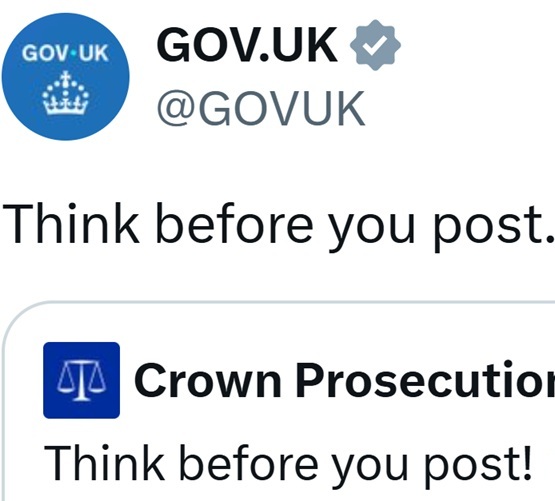
The documentary’s title references the government’s advisory during the riots: “Think before you post” which was employed to caution users against potential prosecution for content deemed hateful.
Overview of the Documentary
The film begins with footage from the 2024 Southport riots, which followed a stabbing incident at a Taylor Swift-themed dance class on 29 July 2024, perpetrated by Axel Rudakubana, a 17-year-old British-born individual of Rwandan heritage.
The attack resulted in the deaths of three young girls Bebe King, Elsie Dot Stancombe and Alice da Silva Aguiar along with injuries to eight other children and two adults. This event prompted widespread disorder, exacerbated by online misinformation falsely claiming the attacker was a Muslim migrant.
The documentary details the government’s response, which included not only managing physical unrest but also intensifying scrutiny of online content. It states that approximately 30 individuals are arrested each day in England and Wales for offences related to social media, such as inciting racial or religious hatred or sending communications considered grossly offensive.
Using Home Office figures, the film compares the UK’s more than 12,000 arrests for speech-related matters in 2023 to Russia’s 3,319, highlighting a contrast between a democratic nation and an authoritarian one in terms of regulating expression.
The investigation references legislation including the Race Relations Act 1965 and the Communications Act 2003, which provide a framework for such prosecutions. It notes that while conviction rates are typically around 10%, the process of arrest and investigation often acts as a deterrent to public discussion.
Key Cases and Personal Stories
The documentary presents several cases to demonstrate the application of these laws. Maxie Allen and Rosalind Levine, a couple from Buckinghamshire, describe their arrest in January 2025 after an online disagreement with their daughter’s school concerning a headteacher’s appointment.
They were charged with harassment and malicious communications for messages that included describing a teacher as a ‘control freak’. Six police officers arrived at their home, leading to their detention, fingerprinting, and DNA sampling.
Hertfordshire Police said the arrests “were necessary to fully investigate the allegations” but the charges were eventually discontinued due to insufficient evidence, but the experience caused considerable stress, particularly for their daughter who has epilepsy.
Journalist Allison Pearson recounts her investigation for inciting racial hatred following a 2023 tweet about police conduct during an anti-Israel demonstration. Essex Police visited her home on Remembrance Sunday 2024, and although the case was later dropped, she highlights the intrusive nature of the process.
Former Royal Marine Jamie Michael discusses his arrest in July 2024 for a Facebook video expressing views on illegal immigration and child safety after the Southport incident. Despite no advocacy for violence, he was held in custody for 17 days and electronically tagged before being acquitted. The report originated from a Labour politician’s office.
The film also covers the case of Lucy Connolly, a 41-year-old former childminder from Northampton, arrested in August 2024 for a tweet responding to the Southport stabbings: “Mass deportation now, set fire to all the f***ing hotels full of the bastards for all I care… If that makes me racist, so be it.”
Charged under Section 19 of the Public Order Act 1986 for publishing material to stir up racial hatred, she pleaded guilty and received a 31-month prison sentence from His Honour Judge Melbourne Inman in October 2024. She served about nine months before release on licence in August 2025, following an unsuccessful appeal in May 2025.
Other examples include a 16-year-old autistic girl arrested for likening a police officer to her ‘lesbian nana’, and Harry Miller whose tweet on transgender issues prompted police to suggest he ‘check his thinking’, a decision later ruled unlawful.
Expert Analysis and Broader Themes
Experts in the documentary provide context. Lord Toby Young, founder of the Free Speech Union, states that police priorities have shifted towards recording ‘non-crime hate incidents’ rather than addressing actual crimes.
He refers to ‘two-tier policing‘, where certain expressions, such as those on immigration, are targeted to preserve social order.
Solicitor Luke Gittos examines the 60-year history of hate speech legislation, noting the ambiguity in definitions that allows for variable enforcement. He argues for addressing offensive ideas through discussion rather than legal action and points out the lack of entrenched free speech rights in UK law.
The film discusses a move towards preventive policing, with social media surveillance used to avert potential disorder. It connects this to societal trends, including identity politics and the Online Safety Act 2023, which requires platforms to remove content under regulatory oversight.
The Irony of Self-Censorship
Upon its release on X, the documentary encountered restrictions under the UK’s Online Safety Act, which reduced its visibility.
Spiked reported this in an article on their website “Our documentary about censorship is being censored Thanks to the Online Safety Act, X has muzzled Think Before You Post“.
Conclusion
Think Before You Post documents the implications of criminalising speech in the UK, using individual cases and data to highlight the scale of arrests. It suggests a need to review current laws to protect democratic discourse.
With 59,095 views on YouTube and 334,439 views on X as of the 30th October 2025, the film has prompted discussion among the public and officials about balancing regulation with freedom of expression.
You may wish to consider joining and supporting The Free Speech Union(FSU). The FSU has silver and gold membership with monthly or annual payments options.
Check out our related articles on the Free Speech Union, Free Speech and the Law, Judiciary, Policing, Rule of Law, Open Justice, Is the Law Black and White ?, Abuse of Process, What Does Lady Justice Symbolise ?, McKenzie Friend, Law Society, Law Commission, McKenzie Friend Right of Audience, Solicitors, Solicitors Regulation Authority, Barristers, Bar Council of England and Wales, Bar Standards Board, R v Sussex Justices, Police Impartiality and the highly questionable Sussex Family Justice Board.
The Ministry of Injustice is not the Ministry of Justice nor is it affiliated in any way with the justice system, legal profession, police or any other law enforcement agencies.
“Publicity is the very soul of justice. . . . It keeps the judge himself, while trying, under trial….Where there is no publicity there is no justice”
Jeremy Bentham – Mr Justice Cobb: ‘Justice must be seen to be done’
Latest Articles ↓
- Presumption of Innocence
 The presumption of innocence is a basic principle of the… Read more: Presumption of Innocence
 - His Honour Judge Daniel Sawyer
 Judge Daniel Sawyer, known as His Honour Judge Daniel Sawyer,… Read more: His Honour Judge Daniel Sawyer
 - UK National Centre for Information Defence
 Prime Minister Andy Burnham used his first United Nations General… Read more: UK National Centre for Information Defence
 - Judges Behaving Badly and His Honour Judge Simon Oliver
 On the 27th August 2026 the Crown Prosecution Service announced… Read more: Judges Behaving Badly and His Honour Judge Simon Oliver
 - Jo Morris Barrister
 Jo Morris is a practising criminal barrister of Drystone Chambers… Read more: Jo Morris Barrister
 - Good Law Project
 The Good Law Project is a UK campaigning organisation that… Read more: Good Law Project
 - Police Federation of England and Wales (PFEW)
 The Police Federation of England and Wales (PFEW) is the… Read more: Police Federation of England and Wales (PFEW)
 - What is the Criminal Justice System (CJS) Common Platform ?
 The Criminal Justice System Common Platform (also known as HMCTS… Read more: What is the Criminal Justice System (CJS) Common Platform ?
 - Strategic Lawsuit Against Public Participation (SLAPPs)
 Strategic Lawsuits Against Public Participation, or SLAPPs, are legal actions… Read more: Strategic Lawsuit Against Public Participation (SLAPPs)
 - His Honour Judge Tony Baumgartner – Recorder of Westminster
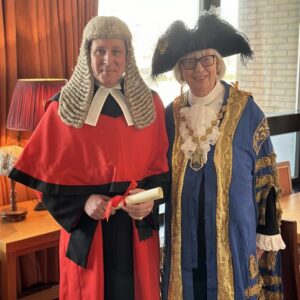 Judge Tony Alan Walter Baumgartner, known as His Honour Judge… Read more: His Honour Judge Tony Baumgartner – Recorder of Westminster
 - New Protocol for Legal Professionals to Raise Informal Concerns About Judges Behaviour
 On the 8th July 2026, the Courts and Tribunals Judiciary… Read more: New Protocol for Legal Professionals to Raise Informal Concerns About Judges Behaviour
 - The Policing Performance System
 In April 2026, His Majesty’s Inspectorate of Constabulary and Fire… Read more: The Policing Performance System
Most Popular ↓
You should always seek formal legal advice from a qualified and reputable lawyer (solicitor or barrister).
There are a number of links to Free and Paid For Legal Resources and Legal Organisations on the Free Legal Advice , Legal Aid and Pro Bono pages.
[post_title] was last updated on the 15th October 2026
