The latest cases in the Crown Court and Court of Appeal are available on the Sky News Courts YouTube channel. These videos are a real opportunity to see justice in action.
Section 41 of the Criminal Justice Act 1925 (CJA 1925) makes it an offence to take any photograph, make or attempt to make any portrait or sketch of a justice or a witness in, or a party to, any proceedings before the court, either in the courtroom or its precincts.
The Crimes and Courts Act 2013 allows the ban to be disapplied in certain circumstances by secondary legislation. For instance, the Court of Appeal and Competition Appeal Tribunal can broadcast proceedings. The Crown court can broadcast sentencing remarks. The Supreme Court is excluded from the two bans because cases heard by the UK’s highest court, which was established in 2009, would have previously been heard in the House of Lords where broadcasting was allowed.
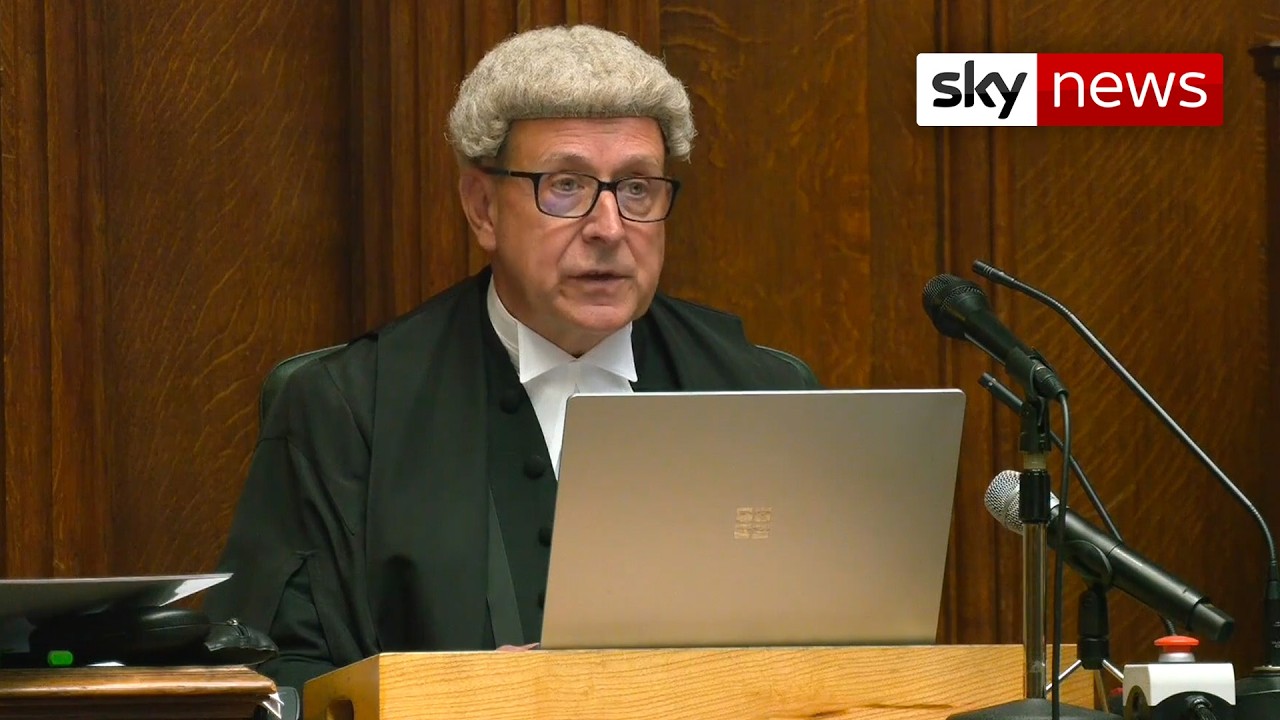
Lady Chief Justice gives judgment in the Court of Appeal – Shamima Begum
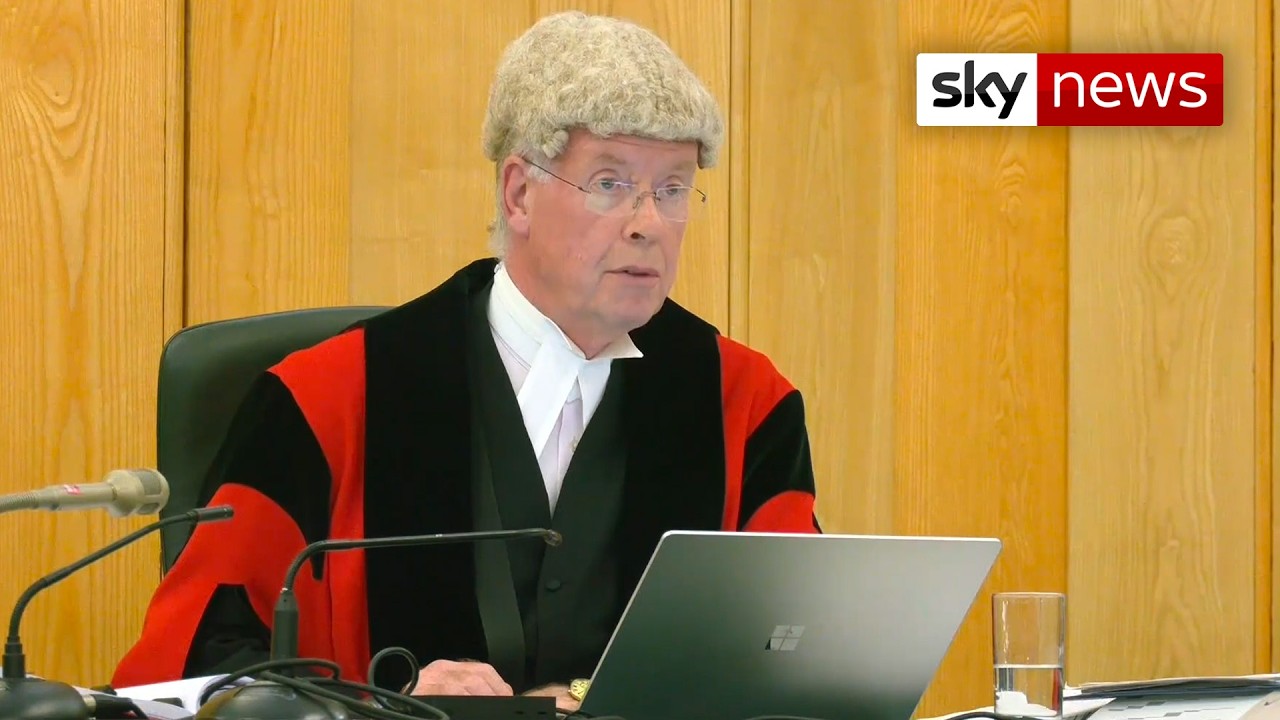
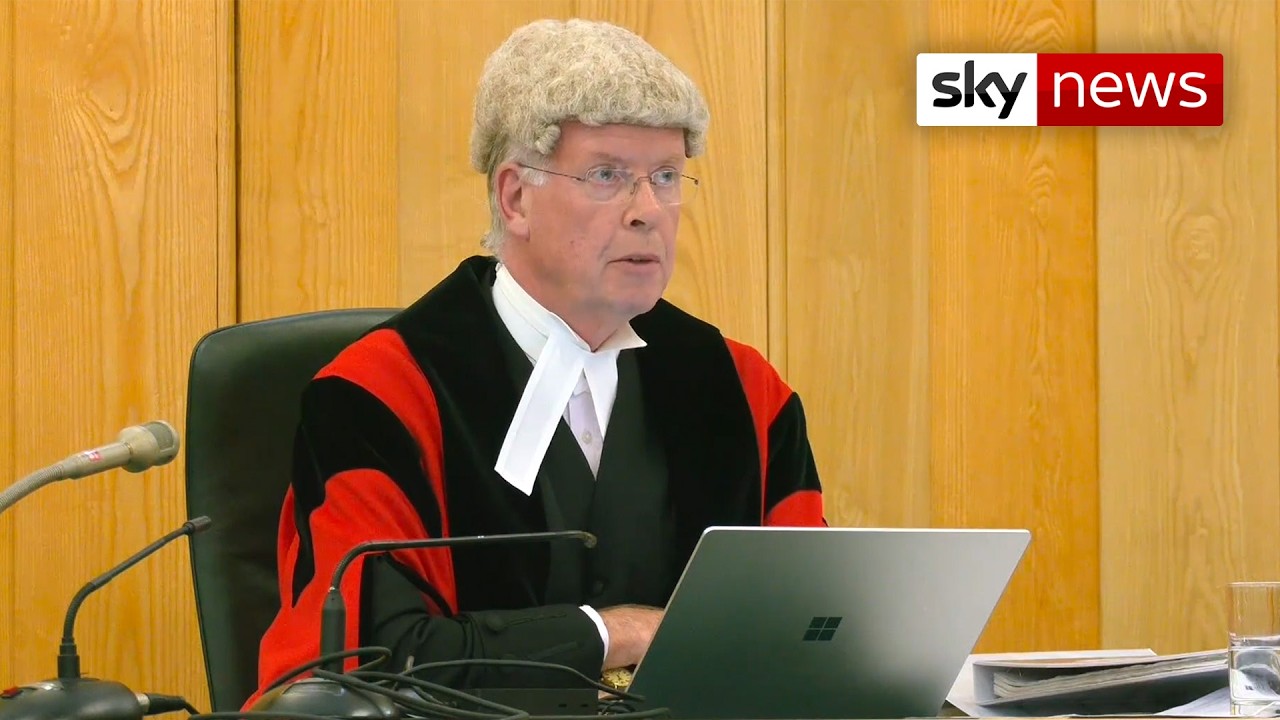
High Court Judge Mr Justice Goss imposed life sentences with whole-life orders – Lucy Letby
Latest Court Proceedings Videos
Please be advised that videos may contain graphic descriptions of serious crimes, including murder and sexual offences.
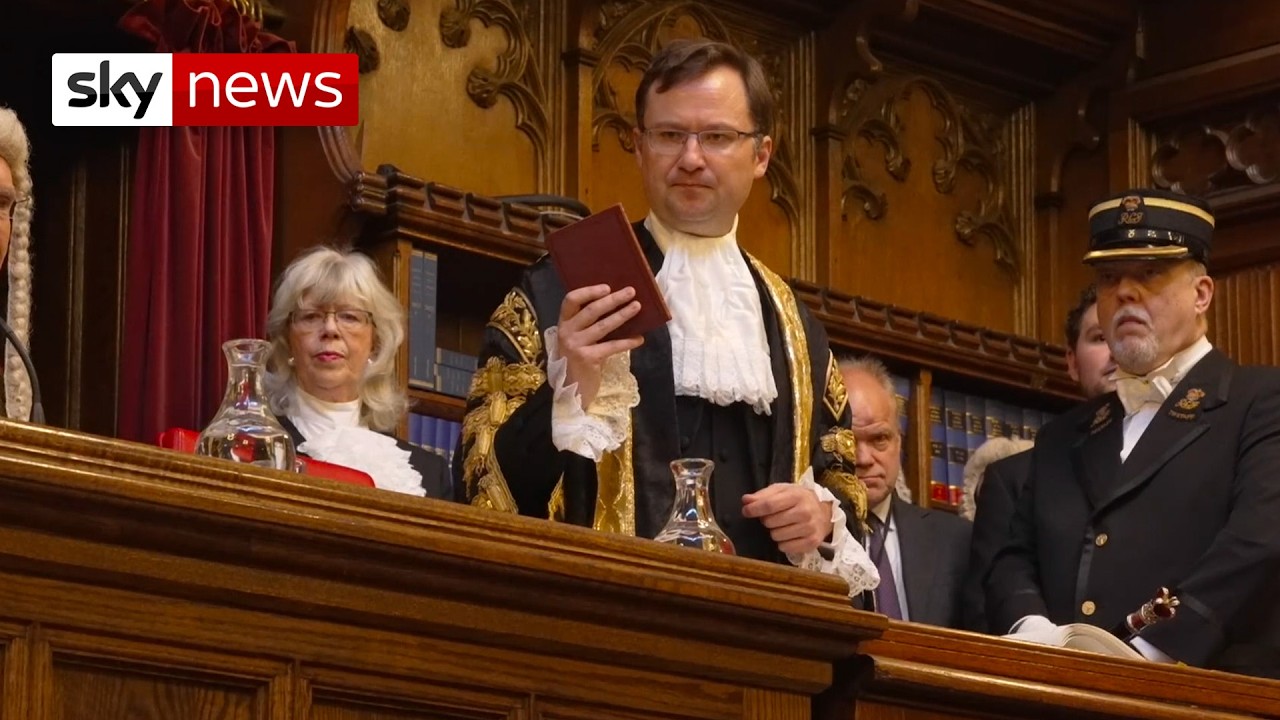
Alex Norris sworn in as new Lord Chancellor
Justice Secretary Alex Norris MP was formally sworn in as Lord Chancellor.
The ceremony at the Royal Courts of Justice took place on the first day of the new legal year ...(1 October) and follows his appointment as Lord Chancellor and Secretary of State for Justice in July 2026. He was previously Minister of State at the Home Office.
The Lady Chief Justice, Baroness Carr, conducted the swearing in ceremony.
She said: “[You] have a deep understanding of every government’s first duty: to protect its citizens.“
She continued: “Taking the oath here, today, once more affirms – publicly – the particular, the fundamental relationship that the Lord Chancellor has with the judiciary, and the office’s statutory duty to defend judicial independence.“
The Lady Chief Justice also swore in the Attorney General, Ellie Reeves MP, who was previously Solicitor General.
In addition, Andy Slaughter MP was sworn in as Solicitor General.
Justice Secretary Alex Norris MP was formally sworn in as Lord ...
Justice Secretary Alex Norris MP was formally sworn in as Lord Chancellor.
The ceremony at the Royal Courts of Justice took place on the first day of the new legal year ...(1 October) and follows his appointment as Lord Chancellor and Secretary of State for Justice in July 2026. He was previously Minister of State at the Home Office.
The Lady Chief Justice, Baroness Carr, conducted the swearing in ceremony.
She said: “[You] have a deep understanding of every government’s first duty: to protect its citizens.“
She continued: “Taking the oath here, today, once more affirms – publicly – the particular, the fundamental relationship that the Lord Chancellor has with the judiciary, and the office’s statutory duty to defend judicial independence.“
The Lady Chief Justice also swore in the Attorney General, Ellie Reeves MP, who was previously Solicitor General.
In addition, Andy Slaughter MP was sworn in as Solicitor General.
Hospital order for Afghan refugee who killed dog walker
An Afghan refugee who fatally stabbed a man walking his dog in a ...
An Afghan refugee who fatally stabbed a man walking his dog in a random attack was sentenced to an indefinite hospital order.
Uber driver Dawood Safi, 28, attacked his landlord Shahzad ...Farrukh with a knife before going on to kill Wayne Broadhurst, 49, in Uxbridge in October 2025.
A 14-year-old boy was also injured after he was caught up in the rampage that started at Safi's home in Midhurst Gardens.
Mr Broadhurst, who worked as a street sweeper for Ealing Council, was walking his dog Harry when he was stabbed 14 times in the head, neck, chest, and back by Safi.
Safi was originally charged with murder, but prosecutors accepted a guilty plea to a lesser charge of manslaughter by reason of diminished responsibility after psychiatric evidence showed he was suffering from delusions and psychosis.
He also admitted causing actual bodily harm to the teenager and possessing an offensive weapon. He was convicted of the attempted murder of Mr Farrukh following a trial at Southwark Crown Court.
Mrs Justice Cutts ordered Safi be held indefinitely in a secure hospital to receive mental health treatment, after finding he was "in a psychotic state" at the time of the stabbings.
The judge also recommended he be deported, saying his "continued presence in the UK is to its detriment", but added the final decision lies with the Home Secretary.
This video has been edited to comply with reporting restrictions.
A burglar who killed a pensioner as he tried to protect his ...
A burglar who killed a pensioner as he tried to protect his 91-year-old wife was jailed for 18 years.
Retired plumber John Burke, 86, was assaulted in the home he shared ...with his wife Peggy during a burglary in east London in September 2025.
He was taken to hospital, and discharged a few hours later, but died at home the next day.
Ashley Malcolm, 40, of Hackney, had headbutted him when he was challenged during the break in.
Within hours of burgling the elderly couple, Malcolm broke into a care home and attempted to burgle another flat while the occupants were at home.
Doctors at the nearby Homerton Hospital had failed to spot that Mr Burke had bleeding on the brain and a broken nose when they discharged him after carrying out tests.
The following morning, his son Sean found him unconscious on the floor of his bedroom, and further tests at the hospital confirmed he had sustained a "devastating and irreversible" brain injury from which he died, as well as multiple areas of bruising and a broken nose.
Malcolm admitted burgling Mr Burke's home, along with another burglary, an attempted burglary and possession of cocaine.
He denied murder but pleaded guilty to the lesser offence of manslaughter part-way through his trial.
Passing sentence at the Old Bailey, Judge Simon Mayo KC said Malcolm broke into the home of "two elderly and vulnerable" people and the burglary took place over a "prolonged period".
"During the course of that burglary you headbutted Mr Burke," he said. "That headbutt fractured his nose and caused intercranial bleeding, and he died as a consequence."
Handing him a 23-year sentence made up of 18 years in jail and five on extended licence, Judge Mayo said he had "decided to reflect all your offending in the sentence I impose for the manslaughter of John Burke".
Gang boss targeted in restaurant shooting jailed over murder plot
A gang boss who was the intended target of a shooting in which a ...
A gang boss who was the intended target of a shooting in which a nine-year-old girl was hit in the head by a stray bullet was jailed for life for ...plotting a separate gun attack a year later.
Beytullah Gunduz, 40, had been sitting in the Evin Restaurant, Dalston, minutes before gunmen opened fire outside in May 2024, leaving the girl with a serious head wound.
Gunduz, a senior member of the Hackney Turks gang, was found guilty of conspiring to murder Onur Guzel, who was shot outside his family's restaurant, also in Dalston, in June 2025.
Gunduz refused to attend his sentencing hearing at the Old Bailey, where he was handed a life sentence with a minimum term of 20 years.
The court heard both shootings were part of a violent feud between Gunduz's gang and a rival group, the Tottenham Turks.
According to police, the dispute between the Tottenham Turks and Hackney Turks originated from a snooker club fight in 2009.
In the first case, Javon Riley, 33, the spotter and getaway driver in the May 2024 attack, was jailed for life last year with a minimum term of 34 years for causing grievous bodily harm with intent to the girl and attempting to murder three men.
Guzel, 38, whose family runs the Umut 2000 restaurant, had been caught up in the feud for months before he was shot.
In November 2024, his brother was sent a text demanding £100,000, alongside a picture of a gun, jurors heard.
In April 2025, gunmen targeting his brother's home went to the wrong address and fired through a neighbour's door.
Two days later, five shots were fired at the empty restaurant at around 2am. Guzel told the court both attacks were blamed on the Tottenham Turks.
After the family went to the police, the demand rose to £300,000 and his sister-in-law was sent a text warning of another shooting.
Before Guzel was shot, the Hackney Turks had also accused his family of paying the Tottenham Turks £100,000 and demanded the same sum for themselves. Guzel said his family had never paid money to any gang.
On 20 June 2025, he was on a break from work, talking to his wife on the phone at about 22:00, when he heard a loud bang, then lifted his shirt and saw blood on his lower abdomen. Two police officers gave first aid before he was taken to hospital.
The Recorder of London, Judge Mark Lucraft KC said Guzel had been left with injuries that were "permanent" and "irreversible".
Jail for ex-cop who asked for intimate video of female suspect
A former police sergeant who asked a colleague to send him an intimate ...
A former police sergeant who asked a colleague to send him an intimate video of a suspect was jailed for four years.
Paul Street, 41, was sentenced at the Old Bailey ...after he was found guilty of two counts of misconduct in a public office following a trial.
The former Cambridgeshire Constabulary officer, who fostered a "toxic" WhatsApp culture among his team, appeared in television crime shows on the BBC and Channel 4, and was known for getting "impressive results" through his "robust" style.
Street, from Huntingdon, headed the southern Neighbourhood Impact Team from Cambourne police station in Cambridgeshire, mainly dealing with county lines drug supply and organised crime.
The officer, who quit the force in 2024, encouraged colleagues to bully a teenage detainee and asked a workmate to send him a sex video of a female suspect.
Anti-corruption officers uncovered Street's two WhatsApp groups in 2021 after a new officer reported him.
In messages investigators found on his phone, he encouraged using violence against the boy, 17, including "smash his little head in".
He also filmed and shared a video of himself using offensive language and making threats that were intended to be shown to the child.
He was convicted of MIPO for those actions and an incident where Street's colleague, PC Josh Williams, was accessing the contents of a suspected drug dealer's phone and told Street she was "quite fit".
The woman had warned the arresting officers that there were private, intimate photos on her phone because she wanted to ensure they were not shared.
In October 2020, Williams, 38, also from Huntingdon, messaged Street to tell him about the phone's content. Street asked Williams if there were "any nudes?".
The WhatsApp exchange indicated that Williams took a photo of the woman's camera roll showing numerous images of her in underwear and forwarded this to Street.
Williams also told him about an intimate video on the phone and, six months later, Street messaged Williams asking if he still had the video so he could "show the lads from footy", although there was no evidence the video was shared.
Williams, who was dismissed after pleading guilty to misconduct in a public office and was jailed for 16 months.
Street previously admitted two offences of unlawful disclosure of personal data.
Passing sentence, the Recorder of London, Judge Mark Lucraft KC, said many thousands of officers would be "utterly horrified" by the defendants' actions and attitude, which were "both appalling and inexplicable".
This video has been edited to remove extreme language.
Honeytrap thieves jailed for killing men they had drugged
A couple who drugged men seeking sexual services in order to steal ...
A couple who drugged men seeking sexual services in order to steal from them were jailed for killing two men and poisoning others.
Adina Mihai and Madalin Dumitru admitted the manslaughter ...of Gary Mouat, 37, from Oxfordshire, and Malcolm King, 80, from Gloucestershire, in 2025 and 2024 respectively.
The pair also each admitted two further counts of administering poison to two surviving victims.
Mihai, 31, and Dumitru, 30, were both sentenced to 17 years in prison at Oxford Crown Court.
Mihai, who posed as a sex worker, and her partner Dumitru, arranged to meet men paying for services she had advertised online at their homes.
The court heard four had their alcoholic drinks spiked with the powerful sedative gamma-butyrolactone (GBL) so the pair could steal from them.
Two men died as a result, while two others survived.
Sentencing, Mrs Justice Brunner said the amount of GBL, commonly referred to as a date rape drug, given to the pair's victims was "haphazard".
She told them: "If you had stopped for a moment to consider the risks, as you should have done, you would have realised that you were creating a high risk of serious injury or death every time you administered that drug.
"If you had done the most cursory research you would know that GBL can be extremely toxic."
The judge added: "You left each victim alone in a state of deep unconsciousness, and a moment's thought could and should have led to the realisation that they might never come round."
Dom Watts founded the Ministry of Injustice in July 2021. Dom is an IT Professional with 30+ years experience in Tier 1 Banking, Government, Defence, Healthcare and Global Blue Chips. Dom has no legal training and is not a lawyer but has previously consulted for a Magic Circle Law Firm. You can find Dom on X or Google.
Section 4a of The Limitation Act 1980 defines the time limit for actions for defamation or malicious falsehood as one year from the date on which the cause of action accrued.
Article 10 of the Human Rights Act 1998 gives the right to freedom of expression. "This right shall include freedom to hold opinions and to receive and impart information and ideas without interference by public authority and regardless of frontiers."
“A key issue here is the need to distinguish between conduct which, however objectionable, does not justify invoking the criminal law and conduct which crosses the line and results in criminal liability" - Para 31 R v O’Neill [2016] EWCA Crim 92 [2016]
“Harassment is generally understood to involve improper oppressive and unreasonable conduct that is targeted at an individual and calculated to produce alarm and distress” - Para 38 R v O’Neill [2016] EWCA Crim 92 [2016]
"The behaviour said to amount to harassment must reach a level of seriousness passing beyond irritations, annoyances....The gravity of the misconduct must be of an order which would sustain criminal liability" - Paras [40-44] Hayden v Dickenson [2020] EWHC 3291 (QB)
"If you tell the truth, you don't have to remember anything"
In 2002 Dom Watts was an unlikely consumer champion. The dad of three from Croydon took on the power and might of Kodak – and won...Dom on BBC Working Lunch



 The presumption of innocence is a basic principle of the… Read more: Presumption of Innocence
 Judge Daniel Sawyer, known as His Honour Judge Daniel Sawyer,… Read more: His Honour Judge Daniel Sawyer
 Prime Minister Andy Burnham used his first United Nations General… Read more: UK National Centre for Information Defence
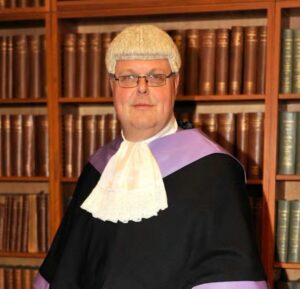 On the 27th August 2026 the Crown Prosecution Service announced… Read more: Judges Behaving Badly and His Honour Judge Simon Oliver
 Jo Morris is a practising criminal barrister of Drystone Chambers… Read more: Jo Morris Barrister
 The Good Law Project is a UK campaigning organisation that… Read more: Good Law Project
 The Police Federation of England and Wales (PFEW) is the… Read more: Police Federation of England and Wales (PFEW)
 The Criminal Justice System Common Platform (also known as HMCTS… Read more: What is the Criminal Justice System (CJS) Common Platform ?
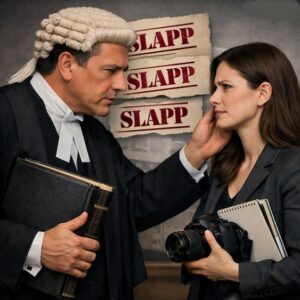 Strategic Lawsuits Against Public Participation, or SLAPPs, are legal actions… Read more: Strategic Lawsuit Against Public Participation (SLAPPs)
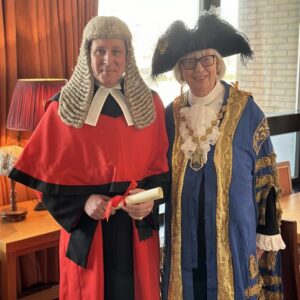 Judge Tony Alan Walter Baumgartner, known as His Honour Judge… Read more: His Honour Judge Tony Baumgartner – Recorder of Westminster
 On the 8th July 2026, the Courts and Tribunals Judiciary… Read more: New Protocol for Legal Professionals to Raise Informal Concerns About Judges Behaviour
 In April 2026, His Majesty’s Inspectorate of Constabulary and Fire… Read more: The Policing Performance System