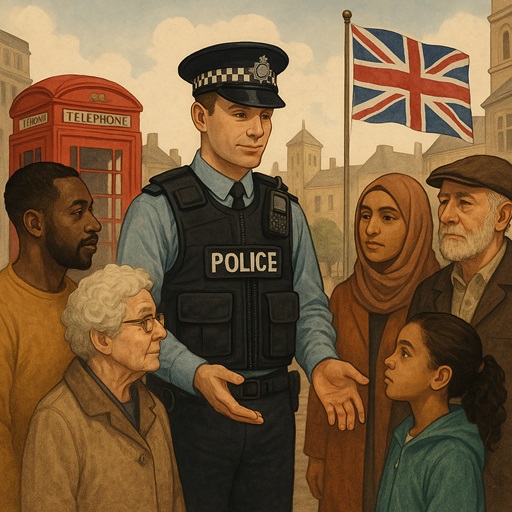
A High Court ruling by Mr Justice Linden KC has determined that Northumbria Police breached their duty of impartiality by allowing uniformed officers to march in a Newcastle Pride parade, displaying symbols like the Progress flag associated with transgender ideology.
The case was brought by Linzi Smith, against the Chief Constable of Northumbria Police (Vanessa Jardine), who argued that the police’s participation compromised their professional oath to act impartially.
The judge ruled that such actions could undermine public trust in the police’s ability to handle disputes fairly, particularly in conflicts involving gender-critical individuals and transgender rights supporters.
This landmark decision may lead to a ban on police marching in Pride parades across the UK and could impact their involvement in other events, such as Remembrance parades or religious festivals, prompting concerns among police chiefs about maintaining impartiality while engaging with communities.
Police officers face being banned from participating in Pride parades after a court ruled that one of Britain’s largest forces breached impartiality by marching at an LGBT+ rights event.
Police face ban from marching in Pride parades after court rules it breaches impartiality – Daily Mail
Legal Framework – The Duty of Impartiality
Mr Justice Linden in his judgment Lindsey Smith, R (on the application of) v The Chief Constable of Northumbria Police. Neutral Citation Number[2025] EWHC 1805 (Admin) Paras 61 to 67 outlines the duty of impartiality for all Police Officers.
By section 29 of the Police Act 1996 every member of a police force maintained for a police area is required, on appointment, to be attested as a constable by making the following declaration before a justice of the peace (see Schedule 4 to the 1996 Act):
‘I………………..of………………..do solemnly and sincerely declare and affirm that I
will well and truly serve the King in the office of constable, with fairness,
integrity, diligence and impartiality, upholding fundamental human rights and according equal respect to all people; and that I will, to the best of my power, cause the peace to be kept and preserved and prevent all offences against people and property; and that while I continue to hold the said office I will, to the best of my skill and knowledge, discharge all the duties thereof faithfully according to law”The Police Regulations 2003 were made pursuant to, amongst other things, section 50 of the 1996 Act which provides that “the Secretary of State may ..make regulations as to the government, administration and conditions of service of police forces”. In effect, the 2003 Regulations therefore set out the terms and conditions which govern police officers as office holders. The matters to which regulations may relate include,
at section 50(2)(e), “the conduct, efficiency and effectiveness of members of police forces and the maintenance of discipline”. Paragraph 1 of Schedule 1 to the Police Regulations 2003, read with Regulation 6, provides as follows:“Restrictions on the private life of members of police forces
(1) A member of a police force shall at all times abstain from any activity which is likely to interfere with the impartial discharge of his duties or which is likely to give rise to the impression amongst members of the public that it may so interfere.
(2) A member of a police force shall in particular–
(a) not take any active part in politics;
(b) not belong to any organisation specified or described in a determination of the Secretary of State.”The Police (Conduct) Regulations 2020 also require that police officers act with impartiality. They were made pursuant to section 50 of the Police Act 1996 and paragraph 29 of Schedule 3 to the Police Reform Act 2002. Regulation 4 provides that the 2020 “Regulations apply where an allegation comes to the attention of an appropriate authority which indicates that the conduct of a police officer may amount to misconduct, gross misconduct or practice requiring improvement”. In broad terms,
the 2020 Regulations require the appropriate authority to decide whether misconduct proceedings should be brought against the officer. Under Regulation 2, “misconduct” includes “a breach of the Standards of Professional Behaviour that is so serious as to justify disciplinary action”. Regulation 5 then provides that “the Standards of Professional Behaviour established are the standards of professional behaviour described in Schedule 2”. Schedule 2 includes the following:Lindsey Smith, R (on the application of) v The Chief Constable of Northumbria Police. Neutral Citation Number[2025] EWHC 1805 (Admin) – Mr Justice Linden
Honesty and Integrity
Police officers are honest, act with integrity and do not compromise or abuse their position.
Equality and Diversity
Police officers act with fairness and impartiality. They do not discriminate
unlawfully or unfairly.
Orders and Instructions
Police officers only give and carry out lawful orders and instructions. Police officers abide by police regulations, force policies and lawful orders.
Discreditable Conduct
Police officers behave in a manner which does not discredit the police service or undermine public confidence in it, whether on or off duty.”
Are the Police Impartial ?
The impartiality of the police in England and Wales is a complex issue, with evidence suggesting both strengths and challenges. The principle of impartiality is central to policing, as outlined in the Peelian Principles, which emphasises policing by consent and fairness.
The College of Policing’s Code of Ethics (2014) explicitly requires officers to act with integrity, impartiality, and respect for all. However, public perception and specific incidents raise questions about consistency.
Data from the 2023/24 Crime Survey for England and Wales shows 56% of respondents had confidence in their local police, but trust varies significantly by demographic. For example, Black respondents (49%) reported lower confidence than White respondents (58%).
High-profile cases, like the 2021 murder of Sarah Everard by a serving police officer and the 2023 Casey Review into the Metropolitan Police, highlighted systemic issues, including institutional racism, misogyny, and bias in stop-and-search practices.
The review found disproportionate stops of Black individuals (2.5 times more likely than White individuals per 1,000 people in 2022/23).
Conversely, oversight mechanisms like the Independent Office for Police Conduct (IOPC) and community scrutiny panels aim to ensure accountability. The IOPC investigated 1,472 complaints in 2022/23, with 23% related to discriminatory behaviour, though only a fraction led to formal misconduct findings.
Police forces also undergo regular inspections by His Majesty’s Inspectorate of Constabulary, which often praises operational fairness but flags inconsistencies in diversity training and community engagement.
Social media reflect polarized views with some users praising local policing efforts, while others cite personal experiences of bias, particularly in urban areas. These anecdotes, while not statistically robust, align with survey trends showing declining trust in the police.
In short, while the legal framework for impartiality exists, systemic issues and public scepticism suggest it’s not universally achieved.
Check out our articles on Policing by Consent, Are the Police for Hire ?, Police Surveillance, Police Public Confidence and Engagement, Police Professional Standards Department, IOPC, Crime Reporting, What is a Police and Crime Commissioner ?, Policing, Police News, Two Tiered Policing, Thought Police, Police Digital Service, Knowledge Hub – Police Digital Service, Wasting Police Time, Police Community Support Officers (PCSO), Met Police, Sussex Police, Chief Constable Jo Shiner, R v Sussex Justices and the highly questionable Sussex Family Justice Board.
The Ministry of Injustice is not the Ministry of Justice nor is it affiliated in any way with the justice system, legal profession, police or any other law enforcement agencies.
“Publicity is the very soul of justice. . . . It keeps the judge himself, while trying, under trial….Where there is no publicity there is no justice”
Jeremy Bentham – Mr Justice Cobb: ‘Justice must be seen to be done’
Latest Articles ↓
- His Honour Judge Daniel Sawyer
 Judge Daniel Sawyer, known as His Honour Judge Daniel Sawyer,… Read more: His Honour Judge Daniel Sawyer
 - UK National Centre for Information Defence
 Prime Minister Andy Burnham used his first United Nations General… Read more: UK National Centre for Information Defence
 - Judges Behaving Badly and His Honour Judge Simon Oliver
 On the 27th August 2026 the Crown Prosecution Service announced… Read more: Judges Behaving Badly and His Honour Judge Simon Oliver
 - Jo Morris Barrister
 Jo Morris is a practising criminal barrister of Drystone Chambers… Read more: Jo Morris Barrister
 - Good Law Project
 The Good Law Project is a UK campaigning organisation that… Read more: Good Law Project
 - Police Federation of England and Wales (PFEW)
 The Police Federation of England and Wales (PFEW) is the… Read more: Police Federation of England and Wales (PFEW)
 - What is the Criminal Justice System (CJS) Common Platform ?
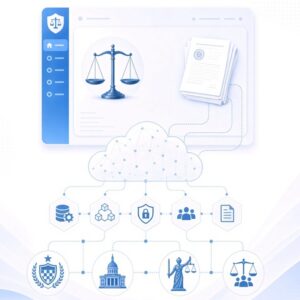 The Criminal Justice System Common Platform (also known as HMCTS… Read more: What is the Criminal Justice System (CJS) Common Platform ?
 - Strategic Lawsuit Against Public Participation (SLAPPs)
 Strategic Lawsuits Against Public Participation, or SLAPPs, are legal actions… Read more: Strategic Lawsuit Against Public Participation (SLAPPs)
 - His Honour Judge Tony Baumgartner – Recorder of Westminster
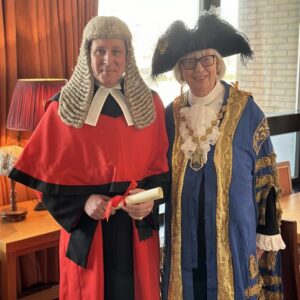 Judge Tony Alan Walter Baumgartner, known as His Honour Judge… Read more: His Honour Judge Tony Baumgartner – Recorder of Westminster
 - New Protocol for Legal Professionals to Raise Informal Concerns About Judges Behaviour
 On the 8th July 2026, the Courts and Tribunals Judiciary… Read more: New Protocol for Legal Professionals to Raise Informal Concerns About Judges Behaviour
 - The Policing Performance System
 In April 2026, His Majesty’s Inspectorate of Constabulary and Fire… Read more: The Policing Performance System
 - What is the Judicial College ?
 The Judicial College serves as the central pillar of professional… Read more: What is the Judicial College ?
Most Popular ↓
You should always seek formal legal advice from a qualified and reputable lawyer (solicitor or barrister).
There are a number of links to Free and Paid For Legal Resources and Legal Organisations on the Free Legal Advice , Legal Aid and Pro Bono pages.
[post_title] was last updated on the 5th October 2026
