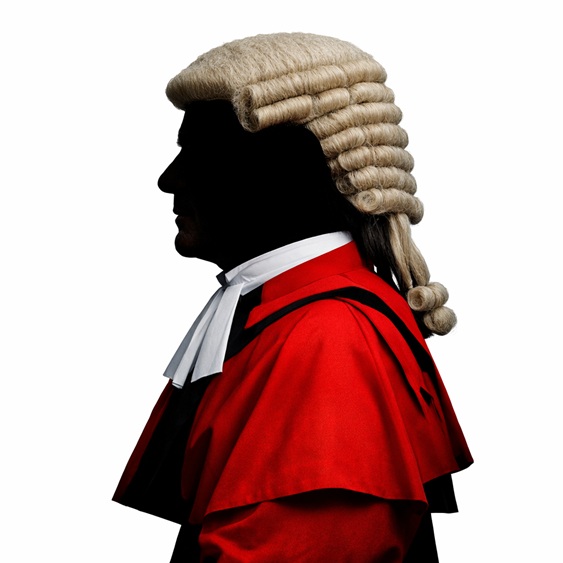
Judge Nicholas Edward Rowland, known as His Honour Judge Nicholas Rowland, is a long-serving Circuit Judge of England and Wales who is assigned to the South West Circuit.
His Honour Judge Nicholas Edward Rowland was called to the Bar in 1988 and practised as a barrister for over 25 years before becoming a full-time judge.
He was appointed a Recorder (part-time judge) in 2005 and sat at Southampton Crown Court, before being appointed a Circuit Judge on the 23rd June 2014 on the South West Circuit, where he has served as a permanent judge based at Southampton Combined Court Centre ever since.
We are pleased to announce that His Honour Judge Nicholas Rowland, a former member, has been appointed to the Crown Court bench to be based in Southampton.
3PB Barristers Autumn 2014 News
Detailed public records on Judge Rowland’s pre-appointment professional background (such as whether he practiced as a barrister or solicitor, chambers affiliation (3 Paper Buildings (3PB) is one of the UK’s oldest chambers), year of call to the Bar, or areas of specialization) are limited.
Unlike some judges whose biographies appear on chambers websites, judicial profiles, or in appointment announcements with full career histories, Judge Rowland’s pre-bench career is not extensively documented in open sources.
HHJ Rowland is shown on the List of Circuit Judges published on the Courts and Tribunal Judiciary website.
| His Honour Judge Nicholas Edward Rowland | South West | 23-06-2014 |
Judge Rowland Legal Controversy – Judge Praises Behaviour of Teenage Rapists
A gang of three teenage boys from the traveller community in Hampshire have avoided custodial sentences after being convicted of multiple rapes against two schoolgirls in separate attacks in Fordingbridge.
In November 2024, two boys aged 14 lured a 15-year-old girl via Snapchat to a riverside underpass, where they raped her while laughing and filming the assault on their phones. Just two months later, the same pair, joined by a 13-year-old boy, subjected a 14-year-old girl to a knife-point gang rape in a park, again recording the attack and encouraging each other to degrade her further.
On the 5th March 2026, following a five-week trial at Southampton Crown Court, the three boys were convicted. The two older boys, now aged 15, were found guilty of multiple counts of rape and taking indecent images of a child. The youngest boy, now aged 14, was convicted of two counts of rape. They were sentenced on the 21st May 2026.
Despite the seriousness of the offences which included filming and the use of a knife in one attack, His Honour Judge Nicholas Rowland sentenced all three to youth rehabilitation orders rather than prison. The two older boys received three-year orders with intensive supervision, while the youngest received an 18-month order.
Judge Rowland cited the defendants’ young age, low intellectual capacity, ADHD issues, vulnerability to peer pressure and limited understanding of consent as key mitigating factors.
Judge Rowland told them: “None of you need to go to prison today,” and praised their good behaviour during the trial “You have all done very well with the restrictions put in place throughout the trial. (The second boy) and (the third boy) your problems are quite bad.“ stating he wished to avoid “criminalising these children unnecessarily” and focus on their rehabilitation.
Judge Rowland’s lenient sentence has sparked significant public outrage and political criticism, with senior politicians describing it as “soft justice” and calling for tougher penalties for such serious sexual offences against children.
The full transcript of judge Nicholas Rowlands sentencing remarks were made publicly available after the BBC requested they be transcribed.
The case has reignited debate over the sentencing of young offenders in England and Wales, particularly in cases involving extreme violence and the filming of sexual assaults.
On Friday 22nd May 2026, a government spokesperson said that the Attorney General’s office had received “multiple” requests for the sentences to be reviewed under the Unduly Lenient Sentence (ULS) scheme.
The Unduly Lenient Sentence (ULS) scheme allows anyone to ask for certain Crown Court sentences to be reviewed by the Attorney General’s Office (AGO) if they think the sentence is too lenient.
The review is ultimately conducted by the Law Officers (Attorney General or Solicitor General) and if they consider the sentence appears unduly lenient, they can ask the Court of Appeal to review the sentence.
On Tuesday 26th May 2026, the Prime Minister Sir Keir Starmer announced that the sentences will be referred to the Court of Appeal.
On the 12th June 2026 the BBC published Boys’ sentences for rape to be reviewed in July
The sentences of three teenage boys who were spared custody over the rape of two girls will now be considered by senior judges at the Court of Appeal during a two-day hearing starting on 1st July 2026.
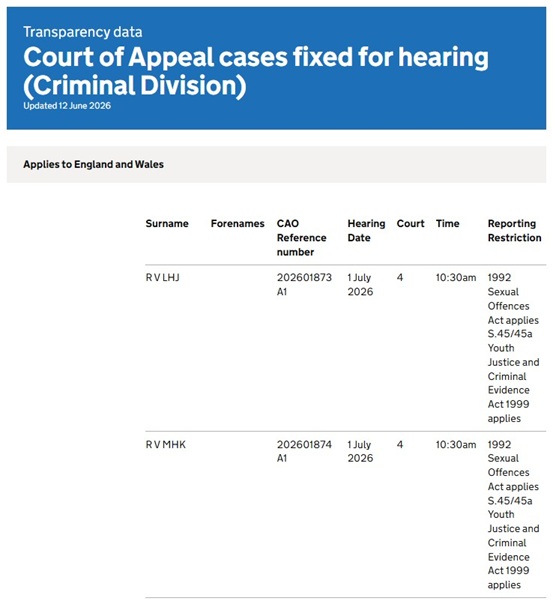
Tom Little KC, for the attorney general, told the court: “It is submitted that the extent and nature of the offending was so serious such that the only appropriate sentence for [the boys] was detention.”
Tom Little KC also said that Judge Nicholas Rowland was “wrong to conclude that a community sentence could be justified for any of them”.
Judge ‘wrong’ to spare boy rapists from custody, court told – BBC News
Judge Nicholas Rowland was accused of being “unduly lenient” to the rapists by lawyers representing the Attorney General at the Court of Appeal.
On the 2nd July 2026, two teenage boys were given four years’ detention after the Court of Appeal changed the sentence. The third boy did not have his sentence changed. The Lady Chief Justice Baroness Carr, Lord Justice Edis, and Justice Norton presided over the case.
The Lady Chief Justice said courts have to follow sentencing guidelines, which together require the sentencing judge to assess the seriousness of the offence, and whether they pass the custody threshold.
The assessment of seriousness was at the heart of the appeal, Carr says – recognising the difficulty of the case due to the ages of everyone involved.
Carr says a deeper analysis of the sentencing guidelines and of the two separate incidents was undertaken, adding that it was then “concluded that the judge had erred in his assessment of the seriousness of the offences“.
Judge Rowland erred in his assessment of the seriousness – Lady Chief Justice
Authorisation to sit as a High Court Judge
HHJ Rowland may be authorised to sit as a High Court Judge by s9(1) of the Senior Courts Act as amended by the Crime and Courts Act 2013.
According to CRIMINAL PRACTICE DIRECTIONS 2015 DIVISION XII His Honour Judge Rowland should be addressed as “My Lord” in court.
Modes of Address B.1 – The following judges, when sitting in court, should be addressed as ‘My Lord’ or ‘My Lady’
(b) any Circuit Judge sitting as a judge of the Court of Appeal (Criminal Division) or the High Court under section 9(1) of the Senior Courts Act 1981;
(d) any Senior Circuit Judge who is an Honorary Recorder.
Description B.3 – In cause lists, forms and orders members of the judiciary should be described as follows:
(a) Circuit Judges, as ‘His [or Her] Honour Judge A’. When the judge is sitting as a judge of the High Court under section 9(1) of the Senior Courts Act 1981, the words ‘sitting as a judge of the High Court’ should be added;
The three key values which are central to the role of judicial office holders (JOHs) in England and Wales are:
• Independence
• Impartiality
• Integrity
“Publicity is the very soul of justice. . . . It keeps the judge himself, while trying, under trial….Where there is no publicity there is no justice”
Jeremy Bentham – Mr Justice Cobb: ‘Justice must be seen to be done’
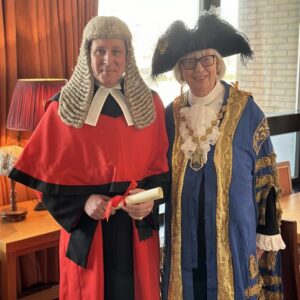
Image of HHJ Rowland : Microsoft Copilot
The High Court Judge that never was – His Honour Judge Melbourne Inman KC
Check out our articles on Rule of Law, Open Justice, Judges Salaries and Fees, Dodgy Judges, Mr Justice Williams, His Honour Now His Dishonour, His Honour Judge Stuart Farquhar, Do you Have to Bow to a Judge ?, Can you Email a Judge ?, Can you Criticise a Judge ? and the highly dubious Sussex Family Justice Board.
The Ministry of Injustice is not the Ministry of Justice nor is it affiliated in any way with the justice system, legal profession, police or any other law enforcement agencies.
“Publicity is the very soul of justice. . . . It keeps the judge himself, while trying, under trial….Where there is no publicity there is no justice”
Jeremy Bentham – Mr Justice Cobb: ‘Justice must be seen to be done’
Latest Articles ↓
- His Honour Judge Daniel Sawyer
 Judge Daniel Sawyer, known as His Honour Judge Daniel Sawyer,… Read more: His Honour Judge Daniel Sawyer
 - UK National Centre for Information Defence
 Prime Minister Andy Burnham used his first United Nations General… Read more: UK National Centre for Information Defence
 - Judges Behaving Badly and His Honour Judge Simon Oliver
 On the 27th August 2026 the Crown Prosecution Service announced… Read more: Judges Behaving Badly and His Honour Judge Simon Oliver
 - Jo Morris Barrister
 Jo Morris is a practising criminal barrister of Drystone Chambers… Read more: Jo Morris Barrister
 - Good Law Project
 The Good Law Project is a UK campaigning organisation that… Read more: Good Law Project
 - Police Federation of England and Wales (PFEW)
 The Police Federation of England and Wales (PFEW) is the… Read more: Police Federation of England and Wales (PFEW)
 - What is the Criminal Justice System (CJS) Common Platform ?
 The Criminal Justice System Common Platform (also known as HMCTS… Read more: What is the Criminal Justice System (CJS) Common Platform ?
 - Strategic Lawsuit Against Public Participation (SLAPPs)
 Strategic Lawsuits Against Public Participation, or SLAPPs, are legal actions… Read more: Strategic Lawsuit Against Public Participation (SLAPPs)
 - His Honour Judge Tony Baumgartner – Recorder of Westminster
 Judge Tony Alan Walter Baumgartner, known as His Honour Judge… Read more: His Honour Judge Tony Baumgartner – Recorder of Westminster
 - New Protocol for Legal Professionals to Raise Informal Concerns About Judges Behaviour
 On the 8th July 2026, the Courts and Tribunals Judiciary… Read more: New Protocol for Legal Professionals to Raise Informal Concerns About Judges Behaviour
 - The Policing Performance System
 In April 2026, His Majesty’s Inspectorate of Constabulary and Fire… Read more: The Policing Performance System
 - What is the Judicial College ?
 The Judicial College serves as the central pillar of professional… Read more: What is the Judicial College ?
Most Popular ↓
You should always seek formal legal advice from a qualified and reputable lawyer (solicitor or barrister).
There are a number of links to Free and Paid For Legal Resources and Legal Organisations on the Free Legal Advice , Legal Aid and Pro Bono pages.
[post_title] was last updated on the 12th October 2026
