Categories
Law

Etiquette and Manners in Court

Etiquette and manners are important aspects of the court system. They help to maintain the decorum of the court, ensure the fair and impartial administration of justice, and demonstrate respect for the rule of law.

Etiquette and Manners Legal Penalties ?

While there are no specific laws or penalties related to court etiquette and manners, it is generally expected that all participants in the court system, including judges, barristers, solicitors, and members of the public, behave in a professional and respectful manner.

Show respect to the Judge

One of the most important rules of court etiquette is to show respect for the judge.

This includes standing up when the judge enters or leaves the courtroom, addressing the judge as “Your Honour” or “Sir/Madam,” and speaking only when spoken to.

It is also important to remain quiet and attentive during court proceedings, and to avoid any disruptive behaviour such as talking loudly, eating or drinking, or using mobile phones.

There is no requirement to bow to a judge. Please see our articles Do You Have to Bow to a Judge ? and Can you Criticise a Judge ?

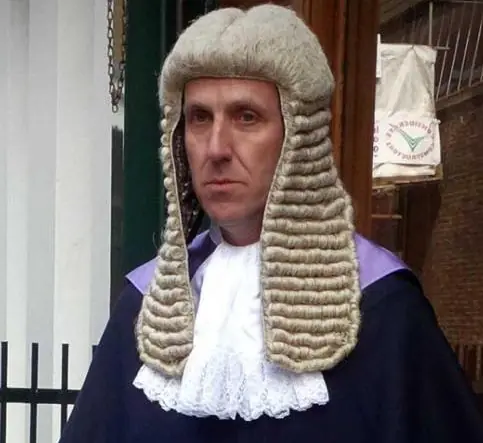
Court Dress Code

Another key aspect of court etiquette is dress code. Participants in court proceedings are expected to dress appropriately and professionally, with men typically wearing suits and ties and women wearing similarly formal attire. Revealing or provocative clothing is not considered appropriate for court.

Rules specific to Barristers

In addition to these general rules of court etiquette, there are also specific rules related to the behaviour of barristers. Barristers are expected to maintain a high level of professionalism and to act in accordance with the Bar Standards Board Code of Conduct. This includes showing respect to the court and to other participants in the legal system, and refraining from any behaviour that could be seen as disrespectful or unprofessional.

Barristers are also expected to be polite and courteous to their clients, and to treat them with respect and professionalism. However, this does not necessarily mean that barristers must always agree with their clients or follow their instructions.

Barristers have a duty to act in the best interests of their clients, even if this means disagreeing with them or offering advice that they may not want to hear.

How to Address a Judge ?

  • High Court Masters, Insolvency and Companies Court Judges and Deputy District Judges are also to be addressed as ‘Judge’
  • Senior Judges, Court of Appeal Judges and High Court Judges are to be addressed as ‘My Lord’ or ‘My Lady’
  • Circuit Judges are to be addressed as ‘Your Honour’
  • Deputy District Judges are to be addressed as ‘Sir’ or ‘Madam’
  • Magistrates are to be addressed as ‘Your Worship’, or ‘Sir’ or ‘Madam’

It is quite telling of the Judiciary and Justice system that the article What do I call a judge? published on the Judiciary website makes no account for transgender people.

How to Address a Barrister ?

There are also specific rules related to how barristers should address judges and other legal professionals. Barristers should also address other barristers, solicitors and Litigants in Person(LIP) by the appropriate pronoun usually followed by their surname.

Judges Powers

Judges have the power to enforce order in the court and maintain decorum and to reprimand participants who engage in inappropriate behaviour. This includes the power to issue warnings, to impose fines for contempt of court, and to remove participants from the courtroom if necessary.

Inappropriate behaviour in court can take many forms, but generally refers to any behaviour that disrupts court proceedings or shows disrespect for the court or other participants in the legal process. Examples of inappropriate behaviour might include:

  • Speaking out of turn or interrupting court proceedings
  • Using offensive or disrespectful language
  • Failing to follow court rules or directions
  • Ignoring the authority of the judge or court
  • Failing to show respect for the court, such as by not standing when the judge enters or leaves the courtroom

It should be noted that Article 10 of the Human Rights Act 1998 protects your right to hold your own opinions.

This is a qualified right which lets you hold opinions and express them freely verbally, in writing, through television, radio or the internet.

The Law and Practice Directions

There are a number of laws, practice directions, and rules that govern court proceedings and provide guidance on appropriate behaviour. These include:

  • The Contempt of Court Act 1981, which outlines the types of behaviour that may constitute contempt of court and sets out the penalties for contempt, including fines and imprisonment
  • The Family Procedure Rules, which set out the rules for the conduct of criminal proceedings in courts in England and Wales
  • The Criminal Procedure Rules, which set out the rules for the conduct of family proceedings in courts in England and Wales
  • The Civil Procedure Rules, which set out the rules for the conduct of civil proceedings in courts in England and Wales
  • The Practice Directions issued by the courts, such as the Supreme Court, which provide guidance on procedural matters and court etiquette.

Unwrite rules on Etiquette and Manners

In addition to these legal rules and guidance, there are also unwritten rules and traditions that govern court behaviour and etiquette.

These are based on longstanding traditions and customs and are designed to ensure that court proceedings are conducted in a respectful and dignified manner.

Conclusion

Overall, judges have a range of powers to enforce order in court and to ensure that court proceedings are conducted in a fair and respectful manner. Participants in court proceedings are expected to follow the rules and guidance set out by the courts, and to behave in a professional and respectful manner at all times.

Admonished by a High Court Judge

On the 2nd November 2022 at the High Court of England and Wales, I as a Litigant in Person (LIP) directly called the barrister Mr Gavin Howe a liar in Court.

This was a public hearing and the transcript could be requested using the form EX107: Order a transcript of court or tribunal proceedings.

Mrs Justice Roberts of the Family Division of the High Court, immediately admonished me and said that I should show Mr Howe “more courtesy and respect”.

Similar to a politician in parliament, I rephrased my factual assertion to comply with the rules of etiquette :-

“Mr Howe has attempted to either deliberately mislead the High Court by lying or is totally incompetent”.

This must have been acceptable to Mrs Justice Roberts as the hearing continued in earnest.

Read the reviews of Junior Sussex Barrister Gavin Howe and make up your own mind about a currently practising Barrister’s Competence, Etiquette and Manners.

etiquette and manners

The Ministry of Injustice is not the Ministry of Justice nor is it affiliated in any way with the justice system, legal profession, police or any other law enforcement agencies.


Latest Articles


Most Popular


You should always seek formal legal advice from a qualified and reputable lawyer (solicitor or barrister).

There are a number of links to Free and Paid For Legal Resources and Legal Organisations on the Free Legal Advice , Legal Aid and Pro Bono pages.

Categories
Judiciary Legal Professionals

Judges

What is a Judge ?

A judge is a legal professional who presides over court proceedings and makes rulings and judgments on legal cases.

Judges are responsible for ensuring that trials are conducted fairly and impartially, and for interpreting and applying the law in accordance with the relevant statutes, legal precedents, and principles of justice.

Check out our articles Could AI replace judges ? and Could AI replace lawyers ? for a detailed analysis of Artificial Intelligence (AI) and what it means for the Justice system not only in the UK but also around the world.

Types of Judges

  1. District Judges – who preside over cases in the County Court and in certain types of tribunals.
  2. Tribunal Judges – who preside over hearings in the various tribunals that exist to resolve disputes in specific areas of law. These tribunals include the Employment Tribunal, the First-tier Tribunal, the Upper Tribunal, and the Tax Tribunal, amongst others.
  3. Circuit Judges – who preside over cases in the Crown Court and some types of civil cases in the County Court.
  4. High Court Judges – who preside over cases in the High Court, which is a superior court with jurisdiction over a wide range of legal matters.
  5. Court of Appeal Judges – who preside over cases in the Court of Appeal, which hears appeals from the High Court and other lower courts.
  6. Supreme Court Justices – who preside over cases in the UK’s highest court, the Supreme Court, which is the final court of appeal in the UK for civil cases.

Day to Day tasks of a Judge

Judges daily tasks include :-

  • prepare for trials by reading papers submitted by legal teams
  • hear civil, family and criminal cases
  • listen to evidence from witnesses, defendants and victims
  • advise juries and legal teams on points of law
  • pass sentences on conviction and impose other penalties
  • reach decisions in tribunals, for example on employment disputes or immigration cases
  • help sides to find agreement in civil cases before proceedings begin
  • take expert opinion, for instance in custody or child welfare cases
  • hear appeals and review decisions of lower courts
  • write reports, giving reasons for rulings
  • keep up to date with legal developments
National Careers Service

Judges Pay and Hours

According to the National Careers Service judges can expect to get paid up to £267,509 and work up to 42 hours in a typical week. Please also see our article on Judges Salaries and Fees.

Working Hours of Judges

Some people do mistakenly think that judges’ working hours are confined to court sitting hours, which are normally 10.30am-4.30pm.

But the reality is very different; most judges also carry a lot of ‘box work’ (paperwork) on current and future (and sometimes past) cases – especially as most cases are settled or concluded before they reach the stage of a court hearing. It is not unusual for judges to work late into the evening, writing judgments and reading files of evidence and letters from parties. They do not claim overtime for this.

There are 4 terms in the legal year, which are the main sitting times for the High Court and Court of Appeal. Most courts do have sittings around the year, and even in the High Court and Court of Appeal, emergency hearings and processing of cases continue during the vacations.

Senior judges use the ‘vacation’ periods between terms to catch up on new legislation and case law, as well as undertaking formal training.

Courts and Tribunal Judiciary Working Hours

Judicial sitting days

Court of Appeal Judges and High Court Judges are expected to devote themselves to judicial business throughout the legal year which usually amounts to somewhere in the region of 185-190 days.

Circuit Judges are expected to sit for a minimum of 210 days, although the expectation is for between 215-220 per year.

District Judges are expected to sit for a minimum of 215 days.

Judges also have out of court duties to perform such as reading case papers, writing judgments, and keeping up to date with new developments in the law.

Courts and Tribunal Judiciary The legal year, term dates and sitting days

The Legal Year

The origins of the legal year are the service in Westminster Abbey which dates back to 1897 when judges prayed for guidance at the start of the legal term. Judges, whose courts were held in Westminster Hall, left the city and walked to the abbey to take part in the service.

The ceremonies now are more or less as they have always been but, instead of the two mile walk from Temple Bar to Westminster Abbey, the judges now travel by car.

The 45-minute service, which starts at 11:30am, is conducted by the Dean of Westminster. It includes prayers, hymns, psalms and anthems; the Lord Chancellor reads a lesson.

Around 700 people are invited to attend the service and breakfast. These include judges, senior judicial officers, the Law Officers, King’s Counsel (KC), government ministers, lawyers, members of the European Court and other overseas judges and lawyers. Judges and KCs wear ceremonial dress.

Courts and Tribunal Judiciary The legal year, term dates and sitting days

Term Dates

The term dates for the legal year apply to sittings in the High Court and Court of Appeal only, and are fixed in accordance with the Practice Direction 2F which supplements Part 39 of the Civil Procedure Rules.

2023

Hilary: Wednesday 11 January to Wednesday 5 April 2023
Easter: Tuesday 18 April to Friday 26 May 2023
Trinity: Tuesday 6 June to Monday 31 July 2023
Michaelmas: Monday 2 October to Thursday 21 December 2023

2024

Hilary: Thursday 11 January to Wednesday 27 March 2024
Easter: Tuesday 9 April to Friday 24 May 2024
Trinity: Tuesday 4 June to Wednesday 31 July 2024
Michaelmas: Tuesday 1 October to Friday 20 December 2024

Courts and Tribunal Judiciary The legal year, term dates and sitting days

How to Become a Judge

You can only become a Judge through an official appointment.

Volunteering

You can get valuable experience and insights into the work of a judge through the Judicial Work Shadowing Scheme. This may help if you later apply for selection to become a judge.

You normally have to be a qualified legal professional, with at least 7 years’ experience in law-related work to join.

If you have been on the Judicial Work Shadowing Scheme, you can apply for a place on the Judicial Mentoring Scheme. This scheme is open to applications from people who are currently under-represented in the judiciary. For example:

  • women
  • ethnic minorities
  • lawyers with a state school education
National Careers Service

Other routes to becoming a Judge

Judges are appointed by the Judicial Appointments Commission. You’ll need to apply to them to be considered for selection.

To apply, you must:

  • be a qualified solicitor, barrister or chartered legal executive
  • have worked as a legal professional for between 5 and 7 years, depending on the type of judge you want to be
  • meet nationality requirements

Common starting roles include district, recorder and tribunal judges. For certain other judicial roles, you can apply if you’re an experienced legal academic, or trademark or patent attorney.

You must successfully complete several application stages to get through to shortlisting by the Commission. You’ll then be invited to attend an assessment and selection day, which will include interviews.

National Careers Service

The Ministry of Injustice is not the Ministry of Justice nor is it affiliated in any way with the justice system, legal profession, police or any other law enforcement agencies.


Latest Articles


Most Popular


You should always seek formal legal advice from a qualified and reputable lawyer (solicitor or barrister).

There are a number of links to Free and Paid For Legal Resources and Legal Organisations on the Free Legal Advice , Legal Aid and Pro Bono pages.

Categories
Law

Constitutional Reform Act 2005

The Constitutional Reform Act 2005 is a significant piece of legislation that introduced major changes to the constitutional framework of the United Kingdom.

A House of Lords Select Committee on the Constitution produced a report with evidence in relation to the Constitutional Reform Act 2005

Explanatory notes to accompany the legislation were also published. The Act received Royal Assent on 24th March 2005.

The Act was intended to modernise and streamline the UK’s constitutional arrangements and strengthen the independence of the judiciary.

This article will examine the key changes introduced by the Constitutional Reform Act 2005, why it is important, and other legislation it superseded. It will also focus on the creation of the Judicial Appointments Commission (JAC), the establishment of the Supreme Court and the appointment of the heads of Criminal and Family justice.

Creation of the Judicial Appointments Commission

The creation of the Judicial Appointments Commission (JAC) was one of the most significant changes introduced by the Constitutional Reform Act 2005. The JAC is responsible for appointing judges to the Supreme Court, the Court of Appeal, and other senior judicial positions. It was established to ensure that appointments were made on the basis of merit and not political considerations.

Before the creation of the JAC, judicial appointments were made by the Lord Chancellor. However, this process was criticized for being opaque and potentially open to political interference.

The creation of the JAC addressed these concerns by establishing an independent body to oversee the appointment of judges. The JAC has been praised for increasing the diversity of the judiciary, with more women and ethnic minorities appointed to senior judicial positions since its creation.

The JAC is made up of 15 Commissioners, including the Chairman, including the Lord Chief Justice, the President of the Supreme Court, and seven non-lawyers appointed by the Lord Chancellor. The Commission is responsible for advertising vacancies, shortlisting candidates, and making recommendations to the Lord Chancellor for appointment.

The Lord Chancellor is required to follow the Commission’s recommendations, except in exceptional circumstances.

The creation of the JAC has had a significant impact on the UK’s constitutional order.

It has helped to ensure that appointments to the judiciary are made on the basis of merit and not political considerations, which has helped to strengthen the independence of the judiciary.

Establishment of the Supreme Court

Another significant change introduced by the Constitutional Reform Act 2005 was the establishment of the Supreme Court. Prior to the Act, the highest court in the UK was the Appellate Committee of the House of Lords.

This arrangement was criticized for blurring the lines between the judiciary and the legislature, as the House of Lords was also a legislative body.

The establishment of the Supreme Court was intended to address these concerns by creating a separate and independent court to hear the most important cases.

The Supreme Court is now the final court of appeal in the UK for civil cases, and for criminal cases in England, Wales, and Northern Ireland.

The Supreme Court is made up of 12 judges, who are appointed by an independent selection commission. The establishment of the Supreme Court has helped to strengthen the independence of the judiciary by creating a separate and distinct court to hear the most important cases. It has also helped to clarify the separation of powers between the judiciary and the legislature.

Appointment of the Heads of Criminal and Family Justice

The Constitutional Reform Act 2005 also introduced changes to the appointment of the heads of criminal and family justice.

Before the Act, the Lord Chancellor had the responsibility of appointing judges to the Court of Appeal and the High Court. The Lord Chancellor also had the authority to make appointments to the heads of the criminal and family justice systems.

However, the Act removed these powers from the Lord Chancellor and transferred them to the Lord Chief Justice.

The Lord Chief Justice became responsible for appointing the heads of the criminal and family justice systems, including the Lord Chief Justice of England and Wales, the Master of the Rolls, the President of the King’s Bench Division, the President of the Family Division, and the Chancellor of the High Court.

This change was intended to strengthen the independence of the judiciary and remove any potential political influence from the appointment process.

The appointment of the heads of criminal and family justice is now made by a selection panel, which is chaired by the Lord Chief Justice and includes other senior members of the judiciary, as well as lay members. The panel makes recommendations to the Lord Chancellor, who must follow their advice unless there are exceptional circumstances.

The transfer of these powers from the Lord Chancellor to the Lord Chief Justice was a significant change that helped to further separate the judiciary from the executive. It ensured that appointments to the heads of the criminal and family justice systems were made on the basis of merit and not political considerations.

Superseded Legislation

The Constitutional Reform Act 2005 superseded several pieces of legislation, including the Judicial Appointments Commission Act 2004, the Supreme Court Act 1981, and the Appellate Jurisdiction Act 1876.

The Judicial Appointments Commission Act 2004 was repealed and replaced by the provisions of the Constitutional Reform Act 2005 that established the JAC.

The Supreme Court Act 1981 was also repealed, and the Supreme Court was established as a separate court under the new Act.

Finally, the Appellate Jurisdiction Act 1876 was repealed, and the judicial functions of the House of Lords were transferred to the Supreme Court.

A number of existing legislations were also affected, such as the Habeas Corpus Act 1679 and the Ecclesiastical Licences Act 1533.

The Oath of the Lord Chancellor

Finally, the Constitutional Reform Act 2005 Part 2 Section 17 introduced changes to the oath taken by the Lord Chancellor.

“I,     , do swear that in the office of Lord High Chancellor of Great Britain I will respect the rule of law, defend the independence of the judiciary and discharge my duty to ensure the provision of resources for the efficient and effective support of the courts for which I am responsible. So help me God.”

Oath of the Lord Chancellor

Before the Act, the Lord Chancellor was required to swear an oath of allegiance to the King and to promise to uphold the judiciary’s independence. However, the Lord Chancellor was also a member of the executive and had political responsibilities.

The Act introduced a new oath for the Lord Chancellor, which removed any reference to political responsibilities.

The new oath requires the Lord Chancellor to swear to respect the rule of law, defend the independence of the judiciary, and ensure that justice is accessible to all. This change was intended to clarify the Lord Chancellor’s role as a guardian of the judiciary’s independence and to remove any potential conflicts of interest.

The Constitutional Reform Act 2005 was a significant piece of legislation that introduced major changes to the constitutional framework of the UK.

These changes have helped to strengthen the independence of the judiciary and clarify the separation of powers between the judiciary and the executive.


The Ministry of Injustice is not the Ministry of Justice nor is it affiliated in any way with the justice system, legal profession, police or any other law enforcement agencies.


Latest Articles


Most Popular


You should always seek formal legal advice from a qualified and reputable lawyer (solicitor or barrister).

There are a number of links to Free and Paid For Legal Resources and Legal Organisations on the Free Legal Advice , Legal Aid and Pro Bono pages.
Categories
Law

Burden and Standard of Proof

Burden and standard of proof are key concepts in the UK legal system that relate to the level of evidence required to prove a case.

The burden of proof refers to the responsibility of the party making an assertion to provide evidence to support it, while the standard of proof is the degree of certainty needed to prove that assertion.

In this article, we will examine the history and examples of burden and standard of proof in UK law.

History

The origins of the burden and standard of proof can be traced back to the Roman law principle of ‘onus probandi incumbit ei qui dicit, non ei qui negat,’ which translates to ‘the burden of proof is on the one who asserts, not on the one who denies.’

This principle was adopted into English law in the 17th century, where it became a fundamental part of the common law system.

In the 18th century, the standard of proof was established as ‘proof beyond a reasonable doubt’ in criminal cases, which required the prosecution to prove their case to a high level of certainty.

In civil cases, the standard of proof was set as ‘balance of probabilities‘ which required the plaintiff to prove their case on the balance of probabilities, i.e., that it was more likely than not that their version of events was correct.

Burden and standard of proof are important in both criminal and civil cases in the UK legal system.

Criminal Cases

In criminal cases, the prosecution must prove their case ‘beyond a reasonable doubt,’ which means that the evidence must be so strong that there is no other logical explanation for the defendant’s guilt.

This is often referred to as the 99% test.

This high standard of proof is necessary because the consequences of a criminal conviction can be severe, including imprisonment or even the death penalty.

One example of the burden and standard of proof in criminal cases is R v Woolmington (1935), where the defendant was charged with the murder of his wife.

The prosecution had the burden of proving that the defendant had killed his wife intentionally or recklessly, and they had to prove this beyond a reasonable doubt.

The defendant claimed that he had accidentally shot his wife while cleaning his gun, and the jury ultimately found him not guilty because the prosecution had failed to prove their case beyond a reasonable doubt.

Civil Cases including Family

In civil cases, the burden and standard of proof are different. The plaintiff has the burden of proving their case on the balance of probabilities, i.e., that it is more likely than not that their version of events is correct.

This is often referred to as the 51% test.

This lower standard of proof is necessary because the consequences of a civil case are less severe than a criminal case, usually involving monetary damages or injunctions.

An example of the burden and standard of proof in civil cases is the case of Re H and Others (Minors) (Sexual Abuse: Standard of Proof) (1996).

The case concerned allegations of sexual abuse against children in care, and the question was whether the standard of proof in such cases should be ‘beyond a reasonable doubt’ or the lower standard of ‘balance of probabilities.’

The court held that in cases involving serious allegations such as sexual abuse, the standard of proof should be ‘balance of probabilities,’ but the evidence must be ‘clear, cogent and convincing’ to establish liability.

In conclusion, the burden and standard of proof are essential concepts in the UK legal system that ensure that justice is served.

The burden of proof is on the party making an assertion, and the standard of proof depends on the type of case, with ‘beyond a reasonable doubt’ required in criminal cases and ‘balance of probabilities’ required in civil cases.

These principles have evolved over centuries of legal practice and are a critical part of ensuring fairness in the administration of justice.


The Ministry of Injustice is not the Ministry of Justice nor is it affiliated in any way with the justice system, legal profession, police or any other law enforcement agencies.


Latest Articles


Most Popular


You should always seek formal legal advice from a qualified and reputable lawyer (solicitor or barrister).

There are a number of links to Free and Paid For Legal Resources and Legal Organisations on the Free Legal Advice , Legal Aid and Pro Bono pages.
Categories
Law Legal Professionals

HMCTS

His Majesty’s Courts and Tribunals Service (HMCTS) is an executive agency of the UK government, operating under the Ministry of Justice.

The Lord Chancellor, The Rt Hon Shabana Mahmood MP, heads the Ministry of Justice as the Secretary of State for Justice.

HMCTS Complaints Procedure

You might want to make a complaint to HMCTS. The HMCTS complaint process looks at how your case was handled by their staff.

HMCTS are not able to change the decision in your case or investigate how a judge or magistrate acted towards you.

HMCTS uses the Opinions, Praise, Treatment, Incident and Complaints system (OPTIC) which is the HMCTS feedback database/system used to record all customer feedback.

To complain about the HMCTS:

  • complete the online complaints form
  • speak to a member of staff in their buildings who will record your feedback
  • contact the courts or tribunals by email, phone or in writing

If you remain unsatisfied at the end of the complaints process, you can also ask your member of Parliament to refer your case to the Parliamentary and Health Service Ombudsman.

HMCTS ignore complaints

I raised an online complaint with HMCTS about the shambolic Brighton Family Court and Sussex Family Team on the 16th January 2023 some 55 working days ago (correct as 31st March 2023).

Confirmation email of complaint from HMCTS OPTIC 19th January 2023

I have previously attempted to raise a complaint with Sussex Family Court (in person, by phone, by email) but no one wants to communicate or accept any responsibility.

Sussex Family Court and its staff fail to communicate, list hearings, process applications, deal with complaints and struggle with basic administration. A senior judge told me they are short staffed and are “doing their best”.

This court and its staff are clearly “interfering with the smooth administration of justice” and are not fit for purpose.

HMCTS are in effect in contempt of court by their actions/inactions.

HMCTS claim to respond within 10 working days.

There has been absolutely no response despite having chased them 3 times with emails to [email protected]. Either my complaint is lost, I am being deliberately being ignored or they are still busy coming up with excuses ?

There are no published phone numbers for HMCTS and the only email addresses listed are [email protected] or [email protected].

There is no way I can see of contacting HMCTS.

On the 22nd March 2023 in utter desperation I sent the following to the Ministry of Justice (MoJ) Data protection Officer (DPO).

Dear MoJ DPO

https://complain-about-a-court-or-tribunal.form.service.justice.gov.uk/privacy

Do you have any contact details for the Complaints or “HMCTS optic” team ? I cannot find an email address or telephone number for the complaints team.

I am concerned that they are either deliberately ignoring me or my personal data has fallen into a “worm hole”.

I would therefore also like to make a SAR. I assume this can be done by email to you instead of by post to Disclosure Team which seems an antiquated approach.

Your help would be much appreciated.

Email to MoJ DPO [email protected] / [email protected]

HMCTS OPTIC Privacy Policy

The HMCTS OPTIC Privacy Policy clearly states that the data protection officer can be contacted at [email protected]

HMCTS OPTIC Privacy Policy 22nd March 2023

This is incorrect as emails to that address are undelivered. That email address does not exist.

Undelivered email to [email protected]

The Information Commissioner’s Office (ICO) entry for Z5679958 lists the DPO as [email protected].

Ministry of Justice ICO Registration reference:  Z5679958 24th March 2023

Is this an innocent mistake or further evidence of institutional incompetence ?

To be really “petty”, Petty should have a capital P as well. Hopefully they will update their website.

The MoJ’s DPO has a duty under GDPR to publish accurate information.

The requirement to send a Subject Access Request (SAR) to a postal address is also dubious and unnecessary as an email should suffice.

HMCTS OPTIC Privacy Policy SAR by Post 22nd March 2023

Update 24th March 2023 : The MoJ Data Access Team [email protected] have responded acknowledging the SAR. It seems, as suspected, you can apply by email and save a stamp.

However, they haven’t updated their email template and still refer to Her Majesty’s Prison and Probation Service and Her Majesty’s Court and Tribunal Service.

What an insult to his majesty the King. I have asked them to update this.

Dear Mr Watts

SUBJECT: Subject Access Request

Thank you for your email below in which you asked for information from the Ministry of Justice (MoJ).

Your request has been handled in line with the General Data Protection Regulation (GDPR) and the Data Protection Act (DPA) 2018 as a Subject Access Request (SAR) for your personal information.

In order for us to process your request we require acceptable proof of your identity.

  • Verifying Identity

Copies of two types of proof of identity. These can be a copy of a recent utility bill (dated within the last three months) and a copy of the photograph page of your passport or driving licence.

  • Search Location/Clarification

The MoJ is a large department with many functions and it will greatly assist us in providing you with the exact information you require if you are able to:

  1. Specify the information or processing activities your request relates to
  2. Provide more details that will help us locate the requested information; such as the context in which your information may have been processed and the likely dates when processing occurred

For your information, in the context of SARs, the MoJ consists of:-

  • Her Majesty’s Prison and Probation Service
  • Her Majesty’s Court and Tribunal Service
  • The Office of the Public Guardian,
  • The Legal Aid Agency, and
  • A large MoJ “HQ”

On receipt of acceptable proof of I.D. we will continue to process your request.

Yours sincerely

Disclosure Team

Disclosure & Library Team,
Information Services Division
Security and Information Group

MoJ Disclosure Team 24th March 2023

I still await a response from the MoJ to resolve my complaint along with a detailed explanation for the inexcusable HMCTS tardiness.

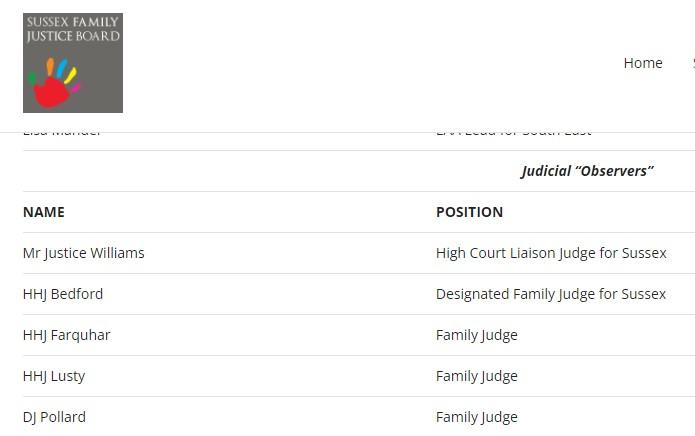
In the meantime check out our article on the highly questionable Sussex Family Justice Board.

Who are HMCTS ?

His Majesty’s Courts and Tribunals Service (HMCTS) is an executive agency of the UK government, operating under the Ministry of Justice. It is responsible for administering the court system in England and Wales, providing support to the courts, tribunals, and other judicial bodies to ensure their effective and efficient operation.

The history of HMCTS reflects a drive to improve the efficiency and effectiveness of the justice system, through the merger of the Court Service and the Tribunals Service in 2011. This created a more streamlined and efficient system that is better equipped to meet the needs of the public, under the oversight of the Ministry of Justice.

The annual budget of HMCTS is significant, reflecting the importance of the services it provides to the public. In 2021/22, the agency’s budget was £1.8 billion, which was a decrease from the previous year’s budget of £1.9 billion. The reduction in funding was due to the impact of the COVID-19 pandemic, which forced the agency to scale back some of its activities.

HMCTS is one of the largest employers in the UK justice system, with a workforce of around 28,000 staff. The agency employs a diverse range of people, including court staff, judges, legal advisers, and administrative staff, overseen by the Ministry of Justice.


The Ministry of Injustice is not the Ministry of Justice nor is it affiliated in any way with the justice system, legal profession, police or any other law enforcement agencies.


Latest Articles


Most Popular


You should always seek formal legal advice from a qualified and reputable lawyer (solicitor or barrister).

There are a number of links to Free and Paid For Legal Resources and Legal Organisations on the Free Legal Advice , Legal Aid and Pro Bono pages.
Categories
Law Police

Crime Statistics By Area

What is a Crime ?

In the UK, a crime is defined as any act or omission that is prohibited by law and is punishable by the state through fines, imprisonment, or other penalties.. Crimes can range from minor offences, such as motoring/traffic offences or petty theft, to serious crimes, such as assault, murder, or drug trafficking.

What is a Criminal ?

Under UK law, a criminal is defined as a person who has committed a criminal offence. The specific offenses that are considered criminal under UK law are defined by various statutes, including the Theft Act 1968, the Fraud Act 2006, and the Misuse of Drugs Act 1971, among others.

What are Crime Statistics ?

Crime statistics in the UK refer to the collection and analysis of data on crime rates, patterns, and trends across the country. These statistics are usually compiled by government agencies, such as the Office for National Statistics (ONS), and are used to inform policies and strategies for reducing crime and ensuring public safety.

The ONS are the UK’s largest independent producer of official statistics and its recognised national statistical institute. They e are responsible for collecting and publishing statistics related to the economy, population and society at national, regional and local levels. They also conduct the census in England and Wales every 10 years.

Some commonly reported crime statistics in the UK include the overall number of crimes recorded, the number of specific types of crimes (such as violent crime or burglary), and the crime rate per capita.

These statistics may also include information on the demographics of offenders and victims, as well as the locations and times of reported crimes.

Where can I find Crime Stats online ?

There are multiple crime stat resources available and these are a selection of the most popular :-

You can check crime in your area at Police.uk

The Office for National Statistics (ONS) also publish crime data

Crime in England and Wales: year ending March 2024 is the latest report

Crime in England and Wales: Police Force Area data tables are published in excel format

“The number of police recorded crimes, percentage change from previous year and rate per 1,000 population by offence group, firearms, knife and sharp instrument, fraud and anti-social behaviour offences by Police Force Area.”

ukcrimestats who say they are the leading crime and postcode data research and analysis platform, also publish crime data that can be searched in a variety of ways :-

By Postcode Area

By Neighbourhood

The Metropolitan Police (Met Police) publish Stats and Data on their website.

Sussex Police publish Sussex Crime Stats which is searchable by neighbourhood.

ADT security provide an interactive crime map


The Ministry of Injustice is not the Ministry of Justice nor is it affiliated in any way with the justice system, legal profession, police or any other law enforcement agencies.


Latest Articles


Most Popular


You should always seek formal legal advice from a qualified and reputable lawyer (solicitor or barrister).

There are a number of links to Free and Paid For Legal Resources and Legal Organisations on the Free Legal Advice , Legal Aid and Pro Bono pages.
Categories
Law

Pro bono

Pro bono, a Latin phrase meaning “for the public good,” refers to the provision of legal services on a voluntary, free-of-charge basis to individuals and organisations who cannot afford to pay for legal assistance.

In short, if you cannot afford a lawyer and do not qualify for legal aid, then you may be able to find a pro bono lawyer (solicitor / barrister) or law firm.

The National Pro Bono Centre was established in 2010 with the aim of bringing together charities dedicated to the provision of pro bono legal services and access to justice.

LawWorks is a charity working in England and Wales to connect volunteer lawyers with people in need of legal advice, who are not eligible for legal aid and cannot afford to pay and with the not-for-profit organisations that support them.

In the UK, pro bono work is an essential part of the legal profession, with lawyers, solicitors, barristers, and law firms providing their services to those in need.

The concept of pro bono dates back to ancient Rome, where lawyers were expected to offer their services for free to the poor.

The practice was formalized in the US in the early 1900s when lawyers began offering their services to immigrants and the working class.

In the UK, pro bono work has been a part of the legal profession for many years, and its importance has grown significantly in recent years.

There are several types of pro bono work in the UK, including:

  1. Legal advice clinics: These are typically run by law firms and provide free legal advice to individuals on a wide range of legal issues, including family, housing, employment, and immigration.
  2. Pro bono cases: Lawyers and barristers may take on pro bono cases, representing clients who cannot afford to pay for legal services. These cases can range from civil litigation, including family law, to criminal defence work.
  3. Public interest litigation: This involves bringing legal action on behalf of groups or individuals who cannot afford to pay for legal services. Public interest litigation can cover a range of issues, including human rights, environmental law, and social justice.
  4. Law school clinics: Many law schools in the UK run pro bono clinics, where law students provide legal assistance to individuals and organisations.
  5. Pro bono work for charities: Lawyers and law firms may provide pro bono services to charities and non-profit organisations, helping them with legal issues such as employment law, contract law, and governance.

Pro bono work is essential in the UK, where legal aid is becoming increasingly restricted.

As the cost of legal services continues to rise, many individuals and organisations cannot afford to pay for legal assistance, leaving them at a disadvantage when it comes to accessing justice. Pro bono work helps to bridge this gap, ensuring that everyone has access to legal services, regardless of their financial situation.

In conclusion, pro bono work is a vital part of the legal profession in the UK, providing free legal services to individuals and organisations who cannot afford to pay for legal assistance.


The Ministry of Injustice is not the Ministry of Justice nor is it affiliated in any way with the justice system, legal profession, police or any other law enforcement agencies.


Latest Articles


Most Popular


You should always seek formal legal advice from a qualified and reputable lawyer (solicitor or barrister).

There are a number of links to Free and Paid For Legal Resources and Legal Organisations on the Free Legal Advice , Legal Aid and Pro Bono pages.
Categories
Police

Met Police

Baroness Casey of Blackstock DBE CB has completed and published today (31st March 2023) her report The Baroness Casey Review into the standards of behaviour and internal culture of the Metropolitan Police Service (Met Police).

You can read the reports into the Metropolitan Police Service here :-

Baroness Casey Review Final Report: March 2023 (PDF, 2642KB)

Baroness Casey’s Report on Misconduct: October 2022 (PDF, 596KB)

Metropolitan PEEL Assessment 2023–2025

The Metropolitan Police remains along with two other forces also in special measuresDevon and Cornwall Police and Nottinghamshire Police.

For the latest Met Police news please see out Police News pages.

Call 999 if:

  • a serious offence is in progress or has just been committed
  • someone is in immediate danger or harm
  • property is in danger of being damaged
  • a serious disruption to the public is likely

Call 101 for non-emergency enquiries. You can also Report a Crime Online

Racism, Misogyny and Homophobia with ‘Rot’ at its Heart

In 1829 Sir Robert Peel established the Metropolitan Police in London, the first professional centrally organised police force.

194 years later the Met Police reputation is in ruins. The Metropolitan Police can only be described as an utter disgrace, embarrassment to the world and totally unfit for purpose.

Policing by consent indicates that the legitimacy of policing in the eyes of the public is based upon a consensus of support that follows from transparency about their powers, their integrity in exercising those powers and their accountability for doing so

The Casey report states that the Met Police ranks are riven with racism, misogyny and homophobia with ‘rot’ at its heart.

  • Alleged rapists went free after fridges broke down, destroying all the evidence inside meaning all the cases had to be dropped. Some fridges were so full it took three officers to shut them and one was also being used to store lunch alongside forensic samples;
  • A Muslim officer had bacon put in his shoes by a colleague, a Sikh officer had his beard trimmed and another officer had his turban put into a shoe box because officers ‘thought it was funny’. In one instance a black guard was referred to as a ‘gate monkey’ by colleagues;
  • Female officers were targeted by men for sex. Some felt pressure to sleep with colleagues to be popular. One officer was even allegedly sexually assaulted in a shower. One woman said a senior officer masturbated in front of her in the communal changing room.
  • ‘Pranks’ included bags of urine being thrown at cars, sex toys slipped into coffee mugs, male officers flicking each other’s genitals and an animal being trapped in an officer’s locker. There is widespread bullying at the Yard, with a fifth of staff being victimised;
  • Homophobia is rife. One gay officer said colleague spread false rumours that he had slept with senior officers to get ahead and made up claims he was taking drugs. Colleagues were accused of making malicious complaints about gay people and even considering using stop and search to target them. One said: ‘I am scared of the police. I don’t trust my own organisation’;
  • The parliamentary and diplomatic protection unit where Couzens and Carrick worked is described as a ‘dark corner’ of the Met known as ‘overtime command’. Officers often join to pay for weddings and top up their pensions.  he review found that officers ‘game the system’ to cash in on overtime and other bonuses, wasting public money on unnecessary overseas training trips and hotel rooms.
  • In the ‘boys’ club’, senior armed officers have competitions to see if they can make female colleagues cry and put up posters in common areas showing female firearms officers carrying mops, irons and kettles instead of weapons. One officer said: ‘It’s the most toxic, racist, sexist place I’ve ever worked – it’s just an unbelievable place.’ 
Daily Mail 21st March 2023

Met Police officer ‘repeatedly raped’ by colleague and staff urinated on: Key findings of Baroness Casey’s damning review into force

Sky News 21st March 2023

Met chief admits force has racism problem but rejects it’s institutional

BBC News 21st March 2023

Officers in Met’s armed police units ‘game the system’ to cash in on overtime and expenses

The Telegraph 21st March 2023
Suella Braverman Home Secretary
Sir Mark Rowley Metropolitan Police

Check out our articles on Sussex Police, Policing by Consent, Police Impartiality, Police Public Confidence and Engagement, Police Professional Standards Department, IOPC, Crime Reporting, What is a Police and Crime Commissioner ?, Policing, Police News, Two Tiered Policing, Thought Police, Police Digital Service, Knowledge Hub – Police Digital Service, Wasting Police Time, Police Community Support Officers (PCSO), Met Police, Chief Constable Jo Shiner, R v Sussex Justices and the highly questionable Sussex Family Justice Board.


The Ministry of Injustice is not the Ministry of Justice nor is it affiliated in any way with the justice system, legal profession, police or any other law enforcement agencies.


Latest Articles


Most Popular


You should always seek formal legal advice from a qualified and reputable lawyer (solicitor or barrister).

There are a number of links to Free and Paid For Legal Resources and Legal Organisations on the Free Legal Advice , Legal Aid and Pro Bono pages.
Categories
Law

Reasonable Person Test

What is a Reasonable Person ?

The reasonable person test is a legal concept used in UK law, which seeks to establish a standard of conduct that a hypothetical reasonable person would exhibit in a given situation. It is also known as the objective standard test or the reasonable man/woman test.

What is the Reasonable Person Test ?

The Reasonable Person test is used to determine whether a defendant has breached their duty of care in a particular situation, for example, in negligence cases. The court asks what a reasonable person would have done in the same circumstances, taking into account the defendant’s knowledge and experience at the time of the incident.

The test was developed in response to the need for a standard to measure the conduct of individuals in society. It was seen as a way to ensure that people acted reasonably in their interactions with others and did not cause harm through their actions.

History of the Reasonable Person Test

The history of the reasonable person test began in the old English law and was first used in a civil lawsuit Vaughn v. Menlove in 1837.

The defendant had stacked hay on his rental property in a manner prone to spontaneous ignition. This was despite being repeatedly warned about the danger over the course of five weeks.

This determined that a reasonable person would not have stacked hay in a dangerous manner next to a neighbours’ structure (as the defendant in that case did) because of the risk of fire.

The Man on the Clapham Omnibus is a hypothetical ordinary and reasonable person used by the courts in English law where it is necessary to decide whether a party has acted as a reasonable person would.

The phrase was reportedly first put to legal use in a judgment by Sir Richard Henn Collins MR in the 1903 English Court of Appeal libel case, McQuire v. Western Morning News

Refinement

Over time, the reasonable person test has been refined and adapted to suit different legal contexts.

In the UK, the test is now a fundamental principle of negligence law and is used extensively in other areas of law, such as criminal law, family law and contract law.

In practice, the test is used by judges and juries to evaluate the conduct of defendants and to determine whether they have acted in a reasonable manner.

The test is a flexible one, which takes into account the particular circumstances of each case. This means that the standard of conduct required of the reasonable person may vary depending on the situation.

Overall, the reasonable person test is an important legal concept that helps to ensure that people act reasonably and with due care in their interactions with others. It is a key component of UK law and is used extensively in legal proceedings.

Check out our related articles on Rule of Law, Open Justice, What is Law, Is the Law Black and White ?, Abuse of Process, What Does Lady Justice Symbolise ?, McKenzie Friend, Can a Judge Direct a Jury to Find a Defendant Not Guilty ?, Law Society, Law Commission, McKenzie Friend Right of Audience, Solicitors, Solicitors Regulation Authority, Barristers, Bar Council of England and Wales, Bar Standards Board, Contra Mundum, R v Sussex Justices, Police Impartiality and the highly questionable Sussex Family Justice Board.


The Ministry of Injustice is not the Ministry of Justice nor is it affiliated in any way with the justice system, legal profession, police or any other law enforcement agencies.


Latest Articles


Most Popular


You should always seek formal legal advice from a qualified and reputable lawyer (solicitor or barrister).

There are a number of links to Free and Paid For Legal Resources and Legal Organisations on the Free Legal Advice , Legal Aid and Pro Bono pages.
Categories
Law

Is your website legal ?

In the United Kingdom, websites must comply with several legal requirements to operate legally.

The three main pieces of legislation governing websites in the UK are the General Data Protection Regulation (GDPR), the Data Protection Act 2018, and the Companies Act 2006.

In addition, public bodies and the government have specific requirements regarding the information they must publish on their websites.

In this article, we will explore what information must be included on a website to comply with UK law and the specific requirements for public bodies and government websites.

General Data Protection Regulation (GDPR) and Data Protection Act 2018

The General Data Protection Regulation (GDPR) is a regulation of the European Union that became effective on May 25, 2018. The GDPR governs the collection, processing, and storage of personal data by companies operating within the EU. The GDPR applies to all companies that handle personal data, regardless of their size or location.

The Data Protection Act 2018 (DPA) is the UK’s implementation of the GDPR. It provides further detail on how the GDPR is applied in the UK and sets out specific requirements for companies operating within the country. The DPA replaced the Data Protection Act 1998 and was designed to modernize data protection laws in the UK.

To comply with the GDPR and DPA, websites must include several pieces of information.

First, websites must provide a privacy policy that details how personal data is collected, processed, and stored. The privacy policy must include information on the legal basis for processing personal data, the categories of personal data collected, and how long personal data will be stored.

Second, websites must obtain consent from users before collecting, processing, or storing personal data. Consent must be explicit and freely given, and users must have the right to withdraw their consent at any time.

Third, websites must provide users with access to their personal data upon request. Users have the right to view their personal data, request corrections to their personal data, and request the deletion of their personal data.

Companies Act 2006

The Companies Act 2006 is a UK law that governs the operation of companies within the country. The act sets out specific requirements for companies’ websites, including information that must be displayed on the site.

All companies must include the following information on their website:

  • Company name, registration number, and registered office address
  • Contact information, including email address and telephone number
  • The names of the company’s directors
  • Information on the company’s share capital, including the number of shares and the rights attached to each class of share
  • Information on any charges or mortgages held over the company’s property or assets

In addition to this basic information, public companies must also include the following information:

  • Details of the company’s auditor, including their name and address
  • Information on any political donations made by the company
  • Information on the company’s remuneration policy

Public Bodies and Government Websites

Public bodies and the government have specific requirements regarding the information they must publish on their websites. These requirements are set out in the Freedom of Information Act 2000 and the Transparency Code 2015.

The Freedom of Information Act 2000 requires public bodies to provide information upon request, and many public bodies choose to publish information proactively on their websites.

The Transparency Code 2015 sets out specific requirements for the publication of information by local authorities.

Public bodies and government websites must include the following information:

  • Contact information, including email address and telephone number
  • Information on the organisation’s structure and governance
  • Budgets and spending information, including details of contracts and tenders
  • Details of any regulatory or inspection reports
  • Policies and procedures, including those relating to data protection and freedom of information
  • Details of any consultations or public engagements

The Ministry of Injustice is not the Ministry of Justice nor is it affiliated in any way with the justice system, legal profession, police or any other law enforcement agencies.


Latest Articles


Most Popular


You should always seek formal legal advice from a qualified and reputable lawyer (solicitor or barrister).

There are a number of links to Free and Paid For Legal Resources and Legal Organisations on the Free Legal Advice , Legal Aid and Pro Bono pages.

Rule of Law - Open Justice - Policing By Consent