
In England and Wales, the legal system demands integrity and truth from all legal professionals involved in court proceedings. Solicitors and barristers are bound by strict professional rules and legal obligations that prohibit misleading the court, whether deliberately or recklessly. Such conduct is a serious breach, potentially leading to professional misconduct charges, contempt of court or criminal sanctions.
Professional Duties of Solicitors and Barristers
Solicitors, regulated by the Solicitors Regulation Authority (SRA) under the SRA Standards and Regulations 2019, are designated as officers of the court under the Solicitors Act 1974.
The SRA Code of Conduct mandates that solicitors act with honesty and integrity (Principle 1) and uphold public trust in the legal profession (Principle 2). Paragraph 1.4 explicitly prohibits knowingly or recklessly misleading the court, including presenting false evidence, allowing misleading information to go uncorrected, or fabricating documents.
Barristers, regulated by the Bar Standards Board (BSB) under the BSB Handbook, are not formally officers of the court but owe a primary duty to the court above their duty to clients (Core Duty 3).
Core Duty 1 requires honesty, and Rule rC3 prohibits barristers from knowingly or recklessly misleading the court, such as by making false statements, concealing material facts, or drafting misleading documents.
The principle, affirmed in cases like Rondel v Worsley [1969] 1 AC 191, underscores barristers’ obligation to the administration of justice.
Both solicitors and barristers must prioritise their duty to the court over client interests. If a client instructs them to present false evidence or withhold key information, they must refuse and may need to withdraw from the case to avoid breaching their professional obligations.
Legal Consequences of Misleading a Court
Misleading the court can violate several laws. Under the Perjury Act 1911, knowingly giving false evidence under oath is a criminal offence, punishable by up to seven years’ imprisonment. If a solicitor or barrister encourages or assists perjury, they may face liability as an accessory or for perverting the course of justice, a common law offence with a maximum penalty of seven years.
Contempt of court is another serious consequence. The Contempt of Court Act 1981 allows courts to penalize conduct that interferes with justice, such as presenting false evidence, with fines or imprisonment. Cases like R v Farooqi [2013] EWCA Crim 1649 highlight the severe repercussions for lawyers who mislead courts.
Professional disciplinary action is also a risk. The SRA and BSB can impose sanctions, including fines, suspensions, or striking off. For instance, in SRA v Wingate [2016], a solicitor was struck off for presenting fabricated documents to the court.
Practical Implications of Misleading a Court
Solicitors and barristers must exercise diligence to avoid inadvertently misleading the court. This includes verifying client instructions, correcting errors promptly, and ensuring submissions are evidence-based.
If a lawyer discovers they or their client has misled the court, they must take steps to rectify the situation, subject to legal professional privilege considerations. A solicitor or barrister may also be invited to correct a misleading statement.
If you think a solicitor or firm might have breached the SRA rules, you should report your concerns to the SRA.
The public can Report concerns about barristers at the BSB. Barristers also have a duty to report their own serious misconduct or that of another barrister.
Check out our articles on Rule of Law, Open Justice, Justice System, Criminal Justice, Criminal Cases Review Commission, R v Sussex Justices, Litigants in Person, McKenzie Friend, Reasonable Person Test, What is Bail ?, Do you Have to Bow to a Judge ?, Can you Email a Judge ?, Can you Criticise a Judge ? and the highly dubious Sussex Family Justice Board.
The Ministry of Injustice is not the Ministry of Justice nor is it affiliated in any way with the justice system, legal profession, police or any other law enforcement agencies.
“Publicity is the very soul of justice. . . . It keeps the judge himself, while trying, under trial….Where there is no publicity there is no justice”
Jeremy Bentham – Mr Justice Cobb: ‘Justice must be seen to be done’
Latest Articles ↓
- Presumption of Innocence
 The presumption of innocence is a basic principle of the… Read more: Presumption of Innocence
 - His Honour Judge Daniel Sawyer
 Judge Daniel Sawyer, known as His Honour Judge Daniel Sawyer,… Read more: His Honour Judge Daniel Sawyer
 - UK National Centre for Information Defence
 Prime Minister Andy Burnham used his first United Nations General… Read more: UK National Centre for Information Defence
 - Judges Behaving Badly and His Honour Judge Simon Oliver
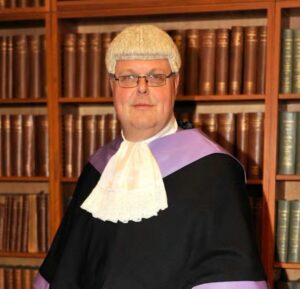 On the 27th August 2026 the Crown Prosecution Service announced… Read more: Judges Behaving Badly and His Honour Judge Simon Oliver
 - Jo Morris Barrister
 Jo Morris is a practising criminal barrister of Drystone Chambers… Read more: Jo Morris Barrister
 - Good Law Project
 The Good Law Project is a UK campaigning organisation that… Read more: Good Law Project
 - Police Federation of England and Wales (PFEW)
 The Police Federation of England and Wales (PFEW) is the… Read more: Police Federation of England and Wales (PFEW)
 - What is the Criminal Justice System (CJS) Common Platform ?
 The Criminal Justice System Common Platform (also known as HMCTS… Read more: What is the Criminal Justice System (CJS) Common Platform ?
 - Strategic Lawsuit Against Public Participation (SLAPPs)
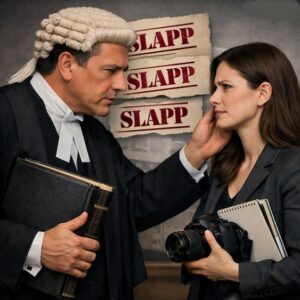 Strategic Lawsuits Against Public Participation, or SLAPPs, are legal actions… Read more: Strategic Lawsuit Against Public Participation (SLAPPs)
 - His Honour Judge Tony Baumgartner – Recorder of Westminster
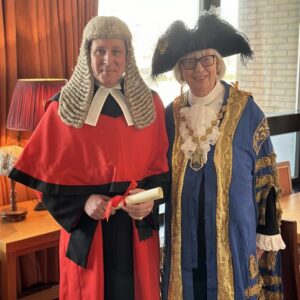 Judge Tony Alan Walter Baumgartner, known as His Honour Judge… Read more: His Honour Judge Tony Baumgartner – Recorder of Westminster
 - New Protocol for Legal Professionals to Raise Informal Concerns About Judges Behaviour
 On the 8th July 2026, the Courts and Tribunals Judiciary… Read more: New Protocol for Legal Professionals to Raise Informal Concerns About Judges Behaviour
 - The Policing Performance System
 In April 2026, His Majesty’s Inspectorate of Constabulary and Fire… Read more: The Policing Performance System
Most Popular ↓
You should always seek formal legal advice from a qualified and reputable lawyer (solicitor or barrister).
There are a number of links to Free and Paid For Legal Resources and Legal Organisations on the Free Legal Advice , Legal Aid and Pro Bono pages.
[post_title] was last updated on the 15th October 2026
