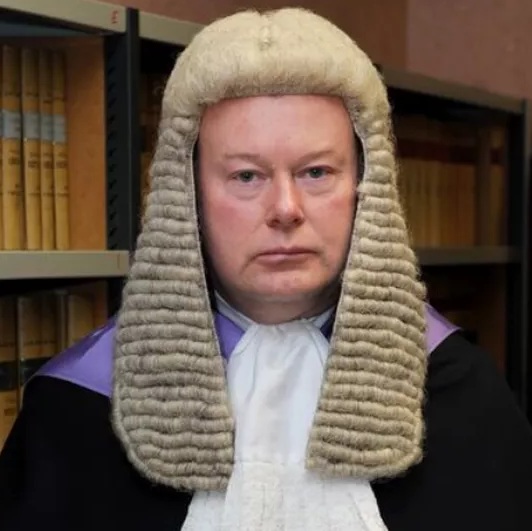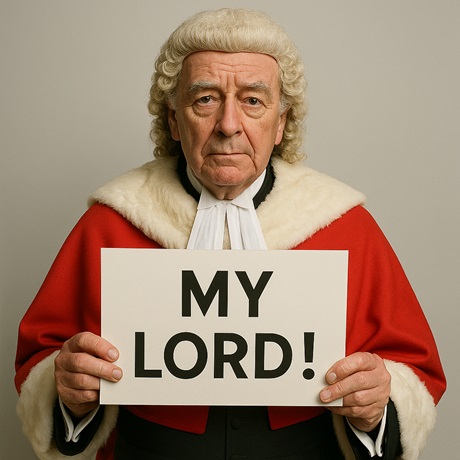
In the United Kingdom, judicial titles such as “His Honour,” “Her Honour,” or “Lord/Lady Justice” carry significant prestige, reflecting the authority and responsibility of judges during their tenure.
But what happens to these titles after retirement? Do retired judges, from circuit judges to High Court judges and beyond retain their honorifics?
This article explores the conventions, relevant legislation, and practical examples surrounding the use of judicial titles post-retirement across various judicial roles in the UK by drawing on guidance from the Incorporated Council of Law Reporting (ICLR) article What Do I Call the Judge and the HM Courts and Tribunals Judiciary article What do I call a judge?.
Judicial Titles During Active Service
Judicial titles in the UK vary by court level. Circuit judges, appointed under the Courts Act 1971, are addressed as “Your Honour” in court and styled “His Honour Judge [Surname]” or “Her Honour Judge [Surname]” (with KC added if applicable).
High Court judges, also under the Courts Act 1971, are addressed as “My Lord” or “My Lady” and styled “The Honourable Mr/Mrs Justice [Surname].” Court of Appeal judges, often referred to as Lords or Ladies Justices, carry the title “Lord/Lady Justice [Surname].” Supreme Court Justices are styled “Lord/Lady [Surname]” and addressed as “My Lord/Lady.”
Judges such as Deputy District Judges and Tribunal Judges are referred to as “Judge”.
Magistrates are referred to as “Your Worship, or Sir or Madam”
The ICLR and Judiciary guidance confirm these conventions for active judges, with correspondence typically beginning “Dear Judge” or “Dear Sir/Madam” depending on the role.
Post-Retirement Title Usage
Upon retirement, judges cease to hold their judicial office, raising questions about title retention. The answer varies by judicial level and context, formal legal settings, professional correspondence or social interactions.
Formal Legal Contexts
Legally, judicial titles are tied to the office held. The Courts Act 1971 and Senior Courts Act 1981 establish judicial roles but do not address post-retirement titles.
The Public Service Pensions and Judicial Offices Act 2022 allows retired judges, including circuit, High Court, and Court of Appeal judges, to be recalled for “sitting in retirement” roles, such as deputy circuit or High Court judges.
When serving in these capacities, they are addressed with their former titles in court (e.g., “Your Honour” for circuit judges, “My Lord/Lady” for High Court judges). Outside such roles, retired judges do not officially retain their titles in formal legal proceedings. Using titles like “His Honour” or “Mr Justice” in court documents for non-serving retired judges may be inappropriate.
Professional and Social Contexts
In practice, retired judges are often addressed with their former titles as a courtesy.
The ICLR guidance notes that retired circuit judges may be styled “His Honour [Full Name]” in correspondence, with letters beginning “Dear Judge.” Similarly, retired High Court judges may be addressed as “Sir [First Name]” or “Dame [First Name]” if knighted or appointed DBE, or simply “Mr/Mrs Justice [Surname] (Retired).” Retired Court of Appeal or Supreme Court judges often retain “Lord/Lady [Surname]” due to peerages, which are lifelong.
The Judiciary’s guidance does not prohibit these practices, suggesting flexibility in non-judicial settings. For example, a retired judge speaking at a legal event might be introduced with their former title, such as “Her Honour Judge [Surname] (Retired)” or “Lord Justice [Surname] (Retired).”
Practical Examples
Consider His Honour Judge Melbourne Inman KC, a retired circuit judge often referenced with his title in professional contexts, suggesting its use post-retirement as a courtesy.
Retired High Court judges, like Sir John Mummery, are frequently styled “Sir John” or “Mr Justice Mummery (Retired)” in legal publications. Lord Dyson, a former Supreme Court Justice, retains his title due to his peerage, as seen in public appearances.
Retired judges serving as arbitrators or mediators, common roles post-retirement are often introduced with their former titles in professional settings.
Conventions and Nuances
Title retention is largely customary. In legal and professional circles, using “His Honour,” “Mr Justice,” or “Lord/Lady” for retired judges is common, particularly in correspondence or when referencing their judicial contributions.
Peerages, like those for Supreme Court or Court of Appeal judges, are retained for life, ensuring continued use of “Lord/Lady.”
The Judicial Pensions and Retirement Act 1993, which governs judicial pensions, does not address titles but reinforces the retirement age of 75, after which judges may serve in limited capacities.
Conclusion
Retired UK judges do not officially retain their titles in formal legal contexts unless recalled to judicial roles under the Public Service Pensions and Judicial Offices Act 2022.
However, conventions outlined by the ICLR and Judiciary allow titles like “His Honour,” “Mr Justice,” or “Lord/Lady” to be used as a courtesy in professional and social settings. This practice reflects respect for their service, with variations by judicial level and context. For formal situations, clarity on a judge’s status is essential to ensure accuracy.
Check out our articles on Judges Salaries and Fees, Dodgy Judges, Lady Chief Justice, Mr Justice Williams, His Honour Judge Melbourne Inman KC, His Honour Judge Richardson, His Honour Now His Dishonour, His Honour Judge Michael Slater, His Honour Judge Martin Davis, HHJ Farquhar, Do you Have to Bow to a Judge ?, Can you Email a Judge ?, Can you Criticise a Judge ? and the highly dubious Sussex Family Justice Board.
The Ministry of Injustice is not the Ministry of Justice nor is it affiliated in any way with the justice system, legal profession, police or any other law enforcement agencies.
“Publicity is the very soul of justice. . . . It keeps the judge himself, while trying, under trial….Where there is no publicity there is no justice”
Jeremy Bentham – Mr Justice Cobb: ‘Justice must be seen to be done’
Latest Articles ↓
- Presumption of Innocence
 The presumption of innocence is a basic principle of the… Read more: Presumption of Innocence
 - His Honour Judge Daniel Sawyer
 Judge Daniel Sawyer, known as His Honour Judge Daniel Sawyer,… Read more: His Honour Judge Daniel Sawyer
 - UK National Centre for Information Defence
 Prime Minister Andy Burnham used his first United Nations General… Read more: UK National Centre for Information Defence
 - Judges Behaving Badly and His Honour Judge Simon Oliver
 On the 27th August 2026 the Crown Prosecution Service announced… Read more: Judges Behaving Badly and His Honour Judge Simon Oliver
 - Jo Morris Barrister
 Jo Morris is a practising criminal barrister of Drystone Chambers… Read more: Jo Morris Barrister
 - Good Law Project
 The Good Law Project is a UK campaigning organisation that… Read more: Good Law Project
 - Police Federation of England and Wales (PFEW)
 The Police Federation of England and Wales (PFEW) is the… Read more: Police Federation of England and Wales (PFEW)
 - What is the Criminal Justice System (CJS) Common Platform ?
 The Criminal Justice System Common Platform (also known as HMCTS… Read more: What is the Criminal Justice System (CJS) Common Platform ?
 - Strategic Lawsuit Against Public Participation (SLAPPs)
 Strategic Lawsuits Against Public Participation, or SLAPPs, are legal actions… Read more: Strategic Lawsuit Against Public Participation (SLAPPs)
 - His Honour Judge Tony Baumgartner – Recorder of Westminster
 Judge Tony Alan Walter Baumgartner, known as His Honour Judge… Read more: His Honour Judge Tony Baumgartner – Recorder of Westminster
 - New Protocol for Legal Professionals to Raise Informal Concerns About Judges Behaviour
 On the 8th July 2026, the Courts and Tribunals Judiciary… Read more: New Protocol for Legal Professionals to Raise Informal Concerns About Judges Behaviour
 - The Policing Performance System
 In April 2026, His Majesty’s Inspectorate of Constabulary and Fire… Read more: The Policing Performance System
Most Popular ↓
You should always seek formal legal advice from a qualified and reputable lawyer (solicitor or barrister).
There are a number of links to Free and Paid For Legal Resources and Legal Organisations on the Free Legal Advice , Legal Aid and Pro Bono pages.
[post_title] was last updated on the 15th October 2026