Categories
Legal Analysis

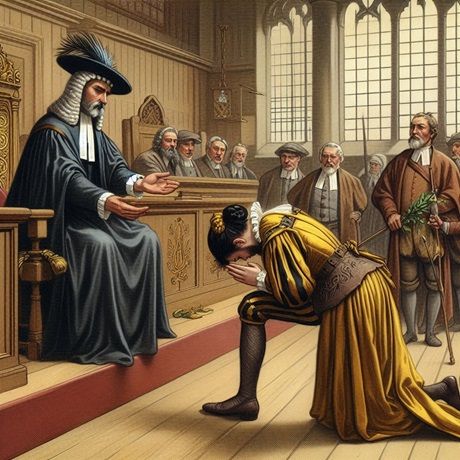
Do You Have to Bow to a Judge ?

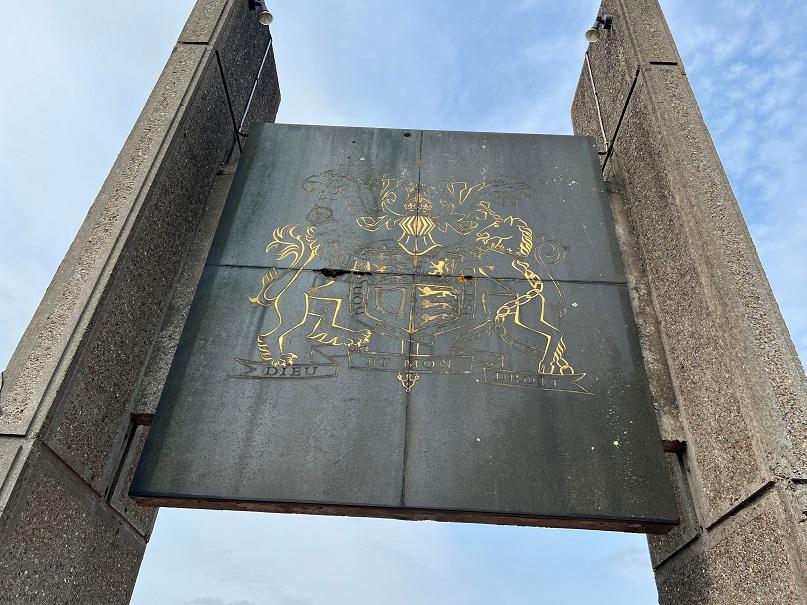
The Royal Coat of Arms appear in every courtroom in England and Wales (with the exception of the Magistrates’ court in the City of London*), to demonstrate that justice comes from the monarch and that a law court is part of the Royal Court.

The presence of the Royal Arms explains why lawyers and court officials bow to the judge or magistrates’ bench when they enter the room. They aren’t bowing to the judge – they are bowing to the coat of arms, to show respect for the King’s justice.

Traditions of the courts judiciary.uk

According to the HM Courts & Tribunals Service article What to expect coming to a court or tribunal :-

You may see some people bow to the judge or magistrate when they walk in or out of the hearing room. You don’t have to do this, but you can if you want to.

What to expect coming to a court or tribunal HMCTS

It’s interesting that HMCTS think that “people” are bowing to the judge or magistrate when this is clearly wrong according the judiciary !

In answer the question Do You Have to Bow to a Judge ? :-

No you do not have to bow to a Judge.

Check out our articles on HHJ Farquhar, HHJ Bedford, Dodgy Judges, Can you Criticise a Judge ?, Etiquette and Manners in Court and the highly questionable Sussex Family Justice Board.


The Ministry of Injustice is not the Ministry of Justice nor is it affiliated in any way with the justice system, legal profession, police or any other law enforcement agencies.


Latest Articles


Most Popular


You should always seek formal legal advice from a qualified and reputable lawyer (solicitor or barrister).

There are a number of links to Free and Paid For Legal Resources and Legal Organisations on the Free Legal Advice , Legal Aid and Pro Bono pages.


Categories
Law Legal Analysis

What is a Kangaroo Court ?

A kangaroo court is a term used to describe a judicial or quasi-judicial proceeding that lacks fairness, impartiality, or due process. It refers to a court that operates outside the boundaries of established legal principles and often serves the interests of those in power rather than providing justice.

Lord Reed observed during the hearing that a judgment which results from an unfair trial is written in water.

Serafin v Malkiewicz and others [2020] UKSC 23

The term kangaroo court implies a mockery of justice, where the outcome of the trial or hearing is predetermined, and the rights of the accused are disregarded.

These types of courts are typically characterized by biased judges or decision-makers, a lack of proper legal representation, limited access to evidence or witnesses, and a general absence of procedural fairness.

The name kangaroo court originates from the concept of a kangaroo’s pouch, which symbolizes a place where things are hidden or secret. The term suggests that these courts are secretive and operate without transparency, potentially manipulating proceedings to achieve a desired outcome.

Kangaroo courts can be found in various settings, including authoritarian regimes, corrupt organisations, or even informal gatherings where individuals take it upon themselves to administer a form of justice without proper legal authority or expertise.

It’s important to note that a kangaroo court should not be confused with a legitimate court that may make controversial or unpopular decisions.

A true court of law, although subject to scrutiny, operates within established legal frameworks and respects the principles of fairness and due process.

Is the House of Commons Committee of Privileges a Kangaroo Court ?

Sue Gray published an interim report INVESTIGATION INTO ALLEGED GATHERINGS ON GOVERNMENT PREMISES DURING COVID RESTRICTIONS – UPDATE on the 31st January 2022.

A Privilege Motion Parliamentary Debate on Partygate was held on the 21st April 2022.

This final Sue Gray Report FINDINGS OF SECOND PERMANENT SECRETARYS INVESTIGATION INTO ALLEGED GATHERINGS ON GOVERNMENT PREMISES DURING COVID RESTRICTIONS was published on the 25th May 2022.

On the 15th June 2023 the House of Commons Committee of Privileges published the Final Report Matter referred on 21 April 2022 (conduct of Rt Hon Boris Johnson) in relation to the behaviour of the former Prime Minister Boris Johnson and Partygate.

Boris Johnson has stated that he believed the House of Commons Committee of Privileges to be a “witch hunt” or “kangaroo” court.

At the end of the session, Sir Charles and Mr Costa asked me a series of questions regarding comments that have been made about the Committee’s work being a “witch hunt” or a “kangaroo court”. Having reviewed the transcript, I am concerned that, at the end of what had been a long hearing, I was not emphatic enough in the answers that I provided. As I hope I made clear in those answers, I have the utmost respect for the integrity of the Committee and all its Members and the work that it is doing.

Their purpose from the beginning has been to find me guilty, regardless of the facts. This is the very definition of a kangaroo court.

Matter referred on 21 April 2022 (conduct of Rt Hon Boris Johnson): Final Report

The House of Commons Committee of Privileges report summary concluded :-

In light of Mr Johnson’s conduct in committing a further contempt on 9 June 2023, the Committee 7 Matter referred on 21 April 2022 (conduct of Rt Hon Boris Johnson): Final Report now considers that if Mr Johnson were still a Member he should be suspended from the service of the House for 90 days for repeated contempts and for seeking to undermine the parliamentary process, by:

a) Deliberately misleading the House

b) Deliberately misleading the Committee

c) Breaching confidence

d) Impugning the Committee and thereby undermining the democratic process of the House

e) Being complicit in the campaign of abuse and attempted intimidation of the Committee.

We recommend that he should not be entitled to a former Member’s pass.

Matter referred on 21 April 2022 (conduct of Rt Hon Boris Johnson): Final Report

Boris Johnson was found by the Sue Gray report to have broken his own rules during the global Covid pandemic by holding and attending “parties”.

It is now many months since people started to warn me about the intentions of the Privileges Committee. They told me that it was a kangaroo court. 

The police investigated my role at all of those events. In no case did they find that what I had done was unlawful.

Why would we have had an official photographer if we believed we were breaking the law?

Boris Johnson’s Response to the Privileges Committee Report 15th June 2023

The Prime Minister sets the standard for all other Ministers of the Crown in how they account to the House of Commons.

Boris may well have been right when he said it was a witch hunt and kangaroo court, because there were people gunning for him over the proroguing of parliament and him removing the whip from 21 MPs that voted against the government before the 2019 general election.

There were scores being settled – but it is his own fault because of the way he constantly broke rules and lied. Then there is his honours list fiasco – knighting his Dad and all his other cronies. One rule for him and all his mates and another for everyone else.

The Rule of Law applies to everyone and especially public servants.

Open justice is a fundamental principle of the United Kingdom’s legal system which means that Justice should not only be done, but should manifestly and undoubtedly be seen to be done.

Should Boris Johnson be prosecuted for Misconduct in Public Office in a proper court?

This offence carries a maximum sentence of life imprisonment and is considered to be one of the most serious offences that a public official can commit.


The Ministry of Injustice is not the Ministry of Justice nor is it affiliated in any way with the justice system, legal profession, police or any other law enforcement agencies.


Latest Articles


Most Popular


You should always seek formal legal advice from a qualified and reputable lawyer (solicitor or barrister).

There are a number of links to Free and Paid For Legal Resources and Legal Organisations on the Free Legal Advice , Legal Aid and Pro Bono pages.

Categories
Legal Analysis

Sent an Email to the Wrong Person ?

In a world which relies so heavily on email, mistakes such as sending an email to the wrong person can and often happen.

Sending an email containing personal information to the wrong person could constitute a data breach according to GDPR. Personal data is defined within Article 4(1) GDPR 2018 as being “any information relating to an identified or identifiable natural person”.

GDPR applies to any organisation that operates within the UK, as well as international organisations that provide goods and services to the UK.

You may be interested in the article Can you Email a Judge ? and The High Court Judge that never was – His Honour Judge Melbourne Inman KC !

Misdirected Email

The Information Commissioner’s Office (ICO) have published the article Common data protection mistakes (and how to fix them) and list sending an email to the wrong person as a common mistake.

An email sent to the wrong recipient is also known as a misaddressed email or a misdirected email.

This is easy to do, especially if more than one person in your address book has the same name.

Tools like Autofill predict who you’re emailing when you start typing someone’s name in the ‘To’ field. It’s a quick way to go through your address book. But the few seconds you save by using Autofill could end up costing you a lot more if you send personal data to the wrong person by mistake.

Sending an email to the wrong person

The ICO publish, in my opinion, minimal guidance on what to do to fix this :-

Act quickly. Try to recall the email as soon as possible. If you can’t recall it, contact the person who received it and ask them to delete it. In the future, consider turning off the Autofill tool when sending work emails.

Fix It – Sending an email to the wrong person

In addition to the guidance from the ICO, you should as the sender of the email, immediately contact the Data Protection Officer (DPO) in your organisation so they can assess the data breach and report it to the ICO if necessary.

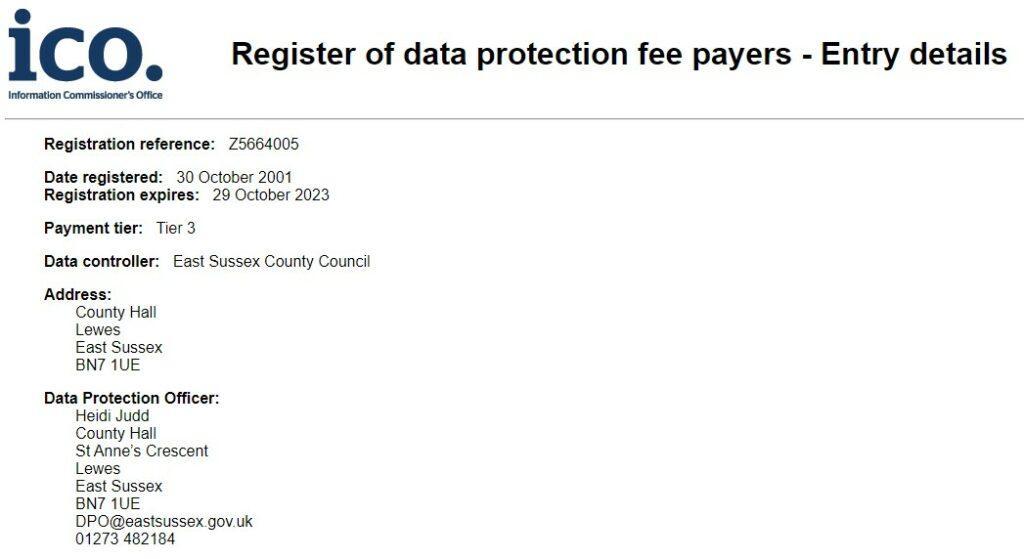
The ICO has a search page which makes it easy to find organisations and people registered with the Information Commissioner’s Office (ICO) under the Data Protection Act 2018.

Example ICO search results – East Sussex County Council

If you have received an email in error that contains personal information that you suspect may be in breach of GDPR, you may wish to contact the senders DPO as well as the ICO to report the Personal Data Breach (PDB).

What is the 72 Hour Rule ?

Part 3 of the Data Protection Act 2018 introduced a duty on all organisations to report certain types of personal data breach to the Information Commissioner. This must be done within 72 hours of becoming aware of the breach, where this is possible.

The ICO have published the article 72 hours – how to respond to a personal data breach which details the 7 steps to be taken :-

  • Step one: Don’t panic
  • Step two: Start the timer
  • Step three: Find out what’s happened
  • Step four: Try to contain the breach
  • Step five: Assess the risk
  • Step six: If necessary, act to protect those affected
  • Step seven: Submit your report (if needed)

What is a Personal Data Breach

A personal data breach is a breach of security leading to the accidental or unlawful destruction, loss, alteration, unauthorised disclosure of, or access to, personal data. This means that a breach is more than just losing personal data.

What is Personal Data ?

Personal data is defined within Article 4(1) GDPR 2018 as being “any information relating to an identified or identifiable natural person”.

The ICO publish the article What is personal information: a guide along with another article What is personal data? which goes into more detail.

What breaches need to be reported to the ICO?

You are legally obliged to notify the ICO of a data breach if it is likely to result in a risk to the rights and freedoms of individuals. If the data breach is left unaddressed would the data breach have a significant detrimental effect on individuals ?

For example:

  • result in discrimination;
  • damage to reputation;
  • financial loss; or
  • loss of confidentiality or any other significant economic or social disadvantage.

In more serious cases, for example those involving victims and witnesses, a personal data breach may cause more significant detrimental effects on individuals.

You have to assess this on a case by case basis and you need to be able to justify your decision to report a breach to the Information Commissioner.  

Personal data breaches – ICO

Review and Remediation

Following the incident, a thorough internal review should be conducted to identify the root cause and implement measures to prevent future occurrences. This may include training, implementing additional security measures, improving data handling protocols, or enhancing email verification systems.


The Ministry of Injustice is not the Ministry of Justice nor is it affiliated in any way with the justice system, legal profession, police or any other law enforcement agencies.


Latest Articles


Most Popular


You should always seek formal legal advice from a qualified and reputable lawyer (solicitor or barrister).

There are a number of links to Free and Paid For Legal Resources and Legal Organisations on the Free Legal Advice , Legal Aid and Pro Bono pages.

Categories
Legal Analysis

What is Judicial Review ?

In England and Wales, judicial review is a legal process through which the courts review the lawfulness of decisions made by public bodies.

It is a mechanism that allows individuals or organizations to challenge the actions, decisions, or omissions of public authorities to ensure that they have acted within the powers conferred upon them by law.

The purpose of judicial review is to hold public bodies accountable for their actions and decisions, ensuring that they act lawfully, fairly, and within the scope of their authority.

It is an essential aspect of the rule of law and serves as a check on the exercise of power by the government and other public bodies.

Judicial review can be sought in relation to a wide range of decisions, including those made by central government departments, local authorities, regulatory bodies, and other public bodies. It covers various areas such as immigration, planning, education, healthcare, and administrative decisions.

To initiate a judicial review, the claimant must establish that they have sufficient standing to bring the case, meaning they must have a sufficient interest in the matter. They must also demonstrate that there are valid grounds for review, such as illegality, irrationality, procedural impropriety, or a breach of human rights.

If the court finds in favour of the claimant, it can quash the decision in question, declare it unlawful, or provide other appropriate remedies.

Judicial review is typically conducted by the Administrative Court, which is a specialised division of the High Court of Justice in England and Wales.

Appeals from the Administrative Court’s decisions can be made to the Court of Appeal and, in certain circumstances, to the Supreme Court.

Apply for a judicial review of a decision

To ask the court for permission to proceed with a claim for a judicial review and to give details of the claim, the Judicial review claim form (Administrative Court) Form N161 must be completed and submitted to the appropriate Administrative Court.

You must make the claim in the appropriate Administrative Court in:

Apply for a judicial review of a decision – gov.uk

The Courts and Tribunal Judiciary publish the Administrative Court Judicial Review Guide 2024 which provides detailed legal guidance on bringing a judicial review case in the Administrative Court.

HM Courts & Tribunals Service published the guidance Administrative Court: bring a case to the court. This shows how to use the Administrative Court, part of the High Court which hears cases about judicial reviews, statutory appeals and extradition.

Civil Procedure Rule (CPR) PART 54 – JUDICIAL REVIEW AND STATUTORY REVIEW contains the appropriate rules about the procedure.

Civil Practice Direction 54A – JUDICIAL REVIEW sets out the procedures to be followed when bringing proceedings before the courts. Please note that the Practice Directions in general supplement the CPR’s.

If the Judicial review is urgent and must be considered within 7 days Form N463 Ask the court to urgently consider a claim for a judicial review must be completed as well as the Judicial review claim form (Administrative Court) Form N161.

Fees in the Civil and Family Courts – full list (EX50A) shows the fees for judicial review on Page 5 :-

D. Judicial Review (other than in respect of judicial review in immigration and asylum)

1.9(a) Permission to apply £169 FEE0454
1.9(b) On request to reconsider at a hearing a decision on permission £424 FEE0455
1.9(c) Permission to proceed £847 FEE0456
1.9(d) Permission to proceed (claim not started by JR procedure) £169 FEE0457

Judicial Review Fees EX50A (May 2024)

The Ministry of Injustice is not the Ministry of Justice nor is it affiliated in any way with the justice system, legal profession, police or any other law enforcement agencies.


Latest Articles


Most Popular


You should always seek formal legal advice from a qualified and reputable lawyer (solicitor or barrister).

There are a number of links to Free and Paid For Legal Resources and Legal Organisations on the Free Legal Advice , Legal Aid and Pro Bono pages.
Categories
Law Legal Analysis

Ministry of Justice

The United Kingdom’s Ministry of Justice is responsible for the country’s justice system, ensuring that it is fair, transparent, and accessible to all.

The Lord Chancellor, The Right Honourable Shabana Mahmood KC MP, heads the Ministry of Justice as the Secretary of State for Justice.

The Ministry of Justice role encompasses a wide range of responsibilities, including the provision of legal services, the management of the court system, and the oversight of the country’s prisons and probation services.

The Ministry of Justice is not responsible for the regulation of the legal profession in England and Wales. This function is carried out by the independent regulatory bodies, such as the Solicitors Regulation Authority and the Bar Standards Board

The history of the Ministry of Justice can be traced back to the Magna Carta

The Magna Carta, also known as the Great Charter, is one of the most important legal documents in history. It was originally issued by King John of England in 1215, in response to the demands of rebellious barons who sought to limit the power of the monarch.

The Magna Carta established the principle that everyone, including the king, is subject to the law, and it protected basic rights such as the right to a fair trial and the right to due process.

Over time, the Magna Carta was revised and reissued by various kings, and it became a symbol of individual liberty and the rule of law. The version of the Magna Carta that is most commonly referenced today is the one issued by King Edward I in 1297.

Of the original 63 clauses in the Magna Carta, only four have survived into modern law. These are clauses 1, 13, 39, and 40.

Clause 1 establishes the principle that the English Church is free from interference by the king. It states that “the Church of England shall be free, and shall have its rights undiminished, and its liberties unimpaired.”

Clause 13 provides for the seizure of property by the king only if it is done in accordance with the law. It states that “No man shall be taken or imprisoned, or disseised of his freehold, or liberties, or free customs, or outlawed, or exiled, or in any way destroyed, nor will we go upon him nor send upon him, except by the lawful judgment of his peers or by the law of the land.”

Clause 39 establishes the principle of due process, stating that “No free man shall be seized or imprisoned, or stripped of his rights or possessions, or outlawed or exiled, or deprived of his standing in any other way, nor will we proceed with force against him, or send others to do so, except by the lawful judgment of his equals or by the law of the land.”

Finally, Clause 40 establishes the right to a fair trial, stating that “To no one will we sell, to no one will we deny or delay, right or justice.”

Together, these surviving clauses represent the enduring legacy of the Magna Carta, and they continue to influence modern legal systems around the world.

In the Crime, Justice and Law section of the gov.uk website, the government regularly publish justice information and statistics as part of the Justice System Transparency


The Ministry of Injustice is not the Ministry of Justice nor is it affiliated in any way with the justice system, legal profession, police or any other law enforcement agencies.


Latest Articles


Most Popular


You should always seek formal legal advice from a qualified and reputable lawyer (solicitor or barrister).

There are a number of links to Free and Paid For Legal Resources and Legal Organisations on the Free Legal Advice , Legal Aid and Pro Bono pages.
Categories
Law Legal Analysis

What is Stalking and Harassment ?

Stalking and harassment is when someone repeatedly behaves in a way that makes you feel scared, distressed or threatened. Stalking and harassment is a criminal offence.

There are different types of stalking and harassment and anyone can be a victim. Stalking and harassment are offences under the Protection from Harassment Act 1997.

You may be interested in our article What is Harassment and R v O’Neill [2016] EWCA Crim 92, [2016] from the Court of Appeal.

There is no legal definition of cyberstalking but it is recognised as being different from harassment as it involves fixated and obsessive behaviour. This maybe to gather information, monitor or discredit the victim.

Social Media and other Electronic Communications – Crown Prosecution Service

Harassment

Someone you know could be harassing you, like a neighbour, or people from your local area or it could be a stranger.

Harassment may include:

  • bullying at school or in the workplace
  • cyber stalking (using the internet to harass someone)
  • antisocial behaviour
  • sending abusive text messages
  • sending unwanted gifts
  • unwanted phone calls, letters, emails or visits

It’s harassment if the unwanted behaviour has happened more than once.

What is stalking and harassment? Police UK

Sexual harassment

Sexual harassment is unlawful, as a form of discrimination, under the Equality Act 2010.

Some of these are also forms of sexual or indecent assault.

The Act says it’s sexual harassment if the unwanted behaviour:

  • violates your dignity
  • creates an intimidating, hostile, degrading, humiliating or offensive environment (this includes the digital environment, online)

Some examples of sexual harassment would include:

  • sexual comments, jokes or gestures
  • staring or leering at your body
  • using names like ’slut’ or ‘whore’
  • unwanted sexual communications, like emails, texts, DMs
  • sharing sexual photos or videos
  • groping and touching
  • someone exposing themselves
  • pressuring you to do sexual things or offering you something in exchange for sex
What is stalking and harassment ? – Police UK

Stalking

Stalking is like harassment, but it’s more aggressive. The stalker will have an obsession with the person they’re targeting.

Stalking may include:

  • regularly following someone
  • repeatedly going uninvited to their home
  • checking someone’s internet use, email or other electronic communication
  • hanging around somewhere they know the person often visits
  • interfering with their property
  • watching or spying on someone
  • identity theft (signing-up to services, buying things in someone’s name)

It’s stalking if the unwanted behaviour has happened more than once.

What is stalking and harassment ? – Police UK

Online stalking and harassment

Social networking sites, chat rooms, gaming sites and other forums are often used to stalk and harass someone, for example:-

  • to get personal information
  • to communicate (calls, texts, emails, social media, creating fake accounts)  
  • damaging the reputation
  • spamming and sending viruses 
  • tricking other internet users into harassing or threatening
  • identity theft 
  • threats to share private information, photographs, copies of messages
What is stalking and harassment ? – Police UK

Stalking or Harassment Crown Prosecution Service (CPS)

The CPS publish prosecution guidance to assist prosecutors with the general principles to be applied when making decisions about prosecutions involving stalking or harassment. It provides guidance on:-

  • the importance of focusing on whether conduct experienced by the victim in its entirety amounts to stalking or harassment, whether the police have investigated those or other individual offences
  • selecting appropriate charges, in order to apply the Code for Crown Prosecutors where there is an overlap between stalking, harassment and/or controlling or coercive behaviour
  • acceptance of pleas
  • the prosecutor’s role in supporting the victim

Stalking or harassment offences can be found in sections 2, 2A, 4 and 4A of the Protection from Harassment Act 1997 (PHA 1997) and section 42A (1) Criminal Justice and Police Act 2001. There are racially and religiously aggravated forms of the PHA offences: see sections 28 and 32 Crime and Disorder Act 1998 and the Racist and Religious Hate Crime prosecution guidance.

Stalking or Harassment – Crown Prosecution Service (CPS)

Report Stalking and Harassment

You should contact the police if you’re being stalked or suffering harassment. Call 999 if you or someone else is in immediate danger of stalking and harassment.

What is the maximum sentence for harassment or stalking ?

Parliament sets the maximum (and sometimes minimum) penalty for any offence. When deciding the appropriate sentence, the court must follow any relevant sentencing guidelines, unless it is not in the interests of justice to do so.

If the offence is harassment or stalking:

  • the maximum sentence is six months’ custody
  • if racially or religiously aggravated, the maximum sentence is two years’ custody

If the offence is harassment (putting people in fear of violence) or stalking (involving fear of violence or serious alarm or distress):

  • the maximum sentence is 10 years’ custody
  • if racially or religiously aggravated, the maximum sentence is 14 years’ custody
Harassment and stalking – Sentencing Council

False Allegations of Stalking and Harassment

If false allegations of stalking and harassment are made to the Police, then this can also classed be as a criminal offence.

The offence of wasting police time is committed when a person causes any wasteful employment of the police. Wasting Police Time – section 5(2) of the Criminal Law Act 1967.

If you are caught wasting police time you could be jailed for up to six months and/or fined. Instead of taking you to court, the police might issue you with a fixed penalty notice under the Criminal Justice and Police Act 2001 (CJPA 2001).

Check out our articles on National Stalking Awareness, Policing by Consent, Police Impartiality, Two Tiered Policing, What is a Police and Crime Commissioner ?, Sussex Police, Policing, Police News, Thought Police, Wasting Police Time, Police Community Support Officers (PCSO), Met Police, Chief Constable Jo Shiner, R v Sussex Justices and the highly questionable Sussex Family Justice Board.


The Ministry of Injustice is not the Ministry of Justice nor is it affiliated in any way with the justice system, legal profession, police or any other law enforcement agencies.


Latest Articles


Most Popular


You should always seek formal legal advice from a qualified and reputable lawyer (solicitor or barrister).

There are a number of links to Free and Paid For Legal Resources and Legal Organisations on the Free Legal Advice , Legal Aid and Pro Bono pages.
Categories
Legal Analysis

CAFCASS – Children and Family Court Advisory and Support

Cafcass stands for Children and Family Court Advisory and Support Service. Cafcass “independently advise the family courts about what is safe for children and in their best interests”

Cafcass has come under scrutiny in recent years due to a number of controversies and criticisms. One of the main criticisms has been utter incompetence, bias and the high caseloads faced by FCAs. This made it difficult for Cafcass to provide the level of support and attention needed by children and families.

Cafcass has a number of resources available on its website to help families understand the court process and their rights, including guides on child arrangements, parental responsibility, and adoption. Cafcass also provides a range of support services for children, including counselling and therapy.

Children and Family Court Advisory and Support Service and Family Court Reform

The research briefing Children and Family Court Advisory and Support Service and Family Court reform was published on the House of Commons Library website in advance of the Westminster Hall debate held on Wednesday 22nd March 2023.

Hansard which is the the official report of all Parliamentary debates, published the full transcript of the debate on the webpage Family Court Reform and CAFCASS Volume 730.

Cafcass and the Sussex Family Justice Board (SFJB)

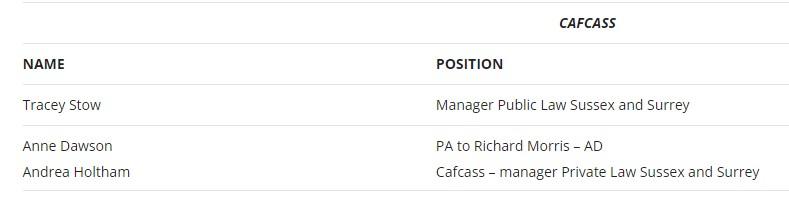
Cafcass staff are listed as board member of the highly questionable Sussex Family Justice Website (SFJB), along with a number of Senior Sussex Judges including HHJ Bedford and HHJ Farquhar.

Is the Sussex Family Justice Board evidence of bias, secrecy and injustice rife within the judiciary, justice system and legal profession in the UK ?

About Cafcass

Cafcass represents children in family court cases in England. Cafcass independently advise the family courts about what is safe for children and in their best interests. Cafcass put their needs, wishes and feelings first, making sure that children’s voices are heard at the heart of the family court setting. Operating within the law set by Parliament (Criminal Justice and Court Services Act 2000) and under the rules and directions of the family courts, we are independent of the courts, social services, education and health authorities and all similar agencies.

Cafcass duty is to safeguard and promote the welfare of children going through the family justice system, supporting over 140,000 children every year by understanding their experiences and speaking up for them when the family court makes critical decisions about their futures.

Cafcass is the largest employer of qualified social workers in England and is deeply committed to making a positive difference to each child we support. We are proud that everyone working for Cafcass is united in improving the lives of children, families and carers.

Our experienced Family Court Advisers (FCA) may be asked by the court to work with families and then advise the court on what we consider to be the best interests of the children involved in three main areas:

  • divorce and separation, sometimes called ‘private law’, where parents or carers can’t agree on arrangements for their children
  • care proceedings, sometimes called ‘public law’, where social services have serious concerns about the safety or welfare of a child
  • adoption, which can be either public or private law.

Cafcass also actively work with our partners to identify solutions to help reduce the increasing pressures on the family courts and to improve the experiences and outcomes for children and families.

Cafcass About Us

History of Cafcass

The Children and Family Court Advisory and Support Service (Cafcass) was formed on 1 April 2001 as part of the Government’s commitment to supporting families and children.

It brought together the services previously provided by the Family Court Welfare Service, the Guardian ad Litem Services and the Children’s divisions of the Official Solicitor’s Office.

Cafcass is sponsored by the Ministry of Justice and is a non-departmental public body.

Cafcass History

Cafcass Annual report and accounts

Cafcass annual reports and accounts are laid before Parliament and show how Cafcass performed each year and how they spent their budget.

The Annual Report and Accounts 2021-22  were approved by the Cafcass Board in October 2022, subject to any changes from the National Audit Office (NAO). The accounts were signed off by the NAO on 12 December 2022.

Cafacss logo used under Copyright exception “Fair dealing for criticism, review or quotation.”

Check out our article on the highly questionable Sussex Family Justice Board and make up your own mind.


The Ministry of Injustice is not the Ministry of Justice nor is it affiliated in any way with the justice system, legal profession, police or any other law enforcement agencies.


Latest Articles


Most Popular


You should always seek formal legal advice from a qualified and reputable lawyer (solicitor or barrister).

There are a number of links to Free and Paid For Legal Resources and Legal Organisations on the Free Legal Advice , Legal Aid and Pro Bono pages.
Categories
Legal Analysis

What is a Contract ?

Contracts are are used to establish legally binding agreements between parties which can written or oral. Contracts can be simply described as a promise enforceable by law.

In the UK, contracts are governed by the common law, which is a body of law that is derived from judicial decisions rather than legislation.

This article will provide an overview of contracts and contract law in the UK, including the key elements of a contract, the types of contracts, and the remedies available for breach of contract.

Elements of a Contract

There are four essential elements of a contract in UK law: offer, acceptance, consideration, and intention to create legal relations.

  1. An offer is a proposal made by one party to another party that is capable of acceptance. The offer must be sufficiently clear and definite so that the other party can understand what is being offered.
  2. Acceptance is the unqualified agreement to the terms of an offer. The acceptance must be communicated to the offeror and must be made in the manner specified in the offer, or in a reasonable manner if no manner is specified
  3. Consideration is something of value that is given in exchange for something else. The consideration must be something that the parties have agreed to exchange and must be sufficient, but need not be adequate. In other words, the consideration must be of some value, but it does not have to be of equal value to the other party’s consideration.
  4. In order for a contract to be enforceable, both parties must intend to create legal relations. This means that the parties must have a serious intention to be bound by the contract and that the agreement is not merely a social or domestic arrangement.

Types of Contracts

There are many different types of contracts that can be formed in the UK. Some of the most common types of contracts include:

  1. Express contracts are contracts that are formed by the express agreement of the parties. This means that the terms of the contract are explicitly stated either in writing or orally.
  2. Implied contracts are contracts that are formed by the conduct of the parties rather than by their express agreement. In other words, the parties’ actions indicate that they have agreed to certain terms.
  3. Unilateral contracts are contracts in which one party makes a promise in exchange for the other party’s performance. The contract is formed when the second party performs the requested act.
  4. Bilateral contracts are contracts in which both parties make promises to each other. The contract is formed when both parties have made their promises.
  5. Void contracts are contracts that are not enforceable by law. These contracts may be illegal, impossible to perform, or the result of a mistake or fraud.
  6. Voidable contracts are contracts that are valid, but may be avoided by one or both parties. These contracts may be avoided because of a mistake, misrepresentation, undue influence, or duress.

What is an Unfair Contract ?

An unfair contract is a contract that contains terms and conditions that are deemed to be unjust, unreasonable, or unconscionable. These terms may provide one party with an unfair advantage over the other or impose burdens or restrictions on one party that are significantly disproportionate to the benefits received.

Unfair contracts can take many forms and can be found in a variety of contexts, including consumer contracts, employment contracts, and commercial contracts. Examples of unfair contract terms might include clauses that:

  • Limit liability for one party while providing no such protection for the other
  • Grant one party the right to terminate the contract without cause or notice, while denying the same right to the other party
  • Give one party the exclusive right to make decisions or take actions that affect both parties
  • Provide for automatic renewals or extensions of the contract without sufficient notice or opportunity to terminate
  • Require one party to waive certain legal rights or remedies in exchange for entering into the contract

The exact criteria for what constitutes an unfair contract may vary. In general, however, an unfair contract is one that places one party at a significant disadvantage and is not the result of a freely negotiated agreement between the parties.

Remedies for Breach of Contract

If one party breaches a contract, the other party may have legal remedies available to them. Some of the most common remedies for breach of contract include:

  1. Damages are a monetary award that is intended to compensate the non-breaching party for the loss suffered as a result of the breach.
  2. Specific performance is a court order that requires the breaching party to fulfil their obligations under the contract.
  3. An injunction is a court order that prohibits the breaching party from doing something that would cause harm to the non-breaching party.
  4. Rescission is the cancellation of the contract and the parties are put back into the position in which they were before the contract was made.. This remedy is available when one or both parties have been induced to enter into the contract by fraud or mistake.

Contracts and contract law are complex topics that require careful consideration and attention to detail. By understanding the elements of a contract, types of contracts, and remedies for breach of contract, businesses and individuals can protect their interests and ensure that they operate in compliance with UK law.

We recommend you should always seek formal legal advice if required, from a qualified and reputable lawyer (solicitor or barrister).

Check out our articles on  What is the Law ?, R v Sussex Justices, Rule of Law, Litigants in Person, McKenzie Friends, HHJ FarquharHHJ Bedford and the highly dubious Sussex Family Justice Board.


The Ministry of Injustice is not the Ministry of Justice nor is it affiliated in any way with the justice system, legal profession, police or any other law enforcement agencies.


Latest Articles


Most Popular


You should always seek formal legal advice from a qualified and reputable lawyer (solicitor or barrister).

There are a number of links to Free and Paid For Legal Resources and Legal Organisations on the Free Legal Advice , Legal Aid and Pro Bono pages.

Categories
Law Legal Analysis

The Privy Council

The Privy Council is an institution that has played an important role in the governance of many countries throughout history.

Its origins can be traced back to the medieval period when it was established as a group of trusted advisors to the monarch.

Over time, the role and composition of the Privy Council have changed, but it remains an important institution today.

History of the Privy Council

The origins of the Privy Council can be traced back to the 13th century when it was established as a group of advisors to the English monarch. Its role was to provide advice on matters of state, and its membership was made up of senior nobles and bishops.

Over time, the Privy Council’s role expanded, and it became involved in the administration of justice and the governance of the country.

During the Tudor period, the Privy Council played an important role in the governance of England. It was responsible for enforcing royal policy, managing the economy, and overseeing the administration of justice. The Privy Council also had the power to make laws, and its decisions were binding.

In the 17th century, the Privy Council’s role changed once again. With the rise of Parliament, its power was reduced, and it became more of a ceremonial institution. However, it remained an important symbol of the monarch’s authority and continued to play a role in the governance of the country.

In the 19th century, the Privy Council’s role changed once again. With the growth of the British Empire, the Privy Council became responsible for overseeing the administration of justice in the colonies. It established the Judicial Committee of the Privy Council, which became the final court of appeal for many countries in the Commonwealth.

The Privy Council Today

Today, the Privy Council remains an important institution in many Commonwealth countries. Its role varies from country to country, but it continues to provide advice to the monarch and play a role in the governance of the country.

“These days, however, the Privy Council is simply the mechanism through which interdepartmental agreement is reached on those items of Government business which, for historical or other reasons, fall to Ministers as Privy Counsellors rather than as Departmental Ministers.

Although members of the Privy Council are appointed for life, only Ministers of the current Government participate in its day-to-day business and they are accountable to Parliament for all matters conducted through the Privy Council. The Ministerial head of the Privy Council Office is the Lord President of the Council.

Privy Council business falls into two main categories:

  • Prerogative business – where there is no legislation allocating the responsibility to a particular Minister, the Privy Council provides a mechanism for Ministerial advice to The King, since constitutionally The King acts only on such advice.
  • Statutory business – where an Act of Parliament has given order making powers to either the The King in Council (Orders in Council) or the Privy Council (Orders of Council).

“Prerogative” business taken through the Privy Council means, almost exclusively these days, the affairs of Chartered bodies; the 1000 or so institutions, charities and companies who are incorporated by Royal Charter. Most other historical prerogative powers have been taken over by Parliament, and the Privy Council is not involved for example in declarations of war or the prerogative of mercy.

The Privy Council also has an important part to play in respect of certain statutory regulatory bodies covering a number of professions including health, and in the world of higher education.

Orders “in” and “of” Council are no different from other forms of delegated legislation. Where they are statutory they will usually involve a Parliamentary procedure. Where they are prerogative they will usually be of no particular public interest, other than to the bodies to which they refer.

The details of its past meetings are published on the Privy Council website, along with all Orders “in”, and Orders “of”, Council.

The Rt Hon Penny Mordaunt was appointed as Lord President of the Council in September 2022.

The Privy Council

Origins of the Word Privy

The word “privy” comes from the Latin word “privatus,” which means “private.” In medieval times, a privy council was a group of advisors who were chosen by the monarch to provide private counsel.

The word “privy” also has a connection to the word “privacy,” which suggests that the council’s discussions were confidential and private.

There is also the noun privy which is an outdoor toilet, typically a small shed with a bench with a hole over a pit.

The word “privy” as a toilet can be traced back to Middle English, where it was originally used to refer to a private room or chamber. Over time, the term came to be associated specifically with a small, enclosed room that was used as a toilet.

In medieval times, people often used chamber pots or simply relieved themselves in the open air. But as cities grew more crowded and sanitation became a concern, some households began to construct small, enclosed rooms that could be used as a private toilet. These rooms were often located in a separate building outside the main house, and they were known as “privies.”

As indoor plumbing became more common in the 19th and 20th centuries, the use of outdoor privies declined. However, the term “privy” has persisted as a somewhat old-fashioned way of referring to an outdoor toilet or outhouse.

The Full Title of the Privy Council

The full title of the Privy Council is the “Most Honourable Privy Council.” This title reflects the council’s importance and status as a symbol of the monarch’s authority.

The Judicial Committee of the Privy Council

The Judicial Committee of the Privy Council (JCPC) is an important institution that has played a key role in the administration of justice in many Commonwealth countries. It was established in the 19th century to provide a final court of appeal for the colonies.

The Judicial Committee is made up of judges who are appointed by the monarch on the advice of the Prime Minister. Its decisions are binding and cannot be appealed, and it has the power to hear cases from any country in the Commonwealth.

Today, the Judicial Committee continues to hear cases from many Commonwealth countries, including Canada, Australia, and New Zealand. Its decisions have played an important role in the development of the law in these countries.

Commonwealth Countries and the Privy Council

The Privy Council continues to play a role in the governance of many Commonwealth countries. Its role varies from country to country, but it remains an important institution in many places.

In the United Kingdom, the Privy Council provides advice to the monarch on matters of state, and its members are appointed by the monarch on the advice of the Prime Minister. The Privy Council also has the power to make laws, and its decisions are binding.

In Canada, the Privy Council is a group of advisors to the Governor General, who acts as the King’s representative. Its role is to provide advice on matters of state, and its members are appointed by the Governor General on the advice of the Prime Minister.

In Australia, the Privy Council no longer plays a role in the governance of the country. In 1986, the country abolished appeals to the Privy Council and established the High Court of Australia as the final court of appeal.

In New Zealand, the Privy Council was the final court of appeal until 2004 when the country established the Supreme Court of New Zealand. Today, the Privy Council no longer plays a role in the governance of New Zealand.

In many other Commonwealth countries, the Privy Council continues to play a role in the administration of justice. Its decisions have had a significant impact on the development of the law in these countries, and its role as a symbol of the monarch’s authority remains an important part of their constitutional systems.

The Privy Council is an institution that has played an important role in the governance of many countries throughout history. Its origins can be traced back to the medieval period, and it has evolved over time to reflect changing political and social conditions.

Today, the Privy Council remains an important institution in many Commonwealth countries, providing advice to the monarch and playing a role in the administration of justice.

Its role varies from country to country, but it remains an important symbol of the monarch’s authority and a key part of the constitutional system.


The Ministry of Injustice is not the Ministry of Justice nor is it affiliated in any way with the justice system, legal profession, police or any other law enforcement agencies.


Latest Articles


Most Popular


You should always seek formal legal advice from a qualified and reputable lawyer (solicitor or barrister).

There are a number of links to Free and Paid For Legal Resources and Legal Organisations on the Free Legal Advice , Legal Aid and Pro Bono pages.
Categories
Legal Analysis Police

Royal Sussex County Hospital – Brighton

The Royal Sussex County Hospital is an acute teaching hospital in Brighton, East Sussex. It is part of the University Hospitals Sussex NHS Foundation Trust.

The hospital and trust are well known for scandal, controversy and medical negligence. It has also been accused of bullying whistle-blowers and turning a blind eye to serious complaints about nursing staff.

University Hospitals Sussex NHS Foundation Trust was placed in category four, receiving a score of 2.82 and placing 117th out of 134 trusts. This trust includes the Royal Sussex County Hospital in Brighton.

A Sussex NHS trust has been rated among the worst performing in England.

Doctor must be chaperoned with female patients. Jeremy Stuart Clark is a general surgeon specialising in keyhole surgery at University Hospitals Sussex NHS Foundation Trust (UHSx) and the Nuffield Health Brighton Hospital. BBC News 27th April 2026

Sussex Police expand NHS death inquiry to heart patients. “…police are now starting to review a small number of cases relating to cardiothoracic surgery at the Royal Sussex County Hospital.” – BBC News 15th April 2026

Inspectors flag up safety concerns at Brighton hospital. The Care Quality Commission (CQC), have threatened to take enforcement action after their visit to the Royal Sussex County Hospital, in Kemp Town, unless things improve rapidly – Brighton and Hove News 17th December 2025

New boss takes charge of trust that runs Brighton hospitals – Brighton and Hove News 15th December 2025

Family sues Royal Sussex County Hospital over father’s death – BBC News 2nd October 2025

Call to suspend Royal Sussex County Hospital medics under police investigation – BBC 26 August 2025

The care Ms Smart’s mother received from the University Hospitals Sussex NHS Trust at the Royal Sussex County hospital is being investigated by Sussex Police as part of Operation Bramber, which is looking into at least 200 cases of alleged medical negligence.

Surgeon banned by private practice is working for NHS – Mr Lamah continues to operate as a colorectal surgeon at the Royal Sussex County Hospital in Brighton.

New details emerge of “appalling” surgical practices at Royal Sussex – 2nd October 2024

Details are emerging of some of the “appalling” practices being used by surgeons whose work is under police investigation at a scandal-hit hospital.

One surgeon at the Royal Sussex County Hospital has been revealed as having used his own penknife – which he used to cut fruit for his lunch – to open up a patient’s chest in an operation.

Slater Gordon Lawyers

Surgeon operated with penknife he uses to cut up lunch – BBC News

Gang culture at neurosurgery department, doctor alleges.

Neurosurgeon Mansoor Foroughi is one of two surgeons who alleges patients were put at risk at University Hospitals Sussex, where Sussex Police are investigating 105 cases of alleged medical negligence.

BBC News 12th April 2024

England’s worst maternity units named and shamed. Yet for eight parts of England, including Brighton, Derby and Luton, MailOnline can reveal the only maternity unit is rated ‘inadequate’ – the Care Quality Commission’s (CQC) worst possible score. 

At The Royal Sussex County Hospital, CQC inspectors warned call bells would run for up to ten minutes before staff members responded. Emergency buzzers used to call a doctor could not be heard in some areas.

The hospital’s unannounced inspection was carried out following patient complaints and whistleblowing staff. 

Royal Sussex County Hospital – Daily Mail

Royal Sussex County Hospital CQC Inspection

The Care Quality Commission (CQC) is the independent regulator of health and adult social care in England.

The CQC make sure health and social care services provide people with safe, effective, compassionate, high-quality care and we encourage care services to improve.

The CQC monitor, inspect and regulate services and publish what we find. Where we find poor care, we will use our powers to take action.

  • Safe – Requires improvement
  • Effective – Requires improvement
  • Caring – Outstanding
  • Responsive – Requires improvement
  • Well-led – Requires improvement

Full CQC inspection report for Royal Sussex County Hospital

Date of inspection visit: 1st to 3rd August 2023 / Published 14th February 2024

‘Let down by a culture of fear’

The NHS Trust that runs hospitals in Sussex has been stripped of its ‘outstanding’ status by its health watchdog and has been downgraded to ‘requires improvement’.

The Care Quality Commission sent in inspectors after whistleblowing concerns were raised by staff themselves.

There are changes, too, for individual hospitals with Brighton’s Royal Sussex County going from ‘good’ to ‘inadequate’ and the Princess Royal at Haywards Heath going from ‘good’ to ‘requires improvement’.

Inspectors said staff and patients were “being let down” by senior leaders who appeared “out of touch” with what was happening on wards and in clinical areas.

And staff who felt bullied or harassed felt pressured into “making unsafe decisions” amid a culture of fear.

ITVx

Care Quality Commission (CQC) and Bullying

Royal Sussex County Hospital bosses told to make urgent improvements.

The Care Quality Commission (CQC) said that the culture in surgery theatres at the Royal Sussex County Hospital was “still poor” and that staff did not feel they could raise concerns without “fear of reprisals”.

The unannounced visit last August found an “improving” culture on the wards where staff felt respected and supported but inspectors also heard examples of bullying in the surgery unit from 30 members of staff.

CQC bosses said that improvements had been made in some aspects of surgery at the hospital since inspections in 2021 and 2022, resulting in the rating of the unit being raised from “inadequate” to “requires improvement”.

The findings come as a review commissioned by University Hospitals Sussex NHS Foundation Trust, which runs the hospital, reported instances of bullying and harassment and a “culture of fear” regarding the top leadership team earlier this month.

Brighton and Hove News

Medical Negligence

Sussex police consider manslaughter charges over dozens of hospital deaths

Police are investigating 105 cases of alleged medical negligence at the Royal Sussex County Hospital in Brighton amid claims of a cover-up.

Police are investigating 105 cases of alleged medical negligence at the Royal Sussex County Hospital in Brighton amid claims of a cover-up.

Specialist officers from the National Crime Agency and Sussex police are looking into cases of harm, which include at least 40 deaths, in the general surgery and neurosurgery departments between 2015 and 2021.

An email from Sussex police, released to The Times after a court application, revealed the huge investigation is looking into 84 cases connected to neurology and 21 related to gastroenterology. Most of the families are yet to be told that their case is among them.

Officers were called in by the senior coroner after she heard of allegations made by two consultant surgeons at University Hospitals Sussex NHS Foundation Trust, one of the largest NHS organisations with 20,000 staff.

The trust has been accused of bullying the whistleblowers and attempting to cover up the circumstances of the deaths.

Mansoor Foroughi, a consultant neurosurgeon, was sacked for “acting in bad faith” in December 2021 after raising concerns about 19 deaths and 23 cases of serious patient harm.

Another whistleblower, Krishna Singh, a consultant general surgeon, claimed that he lost his post as clinical director because he said the trust promoted insufficiently competent surgeons, introduced an unsafe rota and had cut costs too quickly.

The Times 27th November 2023

Transgender Breast Milk

An NHS trust has claimed that breast milk from transgender women is just as good as that produced by a mother who has given birth.

The Telegraph reported that a leaked letter from a University Hospitals Sussex NHS Foundation Trust medical director said milk produced by trans-women, with the help of drugs, is “comparable to that produced following the birth of a baby”.

The hospital became the first to use the gender-inclusive terms “chestfeeding” and “human milk” for its perinatal services in 2021. It created what it called the “first clinical and language guidelines supporting trans and non-binary birthing people”.

The Standard – University Hospitals Sussex NHS Foundation Trust guidance attracts criticism from campaigners after being leaked in letter

Trust headquarters

University Hospitals Sussex NHS Foundation Trust, Worthing Hospital, Lyndhurst Road, Worthing, West Sussex, BN11 2DH

Switchboard : +44 (0)1903 205111

Check out our articles on Sussex Police, Chief Constable Jo Shiner Sussex Police, R v Sussex Justices, HHJ Farquhar, HHJ Bedford and the highly questionable Sussex Family Justice Board.


The Ministry of Injustice is not the Ministry of Justice nor is it affiliated in any way with the justice system, legal profession, police or any other law enforcement agencies.


Latest Articles


Most Popular


You should always seek formal legal advice from a qualified and reputable lawyer (solicitor or barrister).

There are a number of links to Free and Paid For Legal Resources and Legal Organisations on the Free Legal Advice , Legal Aid and Pro Bono pages.

Rule of Law - Open Justice - Policing By Consent