Categories
Legal Analysis

What is Injustice ?

Injustice is a pervasive and complex concept that transcends geographical, cultural, and temporal boundaries, manifesting in various forms that deeply impact individuals and communities.

At its core, injustice refers to the violation of principles of fairness, equity, and moral rightness within social, political, economic, and legal contexts. The intricate nature of injustice makes it challenging to encapsulate in a singular definition, as its manifestations evolve and adapt to the dynamics of society.

One fundamental aspect of injustice lies in the unequal distribution of resources and opportunities.

Economic injustice, for instance, is evident when certain groups or individuals face systemic barriers preventing them from accessing basic needs, education, or employment opportunities. This form of inequality perpetuates cycles of poverty and limits the upward mobility of marginalised communities, creating a stark contrast between the privileged and the disenfranchised.

Social injustice encompasses discrimination based on race, gender, ethnicity, sexual orientation, or other defining characteristics. Prejudice and bias embedded within societal structures lead to unequal treatment, limiting the rights and opportunities available to certain groups. Discriminatory practices can manifest in subtle ways, such as microaggressions, or in more overt forms like systemic racism, reinforcing power imbalances and perpetuating stereotypes that fuel inequality.

Within the legal system, injustice emerges when the application of laws and regulations favours particular groups while disadvantaging others. Legal injustices can range from biased law enforcement practices to discriminatory sentencing, ultimately eroding trust in the judicial system. In some instances, unjust laws themselves may exist, further marginalising specific communities and impeding progress toward a more equitable society.

Political injustice often stems from the abuse of power, corruption, and the suppression of dissent. When leaders prioritize personal gain over the welfare of their constituents, democratic principles are undermined, leading to a lack of representation and accountability. Authoritarian regimes, censorship, and voter suppression are among the myriad ways political injustice can manifest, stifling the voices of those who seek a fair and inclusive governance structure.

Injustice is not solely confined to a macroscopic level; it permeates interpersonal relationships as well.

In everyday life, individuals may experience injustice through bullying, harassment, or exclusion based on personal characteristics. The repercussions of such injustices extend beyond immediate harm, contributing to the perpetuation of harmful social norms and attitudes.

Efforts to combat injustice require a comprehensive approach that addresses its multifaceted nature. Education and awareness play crucial roles in dismantling stereotypes and challenging ingrained biases.

Legal and policy reforms are essential to ensure the fair treatment of all individuals, regardless of their background. Grassroots movements and advocacy are powerful tools for challenging systemic injustices, fostering a collective commitment to building a more equitable and inclusive society.

In conclusion, injustice is a complex and pervasive phenomenon that manifests in various forms across societal structures. It encompasses economic, social, legal, and political dimensions, as well as interpersonal relationships.

Understanding the intricacies of injustice is essential for fostering meaningful change, as it empowers individuals and communities to challenge systemic inequalities and work towards a more just and equitable world.


The Ministry of Injustice is not the Ministry of Justice nor is it affiliated in any way with the justice system, legal profession, police or any other law enforcement agencies.


Latest Articles


Most Popular


You should always seek formal legal advice from a qualified and reputable lawyer (solicitor or barrister).

There are a number of links to Free and Paid For Legal Resources and Legal Organisations on the Free Legal Advice , Legal Aid and Pro Bono pages.

Categories
Legal Analysis

What is Section 35 of the Anti-Social Behaviour, Crime and Policing Act 2014 ?

Section 35 of the Anti-Social Behaviour, Crime and Policing Act 2014 grants police officers the power to direct a person to leave a specified area for up to 48 hours if certain conditions are met.

The Met Police were recently criticised for their use of Section 35 powers to arrest Tommy Robinson who was attending a march against antisemitism in London whilst working as a journalist.


(1) If the conditions in subsections (2) and (3) are met and an authorisation is in force under section 34, a constable in uniform may direct a person who is in a public place in the locality specified in the authorisation—

(a) to leave the locality (or part of the locality), and

(b) not to return to the locality (or part of the locality) for the period specified in the direction (“the exclusion period”).

(2) The first condition is that the constable has reasonable grounds to suspect that the behaviour of the person in the locality has contributed or is likely to contribute to—

(a) members of the public in the locality being harassed, alarmed or distressed, or

(b) the occurrence in the locality of crime or disorder.

(3) The second condition is that the constable considers that giving a direction to the person is necessary for the purpose of removing or reducing the likelihood of the events mentioned in subsection (2)(a) or (b).

(4) The exclusion period may not exceed 48 hours.

The period may expire after (as long as it begins during) the period specified in the authorisation under section 34.

(5) A direction under this section—

(a) must be given in writing, unless that is not reasonably practicable;

(b) must specify the area to which it relates;

(c) may impose requirements as to the time by which the person must leave the area and the manner in which the person must do so (including the route).

(6) The constable must (unless it is not reasonably practicable) tell the person to whom the direction is given that failing without reasonable excuse to comply with the direction is an offence.

(7) If the constable reasonably believes that the person to whom the direction is given is under the age of 16, the constable may remove the person to a place where the person lives or a place of safety.

(8) Any constable may withdraw or vary a direction under this section; but a variation must not extend the duration of a direction beyond 48 hours from when it was first given.

(9) Notice of a withdrawal or variation of a direction—

(a) must be given to the person to whom the direction was given, unless that is not reasonably practicable, and

(b) if given, must be given in writing unless that is not reasonably practicable.

(10) In this section “public place” means a place to which at the material time the public or a section of the public has access, on payment or otherwise, as of right or by virtue of express or implied permission.

(11) In this Part “exclusion period” has the meaning given by subsection (1)(b).

Directions excluding a person from an area Section 35 ABCP Act 2014

These conditions include the officer having reasonable grounds to suspect that the person’s behaviour has contributed or is likely to contribute to members of the public being harassed, alarmed, or distressed, or to the occurrence of crime or disorder in the area.

The direction must be given in writing (unless impractical), specify the area, and may include requirements on the time and manner of departure, including the route. Failing to comply with the direction is an offence.

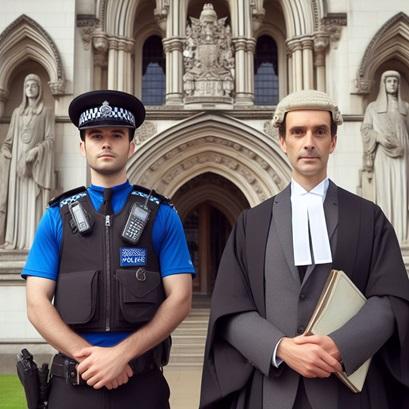
The power can be exercised by a Police Constable or a Police Community Support Officer. and must be authorised by a police officer of at least the rank of inspector. Section 34 of the Anti-Social Behaviour, Crime and Policing Act 2014 details the Authorisations to use powers under section 35.

(1) A police officer of at least the rank of inspector may authorise the use in a specified locality, during a specified period of not more than 48 hours, of the powers given by section 35.

“Specified” means specified in the authorisation.

(2) An officer may give such an authorisation only if satisfied on reasonable grounds that the use of those powers in the locality during that period may be necessary for the purpose of removing or reducing the likelihood of—

(a) members of the public in the locality being harassed, alarmed or distressed, or

(b) the occurrence in the locality of crime or disorder.

(3) In deciding whether to give such an authorisation an officer must have particular regard to the rights of freedom of expression and freedom of assembly set out in articles 10 and 11 of the Convention.

“Convention” has the meaning given by section 21(1) of the Human Rights Act 1998.

(4) An authorisation under this section—

(a) must be in writing,

(b) must be signed by the officer giving it, and

(c) must specify the grounds on which it is given.

Authorisations to use powers under section 35 Section 34 ABCP Act 2014

Challenge a Section 35 Order

There are several ways to challenge the use of Section 35 of the Anti-Social Behaviour, Crime and Policing Act 2014 if you believe that the powers have been used inappropriately or unfairly :-

  1. Complain to the Police: Initially, you can make a complaint to the police force that issued the direction under Section 35. Each police force and local authority will have a formal complaints procedure.
  2. Independent Review: If you are not satisfied with the response from the police or local authority, you can seek an independent review. For police complaints, this may involve the Independent Office for Police Conduct (IOPC).
  3. Judicial Review: As a last resort, you can consider a judicial review, which is a type of court proceeding where a judge reviews the lawfulness of a decision or action made by a public body. A judicial review could challenge the way in which the powers were exercised.
  4. Legal Advice: It is advisable to seek legal advice if you are considering challenging the use of these powers. A solicitor can provide guidance on the merits of your case and the appropriate course of action.

Remember, the use of these powers is subject to certain conditions and must be proportionate to the issue being addressed. The rights of freedom of expression and freedom of assembly, as set out in the Human Rights Act 1998, must also be considered by the authorities when exercising these powers.

If you need detailed guidance or support, you may want to consult a legal professional who specialises in this area of law. They can provide personalised advice based on the specifics of your situation.

Public place” includes any highway and any other premises or place to which at the material time the public have or are permitted to have access, whether on payment or otherwise ”.

Section 33 Criminal Justice Act 1972

Check out our articles on Police Professional Standards, Policing by Consent, Police Impartiality, Police Surveillance, Are the Police for Hire ?, Independent Office for Police Conduct (IOPC),Police Public Confidence and Engagement, Crime Reporting, What is a Police and Crime Commissioner ?, Sussex Police, Policing, Police News, Two Tiered Policing, Thought Police, Wasting Police Time, Police Community Support Officers (PCSO), Met Police, Chief Constable Jo Shiner, R v Sussex Justices and the highly questionable Sussex Family Justice Board.


The Ministry of Injustice is not the Ministry of Justice nor is it affiliated in any way with the justice system, legal profession, police or any other law enforcement agencies.


Latest Articles


Most Popular


You should always seek formal legal advice from a qualified and reputable lawyer (solicitor or barrister).

There are a number of links to Free and Paid For Legal Resources and Legal Organisations on the Free Legal Advice , Legal Aid and Pro Bono pages.
Categories
Legal Analysis Legal Professionals

Bar Standards Board Justice !

The Bar Standards Board published disciplinary findings against barrister Mr Thomas David Davidson on the 21st November 2023.

Thomas Davidson, a practising barrister, behaved in a way which was likely to diminish the trust and confidence which the public places in him or in the profession, in that, on 7 February 2022 at Salisbury Magistrates Court, following the conclusion of a trial during which he had represented a defendant before a Bench consisting of three Lay Magistrates, and after the Chairperson raised with him the issue of his having used a German accent during the proceedings and telling him that this conduct had been inappropriate, Mr Davidson looked at the Bench and said “Jawohl” at the same time as raising a hand in a Nazi salute, which conduct was seriously offensive and discreditable.

For professional misconduct contrary to Core Duty 5 (CD5) of the Code of Conduct of the Bar of England and Wales, Thomas Davidson was reprimanded and fined £250 with costs of £1,750.00.

The work that the Bar Standards Board do is governed by the Legal Services Act 2007 (the Act) as well as a number of other statutes.

The BSB Handbook contains the rules about how barristers must behave and work. Version 4.8 of the BSB Handbook came into force on the 21st May 2024.

This is hardly a punishment or deterrent by the Bar Standards Board. Where is the justice in this pathetic reprimand ?

Why was he not dealt with by the magistrates for contempt of court ?

•    setting the education and training requirements for becoming a barrister;
•    setting continuing training requirements to ensure that barristers’ skills are maintained throughout their careers;
•    setting standards of conduct for barristers;
•    authorising organisations that focus on advocacy, litigation, and specialist legal advice;
•    monitoring the service provided by barristers and the organisations we authorise to ensure they meet our requirements; and
•    considering reported concerns about barristers and the organisations we authorise and taking enforcement or other action where appropriate.

Bar Standards Board Responsibilities

Check out our articles on Barristers, Gavin Howe, Eleanor Battie, Direct Access Barristers, Inns of Court, Bar Standards Board, Bar Council, Law Society, Legal Services Board, Rule of Law, Lincoln’s Inn and the highly questionable Sussex Family Justice Board.


The Ministry of Injustice is not the Ministry of Justice nor is it affiliated in any way with the justice system, legal profession, police or any other law enforcement agencies.


Latest Articles


Most Popular


You should always seek formal legal advice from a qualified and reputable lawyer (solicitor or barrister).

There are a number of links to Free and Paid For Legal Resources and Legal Organisations on the Free Legal Advice , Legal Aid and Pro Bono pages.
Categories
Law Legal Analysis

Photography in Court

Section 41 of the Criminal Justice Act 1925 (CJA 1925) makes it an offence to take any photograph, make or attempt to make any portrait or sketch of a justice or a witness in, or a party to, any proceedings before the court, either in the courtroom or its precincts. A court precinct are its buildings and land.

According to the CPS, the penalty on summary conviction is a fine not exceeding level 3 on the standard scale. A Level 3 fine is a maximum of £1,000 and is published on the Sentencing Council website. The CJA 1925, however only provides for a fine not exceeding £50.

(1) No person shall—

(a) take or attempt to take in any court any photograph, or with a view to publication make or attempt to make in any court any portrait or sketch, of any person, being a judge of the court or a juror or a witness in or a party to any proceedings before the court, whether civil or criminal; or

(b) publish any photograph, portrait or sketch taken or made in contravention of the foregoing provisions of this section or any reproduction thereof;

and if any person acts in contravention of this section he shall, on summary conviction, be liable in respect of each offence to a fine not exceeding fifty pounds.

Criminal Justice Act 1925 Section 41

The Criminal Justice Act 1925 comes into effect within the precinct of a Crown Court; whereas the Contempt of Court Act 1981 comes into effect on all other HMCTS sites.

The offence at s41 CJA 1925 can be charged as a criminal offence in accordance with the Director’s Guidance on Charging, or the underlying behaviour can be dealt with by the court as a contempt in accordance with the summary procedure at Rule 48.5 of the Criminal Procedure Rules – see R v D (Contempt of Court: Illegal Photography) [2004] EWCA Crim 1271, or on a later application to the High Court by the Attorney General.

If dealt with by summons or charge normal time limits apply. The decision whether to charge a criminal offence or to bring proceedings for contempt will depend on the facts of the case, including the gravity of the interference with the administration of justice.

In Solicitor General v Cox [2016] EWHC 1241 (QB) the Solicitor General brought proceedings for common law contempt in respect of photos and videos taken in court and posted online along with derogatory comments about the judge. The court found that both the taking and publication of the illegally taken images, accompanied by pejorative comments about a judge, amounted to contempt, in circumstances where the contemnor knew phones were banned and had acted in deliberate defiance of it. The court considered the gravity of the risks and of the interference with the due administration of justice in the case and held that proceedings for contempt, rather than prosecution of the criminal offence, were appropriate.

The case of Cox highlights the extent to which the use of social media can interfere with the administration of justice and the need to take appropriate action. Prosecutors should refer to the Criminal Practice Directions (CPD I General matters 6C. This clarifies the use which may be made of live text-based communications, such as mobile email, social media (including Twitter) and internet-enabled laptops in and from courts).

Where evidence exists of an offence contrary to s.41 CJA 1925 prosecutors should assist the court by reference to the above considerations. The court initially decides on whether action must be taken by application of the summary contempt procedure at Rule 48.5. In the magistrates’ court the summary contempt procedure must be completed that day – see Practice and Procedure below. If the court does not proceed in this manner a decision has to be made on whether to proceed by charge or to refer the matter to the Attorney General having regard to the gravity of the risks and interference with the due administration of justice in the case.

Two options

  1. If the offender is apprehended on the day and the court is sitting advise court that it can deal with it as a contempt of court there and then, using the summary procedure at Rule 48.5 above, or have the police decide whether to charge an offence contrary to s.41 Criminal Justice Act 1925. If a magistrates’ court decides to deal with it there and then it may receive an apology but cannot impose a sanction – see Rule 48.5 procedure above.
  2. If the court does not deal with it there and then the normal police investigation and charge procedure applies. The offence is at s41 Criminal Justice Act 1925. Penalty is a level 3 fine. AG consent is not required so police can charge. Prosecutors note – there is no need to contact AGO when this scenario occurs unless the risks and interference with the due administration of justice was particularly grave. See Solicitor General v Cox where particularly serious issue.
Photography in court – Crown Prosecution Service (CPS) Legal Guidance

Contempt of Court

Contempt of Court is conduct that denotes wilful defiance of, or disrespect towards the court, or that wilfully challenges or affronts the authority of the court or the supremacy of the law itself.

Photography Ban and the Crimes and Courts Act 2013 

According to The Law Society Gazette article Court photography ban under review in transparency drive written by Monidipa Fouzder and published on the 11th May 2023 :-

A ban imposed nearly 100 years ago on photography in courts could be lifted under ideas being floated by the government to make the justice system more transparent.

A call for evidence published by the Ministry of Justice today asks if the 1925 prohibition on photography and 1981 prohibition on sound recording remain fit for purpose.

The Crimes and Courts Act 2013 allows the ban to be disapplied in certain circumstances by secondary legislation. For instance, the Court of Appeal and Competition Appeal Tribunal can broadcast proceedings. The Crown court can broadcast sentencing remarks. The Supreme Court is excluded from the two bans because cases heard by the UK’s highest court, which was established in 2009, would have previously been heard in the House of Lords where broadcasting was allowed.

Court photography ban under review in transparency drive

Video of Crown Court and Court of Appeal Cases

The latest cases as captured by Sky News cameras in the Crown Court and Court of Appeal are published on the Sky News – Courts YouTube Channel.

Please be advised that the published videos by Sky News may contain graphic descriptions of serious crimes, including murder and sexual offences.

Check out our articles on Judiciary, Rule of Law, Open Justice, Judges Salaries and Fees, Dodgy JudgesMr Justice Williams, His Honour Judge Richardson, His Honour Now His Dishonour, His Honour Judge Michael Slater, His Honour Judge Martin Davis, HHJ Farquhar, Do you Have to Bow to a Judge ?, Can you Email a Judge ?, Can you Criticise a Judge ? and the highly dubious Sussex Family Justice Board.


The Ministry of Injustice is not the Ministry of Justice nor is it affiliated in any way with the justice system, legal profession, police or any other law enforcement agencies.


Latest Articles


Most Popular


You should always seek formal legal advice from a qualified and reputable lawyer (solicitor or barrister).

There are a number of links to Free and Paid For Legal Resources and Legal Organisations on the Free Legal Advice , Legal Aid and Pro Bono pages.
Categories
Legal Analysis

What is Recusal ?

Judges have a duty to act impartially and without bias. This duty is enshrined in common law principles and is essential for upholding the rule of law.

Recusal is an important ethical and legal principle in the justice system, designed to ensure that legal proceedings are conducted fairly and impartially, and that the rights of all parties are protected. It helps maintain public trust in the legal system and upholds the principles of justice and due process.

The basic principle is that a court or tribunal hearing a case must be impartial and that justice “should not only be done, but should manifestly and undoubtedly be seen to be done” R v Sussex Justices

Recusal is when a judge steps down (recuses) from hearing a case on the basis that it’s not appropriate for them to deal with it. They may have a conflict of interest or there might be actual, presumed or apparent bias against a party. There may also be a real possibility that a fair-minded observer would conclude that the judge should not try the case because they cannot be impartial.

A judge can decide to recuse themselves of their own volition, or a party can make an application for recusal. The application should be made at the beginning of any hearing or proceedings.

A Practical Law article RECUSAL OF JUDGES IN CIVIL LITIGATION is published on the 3 Paper Buildings (3PB) Chambers website.

What is a conflict of interest ?

A conflict of interest (COI) refers to a situation in which a judge is involved in multiple interests or relationships, and these interests or relationships could potentially compromise their ability to make impartial or objective decisions. In such situations, there is a risk that personal or financial considerations may unduly influence a judge’s actions or decisions.

What is bias ?

“Bias is an attitude of mind that prevents the judge from making an objective determination of the issues that they have to resolve” Re Medicaments and Related Classes of Goods (No 2) [2001] 1 WLR 700, Para 37.

The University of Oxford Faculty of Law published Determining Bias: A survey of the law in the United Kingdom in January 2020

Following the decision of the Court of Appeal in In Re Medicaments and Related Classes of Goods (No 2) [2001] 1 WLR 700, the accepted test is that laid down in Porter v Magill [2001] UKHL 67, [2002] 2 AC 357, para 103: “whether the fair-minded and informed observer, having considered the facts, would conclude that there was a real possibility that the tribunal was biased”……. The characteristics of the fair-minded and informed observer are now well understood: he must adopt a balanced approach and will be taken to be a reasonable member of the public, neither unduly complacent or naïve nor unduly cynical or suspicious.

R v. Abdroikof (Appellant) and another (On Appeal from the Court of Appeal (Criminal Division)

Check out our articles on Rule of Law, Open Justice, Judges Salaries and Fees, Dodgy JudgesDo you Have to Bow to a Judge ?, Can you Email a Judge ?, Can you Criticise a Judge ? and the highly dubious Sussex Family Justice Board.


The Ministry of Injustice is not the Ministry of Justice nor is it affiliated in any way with the justice system, legal profession, police or any other law enforcement agencies.


Latest Articles


Most Popular


You should always seek formal legal advice from a qualified and reputable lawyer (solicitor or barrister).

There are a number of links to Free and Paid For Legal Resources and Legal Organisations on the Free Legal Advice , Legal Aid and Pro Bono pages.

Categories
Legal Analysis

ULEZ Bag Crime ?

ULEZ is London Mayor Sadiq Khan’s much-hated and deeply unpopular road charge, which has seen protests, violence and vandalism (criminal damage) throughout Greater London.

The ULEZ scheme was expanded to cover all of Greater London on Tuesday 29th August 2023. Ulez charges (fines) older, more polluting vehicles £12.50 a day and is currently the largest clean air zone in the world.

The Ultra Low Emission Zone (ULEZ) operates 24 hours a day, 7 days a week, every day of the year, except Christmas Day (25th December). The zone operates across all London boroughs, and does not include the M25.

At least a quarter of the cameras in London’s newly expanded Ultra Low Emission Zone have been damaged by vandals, new data reveals.

Campaigners this week have stepped up efforts to deface the cameras installed in wake of mayor Sadiq Khan’s controversial extension of the scheme, which is now clobbering thousands more drivers with £12.50 a day charges.

ULEZ vandals damage ‘a quarter of all new cameras in expansion zone’ amid backlash over Sadiq Khan’s ultra-low emissions scheme – Daily Mail 1st September 2023

Is putting a bag over a ULEZ camera criminal damage or harmless civil disobedience ?

The Crown Prosecution Service (CPS) publish legal guidance on Criminal Damage.

What is Criminal Damage ?

The Criminal Damage Act 1971 (CDA 1971) is the primary source of offences involving damage to property.

Section 1(1) CDA 1971 – A person who without lawful excuse destroys or damages any property belonging to another, intending to destroy or damage any such property, or being reckless as to whether any such property would be destroyed or damaged, shall be guilty of an offence.

This offence is triable either way – para. 29, Schedule 1 Magistrates’ Court Act 1980 (MCA 1980).The maximum penalty is 10 years imprisonment – Section 4 CDA 1971.

What is the Meaning of Property ?

Property” in the Criminal Damage Act 1971 (CDA 1971) means property of a tangible nature, whether real or personal. – Section 10.

The CDA 1971 requires proof that tangible property has been damaged, not necessarily that the damage itself should be tangible. Property does not however include intangibles or things in action.

What is Damage ?

Damage is not defined by the Criminal Damage Act 1971 (CDA 1971).

It should be widely interpreted to include not only permanent or temporary physical harm, but also permanent or temporary impairment of value or usefulness – Morphitis v. Salmon [1990] Crim.L.R. 48.

Any alteration to the physical nature of the property concerned may amount to damage within the meaning of the section.

The courts have construed the term liberally and included damage that is not permanent such as smearing mud on the walls of a police cell.

Where the interference amounts to an impairment of the value or usefulness of the property to the owner, then the necessary damage is established – R v Whiteley [1991] 93 Crim. App. R. 25.

Mens Rea

Mens Rea refers to criminal intent. The literal translation from Latin is “guilty mind.” The plural of mens rea is mentes reae. Mens rea​ is the state of mind statutorily required in order to convict a particular defendant of a particular crime. Establishing the mens rea of an offender, in addition to the actus reus (physical elements of the crime) is usually necessary to prove guilt in a criminal trial.

Cornell Law School

Without Lawful Excuse

Section 5 of the CDA 1971 sets out a defence to criminal damage charges, though not to aggravated criminal damage under s.1(2) – see s.5(1) CDA 1971. A person has a lawful excuse if

  • they believed at the time that those whom they believed to be entitled to consent to the destruction of or damage to the property in question had so consented, or would have so consented to it if they had known of the destruction or damage and its circumstances; or
  • at the time of the act or acts alleged to constitute the offence they believed:
    • that the property, right or interest was in immediate need of protection; and
    • that the means of protection adopted or proposed to be adopted were or would be reasonable having regard to all the circumstances.

Tried Summarily

The provisions of s. 22 and Schedule 2 Magistrates’ Courts Act 1980 (MCA) deal with the determination of mode of trial for those offences, referred to as “scheduled offences” that are mentioned in the first column of Schedule 2 MCA 1980.

Where a person is charged with an offence contrary to s.1(1) CDA 1971 or with aiding, abetting, counselling or procuring such an offence, or with attempting to commit, or inciting such an offence, and the value involved is less than £5,000, they must be tried summarily.

Tried summarily is an offence that can be tried only in a magistrates’ court.

It is important to note that there are two exceptions set out in Schedule 2 where the offence will be triable either way even if the value of the destroyed property or damage amounts to less than £5000. These are:

  • if the damage was caused by fire (the offence will be arson – see below); and
  • if the damage was done to a memorial on or after 28 June 2022.

Civil Disobedience on Conscientious Grounds

The common law has always been sensitive to the position of protesters when it comes to both prosecution and sentencing.

“My Lords, civil disobedience on conscientious grounds has a long and honourable history in this country.

People who break the law to affirm their belief in the injustice of a law or government action are sometimes vindicated by history.

The suffragettes are an example which comes immediately to mind. It is the mark of a civilised community that it can accommodate protests and demonstrations of this kind.

But there are conventions which are generally accepted by the law-breakers on one side and the law-enforcers on the other.

The protesters behave with a sense of proportion and do not cause excessive damage or inconvenience. And they vouch the sincerity of their beliefs by accepting the penalties imposed by the law.

The police and prosecutors, on the other hand, behave with restraint and the magistrates impose sentences which take the conscientious motives of the protesters into account.

The conditional discharges ordered by the magistrates in the cases which came before them exemplifies their sensitivity to these conventions.”

Lord Hoffmann – R v Jones (Margaret) [2007] 1 AC 161 at [89]:

Is putting a bag over a ULEZ camera criminal damage ?

I am not a lawyer and this is purely my opinion of the Criminal Damage Act 1971. This is not legal advice ! I am not condoning or encouraging any form of criminal behaviour or civil disobedience.

  • Putting a bag over a ULEZ camera would be a temporary impairment of usefulness – Morphitis v. Salmon [1990] Crim.L.R. 48 and would therefore be classed as damage. This would be the Actus Reus (physical elements of the crime)
  • The Mens Rea would be to render the camera unable to carry out it’s function.
  • The damage would be less than £5000 so if prosecuted, it would be tried summarily in a magistrates’ court.
  • Civil disobedience on conscientious grounds has a long and honourable history in this country. The police and prosecutors should behave with restraint and the magistrates impose sentences which take the conscientious motives of the protesters into account.

Check out our articles on Rule of Law, Open Justice, R v Sussex Justices, Policing by Consent and the highly dubious Sussex Family Justice Board.


The Ministry of Injustice is not the Ministry of Justice nor is it affiliated in any way with the justice system, legal profession, police or any other law enforcement agencies.


Latest Articles


Most Popular


You should always seek formal legal advice from a qualified and reputable lawyer (solicitor or barrister).

There are a number of links to Free and Paid For Legal Resources and Legal Organisations on the Free Legal Advice , Legal Aid and Pro Bono pages.

Categories
Law Legal Analysis Police

National Security Online Information Team (NSOIT)

The National Security Online Information Team (NSOIT) at the Department for Science, Innovation and Technology was allegedly established to bring together cross-government monitoring and analysis capabilities. The National Security Online Information Team (NSOIT) was previously known as the Counter Disinformation Unit (CDU).

Check out the article on the Counter Disinformation Data Platform (CDDP).

It is often said that when a government decides what information is to be disseminated to the people, the institution of government is no longer for the people but for its own self-preservation. The 1949 George Orwell novel Nineteen Eighty Four (1984) had a fictional Ministry of Truth.

On the 3rd June 2023 The Telegraph published an article Elon Musk joins backlash over secret unit curbing lockdown dissent and states “The billionaire Twitter owner condemned the ‘terrible’ tactics used by the Government during the pandemic, as revealed by the Telegraph”

On the 9th June 2023 The Telegraph published an article Covid disinformation unit made ‘hourly contact’ with tech firms, its leader reveals

In response to this article, Dr John Campbell published his own analysis on his YouTube channel which has 2.8 million followers.

Government Counter Disinformation Unit – Dr John Campbell

According to The Telegraph on the 10th June 2023 Twitter refused majority of removal requests from Covid spying unit “Figures show that social media firm refused nearly six out of 10 appeals from UK government CDU”

Molly Kingsley published the following Tweet on the 3rd June 2023 containing evidence of government censorship following a Subject Access Request (SAR) to the CDU at the DCMS.

Molly Kingsley Twitter

The Daily Sceptic published on the 12th June 2023 an article Secretive Government Unit Broke Own Rules by Flagging Opinions as ‘Disinformation’

Originally Published 12th June 2023 – Last Updated Updated 22th July 2023

Big Brother Watch have launched a campaign against the CDU :-

  • Take the first ever legal action in Europe against a government’s ‘counter disinformation’ activity
  • Grow pressure in Parliament for an immediate suspension of the CDU and an investigation into its work
  • Continue our investigation into extra-judicial government censorship and surveillance activities.

Big Brother Watch have published their report Ministry of Truth: the secretive government units spying on your speech which details their findings.

Misinformation from the Counter Disinformation Unit or an MP ?

There is a discrepancy about when the CDU was actually established. The Cabinet Office and Department for Science, Innovation and Technology published a Fact Sheet on the CDU and RRU on the 9th June 2023.

Is the following evidence of Disinformation by the Counter Disinformation Unit or an MP ? 2019 v 2020 ?

The Counter Disinformation Unit (CDU) was first set up within the Department for Digital, Culture, Media and Sport in 2019 and it has since responded to periods of acute disinformation risk including Covid-19.

Fact Sheet on the CDU and RRU

Lucy Powell who is the Labour MP for Manchester South tabled (UIN 98962) the following parliamentary question on the 6th January 2022

To ask the Secretary of State for Digital, Culture, Media and Sport, whether the cross-Whitehall unit to counter disinformation on covid-19 is operating as of 6 January 2022; how many staff working as part of that unit there are in the (a) Department for Digital, Culture, Media and Sport, (b) Home Office (c) Foreign, Commonwealth and Development Office, (d) Cabinet Office and (e) Ministry of Defence; and whether the number of staff in each team has increased or decreased since that unit was established in March 2020.

Coronavirus: Disinformation Question for Department for Digital, Culture, Media and Sport

Chris Philp who is the Conservative MP for Croydon South replied on the 11th January 2022.

The Cross-Whitehall Counter Disinformation Unit (CDU) was established on 5 March 2020, bringing together cross-government monitoring and analysis capabilities. As of 7 January 2022 the CDU is still fully operational.

Addressing the challenges of disinformation and misinformation is a whole of the government effort. The CDU is resourced full time and works in close partnership with cross-government teams. In response to the COVID-19 pandemic, the size of the team in DCMS has increased. Requirements are continually reviewed to ensure appropriate levels of resourcing, including surge capacity as needed.

When false narratives are identified, the CDU coordinates departments across Whitehall to deploy the appropriate response. This can include a direct rebuttal on social media, flagging content to platforms and ensuring public health campaigns are promoted through reliable sources.

Coronavirus: Disinformation Question for Department for Digital, Culture, Media and Sport

It is no surprise that Chris Philp MP chose to ignore most of the questions that were asked.

Fact Sheet on the CDU and RRU

The Cabinet Office and Department for Science, Innovation and Technology published a Fact Sheet on the CDU and RRU on the 9th June 2023.

Counter-Disinformation Unit Fact Sheet

The Department for Science, Innovation and Technology published the Counter-Disinformation Unit – open source information collection and analysis: privacy notice on the 16th Match 2023.

RESIST 2 Counter Disinformation Toolkit

The Government Communication Service published the RESIST 2 Counter Disinformation Toolkit sometime in 2021 and updated it on the 11th January 2022.

It is unknown if the National Security Online Information Team (NSOIT) use this toolkit.

It is however interesting that this was updated on the same day that Chris Philp MP replied to the question tabled by Lucy Powell MP.

Check out our articles on Office for Communications Data Authorisations, Thought Police, Policing, Police News, Policing by Consent, Police Impartiality, Two Tiered Policing, Wasting Police Time, Counter Disinformation Data Platform (CDDP), Police Professional Standards and the highly questionable Sussex Family Justice Board.


The Ministry of Injustice is not the Ministry of Justice nor is it affiliated in any way with the justice system, legal profession, police or any other law enforcement agencies.


Latest Articles


Most Popular


You should always seek formal legal advice from a qualified and reputable lawyer (solicitor or barrister).

There are a number of links to Free and Paid For Legal Resources and Legal Organisations on the Free Legal Advice , Legal Aid and Pro Bono pages.

Categories
Law Legal Analysis

GDPR and Subject Access Requests

The Data Protection Act 2018 (DPA) is a law that sets out rules and regulations regarding the use, storage, and sharing of personal data in the United Kingdom (UK).

The Data Protection Act 2018 was introduced to replace the Data Protection Act 1998, and it incorporates the General Data Protection Regulation (GDPR), which is a European Union (EU) regulation that governs data protection across the EU.

In this article, we explore the key features of the DPA and how it relates to GDPR, the role of the Data Protection Officer (DPO), how to make a Subject Access Report (SAR) and data protection complaint to an organisation.

Key Features of the Data Protection Act 2018

The Data Protection Act is a comprehensive piece of legislation that covers all aspects of data protection in the UK. Some of the key features of the DPA include:

  1. Data protection principles: The DPA sets out six data protection principles that organisations must follow when processing personal data. These principles include fairness, lawfulness, transparency, accuracy, storage limitation, and accountability.
  2. Lawful basis for processing: The DPA requires organisations to have a lawful basis for processing personal data. These include consent, contract, legal obligation, vital interests, public interest, and legitimate interests.
  3. Rights of data subjects: The DPA gives individuals the right to access their personal data, request the erasure of their data, and object to the processing of their data. It also gives individuals the right to data portability, which means they can request their data in a portable format.
  4. Data protection officers: The DPA requires certain organisations to appoint a data protection officer (DPO) to oversee their data protection activities.
  5. Data breaches: The DPA requires organisations to report certain types of data breaches to the Information Commissioner’s Office (ICO) within 72 hours of becoming aware of the breach.
  6. Enforcement: The DPA gives the ICO the power to issue fines of up to £17.5 million or 4% of an organization’s global turnover for serious breaches of data protection law.

How the Data Protection Act relates to the GDPR

The DPA incorporates the GDPR into UK law. This means that organisations in the UK must comply with both the DPA and the GDPR. Some of the key ways in which the DPA relates to the GDPR include:

  1. Data protection principles: The data protection principles in the DPA are based on the principles set out in the GDPR. This means that organisations must follow the same principles when processing personal data, regardless of whether they are subject to the DPA or the GDPR.
  2. Lawful basis for processing: The lawful bases for processing personal data in the DPA are based on the lawful bases set out in the GDPR. This means that organisations must have a lawful basis for processing personal data under both the DPA and the GDPR.
  3. Rights of data subjects: The rights of data subjects in the DPA are based on the rights set out in the GDPR. This means that individuals in the UK have the same rights to access their personal data, request the erasure of their data, and object to the processing of their data as individuals in the EU.
  4. Data protection officers: The requirements for appointing a data protection officer in the DPA are based on the requirements set out in the GDPR. This means that organisations in the UK must appoint a DPO if they meet the same criteria as organisations in the EU.
  5. Data breaches: The requirements for reporting data breaches in the DPA are based on the requirements set out in the GDPR. This means that organisations in the UK must report certain types of data breaches to the ICO within 72 hours of becoming aware of the breach, just as organisations in the EU must report certain types of data breaches to their supervisory authority.
  6. Enforcement: The enforcement provisions in the DPA are based on the enforcement provisions set out in the GDPR. This means that the ICO has the power to issue fines of up to £17.5 million or 4% of an organisation’s global turnover for serious breaches of data protection law, just as supervisory authorities in the EU have the power to issue fines under the GDPR.

The ICO Guide to the UK GDPR is part of their Guide to Data Protection and is a must read to fully understand Data Protection and GDPR. The ICO is the UK’s independent body set up to uphold information rights. 

Data Protection Officer (DPO)

The primary role of the Data Protection Officer (DPO) is to ensure that there organisation processes the personal data of its staff, customers, providers or any other individuals (also referred to as data subjects) in compliance with the applicable data protection rules.

  • The UK GDPR introduces a duty for you to appoint a data protection officer (DPO) if you are a public authority or body, or if you carry out certain types of processing activities.
  • DPOs assist you to monitor internal compliance, inform and advise on your data protection obligations, provide advice regarding Data Protection Impact Assessments (DPIAs) and act as a contact point for data subjects and the Information Commissioner’s Office (ICO). 
  • The DPO must be independent, an expert in data protection, adequately resourced, and report to the highest management level.
  • A DPO can be an existing employee or externally appointed.
  • In some cases several organisations can appoint a single DPO between them.
  • DPOs can help you demonstrate compliance and are part of the enhanced focus on accountability.
Data Protection Officers ICO

Rights of Access – Subject Access Request

One of the key rights that individuals have under the DPA and the GDPR is the right to access their personal data. This means that individuals can request a copy of the personal data that an organisation holds about them.

  • Individuals have the right to access and receive a copy of their personal data, and other supplementary information.
  • This is commonly referred to as a subject access request or ‘SAR’.
  • Individuals can make SARs verbally or in writing, including via social media.
  • A third party can also make a SAR on behalf of another person.
  • In most circumstances, you cannot charge a fee to deal with a request.
  • You should respond without delay and within one month of receipt of the request.
  • You may extend the time limit by a further two months if the request is complex or if you receive a number of requests from the individual.
  • You should perform a reasonable search for the requested information.
  • You should provide the information in an accessible, concise and intelligible format.
  • The information should be disclosed securely.
  • You can only refuse to provide the information if an exemption or restriction applies, or if the request is manifestly unfounded or excessive.
Rights of Access (SAR) ICO

How to make a Subject Access Report (SAR)

To make a Subject Access Request (SAR), individuals should follow these steps:

  1. Identify the organisation: The first step is to identify the organisation that holds your personal data. This could be your employer, your bank, your healthcare provider, or any other organisation that you have interacted with.
  2. Make a request: Once you have identified the organisation, you should make a subject access request. You can do this by writing to the organisation or filling in a subject access request form, if they have one.
  3. Provide identification: The organisation will need to verify your identity before they can provide you with a copy of your personal data. They may ask for a copy of your passport, driving license, or other form of identification.
  4. Wait for a response: The organisation has 30 days to respond to your subject access request. They may ask for more information or clarification if they need it.
  5. Receive your personal data: Once the organisation has verified your identity and processed your request, they will provide you with a copy of your personal data. This may be in electronic or paper form, depending on how the organisation stores your data.
  6. Review your personal data: Once you have received your personal data, you should review it to ensure that it is accurate and up-to-date. If you find any errors or inaccuracies, you can request that the organisation corrects them.

Make a data protection complaint to an organisation

You can complain to an organisation about how it is handling yours or other people’s information; if it:

  • has not properly responded to your request for your personal information;
  • is not keeping information secure;
  • holds inaccurate information about you;
  • has disclosed information about you;
  • is keeping information about you for longer than is necessary;
  • has collected information for one reason and is using it for something else; or
  • has not upheld any of your data protection rights.
How to make a data protection complaint to an organisation ICO

To make a complaint you must follow the steps below:

  1. Complain directly to the organisation involved
  2. Give the organisation one month to respond to your complaint or request.
  3. Ask the organisation involved for clarification if you don’t understand or you’re unhappy with their response.
  4. Complain to the ICO

If you have followed these steps or the organisation is refusing to respond to you, you can complain to the ICO.

Before you submit a complaint about an organisation you should read about what to expect from the ICO.

In conclusion, the Data Protection Act 2018 is a crucial piece of legislation that sets out the rules and regulations governing data protection in the UK. The DPA incorporates the GDPR into UK law, which means that organisations in the UK must comply with both the DPA and the GDPR.

One of the key rights that individuals have under the DPA and the GDPR is the right to access their personal data. To make a subject access request, individuals should follow the steps outlined above. By following the rules and regulations set out in the DPA and the GDPR, organisations can ensure that they protect the personal data of their customers, employees, and stakeholders.


The Ministry of Injustice is not the Ministry of Justice nor is it affiliated in any way with the justice system, legal profession, police or any other law enforcement agencies.


Latest Articles


Most Popular


You should always seek formal legal advice from a qualified and reputable lawyer (solicitor or barrister).

There are a number of links to Free and Paid For Legal Resources and Legal Organisations on the Free Legal Advice , Legal Aid and Pro Bono pages.

Categories
Free Speech Law Legal Analysis

Domain Names and Freedom of Expression

The Ministry of Injustice have a number of domains names that can be used to access the MOI and other websites.

All domains are used for a lawful purpose in line with the relevant domain registry rules. The domains are clearly not being used to commit fraud or deceive the public.

A few of the MOI domain names have recently been temporarily suspended by Nominet and then reactivated having followed their verification process.

One particular domain name has been suspended and reactivated twice following a report to Nominet by the National Fraud Intelligence Bureau (NFIB).

I am told suspension is “Something you are just going to have to live with”.

Freedom of expression

1 Everyone has the right to freedom of expression. This right shall include freedom to hold opinions and to receive and impart information and ideas without interference by public authority and regardless of frontiers. This Article shall not prevent States from requiring the licensing of broadcasting, television or cinema enterprises.

2 The exercise of these freedoms, since it carries with it duties and responsibilities, may be subject to such formalities, conditions, restrictions or penalties as are prescribed by law and are necessary in a democratic society, in the interests of national security, territorial integrity or public safety, for the prevention of disorder or crime, for the protection of health or morals, for the protection of the reputation or rights of others, for preventing the disclosure of information received in confidence, or for maintaining the authority and impartiality of the judiciary.

Article 10 of the Human Rights Act

If the public authorities don’t like certain domain names being used, then why didn’t they register them for themselves ?

MOI domains

btppolice.uk
ci5.uk
cityoflondonpolice.uk
cjsm.uk
cpsgov.uk
hampshirepolice.uk
hertspolice.uk
judges.uk
justice.me.uk
met-police.uk
mi5gov.uk
mi6gov.uk
ministryofinjustice.co.uk
ministryofinjustice.com
ministryofinjustice.uk
moi.me.uk
ncagov.uk
pdspolice.uk
roguelawyer.co.uk
royalcourtsofjustice.co.uk
royalcourtsofjustice.uk
unlawful.co.uk
sisgov.uk
sussexpolice.uk
sussex-police.uk
thesecretbarrister.co.uk
west-midlands-police.uk

Terms & Conditions of Domain Name Registration – The contract a Registrant enters into with Nominet when they register a .UK domain name.

Rules of Registration – The rules for the registration and use of domain names within the .UK domain and its sub-domains. These rules form part of our Terms & Conditions of Domain Name Registration and are part of the Registrant’s contract with Nominet.

Criminal Practices Policy – How we address criminal activity in .UK, .cymru and .wales. This policy is also available in Welsh.

DRS Policy – the rules and procedures governing our Dispute Resolution Service. Understanding these rules is vital.

List of .gov.uk domain names

A list of active .gov.uk domain names is updated once a year by the Central Digital and Data Office.

List of .gov.uk domain names as of 13th January 2025

For some reason this list was not updated in 2024 ?

Domain Squatting and Cyber Security ?


The Ministry of Injustice is not the Ministry of Justice nor is it affiliated in any way with the justice system, legal profession, police or any other law enforcement agencies.


Latest Articles


Most Popular


You should always seek formal legal advice from a qualified and reputable lawyer (solicitor or barrister).

There are a number of links to Free and Paid For Legal Resources and Legal Organisations on the Free Legal Advice , Legal Aid and Pro Bono pages.
Categories
Legal Analysis

You Can Leave Your Hat On at Horsham County Court

On the 4th July 2023 at 9.30am a McKenzie Friend and I went through “strict” airport style security at Horsham County Court in Hurst Rd, Horsham RH12 2ET.

Horsham County Court Entrance

Pockets were emptied into a tray and my laptop bag was searched by a Security guard using a torch taped to a ruler. Very unusual apparatus operated by a security guard in a shirt that was once white !

Horsham County Court Security and Staff Smoking Area

At least he and the other security guards were displaying their SIA badges as required by law under Section 9 of the Private Security Industry Act 2001.

One of the Security guards was obviously under pressure to secure the Court building as he was regularly going outside for a smoke !

Hats on Security at Horsham County Court

Inadvertently I left my Eurostar hat on (as pictured) and I wore it during the security screening including going through the airport style metal detector.

At no time was I asked to remove the hat nor was it scanned using the handheld scanner. The CCTV from the Court building, if working, would confirm this. I could request this footage from the Court by submitting a Subject Access Request.

The article Going through security at a court or tribunal building is published on the gov.uk website and explains the security when you enter a court or tribunal building.

You’ll go through a security check, like you would at an airport. This may include:

  • emptying your pockets into a tray
  • taking off your shoes, coat, gloves or hat
  • being asked to take off or open your belt
  • walking through an archway detector
  • being checked by hand or with a handheld scanner

If you’re wearing a head covering for religious or cultural reasons, you can ask for it to be checked with a handheld scanner so you do not have to take it off.

Going Through Security – gov.uk

The guidance says “may” which is a little odd.

In my opinion, the Security staff at Horsham County Court failed to do their job properly. I do not think a Eurostar hat could ever be classed as a head covering for religious or cultural reasons !

At Horsham County Court it seems that you can leave your hat on !

Horsham County Court Royal Coat of Arms

Horsham County Court Literature

There were a number of leaflet holders in the waiting area that were empty apart from a leaflet about “Restorative Justice For You” and one containing a Mars Bar Wrapper that has been there for at least 3 months !

“Restorative Justice For You” mentions the Sussex Criminal Justice Board.

Restorative Justice For You – Sussex Criminal Justice Board

Are the Sussex Criminal Justice Board as dodgy as the Sussex Family Justice Board ? The MOI will be investigating for a future article.

Horsham County Court Security Review

Horsham County Court Security staff made regular security patrols which was very reassuring. I am aware there were VIP’s in the building including my mentor DDJ Mills !

They used a phone to scan targets that were a circle with a cross hand drawn with a black sharpie on a Tipp-Ex background. Improvisation that rivals the skills of MacGyver.

I couldn’t help but notice that there was a lot of network cables in trunking attached to the ceiling that were secured with red cable ties. This is assumed to be for a secure network, however there were gaps in the trunking and the cables were exposed where they entered the wall. No doubt the Ministry of Justice/HMCTS IT will want to review this as a security risk.

In summary :-

  • Horsham Security should review their Airport Style security. Can you leave your hat on ?
  • Improve the appearance of their security staff.
  • Horsham Court staff or the Ministry of Justice/HMCTS should review their smoking policy on Court premises.
  • MoJ/HMCTS IT to review the secure cabling.

I will back to Horsham County Court in October 2023 to review again.

You may be interested in the article about the Royal Courts of Justice which explains Court security and spoons !

Check out our articles on R v Sussex Justices, Dodgy Judges, HHJ Farquhar, HHJ Bedford, Can you Criticise a Judge ? and the highly questionable Sussex Family Justice Board.


The Ministry of Injustice is not the Ministry of Justice nor is it affiliated in any way with the justice system, legal profession, police or any other law enforcement agencies.


Latest Articles


Most Popular


You should always seek formal legal advice from a qualified and reputable lawyer (solicitor or barrister).

There are a number of links to Free and Paid For Legal Resources and Legal Organisations on the Free Legal Advice , Legal Aid and Pro Bono pages.

Rule of Law - Open Justice - Policing By Consent