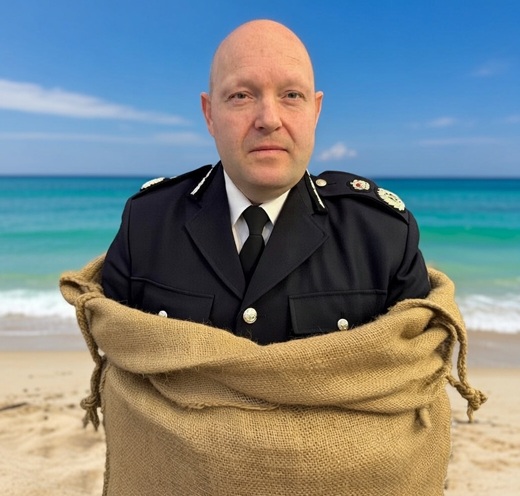
In the United Kingdom, chief constables hold one of the most senior positions in policing, leading territorial police forces and bearing ultimate responsibility for operational decisions.
Their role is pivotal in maintaining public safety, upholding the law and ensuring accountability.
However, when performance falters or controversies arise, mechanisms exist to hold them to account, including dismissal.
This article explores the procedures for dismissing a chief constable, drawing on relevant legislation and safeguards, and examines the high-profile case involving Craig Guildford Chief Constable of West Midlands Police.
The disgraced chief constable of West Midlands Police Craig Guildford retired on the 16th January 2026 with a full pension after eventually giving in to mounting calls to quit over the Maccabi Tel Aviv fan ban.
The Legal Framework
The primary legislation governing the appointment and removal of chief constables is the Police Reform and Social Responsibility Act 2011.
This Act established Police and Crime Commissioners (PCCs) who are elected officials tasked with overseeing police forces in England and Wales (with equivalent arrangements in Scotland and Northern Ireland under different structures).
Under Section 38(3) of the Act, a PCC has the authority to call upon a chief constable to resign or retire.
This power is not absolute; it must be exercised reasonably and fairly, in line with public law principles.
Historically, the Home Secretary had limited direct involvement in such matters, but recent developments have expanded this role.
In January 2026, Home Secretary Shabana Mahmood announced plans to introduce new statutory powers allowing the Home Secretary to force the retirement, resignation, or suspension of chief constables on performance grounds.
This move aims to address perceived gaps in accountability, particularly in cases where local oversight may be insufficient.
The Policing Protocol Order 2011 further outlines the relationships between PCCs, chief constables, and other bodies, emphasising that while chief constables retain operational independence, PCCs are responsible for holding them accountable.
Dismissal is typically pursued for reasons such as misconduct, poor performance, or loss of public confidence.
The Step-by-Step Process for Dismissal
Dismissing a chief constable is a structured process designed to ensure fairness and transparency. It cannot be done arbitrarily and involves multiple stakeholders.
Here is an overview of the key steps, based on Regulation 11A of the Police Regulations 2003 (as amended):
- Initiation by the PCC: The process begins when the PCC proposes to call upon the chief constable to resign or retire. They must provide a written explanation of the reasons, which could include failures in leadership, operational mishandlings, or ethical breaches.
- Consultation with His Majesty’s Chief Inspector of Constabulary (HMCIC): The PCC must obtain written views from HM Chief Inspector of Constabulary and have regard to them. This independent assessment helps evaluate the validity of the concerns.
- Notification and Response: The chief constable is notified and given the opportunity to make written representations. Copies of the HMCIC views and the PCC’s explanation are provided to both the chief constable and the local Police and Crime Panel (PCP).
- Role of the Police and Crime Panel: The PCP, composed of local councillors and independent members, reviews the proposal. They must make a recommendation within six weeks, either supporting or opposing the dismissal, and may consult HMIC. While the PCC is not bound by the PCP’s view, they must consider it. bbc.com The PCP also has veto powers in certain appointment processes, underscoring their scrutiny role.
- Final Decision and Suspension: If the PCC proceeds, they issue the call to resign or retire. In urgent cases, the chief constable can be suspended pending the outcome, but this requires similar consultations. publications.parliament.uk The chief executive of the PCC’s office is notified throughout.
- Appeals and Judicial Review: A chief constable can challenge the decision through judicial review if they believe it was irrational, unfair, or unlawful. Past cases, such as the reinstatement of Lincolnshire’s chief constable in 2013, highlight how courts can intervene.
With the impending Home Secretary powers, Home Secretary to introduce power to sack chief constables, an additional layer may allow direct intervention, bypassing or supplementing the PCC process in national interest cases.
Safeguards and Challenges
These procedures include built-in safeguards to prevent misuse of power. The involvement of HMCIC and the PCP ensures independent oversight, while the requirement for written explanations promotes transparency.
However, critics argue that the system can be politicised, as PCCs are elected and may face pressures from public opinion or party lines. The government’s defence is that these checks balance accountability with fairness.
Craig Guildford and West Midlands Police
A recent example of this process was the controversy surrounding Craig Guildford, who had been Chief Constable of West Midlands Police since December 2022.
Craig Guildford, who previously led Nottinghamshire Police, has faced intense scrutiny following a decision to ban fans of Israeli club Maccabi Tel Aviv from attending a Europa League match against Aston Villa in November 2025.
A damning report by Sir Andy Cooke QPM DL HM Chief Inspector of Constabulary, Inspection of police forces’ contributions to safety advisory groups: West Midlands Police, found that the ban was based on “exaggerated and untrue” intelligence, including evidence possibly generated by AI, which Craig Guildford later apologised for presenting to MPs.
The report criticised the force’s handling, leading Home Secretary Shabana Mahmood to declare on the 14th January 2026 that she had “lost confidence” in Guildford.
This sentiment was echoed by Downing Street the following day, with No 10 stating it “no longer has confidence” in him.
Politicians from across the spectrum have called for his resignation or dismissal, describing his continued tenure as “astonishing.”
The Independent Office for Police Conduct (IOPC) is now considering an investigation using special powers.
On the 16th January 2026 the disgraced chief constable of West Midlands Police Craig Guildford retired with a full pension.
The Chief Constable, Craig Guildford, has today retired from West Midlands Police with immediate effect. In doing so, he has acted with honour and in the best interests of West Midlands Police and our region. I welcome his decision.
I am pleased this outcome has been reached having regard to due process and the law. That has prevented what might otherwise have been a complex procedure, that would have caused significant distraction, impact and cost to West Midlands Police and the wider West Midlands. It was important this matter was resolved in a balanced, calm, fair, measured and respectful manner.
West Midlands Police and Crime Commissioner Simon Foster – Chief Constable Craig Guildford retires
Craig Guildford’s brief retirement in November 2024 to safeguard his pension before reappointment has drawn further criticism.
In November 2024, he retired as Chief Constable of West Midlands Police for one month in order to protect his pension, which would otherwise have fallen in value after 30 years’ unbroken service, before taking up the post again. Scott Green served as Acting Chief Constable in the interim.
Chief Constable Craig Guildford West Midlands Police – Wikipedia
Image of Craig Guildford Chief Constable of West Midlands Police – Richard Vernalls/PA and Grok AI
Check out our articles on Policing by Consent, Police Professional Standards, Police Misconduct Hearings, Police Impartiality, Police Surveillance, Are the Police for Hire ?, Independent Office for Police Conduct (IOPC),Police Public Confidence and Engagement, Crime Reporting, What is a Police and Crime Commissioner ?, Sussex Police, Policing, Police News, Two Tiered Policing, Thought Police, Wasting Police Time, Police Community Support Officers (PCSO), Met Police, Chief Constable Jo Shiner, R v Sussex Justices and the highly questionable Sussex Family Justice Board.
The Ministry of Injustice is not the Ministry of Justice nor is it affiliated in any way with the justice system, legal profession, police or any other law enforcement agencies.
“Publicity is the very soul of justice. . . . It keeps the judge himself, while trying, under trial….Where there is no publicity there is no justice”
Jeremy Bentham – Mr Justice Cobb: ‘Justice must be seen to be done’
Latest Articles ↓
- His Honour Judge Daniel Sawyer
 Judge Daniel Sawyer, known as His Honour Judge Daniel Sawyer,… Read more: His Honour Judge Daniel Sawyer
 - UK National Centre for Information Defence
 Prime Minister Andy Burnham used his first United Nations General… Read more: UK National Centre for Information Defence
 - Judges Behaving Badly and His Honour Judge Simon Oliver
 On the 27th August 2026 the Crown Prosecution Service announced… Read more: Judges Behaving Badly and His Honour Judge Simon Oliver
 - Jo Morris Barrister
 Jo Morris is a practising criminal barrister of Drystone Chambers… Read more: Jo Morris Barrister
 - Good Law Project
 The Good Law Project is a UK campaigning organisation that… Read more: Good Law Project
 - Police Federation of England and Wales (PFEW)
 The Police Federation of England and Wales (PFEW) is the… Read more: Police Federation of England and Wales (PFEW)
 - What is the Criminal Justice System (CJS) Common Platform ?
 The Criminal Justice System Common Platform (also known as HMCTS… Read more: What is the Criminal Justice System (CJS) Common Platform ?
 - Strategic Lawsuit Against Public Participation (SLAPPs)
 Strategic Lawsuits Against Public Participation, or SLAPPs, are legal actions… Read more: Strategic Lawsuit Against Public Participation (SLAPPs)
 - His Honour Judge Tony Baumgartner – Recorder of Westminster
 Judge Tony Alan Walter Baumgartner, known as His Honour Judge… Read more: His Honour Judge Tony Baumgartner – Recorder of Westminster
 - New Protocol for Legal Professionals to Raise Informal Concerns About Judges Behaviour
 On the 8th July 2026, the Courts and Tribunals Judiciary… Read more: New Protocol for Legal Professionals to Raise Informal Concerns About Judges Behaviour
 - The Policing Performance System
 In April 2026, His Majesty’s Inspectorate of Constabulary and Fire… Read more: The Policing Performance System
 - What is the Judicial College ?
 The Judicial College serves as the central pillar of professional… Read more: What is the Judicial College ?
Most Popular ↓
You should always seek formal legal advice from a qualified and reputable lawyer (solicitor or barrister).
There are a number of links to Free and Paid For Legal Resources and Legal Organisations on the Free Legal Advice , Legal Aid and Pro Bono pages.
[post_title] was last updated on the 12th October 2026
