The journey to becoming a barrister in England and Wales involves rigorous training, with professional ethics forming a cornerstone of the profession.
In England and Wales, barristers are regulated professionals bound by strict ethical standards outlined in version 5.0 of the Bar Standards Board (BSB) Handbook.
As part of reforms to Bar training introduced by the Bar Standards Board (BSB), the assessment of professional ethics has been divided between the vocational component and the pupillage or work-based learning stage.
This ensures that aspiring barristers develop a robust understanding of ethical principles at different points in their training.
During the vocational component, Authorised Education and Training Organisations provide tuition and assessment in professional ethics to a foundation level as part of the Bar Training course.
For more details on this stage, see the Vocational Component.
In contrast, the pupillage stage focuses on assessing specified learning outcomes at the standard expected of barristers on their first day of practice, as outlined in the Professional Statement.
Following a transition period, passing the Professional Ethics assessment during pupillage is now mandatory for all pupils, unless they have been granted a specific exemption by the BSB.
Graduates of the Bar Professional Training Course (BPTC) who commenced pupillage before 1st May 2024 remain exempt from this requirement.
Transferring qualified lawyers undertaking pupillage or work-based learning may also need to complete the assessment, with the default assumption being that they must sit the exam unless an exemption is authorised. For exemption queries, individuals should contact the BSB’s Authorisations team.
Format of the Assessment
The Professional Ethics assessment is an open-book examination centrally set and marked by the BSB. It consists of twelve short-answer questions, each equally weighted, and requires responses in narrative prose. These questions present scenarios drawn from professional practice, where candidates must identify ethical issues, apply relevant principles, critically analyse the situation, and propose appropriate resolutions. No specialist knowledge of particular areas of law is needed, as the ethical principles are applicable across various fields, such as criminal or civil practice.
Candidates are expected to draw on the provisions of the BSB Handbook, associated guidance, and other syllabus materials to provide comprehensive analyses supported by sound reasoning. The exam lasts three hours, during which candidates manage their own time allocation.
The only permitted material is the BSB Handbook, accessible electronically during the test. At test centres, it is available online but not downloadable, with search functionality limited to the Handbook’s own tool and no keyboard shortcuts for copying and pasting.
For remote online invigilation, a downloadable PDF version is provided, allowing full search capabilities and keyboard shortcuts.
A side-by-side view of the exam and Handbook is possible on screens with a minimum resolution of 1920×1080 pixels, which all test centre screens support. Paper copies of the Handbook can be requested as a reasonable adjustment. There is no prescribed programme of study prior to the exam, but a practice assessment is available for developmental purposes, along with a downloadable syllabus.
Practice assessments can be accessed via the Surpass platform, where candidates can attempt them unlimited times. Responses are not saved or marked automatically, but can be copied for self-evaluation against provided mark schemes. It is recommended to trial the practice exam to familiarise oneself with the computer-based format, regardless of whether the actual exam is taken at a centre or remotely.
Key Documents and Resources
Several essential documents are available to support candidates in understanding and preparing for the assessment.
The Exam Requirements outline the rules, replacing previous versions and linking to the Exams Misconduct Policy. The 2026 Syllabus and its version with tracked changes provide detailed learning outcomes.
An Approach Paper from April 2020 explains the new assessment methodology, while the Ethics Assessment Guidance further details the expected outcomes. Exam-specific resources include Candidate Instructions and mark schemes for practice papers: Paper 1 Mark Scheme and Paper 2 Mark Scheme.
For transparency, the Professional Ethics Chair’s Report Part 1 and Part 2 for July 2025 offer insights into the exam process. Additional policies cover Adjustments and Other Arrangements, Extenuating Circumstances, Feedback and Candidate Review Regulations.
The Bar Qualification Manual details pupil supervisor duties, and Pupil Supervisor Training Outcomes are also available. For historical context, see Sample Questions and Mark Scheme from the previous BPTC, the New Mark Scheme and further Assessment Guidance.
Exam Sittings and Dates
The Professional Ethics assessment is offered three times annually, typically in early January, late April, and late July.
For 2026, the January sitting includes deadlines for adjustments applications on 17th November 2025, exam booking from 25th November to 9th December 2025, the exam on Tuesday 13th January at 10am, and results by the end of Thursday 12th March 2026.
April 2026 features booking from 3rd March to 17th March, the exam on 28th April at 10am, with results to be confirmed.
The July sitting is on 28th July at 10am, with booking and results dates also to be confirmed.
There is no requirement to take the exam during the first six months of pupillage (the non-practising period), but candidates must have completed at least three months of pupillage beforehand to benefit from discussions with supervisors and colleagues on real-life ethical scenarios.
TQLs with reduced pupillage periods are exempt from this three-month rule. The exam is delivered online, with options for remote proctoring or attending a test centre in the UK (and potentially overseas).
Fees and Costs
The first and second attempts at the Professional Ethics assessment are covered by the practising certificate fee, incurring no additional cost to the candidate. However, any subsequent resits cost £832.
It is advisable to include agreements on who bears the cost of resits, whether chambers, the employer or the pupil, in the written pupillage agreement. Funding for further attempts is at the discretion of chambers or employers.
Preparation and Support
No mandatory preparatory course is required, and the BSB does not develop or endorse any specific materials from third parties. Candidates are encouraged to familiarise themselves with the syllabus and guidance documents. Recommended resources include the ICCA Pupillage Ethics Materials, available for £150 (or £75 for ICCA alumni) with 12 months’ access and training from the Northern Circuit.
Pupil supervisors play a key role in providing a suitable training programme to meet the competences in the Professional Statement. They should support pupils in engaging actively with exam preparation, including guidance on registration, booking, adjustments, and results. Supervisors do not need to be ethics experts in specific practice areas, as the issues are general.
Pupillage plans can be adjusted if needed, and supervisors should refer to the Bar Qualification Manual for their responsibilities.
If significant time has passed since completing Bar training, candidates should re-familiarise themselves with relevant ethical areas. Taking the assessment closer to authorisation to practise is considered good practice.
There is no mandated time off for study, as preparation materials are designed for self-study, but arrangements should be discussed with the pupil.
Passing the Assessment and Results
The assessment is competency-based, with candidates needing to demonstrate the skills and knowledge expected in the Professional Statement.
To pass, a candidate typically requires at least eight satisfactory answers out of twelve, with borderline cases reviewed holistically. Receiving three or more ‘Unacceptable’ ratings on sub-parts results in a ‘Not Competent’ outcome, and blank answers count as ‘Unacceptable’. There is no fixed pass rate; success depends on meeting the required standard.
For comparison, the previous BPTC ethics exam had a pass rate of around 70%, but the pupillage assessment is open-book with more time allocated, and candidates have already passed vocational training and been selected for pupillage.
Passing is essential for sign-off from pupillage; failure by the end may require an extension, with funding decisions made by chambers or employers as per the pupillage agreement. Results are uploaded to the MyBar portal.
Read the reviews of Junior Sussex Barrister Gavin Howe and Legal 500 Junior Barrister Eleanor Battie.
Check out our related articles on Rule of Law, Open Justice, What is Law, Is the Law Black and White ?, Branches of Law, Bullying, Harassment and Discrimination at the Bar, Blackbelt Barrister, The Secret Barrister, Barristers, Direct Access Barrister, Barristers Behaving Badly, Inns of Court, Council of the Inns of Court, Bar Standards Board, Bar Tribunal and Adjudication Services, Bar Council, Innocent until Proven Guilty and the highly questionable Sussex Family Justice Board.
The Ministry of Injustice is not the Ministry of Justice nor is it affiliated in any way with the justice system, legal profession, police or any other law enforcement agencies.
“Publicity is the very soul of justice. . . . It keeps the judge himself, while trying, under trial….Where there is no publicity there is no justice”
Jeremy Bentham – Mr Justice Cobb: ‘Justice must be seen to be done’
Latest Articles ↓
- Presumption of Innocence
 The presumption of innocence is a basic principle of the… Read more: Presumption of Innocence
 - His Honour Judge Daniel Sawyer
 Judge Daniel Sawyer, known as His Honour Judge Daniel Sawyer,… Read more: His Honour Judge Daniel Sawyer
 - UK National Centre for Information Defence
 Prime Minister Andy Burnham used his first United Nations General… Read more: UK National Centre for Information Defence
 - Judges Behaving Badly and His Honour Judge Simon Oliver
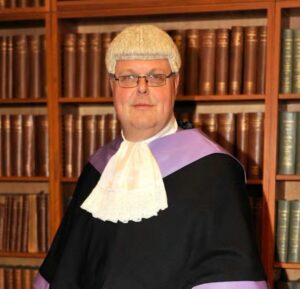 On the 27th August 2026 the Crown Prosecution Service announced… Read more: Judges Behaving Badly and His Honour Judge Simon Oliver
 - Jo Morris Barrister
 Jo Morris is a practising criminal barrister of Drystone Chambers… Read more: Jo Morris Barrister
 - Good Law Project
 The Good Law Project is a UK campaigning organisation that… Read more: Good Law Project
 - Police Federation of England and Wales (PFEW)
 The Police Federation of England and Wales (PFEW) is the… Read more: Police Federation of England and Wales (PFEW)
 - What is the Criminal Justice System (CJS) Common Platform ?
 The Criminal Justice System Common Platform (also known as HMCTS… Read more: What is the Criminal Justice System (CJS) Common Platform ?
 - Strategic Lawsuit Against Public Participation (SLAPPs)
 Strategic Lawsuits Against Public Participation, or SLAPPs, are legal actions… Read more: Strategic Lawsuit Against Public Participation (SLAPPs)
 - His Honour Judge Tony Baumgartner – Recorder of Westminster
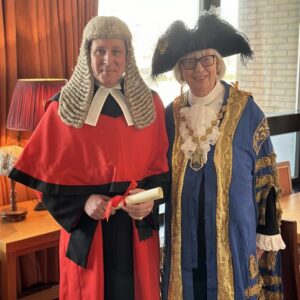 Judge Tony Alan Walter Baumgartner, known as His Honour Judge… Read more: His Honour Judge Tony Baumgartner – Recorder of Westminster
 - New Protocol for Legal Professionals to Raise Informal Concerns About Judges Behaviour
 On the 8th July 2026, the Courts and Tribunals Judiciary… Read more: New Protocol for Legal Professionals to Raise Informal Concerns About Judges Behaviour
 - The Policing Performance System
 In April 2026, His Majesty’s Inspectorate of Constabulary and Fire… Read more: The Policing Performance System
Most Popular ↓
You should always seek formal legal advice from a qualified and reputable lawyer (solicitor or barrister).
There are a number of links to Free and Paid For Legal Resources and Legal Organisations on the Free Legal Advice , Legal Aid and Pro Bono pages.
[post_title] was last updated on the 15th October 2026
