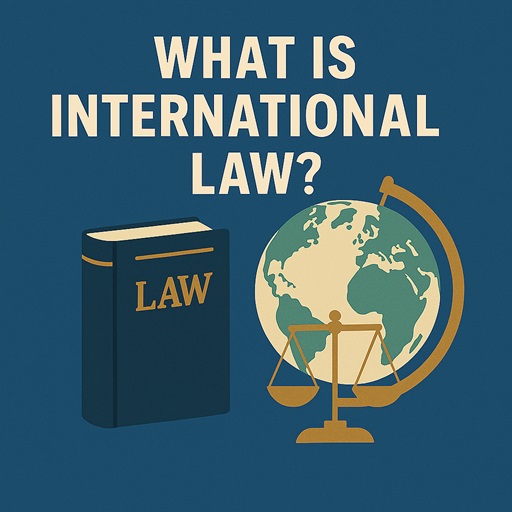
International law consists of rules, norms and principles governing relations between sovereign states and other international entities.
It promotes peaceful interactions, dispute resolution and cooperation on transnational issues. Unlike domestic law, it primarily relies on state consent and voluntary compliance.
Historical Development of International Law
The concept of law governing relations between nations dates back to ancient times, but modern terminology emerged in the late 18th century. Jeremy Bentham, the English philosopher and jurist (1748–1832), coined the term “international law” in his 1789 work An Introduction to the Principles of Morals and Legislation. He proposed replacing the older phrase “law of nations” (jus gentium) with “international law” to better describe law between nations rather than within them.
Bentham wrote several essays between 1786 and 1789, later compiled as Principles of International Law. He advocated codification of international rules, proposed an international court for dispute resolution, and outlined a plan for universal and perpetual peace based on utilitarian principles, maximising happiness and minimising harm across nations.
Sources of International Law
These are specified in Article 38 of the Statute of the International Court of Justice (ICJ):
- Treaties and conventions, such as the United Nations Charter, prohibiting the use of force except in self-defence or with Security Council authorisation.
- Customary international law, from consistent state practice accepted as binding (e.g., prohibition of genocide).
- General principles of law recognised by nations (e.g., pacta sunt servanda—agreements must be honoured).
- Judicial decisions and scholarly writings as subsidiary sources.
It covers human rights Universal Declaration of Human Rights, humanitarian law, environmental protection Paris Agreement, trade and maritime issues.
Enforcement of International Law
Enforcement is challenging without a central authority. The UN Security Council can impose sanctions or authorise force, but permanent members (China, France, Russia, UK, US) hold veto power. The ICJ resolves disputes between consenting states.
The International Criminal Court (ICC) prosecutes individuals for grave crimes, though major powers like the US are not parties.
US Military Action in Venezuela (January 2026) – International Law
On the 3rd January 2026, the United States conducted airstrikes in Venezuela, including targets in Caracas, and captured former Venezuelan President Nicolás Maduro and his wife Cilia Flores.
They were extradited to the US to face drug trafficking and narco-terrorism charges. Maduro pleaded not guilty in a New York federal court on the 5th January 2026.
The operation has faced widespread international criticism as a violation of state sovereignty and the UN Charter’s prohibition on the use of force.
The UN held emergency meetings, with allies and others condemning it as unlawful aggression. This illustrates tensions between unilateral actions by powerful states and core principles of international law.
Prime Minister Sir Keir Starmer, a former barrister and KC, has refused to be drawn on whether or not US President Donald Trump’s military action against Venezuela may have broken international law.
Additional Examples of International Law
International law features in ongoing conflicts, such as Russia-Ukraine (ICC probes into war crimes; ICJ on territorial integrity) and South China Sea disputes under the United Nations Convention on the Law of the Sea (UNCLOS).
Significance and Challenges
International law establishes a framework for global order but struggles with enforcement and geopolitical influences. Jeremy Bentham’s vision of codified rules and institutions remains influential, yet events like the Venezuela incident highlight persistent vulnerabilities when compliance is uneven.
Adherence remains essential for addressing shared challenges like security and climate change.
Check out our related articles on Rule of Law, Open Justice, What is Law, Is the Law Black and White ?, Branches of Law, Bullying, Harassment and Discrimination at the Bar, The Secret Barrister, Barristers, Direct Access Barrister, Barristers Behaving Badly, Inns of Court, Council of the Inns of Court, Bar Standards Board, Bar Tribunal and Adjudication Services, Bar Council, Innocent until Proven Guilty and the highly questionable Sussex Family Justice Board.
The Ministry of Injustice is not the Ministry of Justice nor is it affiliated in any way with the justice system, legal profession, police or any other law enforcement agencies.
“Publicity is the very soul of justice. . . . It keeps the judge himself, while trying, under trial….Where there is no publicity there is no justice”
Jeremy Bentham – Mr Justice Cobb: ‘Justice must be seen to be done’
Latest Articles ↓
- Presumption of Innocence
 The presumption of innocence is a basic principle of the… Read more: Presumption of Innocence
 - His Honour Judge Daniel Sawyer
 Judge Daniel Sawyer, known as His Honour Judge Daniel Sawyer,… Read more: His Honour Judge Daniel Sawyer
 - UK National Centre for Information Defence
 Prime Minister Andy Burnham used his first United Nations General… Read more: UK National Centre for Information Defence
 - Judges Behaving Badly and His Honour Judge Simon Oliver
 On the 27th August 2026 the Crown Prosecution Service announced… Read more: Judges Behaving Badly and His Honour Judge Simon Oliver
 - Jo Morris Barrister
 Jo Morris is a practising criminal barrister of Drystone Chambers… Read more: Jo Morris Barrister
 - Good Law Project
 The Good Law Project is a UK campaigning organisation that… Read more: Good Law Project
 - Police Federation of England and Wales (PFEW)
 The Police Federation of England and Wales (PFEW) is the… Read more: Police Federation of England and Wales (PFEW)
 - What is the Criminal Justice System (CJS) Common Platform ?
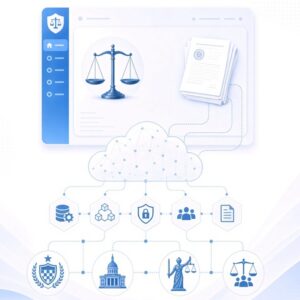 The Criminal Justice System Common Platform (also known as HMCTS… Read more: What is the Criminal Justice System (CJS) Common Platform ?
 - Strategic Lawsuit Against Public Participation (SLAPPs)
 Strategic Lawsuits Against Public Participation, or SLAPPs, are legal actions… Read more: Strategic Lawsuit Against Public Participation (SLAPPs)
 - His Honour Judge Tony Baumgartner – Recorder of Westminster
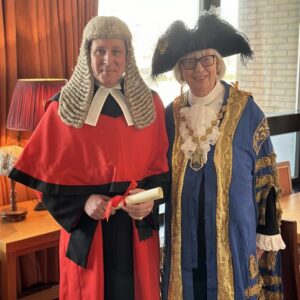 Judge Tony Alan Walter Baumgartner, known as His Honour Judge… Read more: His Honour Judge Tony Baumgartner – Recorder of Westminster
 - New Protocol for Legal Professionals to Raise Informal Concerns About Judges Behaviour
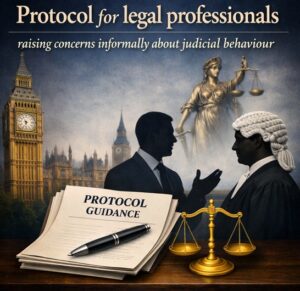 On the 8th July 2026, the Courts and Tribunals Judiciary… Read more: New Protocol for Legal Professionals to Raise Informal Concerns About Judges Behaviour
 - The Policing Performance System
 In April 2026, His Majesty’s Inspectorate of Constabulary and Fire… Read more: The Policing Performance System
Most Popular ↓
You should always seek formal legal advice from a qualified and reputable lawyer (solicitor or barrister).
There are a number of links to Free and Paid For Legal Resources and Legal Organisations on the Free Legal Advice , Legal Aid and Pro Bono pages.
[post_title] was last updated on the 15th October 2026
