Categories
Judiciary Legal Professionals

His Honour Now His Dishonour

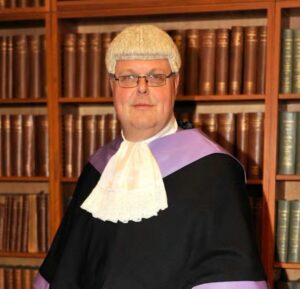
Andrew Easteal formerly known as His Honour Andrew Easteal has been removed from office by the Judicial Conduct Investigations Office (JCIO) for misconduct after he ‘deliberately’ deleted data which was of police interest. 

The Lord Chancellor, with the Lord Chief Justice’s agreement, has removed His Honour Judge Andrew Easteal from office for misconduct.

Judicial office-holders are expected to strive to ensure that their conduct, both in and out of court, maintains and enhances the confidence of the public, the legal profession, and litigants, in their personal impartiality and that of the judiciary. They are also expected to put the obligations of judicial office above personal interests.

Following an investigation carried out under the Judicial Conduct (Judicial and other office holders) Rules 2014 by a senior judge appointed by the Lord Chief Justice, Judge Easteal was found to have deliberately deleted data in the knowledge that it was of interest to police officers carrying out a criminal investigation. The judge denied that his intention was to frustrate the criminal investigation.

Having considered the mitigation offered by Judge Easteal, the Lord Chief Justice and Lord Chancellor agreed with the investigating judge’s finding that this was misconduct of the utmost seriousness, for which the judge should be removed from office.

STATEMENT FROM THE JUDICIAL CONDUCT INVESTIGATIONS OFFICE

Despite being removed from Office, Andrew Easteal is still on the List of Circuit Judges on the Judiciary website. This is several hours after the announcement.

Clearly not all judges are as honourable as they seem !

“Publicity is the very soul of justice. . . . It keeps the judge himself, while trying, under trial….Where there is no publicity there is no justice”

Jeremy BenthamMr Justice Cobb: ‘Justice must be seen to be done’

Check out our articles on Mr Justice Williams, His Honour Judge Melbourne Inman KC, His Honour Judge Jeremy Richardson KC, His Honour Judge Guy Kearl, HHJ Farquhar, HHJ Bedford, Dodgy Judges, Can you Criticise a Judge ?, Do you Have to Bow to a Judge ?, Can you Email a Judge ?, Can you Criticise a Judge ? and the highly questionable Sussex Family Justice Board.


The Ministry of Injustice is not the Ministry of Justice nor is it affiliated in any way with the justice system, legal profession, police or any other law enforcement agencies.


Latest Articles


Most Popular


You should always seek formal legal advice from a qualified and reputable lawyer (solicitor or barrister).

There are a number of links to Free and Paid For Legal Resources and Legal Organisations on the Free Legal Advice , Legal Aid and Pro Bono pages.


Categories
Law

What are Byelaws ?

Byelaws play a crucial role in regulating various aspects of society in the United Kingdom. Byelaws are made by local authorities and public bodies, including some private companies or charities, to address specific issues that are not covered by national legislation. Byelaws are made using powers granted by the relevant Act of Parliament.

A byelaw cannot be made where alternative legislative measures already exist that could be used to address the problem. Byelaws should always be proportionate and reasonable. Where a byelaw is no longer necessary, it should be revoked.

Local government legislation: byelaws – gov.uk

Byelaws govern a wide range of areas, from public behaviour to the use of public spaces.

Byelaws are generally accompanied by some sanction or penalty for their non-observance that can be prosecuted in magistrates’ courts or Justice of the Peace Courts in Scotland.

History of Byelaws in the UK

The origins of byelaws can be traced back to medieval England when local communities enacted regulations to govern their own affairs. These early byelaws covered aspects such as public health, trade, and public order. However, it was not until the 19th century that byelaws began to be widely recognized and authorized by legislation.

The Municipal Corporations Act of 1835 was a significant milestone in the development of byelaws in the UK. It granted municipal corporations the power to make byelaws for the “good rule and government” of their respective boroughs. This act paved the way for local authorities to pass regulations on matters like public nuisances, street trading, and the management of public spaces.

Since then, numerous acts of Parliament have expanded the scope of byelaw-making powers for different bodies. Notable examples include the Public Health Act 1875, which empowered local authorities to create byelaws concerning sanitation and public health, and the Road Traffic Act 1988, which enabled local authorities to regulate parking and traffic through byelaws.

Legislation

The Local Government Act 1972  was made in respect of local government and the functions of local authorities in England and Wales. It includes the “Power of councils to make byelaws for good rule and government and suppression of nuisances”.

The Local Government (Scotland) Act 1973 includes “Byelaws for good rule and government”.

The Local Government Byelaws (Wales) Act 2012 “reforms procedures for making byelaws in Wales, including removing a requirement for confirmation of byelaws by the Welsh Minister”.

The Byelaws (Alternative Procedure) (England) Regulations 2016 introduce new arrangements for byelaws by simplifying the procedures for making new byelaws and amending byelaws.

Types of Byelaws

Byelaws in the UK can be categorised into different sections based on their subject matter. Some common areas covered by byelaws include :-

  1. Public Order and Safety: Byelaws in this category govern public behavior and conduct to maintain order and safety. They may include regulations on alcohol consumption in public places, restrictions on public gatherings, and rules regarding the use of fireworks.
  2. Public Spaces: Byelaws related to public spaces cover issues such as the use of parks, beaches, and open spaces. They may address activities like dog walking, cycling, barbecues, and the prohibition of certain activities in designated areas.
  3. Environmental Protection: Byelaws aimed at environmental protection focus on preventing pollution, preserving natural habitats, and promoting sustainable practices. They may cover topics such as waste management, noise pollution, and the protection of wildlife.
  4. Public Transport: Byelaws in this category pertain to public transport services, including buses, trains, trams, and ferries. They often define rules for passenger behaviour, ticketing, and the use of facilities.
  5. Trading and Licensing: Byelaws concerning trading and licensing govern various commercial activities. They may regulate street trading, markets, licensing of premises for specific purposes, and the sale of goods in public spaces.
  6. Health and Sanitation: Byelaws addressing health and sanitation focus on maintaining public health standards. They may cover topics like food hygiene, public toilets, pest control, and the prevention of infectious diseases.

Significance of Byelaws in the UK

Byelaws play a crucial role in complementing national legislation by addressing local issues and concerns. They provide local authorities and public bodies with the flexibility to regulate matters that are specific to their regions. Byelaws also enable communities to uphold public order, protect the environment, and ensure the well-being of residents and visitors.

Furthermore, byelaws encourage civic engagement and local democracy, as they often involve public consultations and input from community members. They provide an opportunity for individuals and organizations to influence the rules and regulations that govern their immediate surroundings.

Byelaws in the UK have a rich history and continue to be an essential part of the legal framework in the country. They serve as a means for local authorities and public bodies to address specific issues and regulate various aspects of society.

Byelaws help maintain public order, protect the environment, and ensure the well-being of communities throughout the United Kingdom.

If you have arrived at the Ministry of Injustice from https://btppolice.uk (a MOI domain) you may well have been looking for https://btp.police.uk which is the official website for British Transport Police.

For the avoidance of doubt this website is not run by British Transport Police nor is it associated in any way with British Transport Police.

Call 999 if:

  • a serious offence is in progress or has just been committed
  • someone is in immediate danger or harm
  • property is in danger of being damaged
  • a serious disruption to the public is likely

Call 101 for non-emergency enquiries. You can also Report a Crime online.

You may also be interested in our articles on What is the Law ? and It’s the Law.


The Ministry of Injustice is not the Ministry of Justice nor is it affiliated in any way with the justice system, legal profession, police or any other law enforcement agencies.


Latest Articles


Most Popular


You should always seek formal legal advice from a qualified and reputable lawyer (solicitor or barrister).

There are a number of links to Free and Paid For Legal Resources and Legal Organisations on the Free Legal Advice , Legal Aid and Pro Bono pages.

Categories
Police

Its the Law

Why do the police make up the law ? Is ignorance of the law by a Police Officer a reasonable excuse ? Check out the latest Police News.

The Gwent Auditor / TGA posted the following video on the 1st June 2023 about a visit to the GLAA – Gangmasters and Labour Abuse Authority building in Nottingham.

Love or hate auditors on YouTube, there is an ever growing library of videos that show the Police abusing their powers, making up the law and showing complete ignorance of the law.

Having watched the video, it is clear that PC 1191 Madison Moss-Hayes of Nottinghamshire Police based at Byron House Police Station urgently needs some training so that she understands how to approach the public, civil trespass, the law about photography in public and what Section 35 is and how to use it lawfully.

9:32 “It’s the law mate

12:57 When asked under what law…….”Under a Section 35 Act ok so it’s a dispersal order

14:03 When asked again…………”It’s under Section 35 Act

PC 1191’s bold statement “It’s the Law” is totally wrong as It’s not the law.

Calling a member of the public “mate” is also high questionable and unprofessional.

The College of Policing publish a Code of Conduct which sets out the principles and standards of behaviour that we expect to see from police professionals.

Members of the public and the media do not need a permit to film or photograph in public places and police have no power to stop them filming or photographing incidents or police personnel.

Photography Advice Met Police

I can only assume PC 1191 Madison Moss-Hayes of Nottinghamshire Police was referring to Section 35 of the Anti-social Behaviour, Crime and Policing Act 2014. There is no evidence to suggest that authorisation was granted as required under Section 34 of the same Act.

In my opinion, any arrest made by PC Moss-Hayes would have been unlawful and The Gwent Auditor would have been able to make a civil claim against the Police Constable and Nottinghamshire Police.

34 Authorisations to use powers under section 35

(1) A police officer of at least the rank of inspector may authorise the use in a specified locality, during a specified period of not more than 48 hours, of the powers given by section 35.

“Specified” means specified in the authorisation.

(2) An officer may give such an authorisation only if satisfied on reasonable grounds that the use of those powers in the locality during that period may be necessary for the purpose of removing or reducing the likelihood of—

(a) members of the public in the locality being harassed, alarmed or distressed, or

(b) the occurrence in the locality of crime or disorder.

(3) In deciding whether to give such an authorisation an officer must have particular regard to the rights of freedom of expression and freedom of assembly set out in articles 10 and 11 of the Convention.

“Convention” has the meaning given by section 21(1) of the Human Rights Act 1998.

(4) An authorisation under this section—

(a) must be in writing,

(b) must be signed by the officer giving it, and

(c) must specify the grounds on which it is given.

35 Directions excluding a person from an area

(1) If the conditions in subsections (2) and (3) are met and an authorisation is in force under section 34, a constable in uniform may direct a person who is in a public place in the locality specified in the authorisation—

(a) to leave the locality (or part of the locality), and

(b) not to return to the locality (or part of the locality) for the period specified in the direction (“the exclusion period”).

(2) The first condition is that the constable has reasonable grounds to suspect that the behaviour of the person in the locality has contributed or is likely to contribute to—

(a) members of the public in the locality being harassed, alarmed or distressed, or

(b) the occurrence in the locality of crime or disorder.

(3) The second condition is that the constable considers that giving a direction to the person is necessary for the purpose of removing or reducing the likelihood of the events mentioned in subsection (2)(a) or (b).

(4) The exclusion period may not exceed 48 hours.

The period may expire after (as long as it begins during) the period specified in the authorisation under section 34.

(5) A direction under this section—

(a) must be given in writing, unless that is not reasonably practicable;

(b) must specify the area to which it relates;

(c) may impose requirements as to the time by which the person must leave the area and the manner in which the person must do so (including the route).

(6) The constable must (unless it is not reasonably practicable) tell the person to whom the direction is given that failing without reasonable excuse to comply with the direction is an offence.

(7) If the constable reasonably believes that the person to whom the direction is given is under the age of 16, the constable may remove the person to a place where the person lives or a place of safety.

(8) Any constable may withdraw or vary a direction under this section; but a variation must not extend the duration of a direction beyond 48 hours from when it was first given.

(9) Notice of a withdrawal or variation of a direction—

(a) must be given to the person to whom the direction was given, unless that is not reasonably practicable, and

(b) if given, must be given in writing unless that is not reasonably practicable.

(10) In this section “public place” means a place to which at the material time the public or a section of the public has access, on payment or otherwise, as of right or by virtue of express or implied permission.

(11) In this Part “exclusion period” has the meaning given by subsection (1)(b).

Anti-social Behaviour, Crime and Policing Act 2014
1:14 Basil Fawlty “It’s against the Law. The Law of England, nothing to do with me……”

Latest Gwent Auditor YouTube Videos

You may also be interested in our articles on Policing by Consent ?, Met Police, Sussex Police, His Majesty’s Inspectorate of Constabulary and Fire & Rescue Services (HMICFRS) and the State of Policing Report 2022 and the Loss of Public Trust.


The Ministry of Injustice is not the Ministry of Justice nor is it affiliated in any way with the justice system, legal profession, police or any other law enforcement agencies.


Latest Articles


Most Popular


You should always seek formal legal advice from a qualified and reputable lawyer (solicitor or barrister).

There are a number of links to Free and Paid For Legal Resources and Legal Organisations on the Free Legal Advice , Legal Aid and Pro Bono pages.

Categories
Legal Analysis

What is Judicial Review ?

In England and Wales, judicial review is a legal process through which the courts review the lawfulness of decisions made by public bodies.

It is a mechanism that allows individuals or organizations to challenge the actions, decisions, or omissions of public authorities to ensure that they have acted within the powers conferred upon them by law.

The purpose of judicial review is to hold public bodies accountable for their actions and decisions, ensuring that they act lawfully, fairly, and within the scope of their authority.

It is an essential aspect of the rule of law and serves as a check on the exercise of power by the government and other public bodies.

Judicial review can be sought in relation to a wide range of decisions, including those made by central government departments, local authorities, regulatory bodies, and other public bodies. It covers various areas such as immigration, planning, education, healthcare, and administrative decisions.

To initiate a judicial review, the claimant must establish that they have sufficient standing to bring the case, meaning they must have a sufficient interest in the matter. They must also demonstrate that there are valid grounds for review, such as illegality, irrationality, procedural impropriety, or a breach of human rights.

If the court finds in favour of the claimant, it can quash the decision in question, declare it unlawful, or provide other appropriate remedies.

Judicial review is typically conducted by the Administrative Court, which is a specialised division of the High Court of Justice in England and Wales.

Appeals from the Administrative Court’s decisions can be made to the Court of Appeal and, in certain circumstances, to the Supreme Court.

Apply for a judicial review of a decision

To ask the court for permission to proceed with a claim for a judicial review and to give details of the claim, the Judicial review claim form (Administrative Court) Form N161 must be completed and submitted to the appropriate Administrative Court.

You must make the claim in the appropriate Administrative Court in:

Apply for a judicial review of a decision – gov.uk

The Courts and Tribunal Judiciary publish the Administrative Court Judicial Review Guide 2024 which provides detailed legal guidance on bringing a judicial review case in the Administrative Court.

HM Courts & Tribunals Service published the guidance Administrative Court: bring a case to the court. This shows how to use the Administrative Court, part of the High Court which hears cases about judicial reviews, statutory appeals and extradition.

Civil Procedure Rule (CPR) PART 54 – JUDICIAL REVIEW AND STATUTORY REVIEW contains the appropriate rules about the procedure.

Civil Practice Direction 54A – JUDICIAL REVIEW sets out the procedures to be followed when bringing proceedings before the courts. Please note that the Practice Directions in general supplement the CPR’s.

If the Judicial review is urgent and must be considered within 7 days Form N463 Ask the court to urgently consider a claim for a judicial review must be completed as well as the Judicial review claim form (Administrative Court) Form N161.

Fees in the Civil and Family Courts – full list (EX50A) shows the fees for judicial review on Page 5 :-

D. Judicial Review (other than in respect of judicial review in immigration and asylum)

1.9(a) Permission to apply £169 FEE0454
1.9(b) On request to reconsider at a hearing a decision on permission £424 FEE0455
1.9(c) Permission to proceed £847 FEE0456
1.9(d) Permission to proceed (claim not started by JR procedure) £169 FEE0457

Judicial Review Fees EX50A (May 2024)

The Ministry of Injustice is not the Ministry of Justice nor is it affiliated in any way with the justice system, legal profession, police or any other law enforcement agencies.


Latest Articles


Most Popular


You should always seek formal legal advice from a qualified and reputable lawyer (solicitor or barrister).

There are a number of links to Free and Paid For Legal Resources and Legal Organisations on the Free Legal Advice , Legal Aid and Pro Bono pages.
Categories
Law

What is a Crown Servant ?

A Crown Servant, in the United Kingdom, is an individual who is employed by the Crown or works within the civil service of the government.

The term “Crown servant” is not used in Scotland, where the equivalent term is “public servant”.

Crown Servants encompass a diverse range of professionals. They work across different government departments and agencies, contributing their expertise and skills to the functioning of the state.

Here are some examples of crown servants :-

  • Civil servants: Civil servants are employed by the government to carry out a variety of tasks, such as running government departments, providing public services, and advising ministers.
  • Police officers: Police officers are employed by the government to uphold the law and protect the public.
  • Members of the armed forces: Members of the armed forces are employed by the government to defend the country from attack.
  • Judges: Judges are employed by the government to preside over court cases.
  • Crown prosecutors: Crown prosecutors are employed by the government to prosecute criminal cases.
  • Diplomats: Diplomats are crown servants, and they represent the UK on the international stage. They negotiate treaties, build relationships with other countries, and promote UK interests abroad.

It’s important to note that although judges are employed by the government, they are separate from the executive branch of government, which includes the Prime Minister, Cabinet, and other government officials. This separation of powers helps to safeguard the integrity and impartiality of the judiciary.

One of the fundamental principles guiding the work of Crown Servants is their commitment to impartiality.

They are expected to perform their duties without bias or favouritism, treating all individuals and groups fairly and equitably. This principle of impartiality ensures that government decisions are made in the best interest of the public rather than personal or political interests.

Integrity is another core value upheld by Crown Servants.

They are expected to act ethically, demonstrating honesty, transparency, and accountability in their work. Maintaining the public’s trust is of utmost importance, and Crown Servants must adhere to high standards of conduct and behaviour.

Crown Servants serve at the pleasure of the Crown.

This means their employment can be terminated at the discretion of the Crown or its representatives. This authority provides flexibility in the management of the civil service, allowing the government to ensure that Crown Servants remain aligned with the goals and objectives of the administration.

The principle of Crown servants serving at the pleasure of the Crown is based on the idea that the Crown is the ultimate source of authority in the UK. This principle dates back to the days of absolute monarchy, when the King or Queen had absolute power over their subjects.

Although the UK is now a constitutional monarchy, the principle of Crown servants serving “at the pleasure of the Crown” has been retained.

Some people argue that serving at the pleasure of the Crown is an outdated and undemocratic principle that gives the government too much power. Others argue that it is an essential principle that helps to ensure the stability of the government and the country.

Crown Servants are expected to be politically neutral in their roles.

This ensures that their decisions and actions are not influenced by personal political beliefs. It is important to note that Crown Servants are distinct from political appointees or ministers who are chosen by the government

The role of Crown Servants in the United Kingdom is crucial in maintaining stability, efficiency, and continuity in the governance of the country.

Crown servants work tirelessly behind the scenes, implementing legislation, managing public services, providing legal advice, conducting diplomacy, and upholding law and order.

Crown servants provide impartial advice and support to government ministers, so that they can deliver public services in a fair and impartial way.

The UK has a long and proud tradition of public service, and Crown servants play a vital role in upholding this tradition.


The Ministry of Injustice is not the Ministry of Justice nor is it affiliated in any way with the justice system, legal profession, police or any other law enforcement agencies.


Latest Articles


Most Popular


You should always seek formal legal advice from a qualified and reputable lawyer (solicitor or barrister).

There are a number of links to Free and Paid For Legal Resources and Legal Organisations on the Free Legal Advice , Legal Aid and Pro Bono pages.
Categories
Law Legal Analysis

Ministry of Justice

The United Kingdom’s Ministry of Justice is responsible for the country’s justice system, ensuring that it is fair, transparent, and accessible to all.

The Lord Chancellor, The Right Honourable Shabana Mahmood KC MP, heads the Ministry of Justice as the Secretary of State for Justice.

The Ministry of Justice role encompasses a wide range of responsibilities, including the provision of legal services, the management of the court system, and the oversight of the country’s prisons and probation services.

The Ministry of Justice is not responsible for the regulation of the legal profession in England and Wales. This function is carried out by the independent regulatory bodies, such as the Solicitors Regulation Authority and the Bar Standards Board

The history of the Ministry of Justice can be traced back to the Magna Carta

The Magna Carta, also known as the Great Charter, is one of the most important legal documents in history. It was originally issued by King John of England in 1215, in response to the demands of rebellious barons who sought to limit the power of the monarch.

The Magna Carta established the principle that everyone, including the king, is subject to the law, and it protected basic rights such as the right to a fair trial and the right to due process.

Over time, the Magna Carta was revised and reissued by various kings, and it became a symbol of individual liberty and the rule of law. The version of the Magna Carta that is most commonly referenced today is the one issued by King Edward I in 1297.

Of the original 63 clauses in the Magna Carta, only four have survived into modern law. These are clauses 1, 13, 39, and 40.

Clause 1 establishes the principle that the English Church is free from interference by the king. It states that “the Church of England shall be free, and shall have its rights undiminished, and its liberties unimpaired.”

Clause 13 provides for the seizure of property by the king only if it is done in accordance with the law. It states that “No man shall be taken or imprisoned, or disseised of his freehold, or liberties, or free customs, or outlawed, or exiled, or in any way destroyed, nor will we go upon him nor send upon him, except by the lawful judgment of his peers or by the law of the land.”

Clause 39 establishes the principle of due process, stating that “No free man shall be seized or imprisoned, or stripped of his rights or possessions, or outlawed or exiled, or deprived of his standing in any other way, nor will we proceed with force against him, or send others to do so, except by the lawful judgment of his equals or by the law of the land.”

Finally, Clause 40 establishes the right to a fair trial, stating that “To no one will we sell, to no one will we deny or delay, right or justice.”

Together, these surviving clauses represent the enduring legacy of the Magna Carta, and they continue to influence modern legal systems around the world.

In the Crime, Justice and Law section of the gov.uk website, the government regularly publish justice information and statistics as part of the Justice System Transparency


The Ministry of Injustice is not the Ministry of Justice nor is it affiliated in any way with the justice system, legal profession, police or any other law enforcement agencies.


Latest Articles


Most Popular


You should always seek formal legal advice from a qualified and reputable lawyer (solicitor or barrister).

There are a number of links to Free and Paid For Legal Resources and Legal Organisations on the Free Legal Advice , Legal Aid and Pro Bono pages.

Categories
Law

Statute of Limitations

The Statute of Limitations in the United Kingdom (UK) establishes time limits within which legal actions can be brought against individuals or entities for various offenses.

These limitations aim to strike a balance between the interests of justice and the need for legal certainty.

In the UK, each jurisdiction—England and Wales, Scotland, and Northern Ireland—has its own legislation governing limitation periods.

This article explores the key aspects of the Statute of Limitations in each jurisdiction, including time limits for offenses and exceptions.

Limitation Act 1980

The Limitation Act 1980 is a piece of legislation that governs the time limits within which legal actions can be brought for civil claims in England, Wales, and Northern Ireland.

It provides a framework for determining when a claim becomes “time-barred” or statute-barred, meaning that it cannot be pursued in court after a certain period has elapsed.

The key provisions of the Limitation Act 1980 include:

  1. General Limitation Period: Section 2 of the Act establishes a general limitation period of six years from the date the cause of action arises for most civil claims. This includes claims for breach of contract, personal injury, and negligence.
  2. Personal Injury Claims: Section 11 of the Act sets a specific limitation period of three years for personal injury claims arising from negligence, nuisance, or breach of duty. The three-year period usually begins from the date the injury occurred or from the date the injured party became aware of the injury.
  3. Latent Damage: Section 14A of the Act addresses claims for latent damage, where the injury or damage may not be immediately apparent. It allows for an extended limitation period of either three years from the date of knowledge or 15 years from the date of the negligent act or omission, whichever occurs first.
  4. Actions to Recover Land: Section 15 of the Act deals with actions to recover land, setting a limitation period of 12 years. This means that legal action to reclaim land or property must be initiated within 12 years from the date the right of action arose.
  5. Contracts and Specialty Debts: Section 5 of the Act establishes a six-year limitation period for actions founded on simple contracts or specialty debts. This includes debts arising from written agreements or deeds.

It is important to note that the Limitation Act 1980 does not apply to criminal offenses, which have separate rules and time limits for prosecution.

In the case of criminal acts, there are no statutory limits on the prosecution of crimes in the UK except for ‘summary’ offences (offences which are tried in the magistrates’ court). In these cases, criminal proceedings must be brought within 6 months. The Magistrates’ Courts Act 1980 (MCA 1980) applies.

There is no time limit for prosecution in England and Wales, including indictable crimes such as murder, manslaughter, war crimes and drug dealing offences.

Prescription and Limitation (Scotland) Act 1973

The Prescription and Limitation (Scotland) Act 1973 governs limitation periods for civil and criminal matters in Scotland.

  1. Time Limits for Offenses:
    • Section 6 of the Limitation (Scotland) Act 1973 establishes a five-year limitation period for most personal injury claims, contracts, and torts.
    • The limitation period for actions based on a right to recover land is 20 years from the date the right of action accrued.

Serious offenses such as murder, rape, and treason generally do not have a time limit for prosecution and can be brought forward at any time.

The Criminal Procedure (Scotland) Act 1995 sets out the procedures and powers of the lower courts in Scotland, which include the Justice of the Peace Courts and Sheriff Courts. The Criminal Procedure (Scotland) Act 1995 outlines the jurisdiction, powers, and functions of these courts, as well as the procedures for criminal cases in Scotland.

The Limitation (Northern Ireland) Order 1989

The Limitation (Northern Ireland) Order 1989 provides the framework for limitation periods for civil claims in Northern Ireland.

  1. Time Limits for Offenses:
    • Section 6 of the Limitation (Northern Ireland) Order 1989 sets a general limitation period of six years for most civil claims, including contract disputes and personal injury cases.
    • Actions to recover land have a limitation period of 12 years.

The Magistrates’ Courts (Northern Ireland) Order 1981. This order sets out the powers, procedures, and jurisdiction of the magistrates’ courts in Northern Ireland. It governs the operation of these courts and provides the legal framework for their functions and processes.

The Statute of Limitations in the UK varies across its jurisdictions. The Limitation Act 1980 applies to England and Wales, the Prescription and Limitation (Scotland) Act 1973 governs limitation periods in Scotland and the Limitation (Northern Ireland) Order 1989 sets the framework for Northern Ireland.

Check out our articles on Solicitors, Solicitors Regulation Authority (SRA), Solicitors from Hell, Barristers, Direct Access Barristers, Bar Standards Board, Bar Council, Law Society, Legal Services Board, Rule of Law and the highly questionable Sussex Family Justice Board.


The Ministry of Injustice is not the Ministry of Justice nor is it affiliated in any way with the justice system, legal profession, police or any other law enforcement agencies.


Latest Articles


Most Popular


You should always seek formal legal advice from a qualified and reputable lawyer (solicitor or barrister).

There are a number of links to Free and Paid For Legal Resources and Legal Organisations on the Free Legal Advice , Legal Aid and Pro Bono pages.
Categories
Judiciary

Master of the Rolls

The Keeper or Master of the Rolls and Records of the Chancery of England, also known as the Master of the Rolls, is the President of the Civil Division of the Court of Appeal of England and Wales.

The Master of the Rolls is a senior judge and is second in seniority in England and Wales only to the Lady Chief Justice the Baroness Carr of Walton-on-the-Hill, DBE, PC.

The Master of the Rolls is consulted on matters such as the civil justice system and rights of audience.

As President of the Court of Appeal’s Civil Division they are the Head of Civil Justice and are responsible for the deployment and organisation of the work of judges in the civil division. They also hear the most complex cases across the full range of civil, family and tribunal matters.

The current Master of the Rolls is Sir Geoffrey Vos.

Address (in Correspondence)….
The Right Honourable
The Master of the Rolls

Dear….Master of the Rolls

In court….My Lord

What do I call a judge? Courts and Tribunals Judiciary

You may also be interested in our article on the Lady Chief Justice and Lord Chancellor.

History of the Master of the Rolls

The Master of the Rolls has a long and fascinating history that dates back to the 13th century. Originally, the position was responsible for keeping the “rools” or records of the Court of Chancery, which was a court of equity that dealt with disputes not covered by common law. As the legal system evolved, the Master of the Rolls became a senior judge in their own right, with responsibilities that extended beyond the Chancery.

During the reign of King Henry VIII, the Master of the Rolls was appointed to the Privy Council, a group of advisers to the monarch. In the 19th century, the position of Master of the Rolls became one of the most prestigious legal positions in the country. In 1833, the Master of the Rolls was made a member of the House of Lords and was granted the right to sit and vote in that chamber.

The Rolls Court was to last 50 years as a court of first instance; it was abolished by the Judicature Act of 1881.  The Master of the Rolls ceased to be a judge of the High Court and became a judge of the Court of Appeal.

A list of previous Masters of the Rolls is maintained at Wikipedia.

Appointment

The Heads of Division are appointed by the King on the recommendation of a selection panel convened by the Judicial Appointments Commission (JAC).

The selection panel comprises the Lady Chief Justice as Chair, a nominee of the Lord Chief Justice, the Chair of the JAC, a lay member of the JAC and a nominee of the JAC Chair agreed with the Lord Chief Justice.

The panel reports to the Lord Chancellor, who can then accept the selection, reject it, or require the panel to reconsider. If practical the panel must consult the current holder of the office for which a selection is being made.

By law, candidates for the post must be qualified for appointment as a Lord Justice of Appeal or to be a judge of the Court of Appeal.

In practice, Heads of Division are generally appointed from among the Lords of Appeal in Ordinary (the Law Lords) or Lord or Lady Justices of Appeal.

Master of the Rolls – Courts and Tribunals Judiciary

Current Master of the Rolls

Sir Geoffrey Vos was appointed as Master of the Rolls on 11th January 2021, succeeding Sir Terence Etherton. He brings a wealth of experience to the position, having had a distinguished legal career spanning several decades.

Sir Geoffrey Vos is set to retire from the judiciary and as Master of the Rolls on the 31st October 2026.

On the 9th July 2026, His Majesty King Charles III has been pleased to approve the appointment of Sir Colin Birss as the Master of the Rolls following the retirement of Sir Geoffrey Vos.

Sir Geoffrey Vos was born on 22nd August 1955 and was educated at Cambridge University, where he studied law. After graduating, he worked as a solicitor for several years before being called to the Bar in 1985. He was made a Queen’s Counsel in 1999.

Sir Geoffrey Vos has held a number of prominent legal positions, including serving as a judge in the Chancery Division and as the Deputy Head of Civil Justice. Before his appointment as Master of the Rolls, he served as Chancellor of the High Court from 2016 to 2021, overseeing the work of the Chancery Division of the High Court.

Sir Geoffrey Vos is highly respected in the legal community and is known for his expertise in commercial and chancery law. He has also been involved in a number of professional and charitable activities, serving as a trustee of several charities and on the Council of the British Institute of International and Comparative Law. He has also been a member of the Lord Chancellor’s Advisory Committee on Private International Law.

The Salary of the Master of the Rolls from from 1st April 2025 to 31st March 2026 is £290,213

Sir Colin Birss was called to the Bar in 1990 and took Silk in 2008. He started his judicial career as a Deputy Chair of the Copyright Tribunal in 2009.

He was appointed as a Specialist Circuit Judge in 2010, as a High Court Judge assigned to the Chancery Division in 2013 and, in 2021, as a Judge of the Court of Appeal and Deputy Head of Civil Justice.

In 2023 he became Lead Judge for Artificial Intelligence. He is currently the Chancellor of the High Court.

Summary of Master of the Rolls

The Master of the Rolls is a highly esteemed position in the UK legal system, responsible for managing the administrative and procedural matters of the Court of Appeal of England and Wales, as well as serving as President of the Civil Division.

Sir Geoffrey Vos is the current holder of the position and brings a wealth of experience to the role, having had a distinguished legal career spanning several decades. His expertise in commercial and chancery law, combined with his leadership skills, make him well-suited to the position of Master of the Rolls and President of the Civil Division.

Image of Sir Geoffrey Vos from the Courts and Tribunal Judiciary website.

Check out the related articles on the Attorney General, Solicitor General, Lady Chief Justice, Lord Chancellor, Chancellor of the High Court,Justice Secretary, Rule of Law, Open Justice, Law, Is the Law Black and White ?, Government Legal Department, Crown Prosecution Service (CPS), Government Legal Department (GLD), Abuse of Process, What Does Lady Justice Symbolise ?, McKenzie Friend, Can a Judge Direct a Jury to Find a Defendant Not Guilty ?,Law Society, Law Commission, McKenzie Friend Right of Audience, Solicitors, Solicitors Regulation Authority, Barristers, Bar Council of England and Wales, Bar Standards Board, R v Sussex Justices, Police Impartiality and the highly questionable Sussex Family Justice Board.


The Ministry of Injustice is not the Ministry of Justice nor is it affiliated in any way with the justice system, legal profession, police or any other law enforcement agencies.


Latest Articles


Most Popular


You should always seek formal legal advice from a qualified and reputable lawyer (solicitor or barrister).

There are a number of links to Free and Paid For Legal Resources and Legal Organisations on the Free Legal Advice , Legal Aid and Pro Bono pages.
Categories
Law Police

Wasting Police Time

The offence of wasting police time is committed when a person causes any wasteful employment of the police. Wasting Police Time – section 5(2) of the Criminal Law Act 1967 applies :-

Penalties for concealing offences or giving false information.

(2)Where a person causes any wasteful employment of the police by knowingly making to any person a false report tending to show that an offence has been committed, or to give rise to apprehension for the safety of any persons or property, or tending to show that he has information material to any police inquiry, he shall be liable on summary conviction to imprisonment for not more than six months or to a fine of not more than [F3 level 4 on the standard scale] or to both.

(3)No proceedings shall be instituted for an offence under this section except by or with the consent of the Director of Public Prosecutions.

Criminal Law Act 1967 Section 5

The Crown Prosecution Service (CPS) publish detailed guidance for prosecutors in relation to wasting police time :-

The offence of wasting police time is committed when a person causes any wasteful employment of the police:

Proceedings may only be instituted by or with the consent of the Director of Public Prosecutions: s.5(3). Consent may be granted after charge but must be before a plea of guilty is entered or summary trial. Consent must be obtained before proceedings are started by way of summons.

Examples of the type of conduct appropriate for a charge of wasting police time include:

  • false reports that a crime has been committed, which initiates a police investigation;
  • the giving of false information to the police during the course of an existing investigation.
Wasting Police Time – CPS

If you are caught wasting police time you could be jailed for up to six months and/or fined. Instead of taking you to court, the police might issue you with a fixed penalty notice under the Criminal Justice and Police Act 2001 (CJPA 2001).

The Code for Crown Prosecutors is a public document, issued by the Director of Public Prosecutions, that sets out the general principles Crown Prosecutors should follow when they make decisions on cases.

Check out our articles on Sussex Police, Chief Constable Jo Shiner Sussex Police, Policing, Police News, Policing by Consent, Police Impartiality, Police Professional Standards, Two Tiered Policing, Thought Police, What is a Police and Crime Commissioner and a Police and Crime Panel ?, Met Police and the highly questionable Sussex Family Justice Board.


The Ministry of Injustice is not the Ministry of Justice nor is it affiliated in any way with the justice system, legal profession, police or any other law enforcement agencies.


Latest Articles


Most Popular


You should always seek formal legal advice from a qualified and reputable lawyer (solicitor or barrister).

There are a number of links to Free and Paid For Legal Resources and Legal Organisations on the Free Legal Advice , Legal Aid and Pro Bono pages.

Categories
Law Legal Analysis

What is Stalking and Harassment ?

Stalking and harassment is when someone repeatedly behaves in a way that makes you feel scared, distressed or threatened. Stalking and harassment is a criminal offence.

There are different types of stalking and harassment and anyone can be a victim. Stalking and harassment are offences under the Protection from Harassment Act 1997.

You may be interested in our article What is Harassment and R v O’Neill [2016] EWCA Crim 92, [2016] from the Court of Appeal.

There is no legal definition of cyberstalking but it is recognised as being different from harassment as it involves fixated and obsessive behaviour. This maybe to gather information, monitor or discredit the victim.

Social Media and other Electronic Communications – Crown Prosecution Service

Harassment

Someone you know could be harassing you, like a neighbour, or people from your local area or it could be a stranger.

Harassment may include:

  • bullying at school or in the workplace
  • cyber stalking (using the internet to harass someone)
  • antisocial behaviour
  • sending abusive text messages
  • sending unwanted gifts
  • unwanted phone calls, letters, emails or visits

It’s harassment if the unwanted behaviour has happened more than once.

What is stalking and harassment? Police UK

Sexual harassment

Sexual harassment is unlawful, as a form of discrimination, under the Equality Act 2010.

Some of these are also forms of sexual or indecent assault.

The Act says it’s sexual harassment if the unwanted behaviour:

  • violates your dignity
  • creates an intimidating, hostile, degrading, humiliating or offensive environment (this includes the digital environment, online)

Some examples of sexual harassment would include:

  • sexual comments, jokes or gestures
  • staring or leering at your body
  • using names like ’slut’ or ‘whore’
  • unwanted sexual communications, like emails, texts, DMs
  • sharing sexual photos or videos
  • groping and touching
  • someone exposing themselves
  • pressuring you to do sexual things or offering you something in exchange for sex
What is stalking and harassment ? – Police UK

Stalking

Stalking is like harassment, but it’s more aggressive. The stalker will have an obsession with the person they’re targeting.

Stalking may include:

  • regularly following someone
  • repeatedly going uninvited to their home
  • checking someone’s internet use, email or other electronic communication
  • hanging around somewhere they know the person often visits
  • interfering with their property
  • watching or spying on someone
  • identity theft (signing-up to services, buying things in someone’s name)

It’s stalking if the unwanted behaviour has happened more than once.

What is stalking and harassment ? – Police UK

Online stalking and harassment

Social networking sites, chat rooms, gaming sites and other forums are often used to stalk and harass someone, for example:-

  • to get personal information
  • to communicate (calls, texts, emails, social media, creating fake accounts)  
  • damaging the reputation
  • spamming and sending viruses 
  • tricking other internet users into harassing or threatening
  • identity theft 
  • threats to share private information, photographs, copies of messages
What is stalking and harassment ? – Police UK

Stalking or Harassment Crown Prosecution Service (CPS)

The CPS publish prosecution guidance to assist prosecutors with the general principles to be applied when making decisions about prosecutions involving stalking or harassment. It provides guidance on:-

  • the importance of focusing on whether conduct experienced by the victim in its entirety amounts to stalking or harassment, whether the police have investigated those or other individual offences
  • selecting appropriate charges, in order to apply the Code for Crown Prosecutors where there is an overlap between stalking, harassment and/or controlling or coercive behaviour
  • acceptance of pleas
  • the prosecutor’s role in supporting the victim

Stalking or harassment offences can be found in sections 2, 2A, 4 and 4A of the Protection from Harassment Act 1997 (PHA 1997) and section 42A (1) Criminal Justice and Police Act 2001. There are racially and religiously aggravated forms of the PHA offences: see sections 28 and 32 Crime and Disorder Act 1998 and the Racist and Religious Hate Crime prosecution guidance.

Stalking or Harassment – Crown Prosecution Service (CPS)

Report Stalking and Harassment

You should contact the police if you’re being stalked or suffering harassment. Call 999 if you or someone else is in immediate danger of stalking and harassment.

What is the maximum sentence for harassment or stalking ?

Parliament sets the maximum (and sometimes minimum) penalty for any offence. When deciding the appropriate sentence, the court must follow any relevant sentencing guidelines, unless it is not in the interests of justice to do so.

If the offence is harassment or stalking:

  • the maximum sentence is six months’ custody
  • if racially or religiously aggravated, the maximum sentence is two years’ custody

If the offence is harassment (putting people in fear of violence) or stalking (involving fear of violence or serious alarm or distress):

  • the maximum sentence is 10 years’ custody
  • if racially or religiously aggravated, the maximum sentence is 14 years’ custody
Harassment and stalking – Sentencing Council

False Allegations of Stalking and Harassment

If false allegations of stalking and harassment are made to the Police, then this can also classed be as a criminal offence.

The offence of wasting police time is committed when a person causes any wasteful employment of the police. Wasting Police Time – section 5(2) of the Criminal Law Act 1967.

If you are caught wasting police time you could be jailed for up to six months and/or fined. Instead of taking you to court, the police might issue you with a fixed penalty notice under the Criminal Justice and Police Act 2001 (CJPA 2001).

Check out our articles on National Stalking Awareness, Policing by Consent, Police Impartiality, Two Tiered Policing, What is a Police and Crime Commissioner ?, Sussex Police, Policing, Police News, Thought Police, Wasting Police Time, Police Community Support Officers (PCSO), Met Police, Chief Constable Jo Shiner, R v Sussex Justices and the highly questionable Sussex Family Justice Board.


The Ministry of Injustice is not the Ministry of Justice nor is it affiliated in any way with the justice system, legal profession, police or any other law enforcement agencies.


Latest Articles


Most Popular


You should always seek formal legal advice from a qualified and reputable lawyer (solicitor or barrister).

There are a number of links to Free and Paid For Legal Resources and Legal Organisations on the Free Legal Advice , Legal Aid and Pro Bono pages.

Rule of Law - Open Justice - Policing By Consent