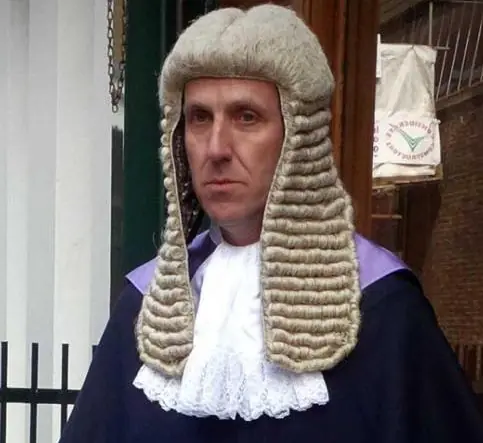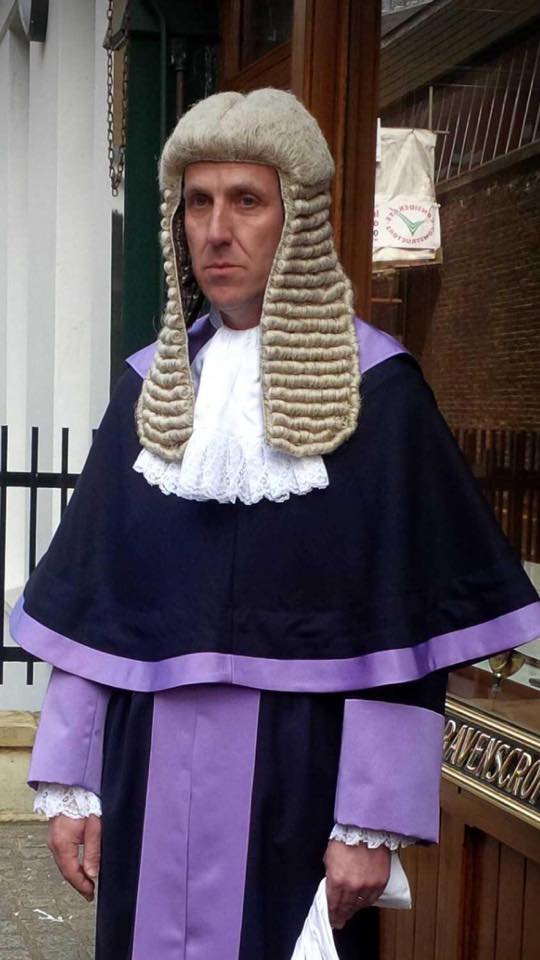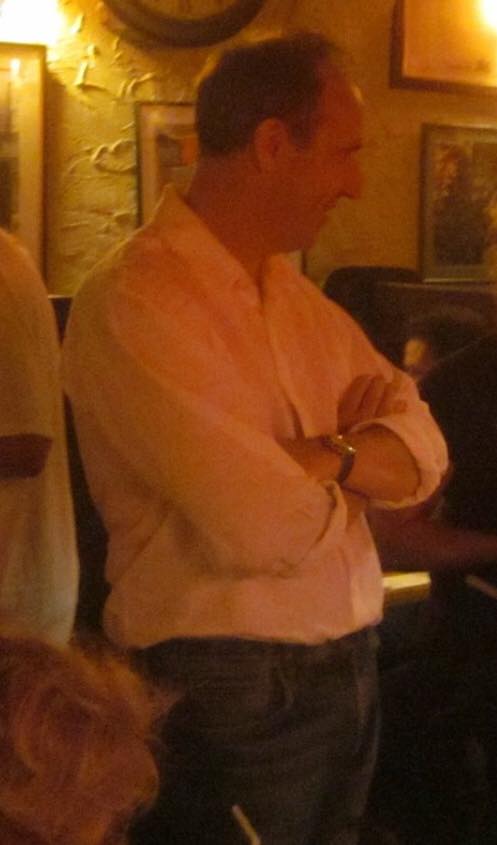
HHJ Farquhar was appointed as a Deputy District Judge in 1999, as a District Judge in 2005 and as a Recorder in 2009.
Stuart Alastair Farquhar was appointed a circuit judge, assigned to the South Eastern Circuit, based at Brighton County Court, with effect from October 9th 2013. Judge Farquhar who was 51 at the time, was called to the Bar (I) in 1985. Judge Farquhar was born on the 4th June 1962.
Stuart Alastair Farquhar is called His Honour Judge Farquhar or abbreviated to HHJ Farquhar. In Court he is addressed as Your Honour.
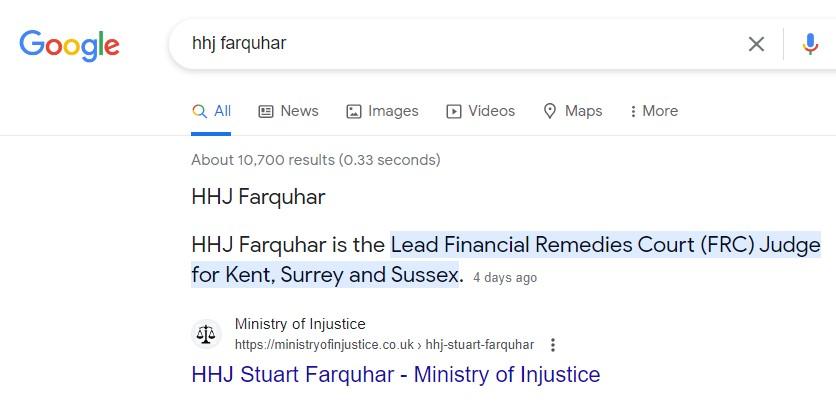
HHJ Farquhar is the Lead Financial Remedies Court (FRC) Judge for Kent, Surrey and Sussex. From KFC to the top of the roost in Sussex !
“I have no family connection to lawyers; father was an engineer and mother looked after me and my two brothers. Attended state schools.
1980-1983 Manchester University
1983-1984 Worked at solicitors during the day and KFC at night & weekends to pay for Bar
School
1984-1985 Bar School1985-2005 Barrister in Nottingham (after pupillage in London where I was not offered tenancy)
Started doing all types of work but after about five years began to specialise in Family work and then just in money cases on divorce2005-2013 District Judge in Cambridgeshire – Family and Civil jurisdiction
2013-present Circuit Judge in Brighton – Family Court and Court of Protection
Interests:
Supporting AFC Wimbledon, walking the dog in the rain (other weather conditions are accepted), preferably near pubs with good real ale.
Married: my wife works as an advisor for a Carers Support Organisation.
University of Brighton Law Careers Question Time 2018
Two children, neither following a legal career (having seen the impact upon me!)”
Sussex Family Justice Board Membership
HHJ Stuart Farquhar was listed (up to 18th April 2023) as a board member of the highly questionable Sussex Family Justice Website (SFJB), along with a number of Senior Sussex Judges.
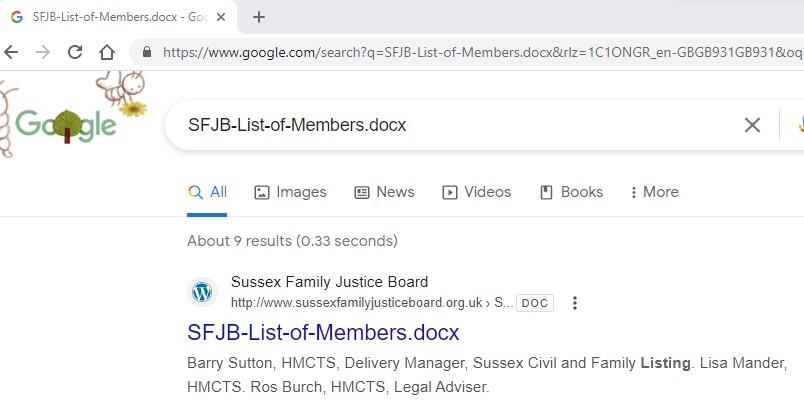
HHJ Farquhar was previously listed as a SFJB member in a SFJB document SFJB-List-of-Members.docx dated September 2018. HHJ Farquhar appears to have been a SFJB board member for at least 5 years !
“The judge is not a member of the board as to be so would be incompatible with the independent position of the judiciary.”
Judiciary and the local justice system
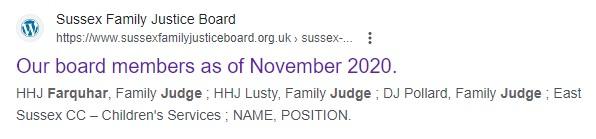
A Google Search on the 3rd April 2023 returned the following which clearly shows HHJ Farquhar as a board member :-
A Bing Search on the 3rd April 2023 returned the following which clearly shows HHJ Farquhar as a board member :-

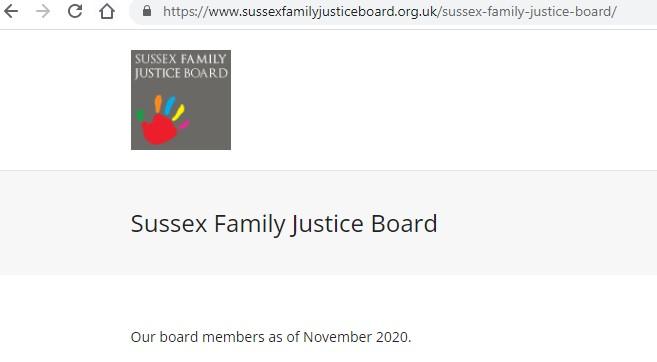
The Sussex Family Justice Board website showed :-
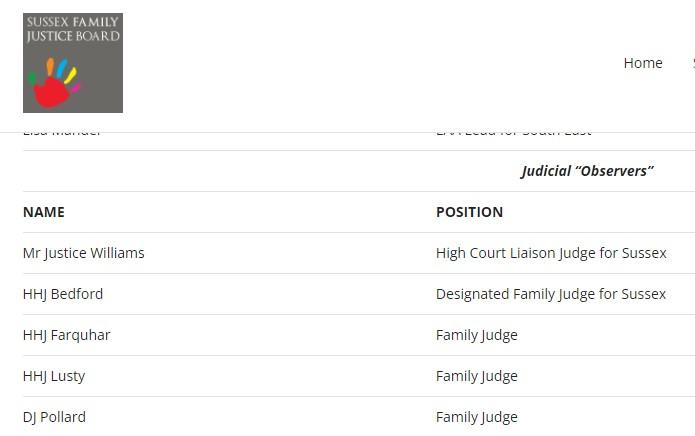
The Sussex Family Justice Board website, according to their public RSS Feed, was updated on the 18th April 2023 at 20:37.
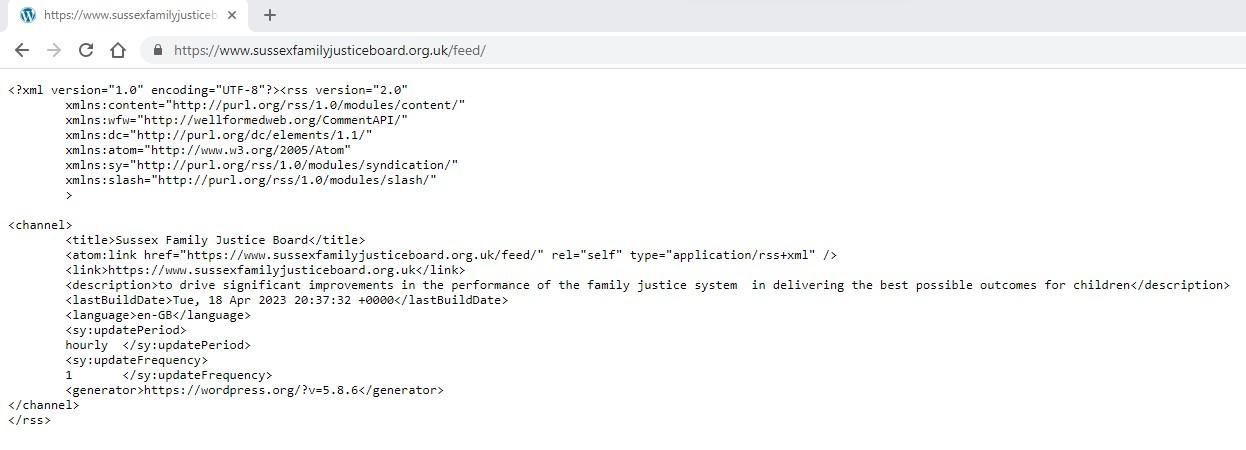
HHJ Farquhar, HHJ Lusty and DJ Pollard have mysteriously been removed as board members. Is this a cynical attempt at a cover up ? Who removed them and why ?
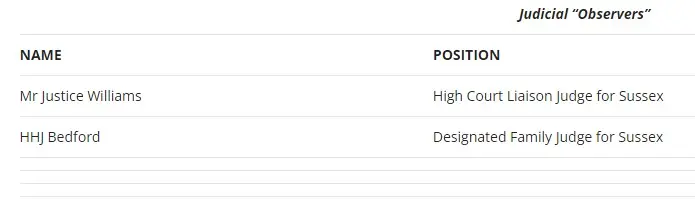
- HHJ Farquhar has denied he is a member of the SFJB and that he was ever invited to join.
- HHJ Farquhar claims he did not know that he was listed on the SFJB website as a board member.
- HHJ Farquhar stated that he had covered for His Honour Judge Robin Bedford at several SFJB events. He also confirmed that HHJ Bedford, The Designated and Most Senior Family Judge in Sussex, was definitely a member of the board.
- HHJ Farquhar said that the SFJB had no income and was surprised to learn that they had a treasurer listed as a board member. He accepted that the SFJB must therefore have income and expenditure which should be publicly accounted for.
This is fraud or at the very least highly misleading behaviour by the SFJB by listing a Senior Judge as a board member without their knowledge or approval.
I can only assume this was done to give the SFJB some sense of importance and credibility but only serves to make their activities even more suspicious.
Financial Remedies Court Lead Judge
In the 4th July 2022 Revision of the FINANCIAL REMEDIES COURT (FRC) – OVERALL STRUCTURE OF THE FINANCIAL REMEDIES COURT AND THE ROLE AND FUNCTION OF THE LEAD JUDGE, HHJ Farquhar is listed as the Lead Financial Remedies Court (FRC) Judge for Kent, Surrey and Sussex.
Farquhar Commitee
“HHJ Stuart Farquhar (Lead Judge of the Kent, Surrey & Sussex Financial Remedies Court (FRC)) was asked by The Honourable Mr Justice Mostyn earlier in 2021 to convene and lead a committee (consisting of a geographically diverse collection of judges at all levels of the judiciary and practitioners).
The committee was to consider in depth and report on the role of remote courts in the post-pandemic environment (Part 1) and the procedures of the Financial Remedies Court (Part 2).
The carefully considered and substantial final reports of the Farquhar Committee (Parts 1 and 2) are now being published so that they may inform decisions on moving matters forward in both these areas.
Report of the Farquhar Committee Part 1
Report of the Farquhar Committee Part 2
Reports of the Farquhar Committee on the Financial Remedies Courts – Parts 1 and 2
Transparency Implementation Group Chair
On the the 11th February 2022 The President of the Family Division (PFD) announce that the Financial Remedy Court Transparency Group, will become the fifth sub group of the Transparency Implementation Group (TIG). This group will be chaired by HHJ Stuart Farquhar and will report to the main TIG.
Please refer to the Announcement for the Family Transparency Implementation Group (TIG)
On the 2nd June 2022 an article entitled Transparency in the FRC – The workings of the TIG Sub-Group written by HHJ Farquhar was published on the Transparency Project website.
Company Appointments
HHJ Stuart Farquhar was a Director of KESTEVEN AND GRANTHAM GIRLS’ SCHOOL ACADEMY TRUST (08133675), listing his occupation as District Judge, but resigned on the 9th October 2013 for unknown reasons.
HHJ Farquhar Contact Details
HHJ Stuart Farquhar judicial email address is [email protected] and he is based at the following Court :-
Brighton County Court Family Centre
1-2 Edward Street,
Brighton
BN2 0JD
Tel: 01273 674421
Email: [email protected]
HHJ Farquhar on the Internet
The Ministry of Injustice is delighted to be the No 1 Search result on Google for HHJ Farquhar (6th April 2023)
“Scandalising the judiciary (also referred to as scandalising the court or scandalising judges) is abolished as a form of contempt of court under the common law of England and Wales.”
Crime and Courts Act 2013 Section 33 – Can you criticise a judge ?
HHJ Farquhar Published Judgments
There are a number of HHJ Farquhar judgments available to view online !
His Honour Judge Farquhar admonished solicitor Paul Gardner for branding obsessed LiP a ‘sociopath’. Mary-Jane Grace v Ian Douglas Grace Neutral Citation Number[2025] EWFC 37 (B)
Judge Farquhar Notable Cases
A woman has been ordered to pay half of her ex-husband’s £160,000 gender reassignment surgery bill after a judge ruled the operation was a “need”, not a “whim”.
The 60-year-old woman had argued it was unfair for her to contribute £80,000 towards the cost of the surgery, saying her former spouse’s decision to transition was the reason their marriage ended.
But Judge Stuart Farquhar, sitting at Brighton Family Court, said it was “reasonable” for the couple to split the cost “out of joint resources”.
Judge Farquhar rules woman must pay half of ex-husband’s £160,000 gender surgery bill – The Standard
Is trans surgery really as essential as cancer treatment – Judge Farquhar ?
It’s worth spelling out what this means: a UK court (HHJ Farquhar) considers it reasonable to expect a mother of two children to pay £80,000 towards the cost of her ex-husband obtaining a fake vagina.
Unherd.com – Joan Smith on Judge Farquhar Case
Judge Stuart Farquhar said that while ‘this has been a hugely difficult and emotionally draining experience’ for the trans woman, the husband had ‘shown no understanding whatsoever that her decision to transition to a woman has had an impact on anyone else, and particularly’ his ex-wife.
Daily Mail
Divorcee forced (by Judge Farquhar)to pay half of ex-husband’s trans surgery in legal first
In his ruling the judge noted that the husband had provided medical evidence of gender dysphoria which had caused “significant anxiety, depression and distress” and for which “the vaginoplasty surgery was considered the next appropriate step”
The Telegraph
This article contains personal opinions protected by common law and Article 10 of the Human Rights Act 1998 along with publicly available information.
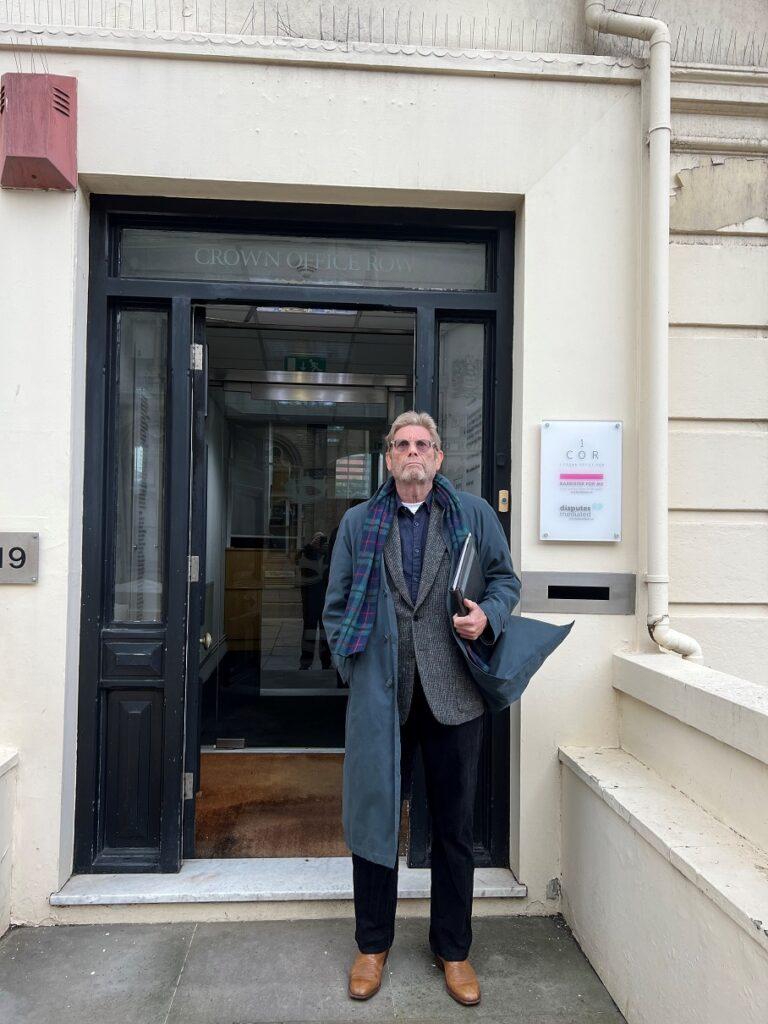
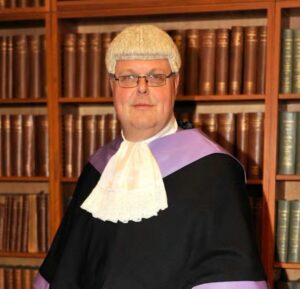
Image shown is an amateur artists impression by the author and for illustration only. It is not His Honour Judge Stuart Farquhar (HHJ Farquhar)
“Publicity is the very soul of justice. . . . It keeps the judge himself, while trying, under trial….Where there is no publicity there is no justice”
Jeremy Bentham – Mr Justice Cobb: ‘Justice must be seen to be done’
Check out our articles on Dodgy Judges, Judges Salaries and Fees, Mr Justice Williams, His Honour Judge Melbourne Inman KC, His Honour Andrew Menary KC, His Honour Now His Dishonour, His Honour Judge Michael Slater, His Honour Judge Martin Davis, HHJ Farquhar, HHJ Bedford, DDJ Nicholes, Do you Have to Bow to a Judge ?, Can you Email a Judge ?, Can you Criticise a Judge ? and the highly dubious Sussex Family Justice Board.
The Ministry of Injustice is not the Ministry of Justice nor is it affiliated in any way with the justice system, legal profession, police or any other law enforcement agencies.
“Publicity is the very soul of justice. . . . It keeps the judge himself, while trying, under trial….Where there is no publicity there is no justice”
Jeremy Bentham – Mr Justice Cobb: ‘Justice must be seen to be done’
Latest Articles ↓
- Presumption of Innocence
 The presumption of innocence is a basic principle of the… Read more: Presumption of Innocence
 - His Honour Judge Daniel Sawyer
 Judge Daniel Sawyer, known as His Honour Judge Daniel Sawyer,… Read more: His Honour Judge Daniel Sawyer
 - UK National Centre for Information Defence
 Prime Minister Andy Burnham used his first United Nations General… Read more: UK National Centre for Information Defence
 - Judges Behaving Badly and His Honour Judge Simon Oliver
 On the 27th August 2026 the Crown Prosecution Service announced… Read more: Judges Behaving Badly and His Honour Judge Simon Oliver
 - Jo Morris Barrister
 Jo Morris is a practising criminal barrister of Drystone Chambers… Read more: Jo Morris Barrister
 - Good Law Project
 The Good Law Project is a UK campaigning organisation that… Read more: Good Law Project
 - Police Federation of England and Wales (PFEW)
 The Police Federation of England and Wales (PFEW) is the… Read more: Police Federation of England and Wales (PFEW)
 - What is the Criminal Justice System (CJS) Common Platform ?
 The Criminal Justice System Common Platform (also known as HMCTS… Read more: What is the Criminal Justice System (CJS) Common Platform ?
 - Strategic Lawsuit Against Public Participation (SLAPPs)
 Strategic Lawsuits Against Public Participation, or SLAPPs, are legal actions… Read more: Strategic Lawsuit Against Public Participation (SLAPPs)
 - His Honour Judge Tony Baumgartner – Recorder of Westminster
 Judge Tony Alan Walter Baumgartner, known as His Honour Judge… Read more: His Honour Judge Tony Baumgartner – Recorder of Westminster
 - New Protocol for Legal Professionals to Raise Informal Concerns About Judges Behaviour
 On the 8th July 2026, the Courts and Tribunals Judiciary… Read more: New Protocol for Legal Professionals to Raise Informal Concerns About Judges Behaviour
 - The Policing Performance System
 In April 2026, His Majesty’s Inspectorate of Constabulary and Fire… Read more: The Policing Performance System
Most Popular ↓
You should always seek formal legal advice from a qualified and reputable lawyer (solicitor or barrister).
There are a number of links to Free and Paid For Legal Resources and Legal Organisations on the Free Legal Advice , Legal Aid and Pro Bono pages.