Categories
Judiciary Legal Professionals

His Honour Judge Michael Slater

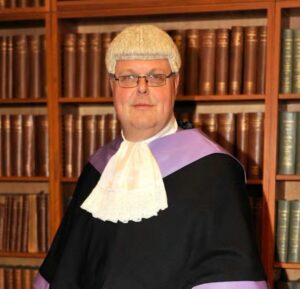
His Honour Judge Michael Slater, fell asleep during a trial and was subsequently investigated by the Judicial Conduct Investigations Office who issued a disciplinary statement on the 29th August 2023.

HHJ Michael Slater, a barrister, was appointed to be a circuit judge in November 2016 and deployed to the north eastern circuit, based at Sheffield Combined Court.

STATEMENT FROM THE JUDICIAL CONDUCT
INVESTIGATIONS OFFICE

His Honour Judge Michael Slater

A spokesperson for the Judicial Conduct Investigations Office said:

The Lord Chief Justice, with the Lord Chancellor’s agreement, has issued His Honour Judge Michael Slater with formal advice for misconduct after he was found to have fallen asleep in court during a hearing.

The Guide to Judicial Conduct reminds judges that they are expected to display diligence and care in the discharge of their duties. Judges are expected to ensure that their conduct maintains and enhances public confidence in the judiciary.

Following an investigation carried out under the Judicial Conduct (Judicial and other office holders) Rules 2014, a nominated judge found that HHJ Slater’s behaviour amounted to misconduct and recommended that he should be issued with formal advice.

In making their recommendation, the nominated judge took into account that HHJ Slater had accepted the allegation and apologised, that he was under a great deal of pressure dealing with an unremitting workload, and that his actions had not derailed the trial. They also took into account that HHJ Slater addressed the matter with parties in court and offered them a retrial, though neither party chose to take this up.

Having considered the facts of the case, the Lord Chief Justice and Lord Chancellor agreed with the nominated judge that HHJ Slater’s actions amounted to judicial misconduct and that the appropriate disciplinary sanction is formal advice.

STATEMENT FROM THE JUDICIAL CONDUCT INVESTIGATIONS OFFICE  His Honour Judge Michael Slater
His Honour Judge SlaterNorth East15-11-2016
His Honour Judge Slater Appointment date

According to a Law Gazette article Judge with ‘unremitting workload’ fell asleep during trial published on the 30th August 2023, HHJ Slater fell asleep during a trial. No details were given by the JCIO of what the case was about, when it was heard or for how long the judge fell asleep.

A list of all Circuit Judges is published on the Courts and Tribunal Judiciary website.

“Publicity is the very soul of justice. . . . It keeps the judge himself, while trying, under trial….Where there is no publicity there is no justice”

Jeremy BenthamMr Justice Cobb: ‘Justice must be seen to be done’

Check out our articles on Dodgy JudgesHis Honour Now His Dishonour, His Honour Judge Martin Davis, HHJ FarquharHHJ Bedford, DDJ Nicholes, Do you Have to Bow to a Judge ?, Can you Email a Judge ?, Can you Criticise a Judge ? and the highly dubious Sussex Family Justice Board.


The Ministry of Injustice is not the Ministry of Justice nor is it affiliated in any way with the justice system, legal profession, police or any other law enforcement agencies.


Latest Articles


Most Popular


You should always seek formal legal advice from a qualified and reputable lawyer (solicitor or barrister).

There are a number of links to Free and Paid For Legal Resources and Legal Organisations on the Free Legal Advice , Legal Aid and Pro Bono pages.


Categories
Judiciary Legal Professionals

His Honour Now His Dishonour

Andrew Easteal formerly known as His Honour Andrew Easteal has been removed from office by the Judicial Conduct Investigations Office (JCIO) for misconduct after he ‘deliberately’ deleted data which was of police interest. 

The Lord Chancellor, with the Lord Chief Justice’s agreement, has removed His Honour Judge Andrew Easteal from office for misconduct.

Judicial office-holders are expected to strive to ensure that their conduct, both in and out of court, maintains and enhances the confidence of the public, the legal profession, and litigants, in their personal impartiality and that of the judiciary. They are also expected to put the obligations of judicial office above personal interests.

Following an investigation carried out under the Judicial Conduct (Judicial and other office holders) Rules 2014 by a senior judge appointed by the Lord Chief Justice, Judge Easteal was found to have deliberately deleted data in the knowledge that it was of interest to police officers carrying out a criminal investigation. The judge denied that his intention was to frustrate the criminal investigation.

Having considered the mitigation offered by Judge Easteal, the Lord Chief Justice and Lord Chancellor agreed with the investigating judge’s finding that this was misconduct of the utmost seriousness, for which the judge should be removed from office.

STATEMENT FROM THE JUDICIAL CONDUCT INVESTIGATIONS OFFICE

Despite being removed from Office, Andrew Easteal is still on the List of Circuit Judges on the Judiciary website. This is several hours after the announcement.

Clearly not all judges are as honourable as they seem !

“Publicity is the very soul of justice. . . . It keeps the judge himself, while trying, under trial….Where there is no publicity there is no justice”

Jeremy BenthamMr Justice Cobb: ‘Justice must be seen to be done’

Check out our articles on Mr Justice Williams, His Honour Judge Melbourne Inman KC, His Honour Judge Jeremy Richardson KC, His Honour Judge Guy Kearl, HHJ Farquhar, HHJ Bedford, Dodgy Judges, Can you Criticise a Judge ?, Do you Have to Bow to a Judge ?, Can you Email a Judge ?, Can you Criticise a Judge ? and the highly questionable Sussex Family Justice Board.


The Ministry of Injustice is not the Ministry of Justice nor is it affiliated in any way with the justice system, legal profession, police or any other law enforcement agencies.


Latest Articles


Most Popular


You should always seek formal legal advice from a qualified and reputable lawyer (solicitor or barrister).

There are a number of links to Free and Paid For Legal Resources and Legal Organisations on the Free Legal Advice , Legal Aid and Pro Bono pages.

Categories
Judiciary Legal Professionals

HHJ Stuart Farquhar

HHJ Farquhar was appointed as a Deputy District Judge in 1999, as a District Judge in 2005 and as a Recorder in 2009.

Stuart Alastair Farquhar was appointed a circuit judge, assigned to the South Eastern Circuit, based at Brighton County Court, with effect from October 9th 2013. Judge Farquhar who was 51 at the time, was called to the Bar (I) in 1985. Judge Farquhar was born on the 4th June 1962.

Stuart Alastair Farquhar is called His Honour Judge Farquhar or abbreviated to HHJ Farquhar. In Court he is addressed as Your Honour.

HHJ Farquhar is the Lead Financial Remedies Court (FRC) Judge for Kent, Surrey and Sussex. From KFC to the top of the roost in Sussex !

“I have no family connection to lawyers; father was an engineer and mother looked after me and my two brothers. Attended state schools.

1980-1983 Manchester University

1983-1984 Worked at solicitors during the day and KFC at night & weekends to pay for Bar

School
1984-1985 Bar School

1985-2005 Barrister in Nottingham (after pupillage in London where I was not offered tenancy)
Started doing all types of work but after about five years began to specialise in Family work and then just in money cases on divorce

2005-2013 District Judge in Cambridgeshire – Family and Civil jurisdiction

2013-present Circuit Judge in Brighton – Family Court and Court of Protection

Interests:

Supporting AFC Wimbledon, walking the dog in the rain (other weather conditions are accepted), preferably near pubs with good real ale.

Married: my wife works as an advisor for a Carers Support Organisation.
Two children, neither following a legal career (having seen the impact upon me!)”

University of Brighton Law Careers Question Time 2018

Sussex Family Justice Board Membership

HHJ Stuart Farquhar was listed (up to 18th April 2023) as a board member of the highly questionable Sussex Family Justice Website (SFJB), along with a number of Senior Sussex Judges.

HHJ Farquhar was previously listed as a SFJB member in a SFJB document SFJB-List-of-Members.docx dated September 2018. HHJ Farquhar appears to have been a SFJB board member for at least 5 years !

“The judge is not a member of the board as to be so would be incompatible with the independent position of the judiciary.”

Judiciary and the local justice system

A Google Search on the 3rd April 2023 returned the following which clearly shows HHJ Farquhar as a board member :-

Google Search 3rd April 2023

A Bing Search on the 3rd April 2023 returned the following which clearly shows HHJ Farquhar as a board member :-

Bing Search 3rd April 2023

The Sussex Family Justice Board website showed :-

Sussex Family Justice Board Members 3rd April 2023
Sussex Family Justice Board Judicial Board Members 3rd April 2023

The Sussex Family Justice Board website, according to their public RSS Feed, was updated on the 18th April 2023 at 20:37.

Sussex Family Justice Board (SFJB) RSS Feed XML <lastBuildDate>Tue, 18 Apr 2023 20:37:32 +0000</lastBuildDate>

HHJ Farquhar, HHJ Lusty and DJ Pollard have mysteriously been removed as board members. Is this a cynical attempt at a cover up ? Who removed them and why ?

Sussex Family Justice Board Judicial Board Members as of 22nd April 2023
SFJB-List-of-Members.docx dated September 2018
  • HHJ Farquhar has denied he is a member of the SFJB and that he was ever invited to join.
  • HHJ Farquhar claims he did not know that he was listed on the SFJB website as a board member.
  • HHJ Farquhar stated that he had covered for His Honour Judge Robin Bedford at several SFJB events. He also confirmed that HHJ Bedford, The Designated and Most Senior Family Judge in Sussex, was definitely a member of the board.
  • HHJ Farquhar said that the SFJB had no income and was surprised to learn that they had a treasurer listed as a board member. He accepted that the SFJB must therefore have income and expenditure which should be publicly accounted for.

This is fraud or at the very least highly misleading behaviour by the SFJB by listing a Senior Judge as a board member without their knowledge or approval.

I can only assume this was done to give the SFJB some sense of importance and credibility but only serves to make their activities even more suspicious.

Financial Remedies Court Lead Judge

In the 4th July 2022 Revision of the FINANCIAL REMEDIES COURT (FRC) – OVERALL STRUCTURE OF THE FINANCIAL REMEDIES COURT AND THE ROLE AND FUNCTION OF THE LEAD JUDGE, HHJ Farquhar is listed as the Lead Financial Remedies Court (FRC) Judge for Kent, Surrey and Sussex.

Farquhar Commitee

“HHJ Stuart Farquhar (Lead Judge of the Kent, Surrey & Sussex Financial Remedies Court (FRC)) was asked by The Honourable Mr Justice Mostyn earlier in 2021 to convene and lead a committee (consisting of a geographically diverse collection of judges at all levels of the judiciary and practitioners).

The committee was to consider in depth and report on the role of remote courts in the post-pandemic environment (Part 1) and the procedures of the Financial Remedies Court (Part 2).

The carefully considered and substantial final reports of the Farquhar Committee (Parts 1 and 2) are now being published so that they may inform decisions on moving matters forward in both these areas.

Report of the Farquhar Committee Part 1

The Financial Remedies Court – The Way Forward
A Paper to consider the future use of Remote Hearings in the FRC (PDF)

Report of the Farquhar Committee Part 2

The Financial Remedies Court – The Way Forward
A Paper to consider changes to the Practices and Procedures in the Financial Remedies Court (PDF)

Reports of the Farquhar Committee on the Financial Remedies Courts – Parts 1 and 2

Transparency Implementation Group Chair

On the the 11th February 2022 The President of the Family Division (PFD) announce that the Financial Remedy Court Transparency Group, will become the fifth sub group of the Transparency Implementation Group (TIG). This group will be chaired by HHJ Stuart Farquhar and will report to the main TIG.

Please refer to the Announcement for the Family Transparency Implementation Group (TIG)

On the 2nd June 2022 an article entitled Transparency in the FRC – The workings of the TIG Sub-Group written by HHJ Farquhar was published on the Transparency Project website.

Company Appointments

HHJ Stuart Farquhar was a Director of KESTEVEN AND GRANTHAM GIRLS’ SCHOOL ACADEMY TRUST (08133675), listing his occupation as District Judge, but resigned on the 9th October 2013 for unknown reasons.

HHJ Farquhar Contact Details

HHJ Stuart Farquhar judicial email address is [email protected] and he is based at the following Court :-

Brighton County Court Family Centre
1-2 Edward Street,
Brighton
BN2 0JD

Tel: 01273 674421
Email: [email protected]

HHJ Farquhar on the Internet

The Ministry of Injustice is delighted to be the No 1 Search result on Google for HHJ Farquhar (6th April 2023)

“Scandalising the judiciary (also referred to as scandalising the court or scandalising judges) is abolished as a form of contempt of court under the common law of England and Wales.”

Crime and Courts Act 2013 Section 33Can you criticise a judge ?

HHJ Farquhar Published Judgments

There are a number of HHJ Farquhar judgments available to view online !

His Honour Judge Farquhar admonished solicitor Paul Gardner for branding obsessed LiP a ‘sociopath’. Mary-Jane Grace v Ian Douglas Grace Neutral Citation Number[2025] EWFC 37 (B)

Judge Farquhar Notable Cases

A woman has been ordered to pay half of her ex-husband’s £160,000 gender reassignment surgery bill after a judge ruled the operation was a “need”, not a “whim”.

The 60-year-old woman had argued it was unfair for her to contribute £80,000 towards the cost of the surgery, saying her former spouse’s decision to transition was the reason their marriage ended.

But Judge Stuart Farquhar, sitting at Brighton Family Court, said it was “reasonable” for the couple to split the cost “out of joint resources”.

Judge Farquhar rules woman must pay half of ex-husband’s £160,000 gender surgery bill – The Standard

Is trans surgery really as essential as cancer treatment – Judge Farquhar ?

It’s worth spelling out what this means: a UK court (HHJ Farquhar) considers it reasonable to expect a mother of two children to pay £80,000 towards the cost of her ex-husband obtaining a fake vagina.

Unherd.com – Joan Smith on Judge Farquhar Case

Judge (Farquhar) tells divorcee to pay her ex-husband half the £160,000 cost of his trans surgery in millionaire couple’s court battle

Judge Stuart Farquhar said that while ‘this has been a hugely difficult and emotionally draining experience’ for the trans woman, the husband had ‘shown no understanding whatsoever that her decision to transition to a woman has had an impact on anyone else, and particularly’ his ex-wife.

Daily Mail

Divorcee forced (by Judge Farquhar)to pay half of ex-husband’s trans surgery in legal first

In his ruling the judge noted that the husband had provided medical evidence of gender dysphoria which had caused “significant anxiety, depression and distress” and for which “the vaginoplasty surgery was considered the next appropriate step”

The Telegraph

This article contains personal opinions protected by common law and Article 10 of the Human Rights Act 1998 along with publicly available information.

Image shown is an amateur artists impression by the author and for illustration only. It is not His Honour Judge Stuart Farquhar (HHJ Farquhar)

“Publicity is the very soul of justice. . . . It keeps the judge himself, while trying, under trial….Where there is no publicity there is no justice”

Jeremy BenthamMr Justice Cobb: ‘Justice must be seen to be done’

Check out our articles on Dodgy JudgesJudges Salaries and Fees, Mr Justice Williams, His Honour Judge Melbourne Inman KC, His Honour Andrew Menary KC, His Honour Now His Dishonour, His Honour Judge Michael Slater, His Honour Judge Martin Davis, HHJ Farquhar, HHJ Bedford, DDJ Nicholes, Do you Have to Bow to a Judge ?, Can you Email a Judge ?, Can you Criticise a Judge ? and the highly dubious Sussex Family Justice Board.


The Ministry of Injustice is not the Ministry of Justice nor is it affiliated in any way with the justice system, legal profession, police or any other law enforcement agencies.


Latest Articles


Most Popular


You should always seek formal legal advice from a qualified and reputable lawyer (solicitor or barrister).

There are a number of links to Free and Paid For Legal Resources and Legal Organisations on the Free Legal Advice , Legal Aid and Pro Bono pages.
Categories
Judiciary Legal Professionals

HHJ Robin Bedford

HHJ Bedford was appointed as a Deputy District Judge on the North Eastern Circuit in May 2002, a District Judge in 2007 and a Circuit Judge on the 10th April 2013.

“HM the Queen has appointed Robin Steven Bedford, to be a District Judge on the advice of the Lord Chancellor, Lord Falconer. The Lord Chief Justice, Lord Phillips of Worth Matravers, has assigned him to the North Eastern Circuit, based in North and West Yorkshire with effect from Monday 19 February 2007. Mr Bedford, 43, was admitted as a solicitor in October 1988.”

Appointment of a district judge – Robin Steven Bedford

Robin Stephen Bedford is called His Honour Judge Bedford or abbreviated to HHJ Bedford. In Court he is addressed as Your Honour.

HHJ Bedford is the Designated Family Judge for Sussex and was originally appointed on the 1st July 2017.

On the 5th August 2025, The Lady Chief Justice of England and Wales, the Right Honourable The Baroness Carr Of Walton-On-The-Hill has appointed His Honour Judge Bedford to be a Senior Circuit Judge, Designated Family Judge, based at Brighton Family Centre.

Sussex Family Justice Board Membership

HHJ Robin Bedford was listed as board member of the highly questionable Sussex Family Justice Website (SFJB), along with a number of Senior Sussex Judges.

“The judge is not a member of the board as to be so would be incompatible with the independent position of the judiciary.”

Judiciary and the local justice system

A google search returns the following which clearly shows HHJ Bedford as a board member :-

A Bing search returns the following which clearly shows HHJ Bedford as a board member :-

“His Honour Judge Bedford. Designated Family Judge for Sussex. 21 December 2020.

Dear all,. It’s some months since I inflicted one of my bulletins upon you.”

Sussex Family Justice Board 21st December 2020

HHJ Farquhar stated that he had covered for His Honour Judge Robin Bedford at several SFJB events. He also confirmed that HHJ Bedford, The Designated and Most Senior Family Judge in Sussex, was definitely a member of the Sussex Family Justice Board.

It’s refreshing to see an Honour “Stitched Up” by another Honour after an Honour attempted to “Stich” me up !

Is there no such a thing as “Honour” amongst thieves ?

Check out our articles on Dodgy JudgesHis Honour Judge Melbourne Inman KC, His Honour Judge Jeremy Richardson KC, His Honour Now His Dishonour, His Honour Judge Michael Slater, His Honour Judge Martin Davis, HHJ Farquhar, DDJ Nicholes ,Can you Email a Judge ?, Can you Criticise a Judge ?, Do you Have to Bow to a Judge ? and the highly dubious Sussex Family Justice Board.

HHJ Bedford Contact Details

HHJ Robin Bedford judicial email address is [email protected] and he is based at the following Court :-

Brighton County Court Family Centre
1-2 Edward Street,
Brighton
BN2 0JD

Tel: 01273 674421
Email: [email protected]

HHJ Bedford on the Internet

“Two years ago today this lowlife scumbag made an order knowing it would lead to a fathers death through ill health. Dishonour Judged Bedford will be exposed as the murderer he is. We will never forgive or forget. Still no apology to those involved either from this despicable oxygen thief.”

UK Corrupt Family Courts Name and Shame

“Another mother has come forward about this Monster who calls himself a judge, Bedford.

Again he was swinging on his chair gnawing on a pen while staring around a room in a world of his own.

He put costs before a child’s family being kept together. The family needed either a mother and baby unit to prove they can parent or a home. He ignored this and went with adoption.

How this twisted moron sleeps at night we have no clue. Probably doesn’t and why he’s daydreaming all day!

Wake up Bedford and start helping these families instead of breaking them you twisted individual.”

UK Corrupt Family Courts Name and Shame

His Honour Judge Robin Bedford led the walk this year as posted by Herrington Solicitors.

“Meet ‘Dishonour’ Judge Robin Bedford. (Wonder if there’s something about the name Robin)
He can normally be found masquerading as a Judge at Hastings Court.
He is usually swinging on his chair while daydreaming staring at the ceiling and chewing a Bic Pen. All this while making sure he ignores vital evidence in a case.
This guy is not fit to be a judge and is someone who should never be allowed to preside over the lives of children. In short he is a danger.
The first time we came across this individual he was defending a violent father while the mother suffered the stress of being bullied and having him breach court orders. He ignored the fact that this father had no interest in his own son and the son making sexual allegations against the father. Instead he palmed the case off with a supervised contact order on the daughter and a care order with placement with the mother leaving The Local Authority to sort out the sorry mess of the case.
In the second case we come across him he signed an order of adoption on a second hearing due to a young mum having mental health problems. Knowing the mother didn’t understand the process was of no interest to him. This mother has since proved she can function and should be given a chance with her son.
The third case is the most terrible. Despite warnings and being shown evidence of why he shouldn’t he sent a 2 year old to go and live with her father who was mentally ill and physically disabled. He agreed he would take personal responsibility if anything went wrong. To date he has never apologised. The child was happily attached living with mother, well cared for meeting all her milestones and had minimal attachment to the father. In four months the child regressed in development and was abused as well as neglected. The father then died alone with the child in a flat which the mother warned would happen! The child now back in the mothers care is thriving and ahead of what’s expected of a child. There’s no local authority involvement and in their own words no role for them, they also agree this judge took a dangerous risk and it backfired to the detriment of the child.
This man should never preside over another child case. Any further screw ups by this twisted individual please inbox us!”

UK Corrupt Family Courts Name and Shame

“Scandalising the judiciary (also referred to as scandalising the court or scandalising judges) is abolished as a form of contempt of court under the common law of England and Wales.”

Crime and Courts Act 2013 Section 33Can you criticise a judge ?

Images of HHJ Bedford

The images shown on this page are from the Facebook Group UK Corrupt Family Courts Name and Shame . These images are believed to be of His Honour Judge Robin Bedford (HHJ Bedford).

Permission to use these images was sought from UK Corrupt Family Courts Name and Shame but no response was forthcoming.

I use these images under the Copyright exception of fair dealing, education and in the spirit of public interest.

This article contains personal opinions protected by common law and Article 10 of the Human Rights Act 1998 along with publicly available information.

“Publicity is the very soul of justice. . . . It keeps the judge himself, while trying, under trial….Where there is no publicity there is no justice”

Jeremy BenthamMr Justice Cobb: ‘Justice must be seen to be done’

Check out our articles on Dodgy JudgesMr Justice Williams, His Honour Judge Melbourne Inman KC, His Honour Andrew Menary KC, His Honour Now His Dishonour, His Honour Judge Michael Slater, His Honour Judge Martin Davis, HHJ Farquhar, HHJ Bedford, DDJ Nicholes, Do you Have to Bow to a Judge ?, Can you Email a Judge ?, Can you Criticise a Judge ? and the highly dubious Sussex Family Justice Board.


The Ministry of Injustice is not the Ministry of Justice nor is it affiliated in any way with the justice system, legal profession, police or any other law enforcement agencies.


Latest Articles


Most Popular


You should always seek formal legal advice from a qualified and reputable lawyer (solicitor or barrister).

There are a number of links to Free and Paid For Legal Resources and Legal Organisations on the Free Legal Advice , Legal Aid and Pro Bono pages.

Categories
Legal Professionals

1 Crown Office Row Barrister Chambers (1COR)

1 Crown Office Row Barrister Chambers was founded in 1935 and has been operating for over 85 years. One Crown Office Row has built a reputation as one of the leading sets of barristers in the UK. 1 Crown Office Row (1COR) Barrister Chambers have offices based in London and Brighton Sussex UK.

On the 1COR history page on their website, they claim

“No fewer than 16 former members have been appointed as judges of the High Court and above, with Lord Woolf being appointed a Law Lord, Lord Chief Justice and Master of the Rolls and both Lord Justice Watkins and Lord Justice Latham being appointed Deputy Lord Chief Justice. Numerous members have been appointed to positions on the circuit bench and in the County Court.”

The 1 Crown Office Row Barrister Chambers (1COR) website states :-

“1COR is one of the best common law sets of chambers at the Bar. It has strength-in-depth and all of its members are intellectually out of the top-drawer.”

1 Crown Office Row Barrister Chambers London 1COR

“1 Crown Office Row members provide expert legal counsel and representation with clerks offering first class service to our a diverse client base.”

1 Crown Office Row Barrister Chambers Brighton Sussex 1COR

“Save time and money on legal services with a Direct Access Barrister. Our Direct Access Clerks are waiting to assist you. They will happily recommend which Direct Access Barrister is best placed to help you.”

1COR Direct – Direct Access 1 Crown Office Row Barristers

1 Crown Office Row London Office

1 Crown Office Row
Temple
London
EC4Y 7HH

Tel: 020 7797 7500
Email: [email protected]

1 Crown Office Row Brighton Office

1 Crown Office Row
119 Church Street
Brighton
BN1 1UD

Tel: 01273 625 625
Email: [email protected]

1COR Direct Barristers London

1 Crown Office Row
Temple
London
EC4Y 7HH

Phone: 020 7797 7500
Email: [email protected]

1 COR Direct Barristers Brighton

1 Crown Office Row
119 Church Street
Brighton
BN1 1UD

Phone: 01273 81 00 11
Email : [email protected]

Check out our article on the highly questionable Sussex Family Justice Board.

Read our review of Gavin Howe Barrister and Eleanor Battie Barrister who are both based at the 1 Crown Office Row Barrister Chambers (1COR) in Brighton Sussex.

This page is not sponsored by 1 Crown Office Row (1COR) Barrister Chambers / 1COR Direct / Gavin Howe / Eleanor Battie nor is it an endorsement of 1 Crown Office Row (1COR) Barrister Chambers / 1 COR Direct / Gavin Howe / Eleanor Battie.

The photo featured in this article is of Rev D A C Barnes DD (RIP) which was taken on the 24th November 2022 outside the offices of 1 Crown Office Row Barrister Chambers (1COR) in Brighton Sussex. Rev Barnes was not a barrister.


The Ministry of Injustice is not the Ministry of Justice nor is it affiliated in any way with the justice system, legal profession, police or any other law enforcement agencies.


Latest Articles


Most Popular


You should always seek formal legal advice from a qualified and reputable lawyer (solicitor or barrister).

There are a number of links to Free and Paid For Legal Resources and Legal Organisations on the Free Legal Advice , Legal Aid and Pro Bono pages.

Categories
Judiciary Legal Professionals

Judges

What is a Judge ?

A judge is a legal professional who presides over court proceedings and makes rulings and judgments on legal cases.

Judges are responsible for ensuring that trials are conducted fairly and impartially, and for interpreting and applying the law in accordance with the relevant statutes, legal precedents, and principles of justice.

Check out our articles Could AI replace judges ? and Could AI replace lawyers ? for a detailed analysis of Artificial Intelligence (AI) and what it means for the Justice system not only in the UK but also around the world.

Types of Judges

  1. District Judges – who preside over cases in the County Court and in certain types of tribunals.
  2. Tribunal Judges – who preside over hearings in the various tribunals that exist to resolve disputes in specific areas of law. These tribunals include the Employment Tribunal, the First-tier Tribunal, the Upper Tribunal, and the Tax Tribunal, amongst others.
  3. Circuit Judges – who preside over cases in the Crown Court and some types of civil cases in the County Court.
  4. High Court Judges – who preside over cases in the High Court, which is a superior court with jurisdiction over a wide range of legal matters.
  5. Court of Appeal Judges – who preside over cases in the Court of Appeal, which hears appeals from the High Court and other lower courts.
  6. Supreme Court Justices – who preside over cases in the UK’s highest court, the Supreme Court, which is the final court of appeal in the UK for civil cases.

Day to Day tasks of a Judge

Judges daily tasks include :-

  • prepare for trials by reading papers submitted by legal teams
  • hear civil, family and criminal cases
  • listen to evidence from witnesses, defendants and victims
  • advise juries and legal teams on points of law
  • pass sentences on conviction and impose other penalties
  • reach decisions in tribunals, for example on employment disputes or immigration cases
  • help sides to find agreement in civil cases before proceedings begin
  • take expert opinion, for instance in custody or child welfare cases
  • hear appeals and review decisions of lower courts
  • write reports, giving reasons for rulings
  • keep up to date with legal developments
National Careers Service

Judges Pay and Hours

According to the National Careers Service judges can expect to get paid up to £267,509 and work up to 42 hours in a typical week. Please also see our article on Judges Salaries and Fees.

Working Hours of Judges

Some people do mistakenly think that judges’ working hours are confined to court sitting hours, which are normally 10.30am-4.30pm.

But the reality is very different; most judges also carry a lot of ‘box work’ (paperwork) on current and future (and sometimes past) cases – especially as most cases are settled or concluded before they reach the stage of a court hearing. It is not unusual for judges to work late into the evening, writing judgments and reading files of evidence and letters from parties. They do not claim overtime for this.

There are 4 terms in the legal year, which are the main sitting times for the High Court and Court of Appeal. Most courts do have sittings around the year, and even in the High Court and Court of Appeal, emergency hearings and processing of cases continue during the vacations.

Senior judges use the ‘vacation’ periods between terms to catch up on new legislation and case law, as well as undertaking formal training.

Courts and Tribunal Judiciary Working Hours

Judicial sitting days

Court of Appeal Judges and High Court Judges are expected to devote themselves to judicial business throughout the legal year which usually amounts to somewhere in the region of 185-190 days.

Circuit Judges are expected to sit for a minimum of 210 days, although the expectation is for between 215-220 per year.

District Judges are expected to sit for a minimum of 215 days.

Judges also have out of court duties to perform such as reading case papers, writing judgments, and keeping up to date with new developments in the law.

Courts and Tribunal Judiciary The legal year, term dates and sitting days

The Legal Year

The origins of the legal year are the service in Westminster Abbey which dates back to 1897 when judges prayed for guidance at the start of the legal term. Judges, whose courts were held in Westminster Hall, left the city and walked to the abbey to take part in the service.

The ceremonies now are more or less as they have always been but, instead of the two mile walk from Temple Bar to Westminster Abbey, the judges now travel by car.

The 45-minute service, which starts at 11:30am, is conducted by the Dean of Westminster. It includes prayers, hymns, psalms and anthems; the Lord Chancellor reads a lesson.

Around 700 people are invited to attend the service and breakfast. These include judges, senior judicial officers, the Law Officers, King’s Counsel (KC), government ministers, lawyers, members of the European Court and other overseas judges and lawyers. Judges and KCs wear ceremonial dress.

Courts and Tribunal Judiciary The legal year, term dates and sitting days

Term Dates

The term dates for the legal year apply to sittings in the High Court and Court of Appeal only, and are fixed in accordance with the Practice Direction 2F which supplements Part 39 of the Civil Procedure Rules.

2023

Hilary: Wednesday 11 January to Wednesday 5 April 2023
Easter: Tuesday 18 April to Friday 26 May 2023
Trinity: Tuesday 6 June to Monday 31 July 2023
Michaelmas: Monday 2 October to Thursday 21 December 2023

2024

Hilary: Thursday 11 January to Wednesday 27 March 2024
Easter: Tuesday 9 April to Friday 24 May 2024
Trinity: Tuesday 4 June to Wednesday 31 July 2024
Michaelmas: Tuesday 1 October to Friday 20 December 2024

Courts and Tribunal Judiciary The legal year, term dates and sitting days

How to Become a Judge

You can only become a Judge through an official appointment.

Volunteering

You can get valuable experience and insights into the work of a judge through the Judicial Work Shadowing Scheme. This may help if you later apply for selection to become a judge.

You normally have to be a qualified legal professional, with at least 7 years’ experience in law-related work to join.

If you have been on the Judicial Work Shadowing Scheme, you can apply for a place on the Judicial Mentoring Scheme. This scheme is open to applications from people who are currently under-represented in the judiciary. For example:

  • women
  • ethnic minorities
  • lawyers with a state school education
National Careers Service

Other routes to becoming a Judge

Judges are appointed by the Judicial Appointments Commission. You’ll need to apply to them to be considered for selection.

To apply, you must:

  • be a qualified solicitor, barrister or chartered legal executive
  • have worked as a legal professional for between 5 and 7 years, depending on the type of judge you want to be
  • meet nationality requirements

Common starting roles include district, recorder and tribunal judges. For certain other judicial roles, you can apply if you’re an experienced legal academic, or trademark or patent attorney.

You must successfully complete several application stages to get through to shortlisting by the Commission. You’ll then be invited to attend an assessment and selection day, which will include interviews.

National Careers Service

Like all professions there are dodgy or rogue elements and the judiciary are not exempt from these type of people. You may be interested in our article about Dodgy Judges.


The Ministry of Injustice is not the Ministry of Justice nor is it affiliated in any way with the justice system, legal profession, police or any other law enforcement agencies.


Latest Articles


Most Popular


You should always seek formal legal advice from a qualified and reputable lawyer (solicitor or barrister).

There are a number of links to Free and Paid For Legal Resources and Legal Organisations on the Free Legal Advice , Legal Aid and Pro Bono pages.

Categories
Law Legal Professionals

HMCTS

His Majesty’s Courts and Tribunals Service (HMCTS) is an executive agency of the UK government, operating under the Ministry of Justice.

The Lord Chancellor, The Rt Hon Shabana Mahmood MP, heads the Ministry of Justice as the Secretary of State for Justice.

HMCTS Complaints Procedure

You might want to make a complaint to HMCTS. The HMCTS complaint process looks at how your case was handled by their staff.

HMCTS are not able to change the decision in your case or investigate how a judge or magistrate acted towards you.

HMCTS uses the Opinions, Praise, Treatment, Incident and Complaints system (OPTIC) which is the HMCTS feedback database/system used to record all customer feedback.

To complain about the HMCTS:

  • complete the online complaints form
  • speak to a member of staff in their buildings who will record your feedback
  • contact the courts or tribunals by email, phone or in writing

If you remain unsatisfied at the end of the complaints process, you can also ask your member of Parliament to refer your case to the Parliamentary and Health Service Ombudsman.

HMCTS ignore complaints

I raised an online complaint with HMCTS about the shambolic Brighton Family Court and Sussex Family Team on the 16th January 2023 some 55 working days ago (correct as 31st March 2023).

Confirmation email of complaint from HMCTS OPTIC 19th January 2023

I have previously attempted to raise a complaint with Sussex Family Court (in person, by phone, by email) but no one wants to communicate or accept any responsibility.

Sussex Family Court and its staff fail to communicate, list hearings, process applications, deal with complaints and struggle with basic administration. A senior judge told me they are short staffed and are “doing their best”.

This court and its staff are clearly “interfering with the smooth administration of justice” and are not fit for purpose.

HMCTS are in effect in contempt of court by their actions/inactions.

HMCTS claim to respond within 10 working days.

There has been absolutely no response despite having chased them 3 times with emails to [email protected]. Either my complaint is lost, I am being deliberately being ignored or they are still busy coming up with excuses ?

There are no published phone numbers for HMCTS and the only email addresses listed are [email protected] or [email protected].

There is no way I can see of contacting HMCTS.

On the 22nd March 2023 in utter desperation I sent the following to the Ministry of Justice (MoJ) Data protection Officer (DPO).

Dear MoJ DPO

https://complain-about-a-court-or-tribunal.form.service.justice.gov.uk/privacy

Do you have any contact details for the Complaints or “HMCTS optic” team ? I cannot find an email address or telephone number for the complaints team.

I am concerned that they are either deliberately ignoring me or my personal data has fallen into a “worm hole”.

I would therefore also like to make a SAR. I assume this can be done by email to you instead of by post to Disclosure Team which seems an antiquated approach.

Your help would be much appreciated.

Email to MoJ DPO [email protected] / [email protected]

HMCTS OPTIC Privacy Policy

The HMCTS OPTIC Privacy Policy clearly states that the data protection officer can be contacted at [email protected]

HMCTS OPTIC Privacy Policy 22nd March 2023

This is incorrect as emails to that address are undelivered. That email address does not exist.

Undelivered email to [email protected]

The Information Commissioner’s Office (ICO) entry for Z5679958 lists the DPO as [email protected].

Ministry of Justice ICO Registration reference:  Z5679958 24th March 2023

Is this an innocent mistake or further evidence of institutional incompetence ?

To be really “petty”, Petty should have a capital P as well. Hopefully they will update their website.

The MoJ’s DPO has a duty under GDPR to publish accurate information.

The requirement to send a Subject Access Request (SAR) to a postal address is also dubious and unnecessary as an email should suffice.

HMCTS OPTIC Privacy Policy SAR by Post 22nd March 2023

Update 24th March 2023 : The MoJ Data Access Team [email protected] have responded acknowledging the SAR. It seems, as suspected, you can apply by email and save a stamp.

However, they haven’t updated their email template and still refer to Her Majesty’s Prison and Probation Service and Her Majesty’s Court and Tribunal Service.

What an insult to his majesty the King. I have asked them to update this.

Dear Mr Watts

SUBJECT: Subject Access Request

Thank you for your email below in which you asked for information from the Ministry of Justice (MoJ).

Your request has been handled in line with the General Data Protection Regulation (GDPR) and the Data Protection Act (DPA) 2018 as a Subject Access Request (SAR) for your personal information.

In order for us to process your request we require acceptable proof of your identity.

  • Verifying Identity

Copies of two types of proof of identity. These can be a copy of a recent utility bill (dated within the last three months) and a copy of the photograph page of your passport or driving licence.

  • Search Location/Clarification

The MoJ is a large department with many functions and it will greatly assist us in providing you with the exact information you require if you are able to:

  1. Specify the information or processing activities your request relates to
  2. Provide more details that will help us locate the requested information; such as the context in which your information may have been processed and the likely dates when processing occurred

For your information, in the context of SARs, the MoJ consists of:-

  • Her Majesty’s Prison and Probation Service
  • Her Majesty’s Court and Tribunal Service
  • The Office of the Public Guardian,
  • The Legal Aid Agency, and
  • A large MoJ “HQ”

On receipt of acceptable proof of I.D. we will continue to process your request.

Yours sincerely

Disclosure Team

Disclosure & Library Team,
Information Services Division
Security and Information Group

MoJ Disclosure Team 24th March 2023

I still await a response from the MoJ to resolve my complaint along with a detailed explanation for the inexcusable HMCTS tardiness.

In the meantime check out our article on the highly questionable Sussex Family Justice Board.

Who are HMCTS ?

His Majesty’s Courts and Tribunals Service (HMCTS) is an executive agency of the UK government, operating under the Ministry of Justice. It is responsible for administering the court system in England and Wales, providing support to the courts, tribunals, and other judicial bodies to ensure their effective and efficient operation.

The history of HMCTS reflects a drive to improve the efficiency and effectiveness of the justice system, through the merger of the Court Service and the Tribunals Service in 2011. This created a more streamlined and efficient system that is better equipped to meet the needs of the public, under the oversight of the Ministry of Justice.

The annual budget of HMCTS is significant, reflecting the importance of the services it provides to the public. In 2021/22, the agency’s budget was £1.8 billion, which was a decrease from the previous year’s budget of £1.9 billion. The reduction in funding was due to the impact of the COVID-19 pandemic, which forced the agency to scale back some of its activities.

HMCTS is one of the largest employers in the UK justice system, with a workforce of around 28,000 staff. The agency employs a diverse range of people, including court staff, judges, legal advisers, and administrative staff, overseen by the Ministry of Justice.


The Ministry of Injustice is not the Ministry of Justice nor is it affiliated in any way with the justice system, legal profession, police or any other law enforcement agencies.


Latest Articles


Most Popular


You should always seek formal legal advice from a qualified and reputable lawyer (solicitor or barrister).

There are a number of links to Free and Paid For Legal Resources and Legal Organisations on the Free Legal Advice , Legal Aid and Pro Bono pages.
Categories
Family Law Legal Professionals

Family Barristers

Family law is the branch of law that deals with family-related issues, such as divorce, child custody, and adoption. Family Barristers who specialise in family law are often called upon to provide sensitive and compassionate advice and representation to clients who are going through difficult personal situations.

In family law cases, family barristers are typically instructed by solicitors on behalf of their clients. The solicitor will handle the administration of the case and prepare the necessary legal documents, while the barrister will provide expert advice and representation in court proceedings.

Family Barristers must have a deep understanding of the complex emotional and legal issues that arise in family disputes. They must also have excellent advocacy skills, as they will be required to present complex legal arguments to judges and juries in court while being sensitive to the emotional needs of their clients.

You can find a family barrister using The Bar Council Find a Barrister website which will help you to find a barrister to represent you, either through a solicitor or through the direct access scheme.

Barristers are legal professionals who specialise in advocacy and litigation. They play a vital role in the legal system, representing clients in court and providing legal advice. Barristers can be classified into two types: direct access barristers and traditional barristers.

Most barristers are self-employed, individual practitioners who may work as a solo practitioner or, more commonly, in groups of offices known as barristers chambers.

In England, “called to the bar” is a term used to describe the formal admission of a person to practice as a barrister in the courts of England and Wales. It is a ceremony where a person who has completed the necessary education and training, which typically includes obtaining a qualifying law degree, completing the Bar Professional Training Course (BPTC), and undertaking a period of pupillage, is officially recognized as a barrister and granted the right to practice in the courts.

The ceremony involves the person being called to the bar by the Inn of Court to which they belong, which is one of the four professional associations for barristers in England and Wales. During the ceremony, the person will typically make a declaration of allegiance and professionalism, and they will then sign the roll of barristers. After being called to the bar, the person can then appear in court and provide legal representation to clients.

The Inns of Court in London are the professional associations for barristers in England and Wales. There are four Inns of Court – Gray’s Inn, Lincoln’s Inn, Inner Temple and Middle Temple.

A limited number of senior barristers receive ‘silk’ – becoming King’s Counsel (KC) – as a mark of outstanding ability. They are normally instructed in very serious or complex cases. Most senior judges once practised as KCs

The Bar Council which is the independent, practising Bar of England and Wales is more than 16,500 strong and plays a crucial role in upholding the principles of government accountability under law and vindication of legal rights through the courts.

The Bar Standards Board (BSB) regulates barristers and specialised legal services businesses in England and Wales in the public interest.

The BSB Handbook 4.8 contains the rules about how barristers must behave and work. It also contains the Code of Conduct for barristers.

Reporting a Concern about a Barrister such as Gavin Howe of the Sussex Barristers Chambers known as 1 Crown Office Row (1COR) is straightforward at the Bar Standards Board website using the Online Reporting Form.

You can also report your concern about a barrister by using the Word version of the form and then sending it by email to [email protected] or by post to: The Bar Standards Board, 289-293 High Holborn, London, WC1V 7HZ.

Many family law barristers are members of the Family Law Bar Association (FLBA) which is the specialist Bar Association for family barristers and has over 1700 members.

The Criminal Bar Association (CBA) exists to represent the views and interests of approximately 2,400 specialist criminal barristers in England & Wales.

The London Common Law & Commercial Bar Association (LCLCBA) has approximately 1500 members and is open to any member of the Bar of England & Wales whose practice is predominantly civil law within the High Court, including the Commercial Court, the County Court and/or tribunals in and around London.

The Chancery Bar Association (ChBA) has over 1300 members who practise Chancery law.

The Fraud Lawyers Association (FLA) was established in 2012. Its members are drawn from leading firms and chambers.

The FLA aims to provide a forum to represent experienced lawyers (solicitors, barristers, and legal executives) practising in the areas of civil and criminal fraud. 

Barristers

Traditional barristers are barristers who work through solicitors. They are instructed by solicitors on behalf of clients and provide legal advice, prepare legal documents and represent clients in court proceedings. Traditional barristers are experts in their field and are often called upon to provide specialist advice and representation in complex and high-profile cases.

To become a traditional barrister, individuals must complete the necessary education and training. This includes obtaining a qualifying law degree or a degree in another subject followed by a one-year conversion course. After completing their degree, they must undertake the Bar Professional Training Course (BPTC) and complete a one-year pupillage with a senior barrister. After completing pupillage, they can apply for tenancy and become a self-employed barrister.

Traditional barristers have a close working relationship with solicitors, who instruct them on behalf of clients. Solicitors handle the administration of cases and the preparation of legal documents, while barristers provide advice and representation in court proceedings. This division of labour allows barristers to specialise in advocacy and litigation, while solicitors specialise in legal research and document preparation.

Direct Access Barristers

Direct access barristers are barristers who can be instructed directly by members of the public without the need for a solicitor. This means that clients can contact a direct access barrister directly and receive legal advice and representation without going through a solicitor. Direct access barristers have undergone the same training and qualification process as traditional barristers, but they have also completed additional training to enable them to work directly with clients.

Direct access barristers are useful for clients who have a good understanding of their legal case and who can manage some aspects of their case themselves. Clients can choose to instruct a direct access barrister for a particular aspect of their case or for the entire case, depending on their needs and budget. However, direct access barristers are not suitable for all cases, particularly those that are complex or involve a significant amount of legal work.

The use of direct access barristers has become increasingly popular in recent years, as it offers clients greater flexibility and cost-effectiveness. Clients can choose to instruct a direct access barrister for a particular aspect of their case or for the entire case, depending on their needs and budget. This can result in significant cost savings for clients, as they do not need to pay for the services of a solicitor in addition to a barrister.

However, there are some limitations to the use of direct access barristers. Direct access barristers are not suitable for all cases, particularly those that are complex or involve a significant amount of legal work. Clients who are not familiar with the legal system may also find it difficult to navigate the process of instructing a direct access barrister and may benefit from the assistance of a solicitor.

Barristers Summary

In summary, both traditional and direct access barristers play important roles in the legal system in the UK. Traditional barristers work closely with solicitors to provide clients with high-quality legal advice and representation, while direct access barristers offer clients greater flexibility and cost-effectiveness by allowing them to instruct a barrister directly without the need for a solicitor.

Types of Law covered by Barristers

Civil Law

Civil law is the branch of law that deals with disputes between individuals or organisations, such as contract disputes, property disputes, and personal injury claims. Barristers who specialise in civil law are often called upon to provide expert advice and representation in complex and high-value cases.

In civil law cases, barristers are typically instructed by solicitors on behalf of their clients. The solicitor will handle the administration of the case and prepare the necessary legal documents, while the barrister will provide expert advice and representation in court proceedings.

Barristers who specialise in civil law must have a deep understanding of the legal principles and rules that govern civil disputes. They must also have excellent advocacy skills, as they will be required to present complex legal arguments to judges and juries in court.

Criminal Law

Criminal law is the branch of law that deals with offences against the state or society, such as theft, assault, and murder. Barristers who specialise in criminal law are often called upon to provide expert advice and representation in complex and high-profile criminal cases.

In criminal law cases, barristers are typically instructed by solicitors on behalf of their clients. The solicitor will handle the administration of the case and prepare the necessary legal documents, while the barrister will provide expert advice and representation in court proceedings.

Barristers who specialise in criminal law must have a deep understanding of the legal principles and rules that govern criminal offences. They must also have excellent advocacy skills, as they will be required to present complex legal arguments to judges and juries in court.

Check out our articles on Barristers, Direct Access BarristersFour Inns of CourtBar Standards BoardBar Standards Board Justice ?SolicitorsRule of Law and the highly questionable Sussex Family Justice Board.


The Ministry of Injustice is not the Ministry of Justice nor is it affiliated in any way with the justice system, legal profession, police or any other law enforcement agencies.


Latest Articles


Most Popular


You should always seek formal legal advice from a qualified and reputable lawyer (solicitor or barrister).

There are a number of links to Free and Paid For Legal Resources and Legal Organisations on the Free Legal Advice , Legal Aid and Pro Bono pages.

Categories
Family Law Law Legal Professionals

Family Solicitors

Family solicitors in England and Wales are legal professionals who specialise in providing legal advice and representation in matters relating to family law.

These family solicitors are experts in dealing with complex family law issues and provide support to individuals and families who are going through a difficult time in their lives.

Family law solicitors can assist with a range of family law issues, including divorce, separation, child custody, adoption, and domestic violence. They provide legal advice and guidance on the legal process involved in these matters and represent clients in court hearings and negotiations.

One of the primary roles of family law solicitors is to help individuals and families navigate the legal system during a difficult time in their lives. This can include helping clients understand their legal rights and obligations, explaining the legal process and options available, and providing emotional support throughout the legal process.

In cases of divorce and separation, family solicitors can help clients understand their options for resolving disputes and reaching a fair settlement. This can involve negotiating a settlement with the other party, or representing clients in court hearings if necessary. Solicitors can also assist with issues related to child custody and access, such as helping clients understand their rights as parents and advocating for their interests in court.

In cases of adoption, family law solicitors can assist with the legal process of adopting a child. This can include providing legal advice on the adoption process, preparing adoption paperwork, and representing clients in court hearings.

Domestic violence is another area where family solicitors can provide legal support. They can assist victims of domestic violence in obtaining restraining orders and providing legal advice on how to protect themselves and their children. They can also represent clients in court hearings related to domestic violence.

Family law solicitors can also provide legal support to same-sex couples and families. They can assist with issues related to civil partnerships, same-sex marriage, and adoption by same-sex couples.

In England and Wales, family solicitors are regulated by the Solicitors Regulation Authority (SRA), which ensures that they meet certain professional standards and ethical guidelines. The SRA also provides a complaints procedure for clients who are dissatisfied with the services provided by their solicitor.

If you are considering hiring a family law solicitor in England or Wales, it is important to choose a solicitor who has experience in dealing with your specific issue. You may also want to consider factors such as the solicitor’s reputation, availability, and fees.

Choosing the right family law solicitor is crucial to ensuring that you receive the best possible legal representation and outcome for your case.

Here are some tips on how to avoid a bad family solicitor:

  1. Do your research: Take the time to research family law solicitors in your area before making a decision. Look for solicitors who specialize in the area of family law that your case relates to, and read reviews and testimonials from previous clients.
  2. Check qualifications: Check that the solicitor you are considering is qualified and licensed to practice law in England and Wales. You can check the Solicitors Regulation Authority (SRA) website to confirm their credentials.
  3. Ask for referrals: Ask friends, family, and colleagues if they have any recommendations for family law solicitors they have used and had a positive experience with.
  4. Meet with the solicitor: Arrange a consultation with the solicitor to discuss your case and gauge whether you feel comfortable working with them. Ask them about their experience, approach to your case, and their fees.
  5. Look for red flags: Be wary of solicitors who promise guaranteed outcomes or unrealistic results, or who pressure you into making decisions quickly. Also, be cautious of solicitors who don’t listen to your concerns or who don’t communicate clearly and effectively.
  6. Consider their availability: Check whether the solicitor you are considering is available to take on your case and whether they have the resources to provide the level of support you require.
  7. Check their fees: Ensure that you understand the solicitor’s fees and how they will be charged. Be wary of solicitors who offer extremely low fees, as this may indicate that they are inexperienced or may not provide high-quality representation.

By following these tips, you can help avoid a bad family law solicitor and ensure that you choose a solicitor who will provide you with the support and guidance you need during a difficult time.

Remember that it’s essential to choose a solicitor who you feel comfortable working with and who you trust to represent your best interests.

In conclusion, family law solicitors in England and Wales provide vital legal support to individuals and families who are going through a difficult time. They can assist with a range of family issues, including divorce, separation, child custody, adoption, and domestic violence.

By providing legal advice and representation, family solicitors can help clients navigate the legal system and reach a fair and equitable outcome.

You can find a family solicitor using The Law Society Find A Solicitor free service.


The Ministry of Injustice is not the Ministry of Justice nor is it affiliated in any way with the justice system, legal profession, police or any other law enforcement agencies.


Latest Articles


Most Popular


You should always seek formal legal advice from a qualified and reputable lawyer (solicitor or barrister).

There are a number of links to Free and Paid For Legal Resources and Legal Organisations on the Free Legal Advice , Legal Aid and Pro Bono pages.

Categories
Judiciary Legal Professionals

What is the Judiciary ?

The Judiciary in England and Wales is made up of judges, magistrates, tribunal members, and coroners. Together, they uphold the rule of law.

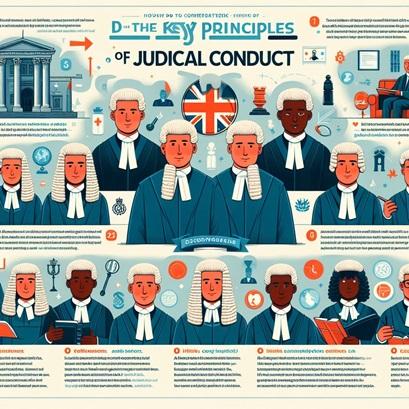
The three key values which are central to the role of judicial office holders (JOHs) in England and Wales are:

Independence / Impartiality / Integrity

The core principles

JOHs are required to adhere to these core principles both inside and outside the courtroom. These form part of the Bangalore Principles of Judicial Conduct, which were endorsed at the 59th session of the United Nations Human Rights Commission at Geneva in April 2003. The principles state:

  1. Judicial independence is a prerequisite to the rule of law and a fundamental guarantee of a fair trial. A judge shall therefore uphold and exemplify judicial independence in both its individual and institutional aspects.
  2. Impartiality is essential to the proper discharge of the judicial office. It applies not only to the decision itself but also to the process by which the decision is made.
  3. Integrity is essential to the proper discharge of the judicial office.
  4. Propriety, and the appearance of propriety, are essential to the performance of all of the activities of the judge.
  5. Ensuring equality of treatment to all before the courts is essential to the due performance of the judicial office.
  6. Competence and diligence are prerequisites to the due performance of judicial office.

Independence

The judiciary should be fair and transparent, free of any influence outside the rule of law.

In a democracy, it is of vital importance that the public and those who appear before judges trust that their cases will be decided in accordance with the law. This can only be achieved if judges and the judiciary as a whole are independent of external pressures and of each other. For judges to discharge their constitutional responsibility of providing fair and impartial justice, it is solely relevant facts and law that should form the basis of their decisions.

When carrying out their judicial function judges must be free of any improper influence, such as pressure by individual litigants, commercial interests, the media, politicians, and their own self-interest. They must not allow potential public or media responses to skew their decision-making. This does not, however, mean displaying no awareness of the profound consequences that judicial decisions inflict on the lives of people before them, and often upon issues of great interest to society at large.

In the last century, the responsibilities of judges in disputes between the citizen and the state have increased together with the growth in governmental functions. The responsibility of the judiciary to protect citizens against unlawful acts of government has increased, and with it the need for the judiciary to be independent of government.

A practical example of the importance of judicial independence is where a high-profile matter, generating a great deal of media interest, comes before the court. This may be the criminal trial of a person accused of a shocking murder, the divorce of celebrities or challenges to the legality of government policy, such as the availability of a new and expensive drug to NHS patients. In the 24-hour media age in which we live, it stands to reason that the judge hearing the case will often be under intense scrutiny, with decisions open to intense debate. It is right that this is so, but it is equally important that decisions in court are made in accordance with the law and are not determined by external pressures.

Impartiality

The judiciary should treat all members of the public equally and fairly, no matter who they are.

Judges strive to ensure that their conduct, both in and out of court, maintains and enhances the confidence of the public, the legal profession and litigants, in their personal impartiality and that of the judiciary.

It follows that judges should, so far as is reasonable, avoid extra-judicial activities that could result in reasonable apprehension of bias or would result in a conflict of interest. This may involve refraining from sitting in a case where they have a close family relationship with a litigant or avoiding involvement with a political party, in such a way as to give the appearance of political bias. They should also avoid taking part in public demonstrations which might diminish their authority as a judge or create a perception of bias in subsequent cases.

It is, however, important for members of the court to deliver lectures and speeches, partake in conferences and seminars and contribute to debate on matters of public interest in the law, the administration of justice, and the judiciary. In making such contributions, judges will take special care to avoid associating themselves with a particular organisation, group or cause in such a way as to give rise to a perception of partiality towards that organisation, group or cause in the conduct of their judicial duties.

Integrity

Judges’ conduct must be bound by principles of honesty and respect, and may require putting the obligations of judicial office above their own personal interests.

Judges are expected to display:

  • Intellectual honesty
  • Respect for the law and observance of the law
  • Prudent management of financial affairs
  • Diligence and care in the discharge of judicial duties
  • Discretion in personal relationships, social contacts and activities

Generally, judges are entitled to exercise the rights and freedoms available to all citizens. Appointment to judicial office brings with it limitations on the private and public conduct of a judge, but that is not to say judges must refrain entirely from community affairs, as there is great public interest in their engagement. It is also necessary to strike a balance between the requirements of judicial office and the legitimate demands of the judge’s personal and family life.

However, they must accept that the nature of their office exposes them to considerable scrutiny and puts constraints on their behaviour which other people may not experience. They should avoid situations which might reasonably lower respect for their judicial office or might cast doubt upon their impartiality as judges. They must also avoid situations which might expose them to charges of hypocrisy by reason of things done in their private life.

The judge should seek to be courteous, patient, tolerant and punctual and should respect the dignity of all. They must ensure that no one in court is exposed to any display of bias or prejudice on grounds said in the Bangalore principle entitled “equality” to include but not to be limited to “race, colour, sex, religion, national origin, caste, disability, age, marital status, sexual orientation, social and economic status and other like causes”.

Guidance for JOHs

The Equal Treatment Bench Book is an extensive document which functions as a key work of reference for the judiciary on the matter of equal treatment for all, covering in detail topics such as ethnicity, religion, disability, sexuality, gender, and more. It is continuously updated to reflect changing social circumstances and to include areas of newer, growing research. More recent additions include sections on modern slavery and multicultural communication. JOHs refer to the text for assistance on how best they can tailor conduct and communication styles to create a professional and inclusive courtroom environment. In July 2022 an interim revision of the book was issued, which you can access by clicking here: Equal Treatment Bench Book – Courts and Tribunals Judiciary.

The Guide to Judicial Conduct explains these principles to judges, and provides practical guidance on a wide range of everyday situations.

Training is provided to new judges in independence, integrity and impartiality, and the principles are often addressed in programmes for continuing training.

The Judicial Conduct Investigations Office (JCIO) is an independent office which supports the Lord Chancellor and Lady Chief Justice in considering complaints about the personal conduct of judicial office holders

Latest Judgments

Latest Announcements

Publications

Some items are Crown copyright and are taken from the Judiciary website under the terms and conditions of the Open Government Licence.

Judicial Office

The Ministry of Injustice is not the Ministry of Justice nor is it affiliated in any way with the justice system, legal profession, police or any other law enforcement agencies.


Latest Articles


Most Popular


You should always seek formal legal advice from a qualified and reputable lawyer (solicitor or barrister).

There are a number of links to Free and Paid For Legal Resources and Legal Organisations on the Free Legal Advice , Legal Aid and Pro Bono pages.

Rule of Law - Open Justice - Policing By Consent