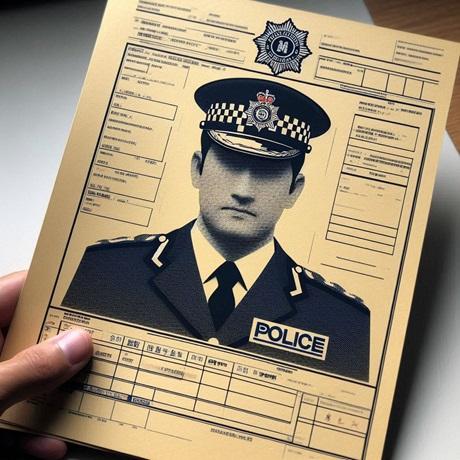
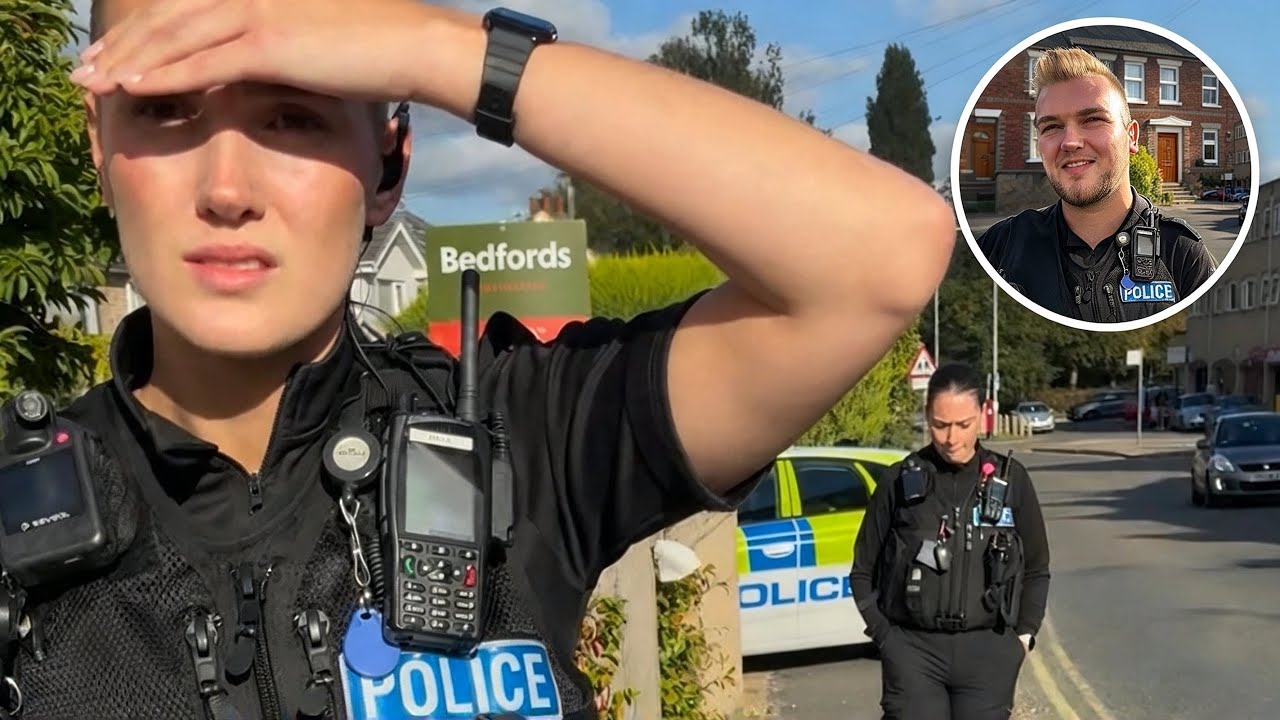
Facial Recognition (FR) technology can be used in a number of ways by the Police, including to prevent and detect crime, find wanted criminals, safeguard vulnerable people, keep the people safe. and to protect people from harm.
The typical uses of FR technology for policing are:
as a real-time aid to help officers to help them locate people on a ‘watchlist’ who are sought by the Police;
as an operator initiated tool for officers who decide they need to take an image of a person and then use Facial Recognition software to help them establish who that person is. This helps the Police even if that person provides false or misleading details. This use of FR can also help provide an identification of someone who is unconscious or seriously injured and unable to communicate who they are;
as a retrospective system to be used after an event to help officers establish who a person is or whether their image matches against other media held on databases.
Police and private companies in the UK have been quietly rolling out facial recognition surveillance cameras, taking ‘faceprints’ of millions of people — often without you knowing about it. This is an enormous expansion of the surveillance state — and it sets a dangerous precedent worldwide. We must stop this dangerously authoritarian surveillance now.
Live Facial Recognition (LFR) cameras are focused on a specific area so that when people pass through that area their images are streamed directly to the Live Facial Recognition system and compared to a watchlist.
All deployments are targeted, intelligence-led, time-bound, and geographically limited. It lets forces place their effort where it is likely to have the greatest effect. Before a deployment, the police will inform the public where they intend to use the technology and where they can obtain more information on its use.
Following a possible LFR alert, it is always a police officer on the ground who will decide what action, if any, to take. If the LFR system does not make a match with the watchlist, a person’s biometric data is deleted immediately and automatically. The watchlist is destroyed after each operation.
Retrospective Facial Recognition (RFR)
The images or short videos that are being searched after the event, are typically obtained from CCTV, mobile phone footage or have been supplied by members of the public. These images can then be searched for example against some of the Police’s custody image databases. If the system indicates a match then a human will always review this and they will decide if they think it is a match or not.
The use of operator initiated facial recognition which takes an image of a particular person and uses it to either (i) help policing establish who a person in the image is or (ii) establish where a person has previously appeared in other media held by the police
Hampshire and Isle of Wight Constabulary uses Facial Recognition Technology in the following cases:
Live Facial Recognition (LFR) compares a live camera feed of faces against a predetermined watchlist to find a possible match that generates an alert.
Retrospective Facial Recognition (RFR) is a post event use of facial recognition technology, which compares still images of faces of unknown subjects against a reference image database in order to identify them.
Operator Initiated Facial Recognition (OIFR) is a mobile phone use of FRT technology, which compares a photograph of a person’s face taken on a mobile phone to the predetermined watchlist to assist an officer to identify a subject.
Auditing Britain published a video of his interaction with the Met Police and was rudely spoken to and the door to their Live Facial Recognition Van was regularly closed. Do the Met Police have something to hide ?
Why did Sussex Police wait 9 days to inform the public ?Surely Sussex Police have a duty to let Sussex residents know that their Chief Constable has retired ?Not very transparent and almost as if the Police have something to hide.
In the same document pack, there is a copy of the letter Jo Shiner wrote to the Sussex PCC on the 14th June 2024. The Sussex PCC replied on the 25th June 2024. The Police Reform and Social Responsibility Act 2011 requires a transparent and open process. Why did the PCC stay quiet until the 10th September 2024 ?
I am still perplexed how the Chief Constable of Sussex Police can retire (and be rehired next month by the PCC), an Acting Chief Constable be appointed and the people of Sussex (and the UK) were not told.
Confirmation Hearing for the Proposed Chief Constable of Sussex Police (Pages 37 – 58)
On 10 September, the Panel was formally notified of the proposal of Sussex Police and Crime Commissioner to appoint a Chief Constable of Sussex Police. The attached report by the Clerk to the Panel provides details of the Panel’s role in the confirmation hearing for the proposed appointment of the Chief Constable of Sussex Police. The appendices and annexes to the report comprise information from the Police and Crime Commissioner regarding the proposed appointment. The Panel is to ask the candidate questions relating to their professional competence and personal independence.
On the 1st October 2024 Jo Shiner was reappointed as the Chief Constable of Sussex Police until 2027 after a short break under the Retire and Rejoin scheme.
The latest HMICFRS inspection of Sussex Police PEEL 2021/22 was published on the 13th April 2023 ? Should we continue to reward failure ? Is Jo Shiner the best person Sussex Police have for the job ?
“This way she can start claiming her pension and, on her return get her full salary without any pension deductions. Nice work if you can get it. If she has retired the job needs to go through the correct selection process.”
There was no announcement on the Sussex Police News website…..however the reason for the BBC news article and announcement may become clear. ⬇
An email was sent to the Sussex Police Media Team on Monday 9th September in relation to a Facebook post about gifts of Samosa’s to Crawley Police. The email also asked questions about the Senior Leadership including Chief Constable Jo Shiner missing from the Sussex Police website……
From: Dom Watts Sent: Monday, September 9, 2024 10:06 AM To:[email protected] Cc:[email protected]; [email protected] Subject: Crawley Police and the Gifts, Gratuities and Hospitality Policy – Facebook Samosa Gifts
Dear Sussex Police Media Team
(cc Katy Bourne Sussex PCC and Sussex Police PSD)
I am a citizen journalist at the Ministry of Injustice website and also a Crawley resident. I am currently writing an article in response to a post made by Crawley Police on their Facebook page (As below) on Friday 6th September 2024 about gifts of Samosa’s to the Police on World Samosa Day (5th September 2024).
This Facebook post is another terrible social media post by Crawley Police, and is not a great optic for the Police at a time of greater scrutiny in light of public claims of two tier policing.
1.3 As a guiding principle, Police Officers, Special Constables and Police Staff must not accept the offer of any gift, gratuity, favour or hospitality without prior approval from the JFVU. This allows an independent assessment of any potential compromise or conflict of interest.
1.4 Offers of a gift, gratuity or hospitality vary widely and could range from a reasonable display of gratitude and common courtesy, which does not breach integrity of any party, through to criminal offences such as a breach of the Bribery Act 2010 (legislation.gov.uk)
3.1 All gifts, gratuities and hospitality require approval from the JFVU before they can be accepted. Police Officers, Special Constables and Police Staff must complete an application form as soon as possible or within a maximum of 7 days from the receipt of the gift, gratuity or prior to any hospitality offered. The gift, gratuity or hospitality must remain with the applicant’s line manager, until approval has been given from the JFVU.
4.3 The Gift, Gratuity and Hospitality policy is intended to manage low value items only and as a guide an upper limit of £20 is considered appropriate.
Could you please provide any comments on the following please :-
Was advice Sought from the Joint Force Vetting Unit (JFVU) in accepting these gifts ?
Have these gifts been recorded by the JFVU ?
Did Superintendent Nick Dias or Chief Inspector Will Keating-Jones accept the gifts ? Was it another officer ?
Does the photo show all the samosa’s that were gifted ? How many Samosa’s were gifted ?
Was the health and safety of the Front Line officers considered when accepting these gifts ?
What is the benefit to policing in accepting these gifts ?
Do senior officers in Sussex Police regularly take time away from policing to accept freebies and photo opportunities ?
Could you please arrange for this page to be updated along with any missing bio’s. Can you please share any publicity photos of these senior officers ?
@[email protected] If any offences have been committed by Superintendent Nick Dias, Chief Inspector Will Keating-Jones or any other officers, could you please furnish me with a crime number and PSD reference.
To be clear, I am not a racist or from the far right. My aunt is of Asian descent and makes brilliant Samosa’s !
Thanks for your time and I look forward to your response.
Regards
Email to Sussex Police Media Team 9th September 2024
Is news about gifts of Samosa’s more important to the public than the retirement of the Chief Constable ?
An email response was received from Sussex Police Media Team……..
From: <[email protected]> Sent: Monday, September 9, 2024 12:19 PM To: Dom Watts Cc:[email protected]; PSD Main <[email protected]> Subject: RE: Crawley Police and the Gifts, Gratuities and Hospitality Policy – Facebook Samosa Gifts
Good afternoon Dom,
Thank you for your email. I hope this gives some clarification regarding the samosas which were received at Crawley police station from Ashwin Soni, Director of Diverse Crawley.
Samosas were delivered to police and other emergency services by Ashwin to help celebrate World Samosa Day.
Ashwin is a valued member of the community as well as a member of multiple independent advisory groups who work closely with Sussex Police.
This kind gesture was gratefully received by Superintendent Nick Dias and Chief Inspector Will Keating-Jones, who is the Hindu Faith lead for Sussex Police, as part of their ongoing engagements with the local community and stakeholders, a core part of senior officers’ duties.
The gift of around 40 samosas was inputted on the Gifts Register and forwarded to vetting for awareness.
Thank you for highlighting information on our website.
Will Keating-Jones was promoted to Chief Inspector, which will be reflected on the website. Superintendent Imran Asghar’s rank is correct.
In relation to the Chief Constable, please can I direct your request to the Office of the Police and Crime Commissioner for Sussex?
I hope this answers any questions you may have. If you require any more information, please do let me know.
Many thanks
Email response from Sussex Police Media Team 9th September 2024
A follow up email was sent to the Sussex Police Media Team and the Sussex Police and Crime Commissioner
From: Dom Watts Sent: Tuesday, September 10, 2024 10:08 AM To: <[email protected]>; [email protected] Subject: RE: Crawley Police and the Gifts, Gratuities and Hospitality Policy – Facebook Samosa Gifts Importance: High
Good Morning xxx
Many thanks for your speedy reply, for clarifying the correct procedure was followed in relation to the “gifts” and for updating the Sussex Police Senior Leadership page.
I see that the reason for your response “In relation to the Chief Constable, please can I direct your request to the Office of the Police and Crime Commissioner for Sussex?”
was answered by the BBC @ 1.32pm the same day
@[email protected] Why did Sussex Police wait 9 days to inform the public ? Surely Sussex Police have a duty to let Sussex residents know that their Chief Constable has retired ? Not very transparent and almost as if the Police have something to hide. Could you please reply to me separately about this ?
Jo Shiner, Sussex Police Chief Constable, formally retired on the 31st August 2024 but will return in a month !
Why did Sussex Police wait 9 days to inform the public ? Not very transparent and almost as if the Police have something to hide? #Policehttps://t.co/8jZt4TcA49
The Sussex Police and Crime Panel met on Friday 27 September 2024 (10.30am start) at County Hall, Lewes. The deadline for residents to submit written questions is 12 noon on Friday 13 September 2024…..
From: Dom Watts Sent: Thursday, September 12, 2024 9:16 AM To:[email protected] Subject: Written questions to the Sussex PCP Meeting 27th September 2024
Dear Sussex Police and Crime Panel
The deadline for residents to submit written questions is 12 noon on Friday 13 September 2024.
I am perplexed how the Chief Constable of Sussex Police can retire (and be rehired next month by the PCC), an Acting Chief Constable be appointed and the people of Sussex (and the UK) were not told.
Why did Sussex Police wait 9 days to inform the public via the BBC ? Surely Sussex Police have a duty to let Sussex residents know that their Chief Constable has retired ?
Is there something to hide ? Not very transparent and almost as if the PCC/Police have something to hide.
My questions to the Sussex PCP have been accepted….
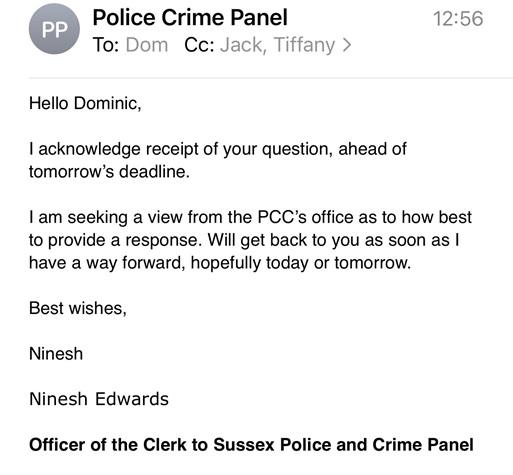
From: Ninesh Edwards <[email protected]> On Behalf Of Police Crime Panel Sent: Thursday, September 12, 2024 3:46 PM To: Dom Watts Cc: Tiffany Taylor ; Jack Bacon Subject: Your written Question
Hello again Dominic,
I can confirm that your question(s) have been accepted as written questions for the meeting on 27 September.
The PCC’s written response will be published just before the meeting (available via the link given in 3. below) and the members of the Panel can ask supplementary questions at the meeting, having read the Commissioner’s response.
You can follow the meeting live on 27 September via the webcast here: https://eastsussex.public-i.tv/core/portal/home. The meeting is being held in public, but the public can only observe (i.e. not participate). The meeting will be in Lewes, East Sussex, and will start at 10:30.
The papers for the meeting will be published here (on or around 19 September): https://sussexpcp.gov.uk/meetings/. As stated above, the report for the “Questions for the Commissioner” item will be updated on the morning of the meeting, to include the PCC’s written responses.
Jo Shiner Biography before Appointment as Chief Constable
Jo Shiner joined Sussex Police as Deputy Chief Constable at the end of 2018. She started her policing career in Norfolk in 1993, serving up to the rank of Chief Superintendent before transferring on promotion to Kent as Assistant Chief Constable in 2014.
Jo’s career in the police spans 28 years, during which time she has undertaken a wide variety of roles. These have predominantly been operational, both in uniform and within the Child and Adult Protection Unit, CID and as a firearms, public order and critical incident commander.
As Deputy Chief Constable, Jo is responsible for the smooth and effective running of Sussex Police, and delivering the services that the communities deserve. As part of this she is passionate about supporting local groups and addressing issues that really matter to our communities.
In January 2020 she took over the NPCC National Lead for the policing of Children and Young People. She is also the NPCC National Lead for police fitness.
Police and Crime Commissioners (PCCs) are directly elected politicians and are responsible for overseeing the non-operational aspects of policing. Their journey began in 2012 when they replaced the old police authorities. Since then, it is said that PCCs have been diligently working to secure an “efficient and effective” police force for their respective areas.
In England and Wales, PCCs are elected by the public to hold the police force to account on their behalf. PCCs aim to cut crime and deliver an effective and efficient police service within their police force area. Police and Crime Commissioners: make sure the police force budget is spent effectively.
Election: PCCs are elected by the public. On the 2nd May 2024, elections took place for 37 police and crime commissioners (PCCs) who set policing priorities and hold to account police forces across most of England and Wales. Police & Crime Commissioner elections are held every 4 years.
Coverage: They represent every police force area in England and Wales, except for London, Greater Manchester, and West Yorkshire (where elected mayors hold these powers). Different arrangements exist in the City of London. Scotland and Northern Ireland have separate policing structures due to devolution. Police and crime commissioners for each police area listed in Schedule 1 to the Police Act 1996 (police areas outside London).
The Powers and Functions of PCCs
Appointing and Holding to Account:
PCCs appoint and, if necessary, dismiss the chief constable. This role is critical for maintaining effective leadership within the police force.
They hold the chief constable accountable for delivering the police and crime plan, which outlines local policing priorities.
Setting Objectives and Budgets:
PCCs set the police and crime objectives for their area through a comprehensive plan.
They also determine the force budget and decide on the precept which is a council tax charge specifically for policing.
Collaboration and Coordination:
PCCs bring together various community safety and criminal justice partners to ensure that local priorities are aligned.
While they’re not responsible for operational policing (that remains with chief constables), they play a crucial role in coordinating efforts.
Operational Independence:
The relationship between PCCs and chief constables is guided by the Policing Protocol Order 2011. It emphasizes safeguarding operational independence while allowing PCCs to fulfil their statutory roles.
Additionally, the Policing and Crime Act 2017 introduced the possibility for PCCs to take on responsibility for fire and rescue governance, becoming a police, fire, and crime commissioner (PFCC).
secure an efficient and effective police for their area
appoint the Chief Constable, hold them to account, and if necessary dismiss them
set the police and crime objectives for their area through a police and crime plan
set the force budget and determine the precept [the amount people pay through council tax for policing]
contribute to the national and international policing capabilities set out by the Home Secretary
bring together community safety and criminal justice partners to make sure local priorities are joined up.
How to complain about a Police and Crime Commissioner
To complain about your Police and Crime Commissioner (PCC), PFCC, mayor or deputy mayor for policing and crime, contact your local police and crime panel. Your local council will provide contact details.
Each police force area has a Police and Crime Panel to provide checks and balances in relation to the performance of the Police and Crime Commissioner. The role of the Panel is to scrutinise the performance of the Commissioner and ensure transparency.
The Panel provides checks and balances in relation to the performance of the PCC. The Panel does not scrutinise the Chief Constable – it scrutinises the PCC’s exercise of their statutory functions. While the Panel is there to challenge the PCC, it must also exercise its functions with a view to supporting the effective exercise of the PCC’s functions. This includes :-
(a) the power of veto (outside the Metropolitan Police District), by a two-thirds majority of the total Panel membership, over the level of the PCC’s proposed precept;
(b) the power of veto (outside the Metropolitan Police District), by a two-thirds majority of the total Panel membership, over the PCC’s proposed candidate for Chief Constable;
(d) the power to review the draft Plan and make recommendations to the PCC who must have regard to them;
(e) the power to review the PCC’s Annual Report and make reports and recommendations at a public meeting, which the PCC must attend;
(f) the power to require relevant reports and information in the PCC’s possession (except those which are operationally sensitive) to enable them to fulfil their statutory obligations;
(g) the power to require the PCC to attend the Panel to answer questions;
(h) the power (outside the Metropolitan Police District) to appoint an acting Police and Crime Commissioner where the incumbent PCC is incapacitated, resigns or is disqualified, and
(i) responsibility for complaints about a PCC, although serious complaints and conduct matters must be passed to the IOPC in line with legislation.
A Police and Crime Panel does not have the power to examine the decisions reached by the Police and Crime Commissioner (PCC) and/or their office in respect of such reviews, and is not the correct body of recourse to challenge such decisions made the PCC and/or their office. Such decisions can be subject to judicial review.
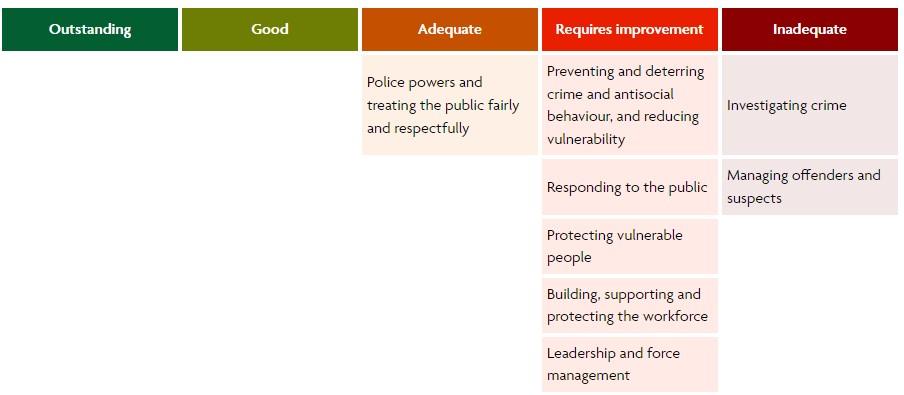
HMICFRS graded the Metropolitan Police’s performance across eight areas of policing. It found the force was adequate in one area, requires improvement in five areas and inadequate in two areas. The Met Police were not graded Outstanding or Good in any areas.
“The unique challenges facing the Metropolitan Police are not underestimated. Policing the capital city places additional strain on the force and its leadership, as the force tirelessly manages protests, state visits and royal occasions, and national and international sporting events.
“In parallel, the force is in the midst of an organisational-wide transformation, which is significant in both its size and scale. While it was evident in my inspection that many key changes have and are being made, they are not yet translating into consistent and sustained improvements in some key areas.
“While I commend the force for the progress it has made in answering the public’s calls quickly, I have serious concerns about how the force is currently investigating crime and how it manages offenders and suspects.
“I am aware that before our inspection, the force had already recognised the need to achieve better outcomes for victims. However, these plans have not yet led to consistent improvements across the whole force, and more work needs to be done to make sure that this happens.
“We will continue to monitor the Metropolitan Police under our Engage process, and I look forward to seeing the further progress made.”
Since the last HMICFRS inspection in 2022 until the 23rd January 2025, the Metropolitan Police Service was in the HMICFRS enhanced monitoring process, Engage. This gave it greater access to assistance from us, the College of Policing, the Home Office and other law enforcement agencies to make the required improvements. During this period, the force has appointed a new commissioner and deputy commissioner, and published a strategic plan called ‘A New Met for London’, which is aimed at transforming the force.
I have serious concerns about how the force is currently investigating crime and managing offenders and suspects.
I also have concerns about how the force is preventing and reducing crime and providing victims with an effective service.
On the 23rd January 2025 HMCIFRS published Metropolitan police service removed from enhanced monitoring – “The Metropolitan Police Service has made improvements and has therefore been removed from an enhanced level of monitoring by the police inspectorate.”
Policing by consent is a fundamental principle that underpins modern democratic societies. It is a concept rooted in the belief that the authority of the police derives from the consent and cooperation of the public they serve, as opposed to the power of the state.
It does not mean the consent of an individual. No individual can chose to withdraw their consent from the police, or from a law.
British policing is based on consent, meaning the ability of the police to carry out their functions rests on ‘public approval of their existence, actions and behaviour’
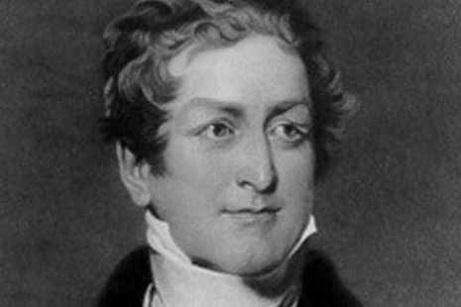
The nine principles of policing by consent, often referred to as the Peelian principles, were articulated by Sir Robert Peel.
There is no evidence that these principles were devised by Sir Robert Peel and it more than likely that they were devised by the first Commissioners of Police of the Metropolis (Sir Charles Rowan and Sir Richard Mayne).
What are the Peelian Principles ?
To prevent crime and disorder, as an alternative to their repression by military force and severity of legal punishment.
To recognise always that the power of the police to fulfil their functions and duties is dependent on public approval of their existence, actions and behaviour and on their ability to secure and maintain public respect.
To recognise always that to secure and maintain the respect and approval of the public means also the securing of the willing co-operation of the public in the task of securing observance of laws.
To recognise always that the extent to which the co-operation of the public can be secured diminishes proportionately the necessity of the use of physical force and compulsion for achieving police objectives.
To seek and preserve public favour, not by pandering to public opinion; but by constantly demonstrating absolutely impartial service to law, in complete independence of policy, and without regard to the justice or injustice of the substance of individual laws, by ready offering of individual service and friendship to all members of the public without regard to their wealth or social standing, by ready exercise of courtesy and friendly good humour; and by ready offering of individual sacrifice in protecting and preserving life.
To use physical force only when the exercise of persuasion, advice and warning is found to be insufficient to obtain public co-operation to an extent necessary to secure observance of law or to restore order, and to use only the minimum degree of physical force which is necessary on any particular occasion for achieving a police objective.
To maintain at all times a relationship with the public that gives reality to the historic tradition that the police are the public and that the public are the police, the police being only members of the public who are paid to give full time attention to duties which are incumbent on every citizen in the interests of community welfare and existence.
To recognise always the need for strict adherence to police-executive functions, and to refrain from even seeming to usurp the powers of the judiciary of avenging individuals or the State, and of authoritatively judging guilt and punishing the guilty.
To recognise always that the test of police efficiency is the absence of crime and disorder, and not the visible evidence of police action in dealing with them.
Since 1829 these ‘General Instructions’ have been issued to every new police officer.
History of Policing by Consent
The origins of policing by consent can be traced back to the early 19th century in England. Prior to this period, law enforcement was often characterised by a lack of professionalism, corruption, and arbitrary use of power.
In 1829, Sir Robert Peel introduced the Metropolitan Police Act, which established the Metropolitan Police in London. This act marked a significant shift in policing philosophy, emphasising the idea of police as a civilian force serving the community rather than a military presence.
To implement his vision, Sir Robert Peel appointed Sir Charles Rowan and Sir Richard Mayne as the first Commissioners of the Metropolitan Police. Rowan and Mayne were instrumental in establishing a professional police force based on Peel’s principles. They implemented rigorous recruitment standards, emphasised training and discipline, and ensured that the police operated under public scrutiny and consent.
Under the leadership of Rowan and Mayne, the Metropolitan Police successfully transformed the concept of policing in London. Their commitment to upholding the principles of policing by consent set a precedent that would influence police forces worldwide.
Sir Robert Peel
Sir Robert Peel (1788-1850) was a British statesman and is widely regarded as the founder of modern policing. Born in Bury, Lancashire, England, Peel had a distinguished political career and served as the Prime Minister of the United Kingdom twice, from 1834 to 1835 and from 1841 to 1846.
Peel is most renowned for his significant contributions to law enforcement and criminal justice reforms.
Peel’s reforms also included the establishment of the first detective force, the improvement of police training and professionalism, and the standardisation of police uniforms and equipment. His contributions to policing set the stage for the development of professional law enforcement agencies that focus on crime prevention, community engagement, and the protection of individual rights.
Beyond his work in law enforcement, Peel made other significant contributions to British politics. He was instrumental in the repeal of the Corn Laws, which were tariffs on imported grain that had protected British agriculture but contributed to high food prices for consumers. The repeal of these laws had a profound impact on British trade and economic development.
Sir Robert Peel’s legacy as a statesman and reformer, particularly in the field of policing, remains influential to this day. His principles continue to shape the foundations of modern law enforcement, emphasising the importance of community consent, accountability, and professionalism in the maintenance of public safety and order.
Sir Charles Rowan and Sir Richard Mayne
Sir Charles Rowan and Sir Richard Mayne were two key figures who played significant roles in the establishment and development of the Metropolitan Police in London, working closely with Sir Robert Peel. They were the first Commissioners of the Metropolitan Police, serving under Peel’s leadership and implementing his vision of professional policing.
Sir Charles Rowan (1782-1852) was a British soldier and police administrator. He was appointed as one of the two Commissioners of the Metropolitan Police when it was first established in 1829. Rowan brought his military experience and organisational skills to the role, contributing to the professionalisation and efficiency of the police force. He worked closely with Peel to implement reforms and ensure that the principles of policing by consent were upheld. Rowan’s emphasis on discipline, training, and strategic deployment of police resources helped shape the early foundations of the Metropolitan Police.
Sir Richard Mayne (1796-1868) was a British lawyer and civil servant. He also served as one of the original Commissioners of the Metropolitan Police alongside Rowan. Mayne, known for his administrative abilities, played a crucial role in developing the infrastructure and operations of the police force. He focused on establishing clear guidelines, procedures, and protocols for police officers, ensuring that they operated within the framework of the law and maintained public trust. Mayne’s contributions helped to solidify the principles of accountability, impartiality, and transparency within the Metropolitan Police.
Rowan and Mayne worked collaboratively to shape the structure and functioning of the Metropolitan Police. They were responsible for recruiting and training officers, establishing a hierarchical command structure, and implementing policies that aligned with Peel’s principles.
Their efforts were instrumental in the successful establishment of a professional and civilian police force in London, setting a standard for policing practices that influenced law enforcement agencies both in the United Kingdom and internationally.
Policing by Consent around the World
Here are some examples of how the Peelian principles of policing by consent have influenced policing globally:-
The principles of policing by consent have had a profound influence on law enforcement practices in the United States. Many police departments strive to build positive relationships with the communities they serve, engaging in community-oriented policing initiatives, implementing transparency measures, and emphasising de-escalation techniques. The principles have also informed the development of professional standards and training programs for officers.
Australian police forces have embraced the Peelian principles as a foundation for their operations. Community engagement, collaboration, and accountability are emphasised in Australian policing, with efforts made to build trust and partnerships with the diverse communities across the country. The principles have guided the development of community policing programs and the adoption of ethical standards.
Policing in Canada is influenced by the Peelian principles, particularly in terms of community engagement and accountability. Canadian police agencies have adopted community policing strategies, emphasising the importance of building relationships, problem-solving, and preventative measures. The principles also guide the training and professional conduct of Canadian police officers.
The Peelian principles have shaped the philosophy of policing in New Zealand. The New Zealand Police explicitly incorporate the principles into their values and code of conduct. The focus on community engagement, proactive policing, and respect for human rights aligns with the Peelian principles. New Zealand Police have also emphasised the importance of building trust and legitimacy through transparency and accountability.
Policing in various European countries has been influenced by the Peelian principles. Concepts such as community policing, the protection of individual rights, and the need for police legitimacy are prevalent across European police forces. Efforts are made to establish partnerships with communities, promote equality and impartiality, and maintain transparency in police operations.
It’s important to note that while the Peelian principles have had a broad impact on policing worldwide, the specific application and implementation may vary across different countries, taking into account local laws and cultures.
Nonetheless, the principles continue to shape the ongoing development of modern policing, emphasising the importance of maintaining public trust and collaboration with the communities they serve.
The Police Digital Service (PDS) is the UK organisation responsible for coordinating, developing, delivering, and managing digital services and solutions that enable UK policing to safely harness technology to improve public safety.
Funded by policing and the Home Office, PDS works with law enforcement organisations, private industry, charities, public bodies, and government to deliver digital services and solutions with policing, for policing. The PDS are NOT a police force.
In 2022-23, Police Digital Service turnover was £74m and it made a profit of £2.4m. It runs cloud services for UK law enforcement as well as cybersecurity and IT support.
If you have arrived at the Ministry of Injustice from pdspolice.uk (MOI domain) you may well have been looking for pds.police.cuk which is the official website for the Police Digital Service.Odd that the Police Digital Service didn’t think to register the domain?
For the avoidance of doubt this website is not run by the Police Digital Service nor is it associated in any way with the Police Digital Service.
National Policing Improvement Agency (NPIA): In July 2010, the UK government outlined its vision for the future of policing in the White Paper “Policing in the 21st Century.” This document paved the way for the creation of the PDS. The NPIA played a crucial role in identifying areas for efficiency gains, encouraging collaboration, and realizing economies of scale through national procurement frameworks.
Transition from NPIA: In December 2011, Home Secretary Theresa May announced plans to replace the NPIA with two new organizations: the College of Policing (a police professional body) and the Police ICT Company (responsible for procuring IT for police forces).
Police ICT Company: In 2012, the Police ICT Company was incorporated as a private company limited by guarantee. Over time, it evolved to address the changing landscape of cyber threats and technology.
The National Management Centre (NMC), part of the PDS, is the national centre of expertise dedicated to protecting UK police forces against cybercrime. Here are key points about the NMC:
Mission: The NMC focuses on mitigating the risk of cyber threats to sensitive police data and infrastructure. It operates 24/7, providing nationally coordinated and locally delivered cybersecurity services to police forces across the UK.
Services Offered:
Protection: The NMC offers services designed to safeguard police infrastructures.
Detection: It actively monitors and detects cyber activity.
Response: In case of incidents, the NMC responds swiftly to mitigate damage.
Evolving Threat Landscape: As cyber threats continue to evolve, the NMC remains vigilant, adapting its strategies to protect police forces effectively.
Police Digital Service NMC Wins Cyber Award
The Police Digital Service’s National Management Centre (NMC) was awarded a National Cybercrime Programme Chief Superintendent’s Commendation for its role in protecting UK law enforcement against cyber threats.
The award to the National Management Centre (NMC) was presented at the annual National Police Chiefs’ Council (NPCC) National Cybercrime Programme, Commissioners, and Chief Superintendents’ Awards.
“This commendation is a testament to the dedication and hard work of the entire team at the National Management Centre. We are honoured to be recognised by the NPCC for our contributions to tackling cyber crime and ensuring the security of our digital landscape.”
The Knowledge Hub, managed by the Police Digital Service (PDS), is a specialised digital platform designed to foster collaboration, knowledge sharing, and innovation within UK policing and its select public and private sector partners.
2,878 online reports and calls were received between November 2022 and February 2024 in relation to officers and staff at the Metropolitan Police Service. It has resulted in 728 Met Police led investigations.
‘Its success has been a very positive step for our communities in London and we are pleased that all the other forces have decided to adopt it and we will see a national roll out……..It’s vital that the public know there are clear systems in place where appalling behaviours will be challenged and addressed robustly and that those within policing know they can trust their colleagues.’
The Police Anti-Corruption and Abuse Reporting Service gives people an easy way to report information about a police officer, member of police staff or volunteer who they believe are taking advantage of their role and abusing their position of power. This abuse may be for financial or sexual motivation, or their conduct could be motivated by hatred or prejudice.
You can contact the national Police Anti-Corruption and Abuse Reporting Service on 0800 085 0000 or online24/7, 365 days a year to provide any information you may have about a Police Service, police officer, member of police staff or police volunteer who engage in the following :-
Provides information or influence in return for money or favours.
Uses their policing position for personal advantage – whether financial or otherwise.
Crosses professional boundaries for sexual purposes.
Abuses or controls their partner, or those they have a relationship with.
Engages in racist, homophobic or misogynistic conduct, on or off duty, in person or online.
Call 999 if:
a serious offence is in progress or has just been committed
someone is in immediate danger or harm
property is in danger of being damaged
a serious disruption to the public is likely
Call 101 for non-emergency enquiries. You can also Report a Crime online.
‘We do not underestimate the impact recent events have had on trust and confidence in policing, including the appalling findings of the Angiolini report……The vast majority of police officers and staff act professionally and with integrity in the fulfilment of their duties to protect the public’
Sussex Police serves East and West Sussex and the city of Brighton & Hove which is an area of about 3,780km. A resident population of 1.65m people grows significantly with millions of visitors, holidaymakers, students, seasonal workers and the 46 million passengers who travel annually through Gatwick Airport.
Sussex Police are investigating (Operation Bramber) allegations of medical negligence at the University Hospitals Sussex NHS Foundation Trust, relating to neurosurgery and general surgery at the Royal Sussex County Hospital in Brighton in the period between 2015 and 2021.
Sussex PC dismissed for failing to store knife and ammo Oliver Kirkup has been dismissed by Sussex Police after failing to properly store ammunition and a knife seized at Gatwick Airport. “The actions of this officer on these occasions were not in line with the values and standards that we expect, lacking honesty and integrity.”
Sussex Police officer dismissed Sussex Police officer ‘A’ was dismissed without notice after a hearing found he behaved inappropriately towards female colleagues and acted dishonestly by claiming overtime.
Sussex Police misconduct hearing Recruit Learner DC Connor Farrell of Sussex Police will answer allegations allegedly in breach of the Standards of Professional Behaviour of: Honesty & Integrity, Discreditable Conduct, Confidentiality and Duties & Instructions.
Sussex Police officer banned for dishonesty Former Sussex Police PC Jacob Vaughan was alleged to have damaged a police car he was driving while on police premises, but failed to report it. “The public deserve to trust that their police officers are behaving honestly, and we will continue to root out those who do not meet that expectation.” – Detective Superintendent Andy Wolstenholme
Sussex Police apology to vulnerable victim Sussex Police has apologised to the victim of police investigator David Gamlin who engaged in sexual activity with her while he was on duty. “Gamlin has been barred from ever serving with the police again.”
Sussex Police officer ‘said no 62 times’ during alleged sex assault PC Daniel Julian of Sussex Police was cleared of three counts of sexual assault, causing a woman to engage in sexual activity without consent and attempted rape by a jury at Lewes Crown Court in April 2024. Misconduct proceedings at Sussex Police Headquarters continue..
Sussex Police recruit barred Former PC Cameron Young did not reveal that he had previously been subject to a disciplinary investigation when applying to join Sussex Police.
Sussex Police officer found not guilty PC Sam James Wilson of Sussex Police has been found not guilty of engaging in controlling and coercive behaviour towards his former partner following a trial at Kingston Crown Court. Sussex Police will now consider misconduct proceedings as the criminal case has concluded.
Sussex Police accelerated misconduct hearing It is alleged that PC Cameron Young EC118 from the East Sussex Police Divisional Coaching Unit has breached the Standards of Professional Behaviour for Honesty and Integrity. He failed to disclose a previous disciplinary investigation on his vetting form when he applied to join Sussex Police.
Sussex Police sergeant is demoted after touching colleague Sussex Police sergeant Matthew Crane who tapped out a tune on a female colleague’s bottom before asking her for naked pictures has kept his job. Sgt Crane’s actions had the potential to undermine discipline and good order within the police an undermine public confidence.
Sussex Police panel says it has ‘lost confidence’ in PCC Members of the Sussex Police and Crime Panel has said it has “lost confidence” in Sussex Police and Crime Commissioner Katy Bourne over her attendance at a protest march over an asylum seeker camp in Crowborough.
Sussex Police officer PC Peter De Silvo has been charged with stalking and fraud offences and is due to appear before Staines Magistrates’ Court on Friday 19th December 2025
‘Thank you for the clarity and for outlining the circumstances which I am frankly mortified about and offer my sincere apologies. I am also very disappointed in those who have let you down and I have asked for that/them to be addressed.’
Former Sussex Police officer barred for life A Sussex Police statement, following the hearing, read: “A former police officer convicted of distributing indecent images of children has been found to have committed gross misconduct.”
Sussex Police needs to improve staff vetting His Majesty’s Inspectorate of Constabulary (HMIC) report stated there was a “huge backlog of vetting” and that some employees were working in a job “without the proper level of clearance”.
This week (April 25-29) is National Stalking Awareness Week. I have reported a stalker on several occasions to Sussex Police but they have refuse to record this as a crime. Do Sussex Police @sussex_police take stalking seriously in Sussex ?https://t.co/C9B7z3s0Sq
Ex Sussex Police PC jailed over driving offences fraud Seren Sriganesh a former Sussex police officer has been jailed after falsely claiming his parents had committed his three driving offences. He also unlawfully accessed police systems to view details of one of the offences.
‘Unhinged’ Sussex PC crashed into e-bike It is alleged Sussex Police PC Tim Bradshaw drove his police car at an e-bike causing serious injury by dangerous driving. “There’s a difference between protecting and serving our community and being unhinged”
Sussex armed police swoop on boys playing with toy Nerf guns Sussex Armed Police yelled at Two boys aged 12 and 13 to get on the ground and put down their ‘weapons’. Sussex Police only realised the nerf guns were toys when they shot the foam bullets for themselves.
Sussex Police officers, staff and volunteers work together to deliver the strategic priorities set within the Sussex Police and Crime Plan and the Sussex Police priorities which are as follows :-
A Sussex Police Community Support Officer (PCSO) was shown refusing to respond to an alleged assault in a supermarket, in a video posted on TikTok.
The video shows a man telling the officer about a fight in the Co-op store in Lancing which had been reported to the police.
The PCSO said: “I’m not a response unit.”
Sussex Police said it had launched an investigation.
The man who was filmed in conversation with the PCSO said members of the public were trying to stop a shoplifter.
He said to the PCSO: “You need to get round to the Co-op. There’s just been a fight round there, because people are trying to stop the shoplifter that you’re doing nothing about.”
He said: “People have called the police and you’re sitting here.”
The officer responded: “I’m not a response unit unfortunately.”
The man said the sight of the police car would “make them scatter”.
The officer replied: “Yeah, but then I have to deal with it.”
“That’s why I’m here and not round there.”
In a statement, Sussex Police said: “We are aware of video footage of a single-crewed Police Community Support Officer being approached by a member of the public to report an incident in Lancing.
“The matter was reported to us and a police officer attended the incident as an emergency. The PCSO also then attended the scene.”
Supt Nick Dias said: “We are sorry for the clumsy language used by the PCSO in this exchange and acknowledge the public’s concern. A police unit was dispatched to the scene as a matter of priority. Our response to this incident is being reviewed.”
Katy Bourne, Sussex Police and Crime Commissioner, said she shared “the public’s disappointment and understandable concern” with the video.
“A member of the public sent me the video and I immediately shared it with the Chief Constable who referred the incident to the Sussex professional standards department.”
She added: “This is not the sort of response that I would expect and the public deserve.”
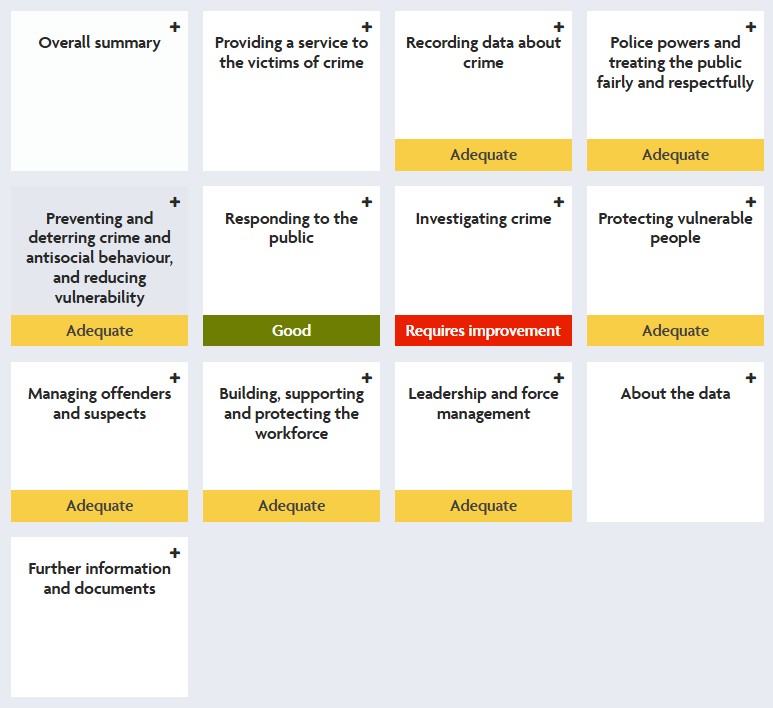
The report PEEL 2021/22 – An inspection of Sussex Police graded Sussex Police’s performance across nine areas of policing and found the force was ‘good’ in two areas, ‘adequate’ in four areas, ‘requires improvement’ in one area, and ‘inadequate’ in two areas.
Sussex Police urgently needs to improve how it responds to the public, and how it records crime.
Its recording of reports of violent crime is inadequate, and the force is also missing opportunities to safeguard vulnerable people. It needs to improve the way it assesses initial calls to the force so that vulnerable people and repeat callers are routinely identified.
As a result of my concerns I have already been in contact with the chief constable and the police and crime commissioner.
I am pleased with the way the force has responded so far and I will continue to check the force’s progress in addressing areas for improvement in the coming months.
His Majesty’s Inspector of Constabulary – Roy Wilsher
Sussex Police and Surrey Police failed to use people’s personal data lawfully by recording hundreds of thousands of phone calls without their knowledge. People have the right to expect that when they speak to a police officer, the information they disclose is handled responsibly. We can only estimate the huge amount of personal data collected during these conversations, including highly sensitive information relating to suspected crimes.
The reprimand reflects the use of the ICO’s wider powers towards the public sector as large fines could lead to reduced budgets for the provision of vital services. This case highlights why the ICO is pursuing a different approach, as fining Surrey Police and Sussex Police risks impacting the victims of crime in the area once again.
This case should be a lesson learned to any organisation planning to introduce an app, product or service that uses people’s personal data. Organisations must consider people’s data protection rights and implement data protection principles from the very start.
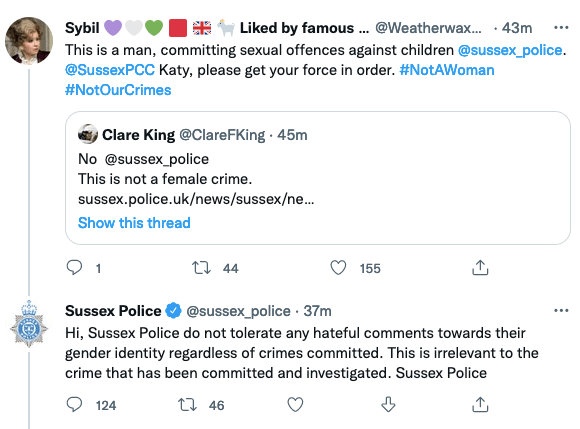
Sussex Police do not tolerate any hateful comments towards their gender identity regardless of crimes committed. This is irrelevant to the crime that has been committed and investigated.
Sussex Police Twitter 27th September 2022
Please see our statement below in relation to the recent sentencing of a historic sex offender. pic.twitter.com/7ZcwkT7yEt
.@Sussex_police have done well to put a dangerous criminal behind bars. But they’ve got it wrong by playing identity politics and denying biology. Focus on catching criminals not policing pronouns. #commonsensepolicinghttps://t.co/19U1Qf77F7
Home Secretary’s Comment About Sussex PoliceSussex Police Twitter Account
Sussex Police and Crime Commissioner Priorities
“As your PCC, my job is to hold the Chief Constable of Sussex Police to account and ensure that the police focus on local priorities. I believe every citizen has a right to feel safe on the streets and in their homes.
“In consultation with the Chief Constable and the people of Sussex, I have published a Police & Crime Plan setting out the priorities and local objectives that local people and business say are important to them.
With your support, I am determined that Sussex Police will operate effectively and efficiently and that the values I have embraced during my professional career – hard work, integrity and fairness – underpin everything we do together.”
Police typically are responsible for maintaining public order and safety, enforcing the law, and preventing, detecting, and investigating criminal activities.
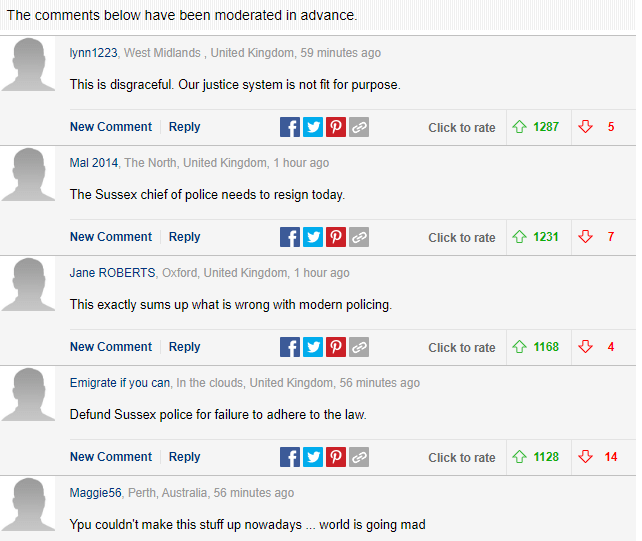
Sussex Police should concentrate on doing the job that they are paid to do.No wonder the public have no faith in the Police !
Auditing Britain is a popular YouTube channel that had 403K subscribers and 1.1k videos (As of 5th October 2026).
Auditors such as Auditing Britain, it is said, use “security concerns surrounding the filming of staff and premises, alongside limited powers to prevent it…..They are also well-versed in their own rights and often cite legislation in their interactions with staff.”
What is the Identity of Auditing Britain ?
The iWiki website assumes the identity of Auditing Britain – “Auditing Britain is the pseudonym of a popular YouTuber, whose name is assumed to be Reda Bouadi-Clifton“
In a version of the Britain Times webpage from 2023 archived on the Internet Archive Wayback Machine “According to a Facebook post, Auditing Britain’s real name is Reda Bouadi-Clifton.”
The National Security Online Information Team (NSOIT) at the Department for Science, Innovation and Technology was allegedly established to bring together cross-government monitoring and analysis capabilities. The National Security Online Information Team (NSOIT) was previously known as the Counter Disinformation Unit (CDU).
It is often said that when a government decides what information is to be disseminated to the people, the institution of government is no longer for the people but for its own self-preservation. The 1949 George Orwell novel Nineteen Eighty Four (1984) had a fictional Ministry of Truth.
On the 3rd June 2023 The Telegraph published an article Elon Musk joins backlash over secret unit curbing lockdown dissent and states “The billionaire Twitter owner condemned the ‘terrible’ tactics used by the Government during the pandemic, as revealed by the Telegraph”
Molly Kingsley published the following Tweet on the 3rd June 2023 containing evidence of government censorship following a Subject Access Request (SAR) to the CDU at the DCMS.
Following the @Telegraph news story today on censorship, the attached photos are the list of my articles, tweets and comments flagged by the Counter Disinformation Unit as potential ‘disinformation’.
It starts in 2020, continues throughout 2021 and into 2022 and even 2023, and… pic.twitter.com/vpPVEdqMkQ
Is the following evidence of Disinformation by the Counter Disinformation Unit or an MP ?2019 v 2020 ?
The Counter Disinformation Unit (CDU) was first set up within the Department for Digital, Culture, Media and Sport in 2019 and it has since responded to periods of acute disinformation risk including Covid-19.
Lucy Powell who is the Labour MP for Manchester South tabled (UIN 98962) the following parliamentary question on the 6th January 2022
To ask the Secretary of State for Digital, Culture, Media and Sport, whether the cross-Whitehall unit to counter disinformation on covid-19 is operating as of 6 January 2022; how many staff working as part of that unit there are in the (a) Department for Digital, Culture, Media and Sport, (b) Home Office (c) Foreign, Commonwealth and Development Office, (d) Cabinet Office and (e) Ministry of Defence; and whether the number of staff in each team has increased or decreased since that unit was established in March 2020.
Chris Philp who is the Conservative MP for Croydon South replied on the 11th January 2022.
The Cross-Whitehall Counter Disinformation Unit (CDU) was established on 5 March 2020, bringing together cross-government monitoring and analysis capabilities. As of 7 January 2022 the CDU is still fully operational.
Addressing the challenges of disinformation and misinformation is a whole of the government effort. The CDU is resourced full time and works in close partnership with cross-government teams. In response to the COVID-19 pandemic, the size of the team in DCMS has increased. Requirements are continually reviewed to ensure appropriate levels of resourcing, including surge capacity as needed.
When false narratives are identified, the CDU coordinates departments across Whitehall to deploy the appropriate response. This can include a direct rebuttal on social media, flagging content to platforms and ensuring public health campaigns are promoted through reliable sources.

 The presumption of innocence is a basic principle of the… Read more: Presumption of Innocence
 Judge Daniel Sawyer, known as His Honour Judge Daniel Sawyer,… Read more: His Honour Judge Daniel Sawyer
 Prime Minister Andy Burnham used his first United Nations General… Read more: UK National Centre for Information Defence
 On the 27th August 2026 the Crown Prosecution Service announced… Read more: Judges Behaving Badly and His Honour Judge Simon Oliver
 Jo Morris is a practising criminal barrister of Drystone Chambers… Read more: Jo Morris Barrister
 The Good Law Project is a UK campaigning organisation that… Read more: Good Law Project
 The Police Federation of England and Wales (PFEW) is the… Read more: Police Federation of England and Wales (PFEW)
 The Criminal Justice System Common Platform (also known as HMCTS… Read more: What is the Criminal Justice System (CJS) Common Platform ?
 Strategic Lawsuits Against Public Participation, or SLAPPs, are legal actions… Read more: Strategic Lawsuit Against Public Participation (SLAPPs)
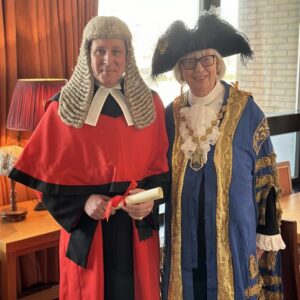 Judge Tony Alan Walter Baumgartner, known as His Honour Judge… Read more: His Honour Judge Tony Baumgartner – Recorder of Westminster
 On the 8th July 2026, the Courts and Tribunals Judiciary… Read more: New Protocol for Legal Professionals to Raise Informal Concerns About Judges Behaviour
 In April 2026, His Majesty’s Inspectorate of Constabulary and Fire… Read more: The Policing Performance System