Categories
Judiciary

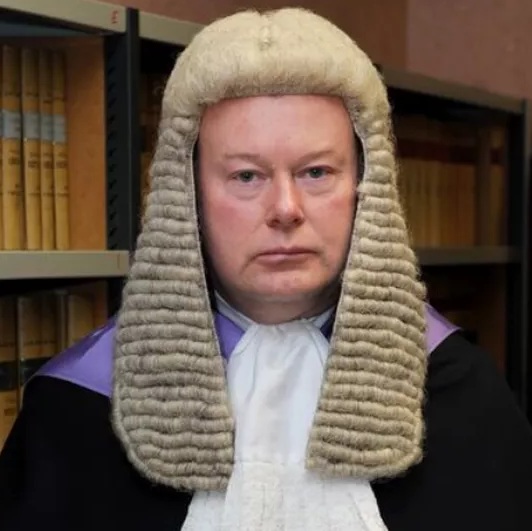
Mr Justice Williams

Mr Justice Williams is a British High Court judge in the Family Division. Sir David Basil Williams is known as The Honourable Mr Justice Williams and should be addressed in court as “My Lord”.

Mr Justice Williams was born on the 18th June 1964 in Bedford and was educated at Cedars Upper School in Leighton Buzzard. He completed his LLB at the University of Leicester and the BVC at the Inns of Court School of Law. From 1986 to 1989, he worked as an executive officer at the Legal Aid Board.

Mr Justice Williams was called to the bar at the Inner Temple in 1990, specialising in family law. He practiced from 3 Dr Johnson’s Buildings from 1990 to 2000 and then from 4 Paper Buildings until 2017.

David Williams took Silk in 2013, was appointed a Recorder in 2016 and a High Court Judge of the Family Division in 2017. Mr Justice Williams took the customary knighthood the same year.

Mr Justice Williams has been appointed as the Family Division Liaison Judge for the South Eastern Circuit (Kent, Surrey, Sussex & Thames Valley) with effect from 30 September 2020 where he will succeed Mr Justice Moor.

Appointment of Family Division Liaison Judges – June 2020

On the 4th September 2024 a New Family Presiding Judge Appointed for the South Eastern Circuit (Kent, Surrey, Sussex & Thames Valley) was announced.

The Lady Chief Justice, with the concurrence of the Lord Chancellor, has announced the appointment of a Family Presiding Judge.

Ms Justice Henke has been appointed for a period of four years, with effect from 1 October 2024, to the South Eastern Circuit (Kent, Surrey, Sussex & Thames Valley) where she will succeed Mr Justice Williams.   

Mr Justice Williams succeeded by Ms Justice Henke

Sara Sharif Case and Open Justice

Open justice is a fundamental principle which means that Justice should not only be done, but should manifestly and undoubtedly be seen to be done. Open justice ensures that the public can have confidence in the fairness and transparency of the legal system.

Sara Sharif judge who gave father custody will not be named

Mr Justice Williams, a Family High Court judge, has been widely criticised for his Reporting Restriction Order. The order prohibits the press from publishing “the name of any third parties referred to in the historic proceedings for the avoidance of doubt including social worker, guardian other named professionals and experts instructed in the proceedings and any judge who heard the historic proceedings”.

Banning the press from identifying judges is said to be unprecedented.

It has been reported that it was a senior judge at Guildford that presided over the case in 2019. The designated and most senior family judge at Guildford is/was HHJ Alison Raeside who was appointed on 01-01-19 and remains in office. The gov.uk website contradicts the judiciary website ““Judge Alison Raeside…and was the Designated Family Judge for Surrey from 2019 until 2024”. What happened to HHJ Raeside ? HHJ Raeside now confirmed as being involved.

Shocking on all levels…”Judges cannot be anonymous” – Art of Law

Mr Justice Williams judgment from a hearing on the 9th December 2024 was handed down remotely at 10.30am on the 20th December 2024. The judgment explains Mr Justice Williams reasoning behind his decision.

The High Court judge who controversially blocked the identification of professionals in the Sara Sharif case was accused of an ‘unjustified’ attack on the Press last night after suggesting that the media cannot be trusted to report fairly.

In an extraordinary broadside, Mr Justice Williams said he imposed an anonymity order to prevent a ‘virtual lynch mob’ because he did not believe the media could be trusted to report matters in a fair, accurate and responsible way.

Fury as Sara Sharif judge says the Press can’t be trusted to be fair as he controversially blocked the identification of professionals – Daily Mail

On the 19th December 2024, Media organisations including the Daily Mail won the right to challenge Mr Justice Williams’s order. The Master of the Rolls, who is a Court of Appeal judge, granted permission to appeal as the open justice arguments have a realistic prospect of success. The appeal over naming the judges will be heard on 14th and 15th January in front of three Court of Appeal judges.

It seems highly suspicious that Mr Justice Williams was succeeded by Ms Justice Henke on the 1st October 2024 (although this could be a coincidental 4 year appointment) and HHJ Alison Raeside, it appears is no longer the the designated and most senior family judge at Guildford.

Was it appropriate that Mr Justice Williams heard the case FD23P00425 which involved judges that reported to him as the Family Presiding Judge for the South East Circuit ?

Did Mr Justice Williams attempt a cover up for “his mates” in the South East Circuit ? Oh My Lord !

Update 24th Jan 2025 : Appeal won to name Sara Sharif’s family court judges

Update 31st Jan 2025 : Sara Sharif family court judges named after appealHer Honour Alison Raeside – who sat on most of the hearings – HHJ Peter Nathan and HHJ Sally Williams. HHJ Alison Raeside sat on the earliest hearings involving Sara, the last one, and most of the hearings in between.

Why open justice is NOT served by shoving the name of a judge under the carpet – “However, we can’t let Mr Justice Williams off the hook…..Mr Justice Williams may have had chivalrous motives”

Para 63 : I have, however, concluded that the judge was wrong.

Para 71 : In the circumstances of this case, the judge had no jurisdiction to anonymise the historic judges either on 9 December 2024 or thereafter. He was wrong to do so, and the Order must be varied accordingly.

Para 78 : The mistake the judge made was to think that he could properly trawl through his own experiences to create a case for anonymising the judges. He should not have done so.

Para 79 : It is not necessary to decide whether the judge’s inappropriate and unfair remarks about the press and the journalists amounted to actual or apparent bias. He undoubtedly behaved unfairly towards the journalists and Channel 4…..The judge lost sight of the importance of press scrutiny to the integrity of the justice system.

Para 80 : I would deprecate the judge’s use of anecdotal material and his own experiences to create a case for anonymising the judges.

IN THE COURT OF APPEAL OF ENGLAND AND WALES (CIVIL DIVISION) ON APPEAL FROM THE HIGH COURT OF JUSTICE FAMILY DIVISION Mr Justice Williams: [2024] EWHC 3330 (Fam) – Appeal Nos: CA-2024-002784 and CA-2025-000083 Case No: FD23P00425

Sussex Family Justice Board

Mr Justice Williams was listed as member of the Sussex Family Justice Board which is a highly dubious “family justice” cartel operating in Sussex. Mr Justice Williams membership was against the rules and incompatible with the independent position of the judiciary

Mr Justice Williams was the Family Division Liaison Judge for the South Eastern Circuit from September 2020 to September 2024 and was “the boss” of HHJ Farquhar, HHJ Bedford and other dubious judges in Sussex such as DDJ Nicholes.

The Lady Chief JusticeLord Chancellor, or President of the Family Division should shut down the Sussex Family Justice Board as it is an embarrassment to justice and the law.

Could Mr Justice Williams be Removed as High Court Judge ?

The three key values which are central to the role of judicial office holders (JOHs) in England and Wales are:
• Independence
• Impartiality
• Integrity

“Publicity is the very soul of justice. . . . It keeps the judge himself, while trying, under trial….Where there is no publicity there is no justice”

Jeremy BenthamMr Justice Cobb: ‘Justice must be seen to be done’

If Mr Justice Williams was party in an attempt a cover up for his judges, then in my opinion, he should be removed from office.

Both Houses of Parliament have the power to petition The King for the removal of a judge of the High Court or the Court of Appeal.

This power originates in the 1701 Act of Settlement and is now contained in section 11(3) of the Senior Courts Act 1981.

It has never had to be exercised in England and Wales. It has in fact only been exercised once, when Sir Jonah Barrington was removed from office as a judge of the Irish High Court of Admiralty in 1830 for corruption: he misappropriated funds due to litigants. No English High Court or Court of Appeal judge has ever been removed from office under these powers. Circuit and District Judges can be removed by the Lord Chancellor. However, they can only do so if the Lord Chief Justice agrees.

Judges and Parliament – HM Courts and Tribunal Judiciary

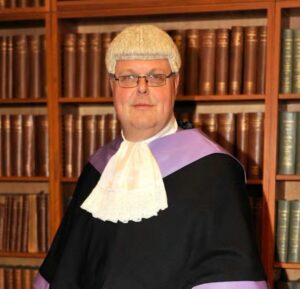
Image of Mr Justice Williams : avalon.red

Check out our articles on Dodgy JudgesJudges Salaries and Fees, Mr Justice Goose, His Honour Judge Melbourne Inman KC, His Honour Andrew Menary KC, His Honour Judge Guy Kearl, His Honour Now His Dishonour, His Honour Judge Michael Slater, His Honour Judge Martin Davis, HHJ Farquhar, Judge Pinder, Do you Have to Bow to a Judge ?, Can you Email a Judge ?, Can you Criticise a Judge ? and the highly dubious Sussex Family Justice Board.


The Ministry of Injustice is not the Ministry of Justice nor is it affiliated in any way with the justice system, legal profession, police or any other law enforcement agencies.


Latest Articles


Most Popular


You should always seek formal legal advice from a qualified and reputable lawyer (solicitor or barrister).

There are a number of links to Free and Paid For Legal Resources and Legal Organisations on the Free Legal Advice , Legal Aid and Pro Bono pages.

Categories
Criminal Justice Judiciary Legal Analysis Legal Professionals

Is the UK Criminal Justice System Broken ?


The UK’s criminal justice system is facing significant delays, with some trials being postponed until as late as 2028. A Sky News investigation at Leicester Crown Court revealed a criminal justice system described as chaotic and ineffective, characterised by:

  • Delayed Trials: Victims and defendants are experiencing waits of up to 460 days, with some cases stretched into future years due to a lack of resources like courtrooms, judges, and barristers.
  • Systemic Issues: The backlog in the crown courts is growing weekly. This delay is attributed to insufficient courtrooms, with around 15% to 20% remaining unused daily due to staffing shortages, alongside an increase in charges by the police and early releases from prisons due to overcrowding.
  • Professional Frustration: Barristers are moving away from criminal law to other, less chaotic areas of legal practice. This exodus is partly due to the system’s inefficiencies along with court staff shortages and increasing case volumes compounding the crisis.
  • Public and Legal Outcry: There’s a strong sentiment among legal professionals and the public that justice is being denied due to these delays. The system is criticized for not functioning effectively, with the Criminal Bar Association chair, Mary Prior KC, highlighting the broken nature of the current setup.
  • Infrastructure Problems: The physical state of court buildings is deteriorating, and even basic facilities like computer systems for tracking cases are unreliable, exacerbating the delays.

The judge then takes the unusual step of addressing the crisis to us in open court.

“I have cases day in, day out that I am having put over. It can be years, if you lose a date in 2025 it is 2026.

“All these cases you have to decide who gets priority… fraud cases are being put on the back burner. In my position I have cases put over for months, even years.”

As a rule, judges don’t do interviews, so this is as close as we’ll get to hearing what he thinks.

He is clearly exasperated and remarkably candid: “I don’t know where things are going to go but they aren’t going to get any better,” he says.

Inside the UK’s ‘wild west’ court system where people may have to wait until 2028 for justice to take place – Sky News
‘Justice delayed is justice denied’: UK’s broken legal system

Read the full Sky News article Inside the UK’s ‘wild west’ court system where people may have to wait until 2028 for justice to take place.

“If you think about it, if we don’t have a functioning criminal justice system, we are in a position where you have people roaming the streets who are committing serious offences and there’s no retribution for that.

People aren’t getting justice quick enough and if they’re not… what’s the point in any of it? People will start to give up.”

Barrister Annabel Lenton – Sky News

This situation in the UK’s criminal justice system underscores an urgent need for investment and reform to ensure timely and effective justice.

Check out our related articles on The Courts of England and Wales, Rule of Law, Innocent until Proven GuiltyOpen Justice, R v Sussex Justices, Criminal Cases Review Commission, Lady Chief Justice and the highly questionable Sussex Family Justice Board.


The Ministry of Injustice is not the Ministry of Justice nor is it affiliated in any way with the justice system, legal profession, police or any other law enforcement agencies.


Latest Articles


Most Popular


You should always seek formal legal advice from a qualified and reputable lawyer (solicitor or barrister).

There are a number of links to Free and Paid For Legal Resources and Legal Organisations on the Free Legal Advice , Legal Aid and Pro Bono pages.

Categories
Government Judiciary Legal Professionals

Solicitor General

The Solicitor General is the second law officer of the Crown in the United Kingdom, after the Attorney General. The role of the Solicitor General is to assist the Attorney General in their legal duties and responsibilities, and to act as their deputy in their absence.

The Solicitor General is also responsible for representing the government in court, and for providing legal advice to government departments and agencies. In addition, the Solicitor General works closely with the Attorney General on a range of legal issues, including the development of legal policy and the administration of justice.

The Rt Hon Ellie Reeves MP was appointed as Solicitor General on the 6 September 2025.

The Lady Chief Justice, at the Royal Courts of Justice, swore in the Solicitor General, The Right Honourable Ellie Reeves MP on the 1st October 2025.

She was previously Minister without Portfolio at the Cabinet Office from 6 July 2024 to 6 September 2025. She was elected as the MP for Lewisham West and East Dulwich in 2024 and was previously the MP for Lewisham West and Penge from 2017.

The Solicitor General is appointed by the monarch on the advice of the Prime Minister, and is usually a member of the government. The Solicitor General is also a Member of Parliament and can participate in parliamentary debates and proceedings.

Previous Solicitor General

  1. Lucy Rigby KC MP2024 to 2025
  2. Sarah Sackman KC MP 2024 to 2024
  3. Robert Courts KC 2023 to 2024
  4. The Rt Hon Michael Tomlinson KC 2022 to 2023
  5. Edward Timpson CBE KC 2022 to 2022
  6. The Rt Hon Alex Chalk KC 2021 to 2022
  7. The Rt Hon Michael Ellis KC 2021 to 2021
  8. The Rt Hon Lucy Frazer KC 2021 to 2021
  9. The Rt Hon Michael Ellis KC 2019 to 2021
  10. The Rt Hon Lucy Frazer KC 2019 to 2019
  11. The Rt Hon Robert Buckland KC 2014 to 2019
  12. The Rt Hon Sir Oliver Heald KC 2012 to 2014
  13. Sir Edward Garnier KC 2010 to 2012

Solicitor General Salary

The Solicitor General is entitled to a salary of £62,368 but claims £57,962 according to Salaries of members of His Majesty’s Government: April 2022

This is addition to the basic annual salary for an MP from 1 April 2025 which is £93,904 according to Pay and expenses for MPs.

Check out our related articles on Attorney General, Director of Public Prosecutions (DPP), Lady Chief Justice, Lord Chancellor, Justice Secretary, Rule of Law, Open Justice, Law, Is the Law Black and White ?, Government Legal Department, Crown Prosecution Service (CPS), Abuse of Process, What Does Lady Justice Symbolise ?, McKenzie Friend, Can a Judge Direct a Jury to Find a Defendant Not Guilty ?,Law Society, Law Commission, McKenzie Friend Right of Audience, Solicitors, Solicitors Regulation Authority, Barristers, Bar Council of England and Wales, Bar Standards Board, R v Sussex Justices, Police Impartiality and the highly questionable Sussex Family Justice Board.


The Ministry of Injustice is not the Ministry of Justice nor is it affiliated in any way with the justice system, legal profession, police or any other law enforcement agencies.


Latest Articles


Most Popular


You should always seek formal legal advice from a qualified and reputable lawyer (solicitor or barrister).

There are a number of links to Free and Paid For Legal Resources and Legal Organisations on the Free Legal Advice , Legal Aid and Pro Bono pages.
Categories
Judiciary Law Legal Analysis

What is is Sub Judice ?

Sub judice is a Latin term meaning “under judgment.” In legal contexts, it refers to a case or matter that is currently under judicial consideration and has not yet been decided. Here are some key points:

  • Legal Principle: It’s a principle in many legal systems that matters under court consideration should not be publicly commented on or discussed in a way that could prejudice the judicial proceedings.
  • Purpose: The purpose is to prevent any influence on the judicial process, ensuring fairness and impartiality in legal outcomes. This includes avoiding prejudicial publicity or influencing potential jurors, witnesses, or even the judge or judges involved.
  • Restrictions:
    • In some jurisdictions, there might be strict rules prohibiting publication or discussion of certain details of the case while it is sub judice.
    • This can apply to media, individuals, and sometimes even legislative bodies discussing the case in detail.
  • Application:
    • In common law countries like the UK, it’s often cited in contempt of court laws where discussing a case publicly might be seen as contempt if it could influence the case’s outcome.
    • The rule helps maintain the integrity of the judicial process by ensuring decisions are based purely on evidence and law, not on public opinion or external commentary.
    • This principle underscores the separation between judicial proceedings and public or political influence, aiming for an unbiased legal process.

The sub judice rule prevents MPs or Lords from referring to a current or impending court case. Although the House is entitled under parliamentary privilege to discuss any subject, sub judice applies to avoid the House from debating a subject and possibly influencing the legal outcome of a case. 

4.68 The privilege of freedom of speech in Parliament places a corresponding duty on members to use the freedom responsibly. This is the basis of the sub judice rule. Under the rule both Houses abstain from discussing the merits of disputes about to be tried and decided in the courts of law.

4.69 The Joint Committee on Parliamentary Privilege recommended that the two Houses should adopt a resolution on sub judice set out in the committee’s report.[155] The House of Lords did this on 11 May 2000. The resolution is as follows:

“That, subject to the discretion of the Lord Speaker,[156] and to the right of the House to legislate on any matter or to discuss any delegated legislation, the House in all its proceedings (including proceedings of committees of the House) shall apply the following rules on matters sub judice:

(1) Cases in which proceedings are active in United Kingdom courts shall not be referred to in any motion, debate or question.

(a) (i) Criminal proceedings are active when a charge has been made or a summons to appear has been issued, or, in Scotland, a warrant to cite has been granted.
(ii) Criminal proceedings cease to be active when they are concluded by a verdict and sentence or discontinuance, or, in cases dealt with by courts martial, after the conclusion of the mandatory post-trial review.

(b) (i) Civil proceedings are active when arrangements for the hearing, such as setting down a case for trial, have been made, until the proceedings are ended by judgment or discontinuance.

(ii) Any application made in or for the purposes of any civil proceedings shall be treated as a distinct proceeding.

(c) Appellate proceedings, whether criminal or civil, are active from the time when they are commenced by application for leave to appeal or by notice of appeal until ended by judgment or discontinuance.

But where a ministerial decision is in question, or in the opinion of the Lord Speaker a case concerns issues of national importance such as the economy, public order or the essential services, reference to the issues or the case may be made in motions, debates or questions.

(2) Specific matters which the House has expressly referred to any judicial body for decision and report shall not be referred to in any motion, debate or question, from the time when the Resolution of the House is passed, until the report is laid before the House.

(3) For the purposes of this Resolution—

(a) Matters before Coroners Courts or Fatal Accident Inquiries shall be treated as matters within paragraph (1)(a); and
(b) “Question” includes a supplementary question.

4.70 The House has agreed that the practice governing motions and questions relating to matters sub judice should be similar in both Houses of Parliament.[157] It is desirable that each House should be in the same position to debate a sub judice matter when the circumstances warrant it.

4.71 The rules governing sub judice do not apply to bills, Measures or delegated legislation or to proceedings on them. Nor do they apply to matters being considered by departmental inquiries and the like; but it is recognised that Parliament should not generally intervene in matters where the decision has been delegated to others by Parliament itself.

4.72 A case is deemed to be sub judice from the moment a petition for leave to appeal is presented to the House of Lords.[158]

4.73 The Lord Speaker must be given at least 24 hours’ notice of any proposal to refer to a matter which is sub judice. The exercise of the Speaker’s discretion may not be challenged in the House.[159]

Companion to the Standing Orders and guide to the Proceedings of the House of Lords

Check out our related articles on What is a Non Crime Hate Incident ?, What is a Cover Up ?, Rule of Law, Open Justice, Policing by Consent, Innocent until Proven Guilty, R v Sussex Justices and the highly questionable Sussex Family Justice Board.


The Ministry of Injustice is not the Ministry of Justice nor is it affiliated in any way with the justice system, legal profession, police or any other law enforcement agencies.


Latest Articles


Most Popular


You should always seek formal legal advice from a qualified and reputable lawyer (solicitor or barrister).

There are a number of links to Free and Paid For Legal Resources and Legal Organisations on the Free Legal Advice , Legal Aid and Pro Bono pages.

Categories
Criminal Justice Free Speech Law Legal Analysis Police

What is a Non-Crime Hate Incident (NCHI) ?

A Non-Crime Hate Incident (NCHI) in the UK refers to any incident where an individual or group perceives that they have been subjected to hostility or prejudice based on race, religion, sexual orientation, disability, or transgender identity, even if no criminal activity has taken place. Here are key points about NCHIs:

  • Definition: It is defined as any non-crime incident which is perceived by the victim or any other person to be motivated by hostility or prejudice. This perception does not require evidence or justification from the victim regarding the hostility.
  • Purpose: NCHIs are recorded by the police to monitor community tensions, potential risks of escalation into more serious incidents or crimes, and to provide data for understanding patterns of prejudice or hostility.
  • Recording Criteria: Not all perceived hate incidents are recorded as NCHIs. There are specific criteria:
    • The incident must disturb an individual’s, group’s, or community’s quality of life or cause concern.
    • The incident must meet an additional threshold if personal data is to be recorded, indicating a real risk of significant harm or future criminal offence against individuals or groups with the same characteristic.
  • Legal Implications: While NCHIs do not result in criminal charges, they can appear in enhanced Disclosure and Barring Service (DBS) checks, which might affect employment opportunities, especially in sectors requiring such checks.
  • Freedom of Speech: Recent guidance and legal reviews have emphasized balancing the recording of NCHIs with the protection of free speech, ensuring that trivial, irrational, or malicious reports do not lead to the recording of personal data unless necessary. The Free Speech Union published An Orwellian Society: Non-Crime Hate Incidents and the policing of speech.
  • Public and Legal Scrutiny: There has been scrutiny over NCHIs, with concerns that they might infringe on free speech or be used maliciously. Changes in guidance now aim for a more proportionate approach where NCHIs are only recorded when deemed absolutely necessary and not merely based on someone being offended.

The Home Office published Statutory guidance – Non-Crime Hate Incidents: Code of Practice on the Recording and Retention of Personal Data (accessible)

Allison Pearson, an award-winning writer, is being investigated by Essex Police for allegedly stirring up racial hatred in a social media post last November.

The scale of the investigation has now become clear, with officers from the Metropolitan Police, Sussex Police and Essex Police all having handled the complaint over the past year.

The Telegraph understands that the post was reported to the Metropolitan Police as a potential breach of the Malicious Communications Act in November last year. The case was then passed to Sussex Police, which marked it as a possible non-crime hate incident (NCHI) as well as a potential malicious communication.

Sussex Police passed it to Essex, where Pearson lives.

The TelegraphNon-Crime Hate Incident (NCHI) or Stirring Up Racial Hatred ?
Non Crime Hate Incident Headlines – The Telegraph

Essex Police sets up ‘gold group’ normally reserved for major crimes to lead Allison Pearson probe

Keir Starmer says police should focus on ‘what matters most’ – amid growing anger over police investigation into Allison Pearson’s tweet

It should be noted that Article 10 of the Human Rights Act 1998 gives the right to freedom of expression.

The Public Order Act 1986, Part III defines Racial Hatred. What is Christophobia ? What is Islamophobia ?

The BlackBelt Barrister published a video Police Will come for YOU Next which examines the right to Free Speech.

“Free speech encompasses the right to offend, and indeed to abuse another.” Para 43 Scottow v CPS [2020] EWHC 3421 (Admin)

Attack on Free Speech ? Black Belt Barrister

Incidents such as the Allison Pearson tweet are supposed to be part of a broader effort to address and monitor hate-related issues in society without necessarily involving criminal law and sanctions. They can still have implications for the individuals involved due to the recording of such incidents by the police.

Check out our articles on Policing by Consent, Are the Police for Hire ?, Police Impartiality, Police Surveillance, Police Professional Standards, Independent Office for Police Conduct (IOPC), Police Public Confidence and Engagement, Crime Reporting, What is a Police and Crime Commissioner ?, Sussex Police, Policing, Police News, Two Tiered Policing, Thought Police, Wasting Police Time, Police Community Support Officers (PCSO), Met Police, Free Speech Union, R v Sussex Justices and the highly questionable Sussex Family Justice Board.


The Ministry of Injustice is not the Ministry of Justice nor is it affiliated in any way with the justice system, legal profession, police or any other law enforcement agencies.


Latest Articles


Most Popular


You should always seek formal legal advice from a qualified and reputable lawyer (solicitor or barrister).

There are a number of links to Free and Paid For Legal Resources and Legal Organisations on the Free Legal Advice , Legal Aid and Pro Bono pages.
Categories
Legal Analysis

What is a Cover Up ?

A coverup is an attempt to conceal wrongdoing, mistakes, or embarrassing information, usually by those in positions of power or authority. It involves:

  1. Suppression or Destruction of Evidence: Hiding, altering, or destroying documents, footage, or other evidence that could reveal the truth.
  2. Misinformation: Spreading false or misleading information to divert attention or to create a narrative that distracts from or contradicts the real events.
  3. Silence or Intimidation: Preventing individuals from speaking out through threats, bribes, or other coercive measures.
  4. Limited Hangout: Admitting to minor faults to distract from the more severe issues, making it seem like the problem has been addressed when it hasn’t.
  5. Official Secrecy: Using legal or procedural means like classification or ‘national security’ claims to keep information under wraps.

Coverups can occur in various contexts, from government and corporate sectors to personal or organisational levels, often aiming to protect reputations, avoid legal consequences, or maintain power.

Here are some notable examples of coverups in the UK…

  1. Hillsborough Disaster (1989):
    • Initially, there was an attempt to blame the tragedy on Liverpool fans. It took years, multiple investigations, and the persistence of the victims’ families to reveal the police’s role and their subsequent coverup of their errors and mistakes during the event.
  2. Bloody Sunday (1972):
    • The initial Widgery Report largely exonerated the British soldiers involved in the shooting of 13 unarmed civilians in Derry, attributing some blame to the victims. It wasn’t until the Saville Inquiry in 2010 that a more truthful account was acknowledged, terming the actions of the soldiers as “unjustified and unjustifiable.”
  3. The Birmingham Six and Guildford Four:
    • These were high-profile miscarriages of justice where individuals were wrongly convicted for IRA bombings in the 1970s. There’s been significant critique and evidence suggesting that judicial processes failed, with police and prosecution potentially withholding evidence that could have proven their innocence. The convictions were eventually overturned, but not before those involved served years in prison.
  4. The Profumo Affair (1963):
    • John Profumo, the Secretary of State for War, initially denied having an affair with Christine Keeler, who was also linked to a Soviet naval attaché. His deceit led to a political scandal and his resignation. The coverup attempt involved misleading statements to Parliament and the public.
  5. Carl Beech Case (Operation Midland):
    • This case involved allegations of a VIP paedophile ring which were later proven to be fabrications by Carl Beech. The police and the Independent Police Complaints Commission (IPCC) faced criticism for their handling of the case, including possibly overlooking evidence that could have discredited Beech sooner, thereby indirectly facilitating a coverup of the truth about the allegations.
  6. The Post Office Horizon IT Scandal:
    • Over many years, sub-postmasters were wrongly prosecuted due to faults in the Horizon IT system. The Post Office maintained the system’s integrity, leading to wrongful convictions, financial ruin, and jail time for many. The coverup involved denial of system errors, aggressive legal tactics against sub-postmasters, and suppression of whistleblower information. The judicial system’s role in prosecuting sub-postmasters based on flawed evidence from the Horizon system can also be seen as part of a broader coverup.
  7. Child Abuse in Care Homes:
    • There have been numerous instances where abuse in children’s homes was covered up. For example, the Rotherham child sexual exploitation scandal saw widespread abuse that was known to authorities but not adequately acted upon for many years due to fear of being labelled racist or due to incompetence.
  8. Kincora Boys’ Home:
    • Allegations have persisted that abuse at Kincora was known to authorities, including MI5, who allegedly used one of the abusers for intelligence purposes. The lack of thorough investigation or prosecution for years could be seen as a form of coverup, although direct judicial involvement in hiding the truth has not been conclusively proven.
  9. Undercover Police Scandals:
    • Undercover police infiltrated various protest groups, forming long-term relationships with activists under false pretenses. The extent of these operations, including fathering children with activists without revealing their true identity, was hidden from public knowledge for decades.
  10. Royal Sussex County Hospital:
    • The hospital and trust are well known for scandal, controversy and medical negligence. It has also been accused of bullying whistle-blowers and turning a blind eye to serious complaints about nursing staff.

These examples highlight a spectrum of coverup activities from misdirection and denial to active suppression of information, illustrating the complexities and implications of such actions in public and legal spheres.

Check out our related articles on Rule of Law, Open Justice, Policing by Consent, Innocent until Proven Guilty, R v Sussex Justices, What is Sub Judice ?, What is a Non-Crime Hate Incident (NCHI) ?, What is Christophobia ?, What is Islamophobia ? and the highly questionable Sussex Family Justice Board.


The Ministry of Injustice is not the Ministry of Justice nor is it affiliated in any way with the justice system, legal profession, police or any other law enforcement agencies.


Latest Articles


Most Popular


You should always seek formal legal advice from a qualified and reputable lawyer (solicitor or barrister).

There are a number of links to Free and Paid For Legal Resources and Legal Organisations on the Free Legal Advice , Legal Aid and Pro Bono pages.
Categories
Government Law Legal Professionals

Government Legal Department (GLD)

The Government Legal Department (GLD) serves as the principal legal adviser to the UK Government. The core purpose of the GLD is to help the government to govern well, within the rule of law. The GLD is a non-ministerial government department and executive agency.

The GLD has more than 3,000 employees, around 2,500 of whom are solicitors or barristers.

The Government Legal Profession (GLP) is the collective network of qualified lawyers embedded across UK government departments and agencies, providing expert legal advice, litigation support, policy guidance, and compliance services to ensure the government operates within the rule of law.

Susanna McGibbon is the Treasury Solicitor and Permanent Secretary of the Government Legal Department. The Treasury Solicitor is the government’s most senior legal official 

Susanna took up the role of Treasury Solicitor and Permanent Secretary of the Government Legal Department on Monday 8 March 2021.

Her previous roles include:

  • Director General, Directorate B, Government Legal Department, 2018 to 2021
  • Director of Litigation, Government Legal Department, 2012 to 2018
  • Legal Director, Department of Communities and Local Government, 2009 to 2012
  • Legal Director, Department for Business Innovation and Skills, 2006 to 2009
HM Procurator General, Treasury Solicitor and Head of the Government Legal Profession
  • Role and Function: The GLD provides legal advice on the development, design, and implementation of government policies and decisions. It drafts secondary legislation and works with the Office of the Parliamentary Counsel on primary legislation. The department represents the government in court proceedings, offering litigation services for most government departments and agencies.
  • Structure: The GLD is organised into various teams:
    • Parliamentary and Advisory Teams: These provide legal advice across numerous policy areas, ensuring government actions are legally sound and compliant.
    • Litigation Group: Handles legal disputes in various courts, covering public and private law, and supports public inquiries.
    • Commercial Law Group: Focuses on commercial law issues, including procurement, contracts, intellectual property, and state aid to ensure value for money in public spending.
  • Leadership: The GLD is headed by the Treasury Solicitor, who also holds the title of His Majesty’s Procurator General. This role involves managing the department and reporting to the Attorney General for England and Wales.
  • Scope: Besides serving Whitehall departments, the GLD extends its services to other organizations like HM Revenue & Customs, MI5, MI6 and various other governmental bodies. It’s also involved in handling ownerless property (bona vacantia) in England, except in certain regions where it’s delegated.
  • Significance: Its work is critical for ensuring that government operations, policy-making, and legal proceedings are conducted within the rule of law. This includes both advising on policy legality and defending or bringing legal actions on behalf of the government.

We are the government’s principal legal advisers. Our core purpose is to help the government to govern well, within the rule of law.

We do this by providing legal advice on the development, design and implementation of government policies and decisions, drafting secondary legislation and working with Parliamentary Counsel on primary legislation, and representing the government in court.

Government Legal Department

Government Legal Department
102 Petty France
Westminster
London
SW1H 9GL
United Kingdom

Email : [email protected]

inetnum:        212.161.51.64 - 212.161.51.95
netname:        NET-GB-Government-Legal-Department
descr:          Government Legal Department
Government Legal Department IP Addresses

The GLD’s work underscores its role in maintaining legal integrity and accountability in governmental functions, ensuring that the government operates legally and ethically.

Check out our related articles on Government Legal Profession (GLP), Attorney General, Solicitor General, Lord Chancellor, Justice Secretary, Rule of Law, Open Justice, Law, Is the Law Black and White ?, Crown Prosecution Service (CPS), Law Society, Law Commission, Solicitors, Solicitors Regulation Authority, Barristers, Bar Council of England and Wales, Bar Standards Board, R v Sussex Justices and the highly questionable Sussex Family Justice Board.


The Ministry of Injustice is not the Ministry of Justice nor is it affiliated in any way with the justice system, legal profession, police or any other law enforcement agencies.


Latest Articles


Most Popular


You should always seek formal legal advice from a qualified and reputable lawyer (solicitor or barrister).

There are a number of links to Free and Paid For Legal Resources and Legal Organisations on the Free Legal Advice , Legal Aid and Pro Bono pages.

Categories
Judiciary Legal Professionals Police

What is a High Sheriff ?

The “High Sheriff” is an independent non-political Royal appointment for a single year only. There are 55 High Sheriffs serving the counties of England and Wales. The post is unpaid (except for a nominal court attendance allowance), and the general expenses of the office are borne personally by the holder.

There is a High Sheriff for each county in England and Wales, although the Shrieval Counties (“Shrieval” means anything to do with a Sheriff) no longer align with administrative areas, this creates a mix between the traditional counties and more recent local authority areas.

High Sheriffs – The Privy Council
  1. Historical Role: The office dates back to Anglo-Saxon times, originally appointed to enforce law and order in a shire (county). The ‘Shire Reeve’ was responsible to the king for the maintenance of law and order within the shire, or county, and for the collection and return of taxes due to the Crown. Of the 63 clauses in the Magna Carta of 1215, no less than 27 relate to the role of the Sheriff and from 1254 the High Sheriff supervised the election to Parliament of two Knights of the Shire. Over centuries, the role has evolved significantly.
  2. Legislation: The Sheriffs’ Declaration Act 1835 and Sheriffs Act 1887.
  3. Current Duties: Today, the High Sheriff has mostly ceremonial and social responsibilities rather than law enforcement duties:
  • To lend active support to the principal organs of the Constitution within their county – the Royal Family, the Judiciary, the Police and other law enforcement agencies, the emergency services, local authorities, and church and faith groups
  • To take an active part in supporting and promoting the voluntary sector and giving all possible encouragement to the voluntary organisations within a County, particularly those involved with crime reduction and social cohesion.
  • To ensure the welfare of visiting High Court Judges, to attend on them at Court and to offer them hospitality
  • To make a meaningful contribution to the High Sheriff’s County during the year of Office and to uphold and enhance the ancient Office of High Sheriff 
  • To support the Lord-Lieutenant on royal visits and on other occasions as appropriate
  1. Appointment: High Sheriffs are appointed annually but serve in a different year from when they are nominated due to a unique system.

It is the responsibility of each High Sheriff to provide the names of people suitable to serve in the future. These names are added to the list of Sheriffs, and every November at a ceremony in the High Court the Lord Chief Justice and three other judges formally add as many new names for each county as are needed to ensure that there are Sheriffs in nomination for each of the next three years. A Sheriff needs to own property in the county for which he or she is nominated. The following March The King, at a meeting of the Privy Council, formally selects one of the three nominated Sheriffs to serve for the next twelve months by literally pricking a hole through his or her name on the List with a bodkin.

High Sheriffs – The Privy Council
  1. Title: The title is “High Sheriff”, not “Sheriff”, which distinguishes it from historical or fictional roles like the American sheriff or the ancient English sheriff with broader law enforcement powers.
  2. Symbolism: High Sheriffs have traditional symbols like the Badge of Office and might carry a ceremonial sword, which represents their historical role in maintaining law and order.

The High Sheriffs’ Association of England and Wales was founded in 1971 to represent the interests of and give assistance to High Sheriffs in England and Wales. 

The position Of High Sheriff maintains a link to the past, preserving traditions while adapting to serve modern community needs. High Sheriffs often work to enhance community cohesion and support local law enforcement and emergency services in non-executive capacities.

Check out our articles on Policing, Police News, Policing by Consent, Two Tiered Policing, Wasting Police Time, Police and Crime Commissioner, Chief Constable Jo Shiner and the highly questionable Sussex Family Justice Board.


The Ministry of Injustice is not the Ministry of Justice nor is it affiliated in any way with the justice system, legal profession, police or any other law enforcement agencies.


Latest Articles


Most Popular


You should always seek formal legal advice from a qualified and reputable lawyer (solicitor or barrister).

There are a number of links to Free and Paid For Legal Resources and Legal Organisations on the Free Legal Advice , Legal Aid and Pro Bono pages.

Categories
Law Legal Analysis

What is the Civil Justice Council ?

The Civil Justice Council (CJC) is a non-departmental public body in the United Kingdom, specifically for England and Wales. Its primary role is to advise the Lord Chancellor, the Judiciary, and the Civil Procedure Rule Committee on matters related to civil justice and civil procedure. Here are some key points about the CJC:

  • Establishment: It was established under the Civil Procedure Act 1997, specifically section 6, to help keep the civil justice system under review.
  • Functions:
    • To keep the civil justice system under review.
    • To consider how to make the civil justice system more accessible, fair, and efficient.
    • To advise on the development of the civil justice system.
    • To refer proposals for changes in the civil justice system to the Lord Chancellor and the Civil Procedure Rules Committee.
    • To make proposals for research into civil justice matters.
  • Structure:
    • The Council is chaired by the Sir Geoffrey Vos, Master of the Rolls, who is also one of the senior judges in England and Wales.
    • It includes members from the judiciary, civil servants, legal professionals, and others representing various perspectives within the civil justice system. Current CJC membership January 2024
  • Recent Activities: The CJC has been involved in various initiatives like reviewing the role and potential future of Alternative Dispute Resolution (ADR) in civil justice, examining the impact of legislative changes like the Litigation Funding Agreements (Enforceability) Bill, and looking into issues like costs in civil litigation.
  • Public Engagement: The CJC often seeks public and professional input on its reviews and projects, indicating an open process for stakeholder engagement in shaping civil justice reforms.

Civil Justice Council 13th National Forum

The Civil Justice Council (CJC) announced that registration is now open for its 13th National Forum ‘Access to Justice: Working Together’. The Forum will take place on Friday 29 November 2024 at Friends House, London and online. 

Full details of speakers, the event’s agenda and how to register can be found here.

The CJC announce the following speakers (in order of appearance): 

“This year’s National Forum promises to be the best ever. We have an excellent line-up of speakers addressing the theme of working together, and discussing the CJC’s exciting work programme including civil case data, enforcement, litigation funding, mental capacity and digital disadvantage. I very much hope you will join us.” 

Sir Geoffrey Vos – Master of the Rolls

The Civil Justice Council 2023-24 Annual Report is available online.

Minutes and Synopsis of CJC meetings are also available online.

Check out our related articles on Rule of Law, Open Justice, Is the Law Black and White ?, Family Justice Board, Civil Justice Council, Youth Justice Board, Abuse of Process, What Does Lady Justice Symbolise ?, McKenzie Friend, Wasted Costs Order, Can a Judge Direct a Jury to Find a Defendant Not Guilty ?, Law Society, Law Commission, McKenzie Friend Right of Audience, Solicitors, Solicitors Regulation Authority, Barristers, Bar Council of England and Wales, Bar Standards Board, Contra Mundum, R v Sussex Justices, Police Impartiality and the highly questionable Sussex Family Justice Board.


The Ministry of Injustice is not the Ministry of Justice nor is it affiliated in any way with the justice system, legal profession, police or any other law enforcement agencies.


Latest Articles


Most Popular


You should always seek formal legal advice from a qualified and reputable lawyer (solicitor or barrister).

There are a number of links to Free and Paid For Legal Resources and Legal Organisations on the Free Legal Advice , Legal Aid and Pro Bono pages.

Categories
Legal Analysis

Weaponization and Politicisation of Justice ?

The concept of the “weaponization and politicisation of justice” generally refers to the misuse of legal systems or judicial processes for political ends.

In the UK :

  • Perceived Political Influence: There have been allegations that the justice system in the UK has been influenced by political agendas.
  • Selective Enforcement: Discussions online have pointed to a perceived disparity in how laws are enforced. For instance, there are sentiments that certain protests or groups receive preferential treatment over others based on political leanings or affiliations. This is often called Two Tier Justice and Two Tier Policing.
  • Legislation for Political Gain: There’s criticism regarding laws created that might serve to benefit legal professionals or align with specific political ideologies, potentially skewing justice towards those who can afford legal representation or align with the political narrative.

It is vitally important in a democracy that individual judges and the judiciary as a whole are impartial and independent of all external pressures and of each other so that those who appear before them and the wider public can have confidence that their cases will be decided fairly and in accordance with the law. When carrying out their judicial function they must be free of any improper influence. Such influence could come from any number of sources. It could arise from improper pressure by the executive or the legislature, by individual litigants, particular pressure groups, the media, self-interest or other judges, in particular more senior judges.

Judicial Independence

Data released today (16 August 2024) confirms 460 people arrested in connection with the violent disorder earlier this month have faced their day in court and at least 99 have already been sentenced.

Hundreds more people continue appearing in court following violent disorder
Violent Disorder – Suspended Sentence ?

Around the World :

  • United States: The concept of “lawfare” has been discussed, where legal battles are seen as strategic tools in political warfare. The FBI’s investigations, especially those touching on high-profile political figures, have been accused of being politically motivated, either to protect or persecute, depending on the political lens through which one views the actions.
  • Global Trends:
    • Censorship and Control: There’s a growing concern about the use of legal systems to suppress dissent or free speech, often under the guise of combating misinformation or hate speech. This is not just a Western issue; in many countries, laws against “fake news” have been criticised for being tools for political control.
    • Selective Prosecution: Various nations have faced accusations of using their legal systems to target opposition leaders, activists, or minorities. This includes high-profile cases where legal actions seem disproportionate or politically motivated, aimed at silencing criticism or dissent.
    • International Influence: The influence of international bodies or agreements (like the European Convention on Human Rights) in domestic legal decisions has been contentious, with some arguing it leads to a form of justice that might not reflect national interests or public sentiment.

Perspectives :

  • Conservative Viewpoints: Some conservative voices argue that progressive politics have influenced the justice system, leading to what they perceive as an unfair targeting of conservative figures or movements. They might point to investigations or legal actions against high-profile conservative politicians or supporters as examples.
  • Liberal Viewpoints: Conversely, liberals might argue that conservative administrations have historically attempted to manipulate justice processes to shield allies or undermine political adversaries. The use of terms like “lawfare” in some discussions highlights this perspective, where legal battles are seen as warfare by other means.
  • Neutral Observations: Many analysts advocate for a justice system that operates independently of political pressures. The concern here is not about which side is doing the weaponizing but that any such action undermines the integrity of legal institutions, public trust in these institutions, and the democratic process itself.

Implications :

  • Erosion of Trust: When justice is perceived as a tool for political ends, it significantly erodes public trust in legal and governmental institutions. This can lead to broader societal distrust and polarization.
  • Legal System Integrity: The politicisation of justice can compromise the rule of law, where laws are applied not uniformly but selectively based on political affiliations or influence.
  • Impact on Democracy: A politicized justice system can deter political participation, especially among those who feel targeted, and can skew political accountability, potentially allowing corruption or misconduct to go unchecked.

Counteractions :

  • Judicial Independence: Strengthening judicial independence is often cited as a countermeasure, ensuring that judges can make decisions free from political pressure.
  • Transparency and Accountability: Increasing transparency in legal proceedings and accountability for judicial and prosecutorial decisions can help mitigate perceptions of bias.
  • Public and Media Scrutiny: An active civil society and media can play roles in highlighting and challenging instances where justice appears to be misused for political ends.

The discussion around the weaponization and politicisation of justice underscores a critical challenge for democratic societies: ensuring that justice remains impartial and free from political manipulation.

Addressing these concerns often requires robust checks and balances, transparency, and sometimes, reforms to reinforce the independence of judicial institutions. This ongoing debate reflects broader tensions about governance, power, and fairness in legal systems globally.

Check out our related articles on Rule of Law, Innocent until Proven GuiltyOpen Justice, R v Sussex Justices, His Honour Judge Jeremy Richardson KC, His Honour Judge Melbourne Inman KC, and the highly questionable Sussex Family Justice Board.


The Ministry of Injustice is not the Ministry of Justice nor is it affiliated in any way with the justice system, legal profession, police or any other law enforcement agencies.


Latest Articles


Most Popular


You should always seek formal legal advice from a qualified and reputable lawyer (solicitor or barrister).

There are a number of links to Free and Paid For Legal Resources and Legal Organisations on the Free Legal Advice , Legal Aid and Pro Bono pages.

Rule of Law - Open Justice - Policing By Consent