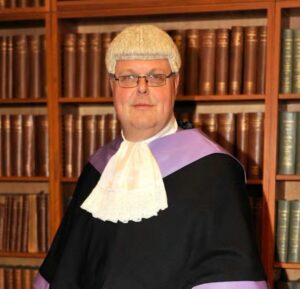
The King’s Counsel (KC) is a prestigious title awarded to senior barristers and advocates who have rights of audience in the higher courts of England and Wales who have also demonstrated the competencies in the Competency Framework to a standard of excellence.
King’s Counsel are appointed from amongst practising advocates – both barristers and solicitors.
The selection process for KC’s is rigorous and selective, and candidates must meet specific criteria to be eligible for consideration.
In this article, we will examine the history, qualifications, and benefits of being appointed as a King’s Counsel in the UK, as well as the process of recommendation and appointment.
History of King’s Counsel
The title of King’s Counsel (KC) has a long and rich history in the legal profession in the UK. It was first introduced in the 16th century during the reign of King Elizabeth I. At that time, the title was conferred upon lawyers who were appointed by the monarch to act as legal advisors and advocates in court.
In the 19th century, the title of King’s Counsel became more closely associated with the legal profession. It was recognized as a mark of excellence in the field, and those who were appointed to the position were seen as being among the most skilled and experienced lawyers in the country.
Qualifications for King’s Counsel
To be considered for appointment as a King’s Counsel, a lawyer must meet a strict set of criteria.
First and foremost, they must have a minimum of ten years’ experience practicing law, and they must have demonstrated exceptional skill and expertise in their field.
They must also have a strong record of advocacy and be able to demonstrate that they have achieved outstanding results for their clients.
In addition to these qualifications, a lawyer must also be nominated for the position by the Lord Chancellor.
The Lord Chancellor invites nominations from a range of sources, including judges, other senior lawyers, and professional bodies such as the Bar Council and Law Society.
Once a nomination has been made, the candidate must submit an application that includes detailed information about their legal career and achievements.
This will typically include information on their education, professional experience, notable cases, and any other relevant information that demonstrates their skill and expertise in the field of law.
Benefits of being a King’s Counsel
Being appointed as a King’s Counsel is a significant achievement in the legal profession. It is a mark of excellence that is recognized both within the legal profession and outside of it. It is also a title that comes with a number of benefits.
One of the main benefits of being a King’s Counsel is that it provides lawyers with increased opportunities to work on high-profile and complex cases. As one of the most respected titles in the legal profession, those who hold the position of King’s Counsel are often sought out by clients who are looking for the best possible representation.
Another benefit of being a King’s Counsel is that it can lead to increased earnings. Lawyers who hold this title are often able to command higher fees for their services, as clients are willing to pay a premium for the expertise and experience that comes with the position.
In addition to these benefits, being a King’s Counsel is also an opportunity to give back to the legal profession. Those who hold this title are often involved in mentoring and training younger lawyers, helping to ensure that the next generation of legal professionals is well-prepared to take on the challenges of the profession.
Recommendation and Appointment Process
The process of appointing a KC in the UK is overseen by the King’s Counsel Appointments (KCA) committee. The KCA is an independent body that is responsible for recommending candidates for appointment as KCs to the Lord Chancellor.
The process typically begins with nominations made by judges, other senior lawyers, and professional bodies such as the Bar Council and Law Society. The Lord Chancellor may also invite nominations from other sources, including members of the public.
Once a nomination has been made, the candidate must submit an application that includes detailed information about their legal career and achievements. The KCA committee will then review the application and consider a range of factors when making their recommendation, including the candidate’s skill, experience, and professional conduct.
The KCA also considers diversity and inclusion when making their recommendations. They are committed to ensuring that the legal profession is representative of the communities it serves, and they actively seek out candidates from a diverse range of backgrounds.
Once the KCA has made their recommendation, it is then up to the Lord Chancellor to make the final decision on whether to appoint the candidate as a KC. The Lord Chancellor typically follows the recommendation of the KCA, but they are not bound to do so.
Being appointed as a King’s Counsel is a significant achievement in the legal profession in the UK. It is a title that is recognized both within the legal profession and outside of it, and it comes with a range of benefits.
Overall, the appointment of KCs is a rigorous and selective process that ensures that only the most skilled and experienced lawyers in the UK are awarded this prestigious title.
It is a mark of excellence that is highly respected within the legal profession and serves as a testament to a lawyer’s skill and expertise in the practice of law.
Read the reviews of Junior Sussex BarristerGavin HoweandLegal 500Junior BarristerEleanor Battie. Neither who, in my opinion, are ever likely to receive KC….
“He is awful, underhanded and should not be practising law!”
2,878 online reports and calls were received between November 2022 and February 2024 in relation to officers and staff at the Metropolitan Police Service. It has resulted in 728 Met Police led investigations.
‘Its success has been a very positive step for our communities in London and we are pleased that all the other forces have decided to adopt it and we will see a national roll out……..It’s vital that the public know there are clear systems in place where appalling behaviours will be challenged and addressed robustly and that those within policing know they can trust their colleagues.’
The Police Anti-Corruption and Abuse Reporting Service gives people an easy way to report information about a police officer, member of police staff or volunteer who they believe are taking advantage of their role and abusing their position of power. This abuse may be for financial or sexual motivation, or their conduct could be motivated by hatred or prejudice.
You can contact the national Police Anti-Corruption and Abuse Reporting Service on 0800 085 0000 or online24/7, 365 days a year to provide any information you may have about a Police Service, police officer, member of police staff or police volunteer who engage in the following :-
Provides information or influence in return for money or favours.
Uses their policing position for personal advantage – whether financial or otherwise.
Crosses professional boundaries for sexual purposes.
Abuses or controls their partner, or those they have a relationship with.
Engages in racist, homophobic or misogynistic conduct, on or off duty, in person or online.
Call 999 if:
a serious offence is in progress or has just been committed
someone is in immediate danger or harm
property is in danger of being damaged
a serious disruption to the public is likely
Call 101 for non-emergency enquiries. You can also Report a Crime online.
‘We do not underestimate the impact recent events have had on trust and confidence in policing, including the appalling findings of the Angiolini report……The vast majority of police officers and staff act professionally and with integrity in the fulfilment of their duties to protect the public’
Sussex Police serves East and West Sussex and the city of Brighton & Hove which is an area of about 3,780km. A resident population of 1.65m people grows significantly with millions of visitors, holidaymakers, students, seasonal workers and the 46 million passengers who travel annually through Gatwick Airport.
Sussex Police are investigating (Operation Bramber) allegations of medical negligence at the University Hospitals Sussex NHS Foundation Trust, relating to neurosurgery and general surgery at the Royal Sussex County Hospital in Brighton in the period between 2015 and 2021.
Sussex Police officer banned for dishonesty Former Sussex Police PC Jacob Vaughan was alleged to have damaged a police car he was driving while on police premises, but failed to report it. “The public deserve to trust that their police officers are behaving honestly, and we will continue to root out those who do not meet that expectation.” – Detective Superintendent Andy Wolstenholme
Sussex Police apology to vulnerable victim Sussex Police has apologised to the victim of police investigator David Gamlin who engaged in sexual activity with her while he was on duty. “Gamlin has been barred from ever serving with the police again.”
Sussex Police officer ‘said no 62 times’ during alleged sex assault PC Daniel Julian of Sussex Police was cleared of three counts of sexual assault, causing a woman to engage in sexual activity without consent and attempted rape by a jury at Lewes Crown Court in April 2024. Misconduct proceedings at Sussex Police Headquarters continue..
Sussex Police recruit barred Former PC Cameron Young did not reveal that he had previously been subject to a disciplinary investigation when applying to join Sussex Police.
Sussex Police officer found not guilty PC Sam James Wilson of Sussex Police has been found not guilty of engaging in controlling and coercive behaviour towards his former partner following a trial at Kingston Crown Court. Sussex Police will now consider misconduct proceedings as the criminal case has concluded.
Sussex Police accelerated misconduct hearing It is alleged that PC Cameron Young EC118 from the East Sussex Police Divisional Coaching Unit has breached the Standards of Professional Behaviour for Honesty and Integrity. He failed to disclose a previous disciplinary investigation on his vetting form when he applied to join Sussex Police.
Sussex Police sergeant is demoted after touching colleague Sussex Police sergeant Matthew Crane who tapped out a tune on a female colleague’s bottom before asking her for naked pictures has kept his job. Sgt Crane’s actions had the potential to undermine discipline and good order within the police an undermine public confidence.
Sussex Police panel says it has ‘lost confidence’ in PCC Members of the Sussex Police and Crime Panel has said it has “lost confidence” in Sussex Police and Crime Commissioner Katy Bourne over her attendance at a protest march over an asylum seeker camp in Crowborough.
Sussex Police officer PC Peter De Silvo has been charged with stalking and fraud offences and is due to appear before Staines Magistrates’ Court on Friday 19th December 2025
‘Thank you for the clarity and for outlining the circumstances which I am frankly mortified about and offer my sincere apologies. I am also very disappointed in those who have let you down and I have asked for that/them to be addressed.’
Former Sussex Police officer barred for life A Sussex Police statement, following the hearing, read: “A former police officer convicted of distributing indecent images of children has been found to have committed gross misconduct.”
Sussex Police needs to improve staff vetting His Majesty’s Inspectorate of Constabulary (HMIC) report stated there was a “huge backlog of vetting” and that some employees were working in a job “without the proper level of clearance”.
This week (April 25-29) is National Stalking Awareness Week. I have reported a stalker on several occasions to Sussex Police but they have refuse to record this as a crime. Do Sussex Police @sussex_police take stalking seriously in Sussex ?https://t.co/C9B7z3s0Sq
Ex Sussex Police PC jailed over driving offences fraud Seren Sriganesh a former Sussex police officer has been jailed after falsely claiming his parents had committed his three driving offences. He also unlawfully accessed police systems to view details of one of the offences.
‘Unhinged’ Sussex PC crashed into e-bike It is alleged Sussex Police PC Tim Bradshaw drove his police car at an e-bike causing serious injury by dangerous driving. “There’s a difference between protecting and serving our community and being unhinged”
Sussex armed police swoop on boys playing with toy Nerf guns Sussex Armed Police yelled at Two boys aged 12 and 13 to get on the ground and put down their ‘weapons’. Sussex Police only realised the nerf guns were toys when they shot the foam bullets for themselves.
Sussex Police officers, staff and volunteers work together to deliver the strategic priorities set within the Sussex Police and Crime Plan and the Sussex Police priorities which are as follows :-
A Sussex Police Community Support Officer (PCSO) was shown refusing to respond to an alleged assault in a supermarket, in a video posted on TikTok.
The video shows a man telling the officer about a fight in the Co-op store in Lancing which had been reported to the police.
The PCSO said: “I’m not a response unit.”
Sussex Police said it had launched an investigation.
The man who was filmed in conversation with the PCSO said members of the public were trying to stop a shoplifter.
He said to the PCSO: “You need to get round to the Co-op. There’s just been a fight round there, because people are trying to stop the shoplifter that you’re doing nothing about.”
He said: “People have called the police and you’re sitting here.”
The officer responded: “I’m not a response unit unfortunately.”
The man said the sight of the police car would “make them scatter”.
The officer replied: “Yeah, but then I have to deal with it.”
“That’s why I’m here and not round there.”
In a statement, Sussex Police said: “We are aware of video footage of a single-crewed Police Community Support Officer being approached by a member of the public to report an incident in Lancing.
“The matter was reported to us and a police officer attended the incident as an emergency. The PCSO also then attended the scene.”
Supt Nick Dias said: “We are sorry for the clumsy language used by the PCSO in this exchange and acknowledge the public’s concern. A police unit was dispatched to the scene as a matter of priority. Our response to this incident is being reviewed.”
Katy Bourne, Sussex Police and Crime Commissioner, said she shared “the public’s disappointment and understandable concern” with the video.
“A member of the public sent me the video and I immediately shared it with the Chief Constable who referred the incident to the Sussex professional standards department.”
She added: “This is not the sort of response that I would expect and the public deserve.”
The report PEEL 2021/22 – An inspection of Sussex Police graded Sussex Police’s performance across nine areas of policing and found the force was ‘good’ in two areas, ‘adequate’ in four areas, ‘requires improvement’ in one area, and ‘inadequate’ in two areas.
Sussex Police urgently needs to improve how it responds to the public, and how it records crime.
Its recording of reports of violent crime is inadequate, and the force is also missing opportunities to safeguard vulnerable people. It needs to improve the way it assesses initial calls to the force so that vulnerable people and repeat callers are routinely identified.
As a result of my concerns I have already been in contact with the chief constable and the police and crime commissioner.
I am pleased with the way the force has responded so far and I will continue to check the force’s progress in addressing areas for improvement in the coming months.
His Majesty’s Inspector of Constabulary – Roy Wilsher
Sussex Police and Surrey Police failed to use people’s personal data lawfully by recording hundreds of thousands of phone calls without their knowledge. People have the right to expect that when they speak to a police officer, the information they disclose is handled responsibly. We can only estimate the huge amount of personal data collected during these conversations, including highly sensitive information relating to suspected crimes.
The reprimand reflects the use of the ICO’s wider powers towards the public sector as large fines could lead to reduced budgets for the provision of vital services. This case highlights why the ICO is pursuing a different approach, as fining Surrey Police and Sussex Police risks impacting the victims of crime in the area once again.
This case should be a lesson learned to any organisation planning to introduce an app, product or service that uses people’s personal data. Organisations must consider people’s data protection rights and implement data protection principles from the very start.
Sussex Police do not tolerate any hateful comments towards their gender identity regardless of crimes committed. This is irrelevant to the crime that has been committed and investigated.
Sussex Police Twitter 27th September 2022
Please see our statement below in relation to the recent sentencing of a historic sex offender. pic.twitter.com/7ZcwkT7yEt
.@Sussex_police have done well to put a dangerous criminal behind bars. But they’ve got it wrong by playing identity politics and denying biology. Focus on catching criminals not policing pronouns. #commonsensepolicinghttps://t.co/19U1Qf77F7
Home Secretary’s Comment About Sussex PoliceSussex Police Twitter Account
Sussex Police and Crime Commissioner Priorities
“As your PCC, my job is to hold the Chief Constable of Sussex Police to account and ensure that the police focus on local priorities. I believe every citizen has a right to feel safe on the streets and in their homes.
“In consultation with the Chief Constable and the people of Sussex, I have published a Police & Crime Plan setting out the priorities and local objectives that local people and business say are important to them.
With your support, I am determined that Sussex Police will operate effectively and efficiently and that the values I have embraced during my professional career – hard work, integrity and fairness – underpin everything we do together.”
Police typically are responsible for maintaining public order and safety, enforcing the law, and preventing, detecting, and investigating criminal activities.
Sussex Police should concentrate on doing the job that they are paid to do.No wonder the public have no faith in the Police !
In short, the answer is yes anyone can criticise a judge or court.
The judiciary and courts are quite rightly not immune to public criticism and comment. The rule of law applies to everyone and no one should be above the law.
Scandalising the judiciary, also known as scandalising the court or scandalising judges, was historically considered a form of contempt of court in the common law of England and Wales.
It involved any publication or speech that would undermine public confidence in the judiciary or its officers, such as judges and magistrates.
However, the Crime and Courts Act 2013 abolished the offence of scandalising the judiciary under the common law of England and Wales.
Section 33 of the Act specifically states
“Scandalising the judiciary (also referred to as scandalising the court or scandalising judges) is abolished as a form of contempt of court under the common law of England and Wales.”
The decision to abolish the offence was controversial, with supporters of the change arguing that it was necessary to ensure that freedom of expression was protected and that the judiciary were not immune to criticism.
While the offence of scandalising the judiciary no longer exists under the common law of England and Wales, other forms of contempt of court still apply.
These include disobedience to court orders, interference with court proceedings, and publication of material that could prejudice ongoing legal proceedings.
In conclusion, scandalising the judiciary was once considered a form of contempt of court in England and Wales, but this offence was abolished by the Crime and Courts Act 2013.
It should however be noted that libel and slander are both forms of defamation, which involve making a false statement about someone that damages their reputation.
In the United Kingdom, the laws around libel and slander are governed by the Defamation Act 2013, which replaced the previous common law rules on defamation.
The JCIO are an independent office which supports the Lord Chancellor and Lady Chief Justice in considering complaints about the personal conduct of judicial office holders.
The JCIO cannot accept complaints about a judge’s decision or the way a judge has managed a case.
In the realm of law and order, the term “unlawful” denotes actions or behaviours that run counter to established laws, regulations, or ethical standards within a given society.
It serves as a fundamental concept in delineating the boundaries of acceptable conduct, guiding individuals, institutions, and authorities in upholding justice and social order. Understanding what constitutes unlawfulness is pivotal for fostering fairness, equity, and respect for the rule of law.
At its essence, unlawfulness encompasses actions prohibited by law. These can range from minor infractions like speeding to more serious offences such as theft, assault, or homicide.
The severity of unlawfulness varies depending on the nature and impact of the transgression, with legal systems categorising offences into different degrees of seriousness, each carrying its own set of penalties and repercussions.
Central to determining unlawfulness is the existence of legal statutes or regulations that explicitly outline prohibited actions and stipulate the corresponding consequences for violating them. These laws are established through legislative processes by governing bodies, reflecting societal norms, values, and priorities.
Additionally, legal principles such as precedent, common law, and judicial interpretation play a vital role in elucidating the scope and application of these laws in specific cases.
Beyond statutory laws, unlawfulness can also arise from breaches of contractual agreements, where parties fail to fulfil their obligations or engage in actions contrary to the terms of their agreements.
Contractual unlawfulness is governed by contract law, which provides mechanisms for resolving disputes arising from such breaches, including compensation, restitution, or specific performance.
Furthermore, unlawfulness extends beyond legal statutes to encompass actions that contravene fundamental principles of morality, decency, or human rights. These may include acts of discrimination, harassment, or abuse that undermine the dignity, equality, or well-being of individuals or groups within society. While not always codified in legal statutes, such behaviours may still be subject to legal scrutiny and condemnation, particularly in jurisdictions with robust human rights legislation or constitutional protections.
The concept of unlawfulness is closely intertwined with notions of justice, fairness, and accountability. A cornerstone of the rule of law is the equal application of legal standards to all individuals, ensuring that no one is exempt from legal accountability.
Upholding unlawfulness through impartial enforcement of laws and regulations is essential for fostering trust in legal institutions and promoting social cohesion.
However, it’s important to acknowledge that perceptions of unlawfulness may vary across different cultures, societies, and historical contexts. What is deemed unlawful in one jurisdiction may be deemed acceptable or even sanctioned in another, reflecting diverse legal traditions, values, and priorities. Moreover, as societal norms evolve and legal frameworks adapt, definitions of unlawfulness are subject to change over time to address emerging challenges and meet evolving needs.
In conclusion, unlawfulness encompasses actions or behaviours that contravene established laws, regulations, or ethical standards within a given society. It serves as a guiding principle in maintaining order, justice, and social harmony, and upholding the principles of fairness, accountability, and the rule of law is crucial for fostering trust in legal institutions and promoting a just and equitable society.
Auditing Britain is a popular YouTube channel that had 378K subscribers and 952 videos (As of 26th January 2026).
Auditors such as Auditing Britain, it is said, use “security concerns surrounding the filming of staff and premises, alongside limited powers to prevent it…..They are also well-versed in their own rights and often cite legislation in their interactions with staff.”
What is the Identity of Auditing Britain ?
The iWiki website assumes the identity of Auditing Britain – “Auditing Britain is the pseudonym of a popular YouTuber, whose name is assumed to be Reda Bouadi-Clifton“
In a version of the Britain Times webpage from 2023 archived on the Internet Archive Wayback Machine “According to a Facebook post, Auditing Britain’s real name is Reda Bouadi-Clifton.”
Fraud is a criminal offence in the UK and can result in serious penalties. The relevant legislation in the UK is the Fraud Act 2006.
Under this Act, it is an offense to dishonestly make a false representation with the intention of causing a gain or loss. This could include making a false statement or providing false documents in order to obtain a court order.
Fraud is the act of gaining a dishonest advantage, often financial, over another person. It is now the most commonly experienced crime in England and Wales, with an estimated 3.4 million incidents in the year ending March 2017.
More than half of these were cyber-related and the number of fraud and forgery cases dealt with by the CPS has risen by almost a third since 2011.
In February 2022, the Justice Committee began examining the ability of the Justice System to effectively prosecute fraud cases.
The Committee was particularly interested in how the system is set up to tackle lower-level frauds, that are often not serious enough to be considered by the Serious Fraud Office but have a significant impact on the public.
They committee also sort to understand the plans that the Government and bodies working in the Justice System had to tackle rising instances of fraud.
UK justice system ‘ill-equipped’ for rise in fraud
Action Fraud ‘unfit for purpose’ as number of victims rises 25% in two years
Only 2% of police funding was dedicated to combating fraud despite it accounting for 40% of reported crime
The Office for National Statistics disclosed last month that the number of people falling victim to fraud had risen by 25% in the past two years, with 4.5m offences in a 12-month period
The committee chair Sir Bob Neill, said fraud was expected to increase, but that the justice system had not reacted to the change. “People are losing their life savings and suffering lasting emotional and psychological harm,” he said. “But the level of concern from law enforcement falls short of what is required.
“Fraud prevention, investigation and prosecution too often has seemed like an afterthought, last in the queue for resources, monitoring and even court time. We need the criminal justice system to have the resources and focus to be able to adapt to new technologies and emerging trends.”
In 2018, the Home Secretary commissioned Her Majesty’s Inspectorate of Constabulary and Fire & Rescue Services (HMICFRS) to carry out a thematic inspection of fraud.
We have revisited our previous inspection to see how the police service has responded to the recommendations and AFIs we made in that report. This report presents our findings on the progress that has been made.
The government published a policy paper Fraud Strategy on the 3rd May 2023 which sets out a plan to reduce fraud by 10% on 2019 levels by December 2024.
The City of London Police are the National Police Chiefs’ Council Lead for Economic and Cyber Crime and National Lead Force for Fraud. They operate Action Fraud and the National Fraud Intelligence Bureau.
We investigate some of the country’s most complex cases of fraud, set the national strategy and coordinate the operational response. We also host Action Fraud, the national reporting centre for fraud and cybercrime, on behalf of policing.
With over 40 per cent of all crime reported in the UK being fraud related, the National Lead Force (NLF), as part of the City of London Police, serves a crucial role in the coordination of the policing response: identifying, disrupting and prosecuting fraud and economic crime across the country.
Harry and Meghan’s ‘provocative’ new Sussex.com website ‘is a betrayal of their agreement with the late Queen’
THE OFFICE OF PRINCE HARRY & MEGHAN THE DUKE & DUCHESS OF SUSSEX
The Duke of Sussex is fifth in line to the throne and the younger son of The King and Diana, Princess of Wales.
The Duchess of Sussex, born Rachel Meghan Markle, married Prince Harry at St George’s Chapel, Windsor in May 2018. The Duke and Duchess have two children, Prince Archie of Sussex and Princess Lilibet of Sussex.
The couple’s ‘provocative’ decision to relaunch their homepage as ‘Sussex.com’ sparked accusations they are trying to be ‘more Royal’.
Well-placed sources said the new online venture would provide a ‘big challenge’ for Buckingham Palace‘s Lord Chamberlain.
The growing row centres around the Duke and Duchess’s decision to replace their Archewell website – the umbrella name for all their philanthropic and business endeavours – with ‘Sussex.com’.
The Single Justice Service (SJS) allows magistrates’ courts to deal with minor offences in a way that’s quicker, more straightforward and more efficient, while still being fair, transparent and rigorous. This process is known as the Single Justice Procedure (SJP).
A single magistrate, supported by a legal adviser, can decide adult, summary-only, non-imprisonable and victimless offences, including company prosecutions.
They can do this when the defendant has pleaded guilty or has not responded to notification that they’re being prosecuted.
The defendant always has the option to choose to attend a hearing in court in person.
Examples of cases covered by the SJP include:
using a television without a licence
failing to show a valid train ticket while travelling on a train service
driving without car insurance
exceeding a speed limit
failing to ensure a dependent child’s school attendance
excess vehicle load
lack of valid vehicle operator’s licence
Is the Single Justice Service (SJS) quicker, more straightforward and more efficient, while still being fair, transparent and rigorous ?
Justice or Injustice
Tristan Kirk who is the Courts correspondent for the Evening Standard regularly posts on X about dubious and immoral convictions using the Single Justice Procedure.
Bristol woman, 57, prosecuted for not paying for a TV Licence “I have no family or friends…my only lifeline is a TV” Disabled, & depressed after her daughter’s death. Struggles with opening letters. #SingleJusticeProcedure
Tristan Kirk Courts correspondent for the Evening Standard
This is an absolute disgrace.
The Single Justice Procedure is clearly not justice !
There’s something fundamentally wrong with our criminal justice system when prosecutors just churn cases with absolutely no regard or compassion for what is going on and what now passes for a court just waves them through without even bothering to read the file. It’s a disgrace. https://t.co/Fn93hOEsjT
Lady Chief Justice to look into flaws of controversial fast-track justice system
Tristan Kirk wrote in the Standard on the 8th February 2024 :-
The top judge in England and Wales has promised to investigate the workings of a controversial fast-track court system after an Evening Standard investigation revealed how the elderly, vulnerable and mentally ill people are convicted in closed-door hearings.
The Lady Chief Justice, Lady Carr of Walton-on-the Hill, backed the single justice procedure when questioned on the fairness of the system, calling it “proportionate” for low-level crimes.
“I think the safeguards are there, both in terms of open justice and protection for the individual involved.”
Lady Carr said she would look into how mentally ill defendants are supported in the procedure, and vowed to inspect how decisions are taken at private hearings. She even suggested she may sit in judgment on SJP cases.
Injustice is a pervasive and complex concept that transcends geographical, cultural, and temporal boundaries, manifesting in various forms that deeply impact individuals and communities.
At its core, injustice refers to the violation of principles of fairness, equity, and moral rightness within social, political, economic, and legal contexts. The intricate nature of injustice makes it challenging to encapsulate in a singular definition, as its manifestations evolve and adapt to the dynamics of society.
One fundamental aspect of injustice lies in the unequal distribution of resources and opportunities.
Economic injustice, for instance, is evident when certain groups or individuals face systemic barriers preventing them from accessing basic needs, education, or employment opportunities. This form of inequality perpetuates cycles of poverty and limits the upward mobility of marginalised communities, creating a stark contrast between the privileged and the disenfranchised.
Social injustice encompasses discrimination based on race, gender, ethnicity, sexual orientation, or other defining characteristics. Prejudice and bias embedded within societal structures lead to unequal treatment, limiting the rights and opportunities available to certain groups. Discriminatory practices can manifest in subtle ways, such as microaggressions, or in more overt forms like systemic racism, reinforcing power imbalances and perpetuating stereotypes that fuel inequality.
Within the legal system, injustice emerges when the application of laws and regulations favours particular groups while disadvantaging others. Legal injustices can range from biased law enforcement practices to discriminatory sentencing, ultimately eroding trust in the judicial system. In some instances, unjust laws themselves may exist, further marginalising specific communities and impeding progress toward a more equitable society.
Political injustice often stems from the abuse of power, corruption, and the suppression of dissent. When leaders prioritize personal gain over the welfare of their constituents, democratic principles are undermined, leading to a lack of representation and accountability. Authoritarian regimes, censorship, and voter suppression are among the myriad ways political injustice can manifest, stifling the voices of those who seek a fair and inclusive governance structure.
Injustice is not solely confined to a macroscopic level; it permeates interpersonal relationships as well.
In everyday life, individuals may experience injustice through bullying, harassment, or exclusion based on personal characteristics. The repercussions of such injustices extend beyond immediate harm, contributing to the perpetuation of harmful social norms and attitudes.
Efforts to combat injustice require a comprehensive approach that addresses its multifaceted nature. Education and awareness play crucial roles in dismantling stereotypes and challenging ingrained biases.
Legal and policy reforms are essential to ensure the fair treatment of all individuals, regardless of their background. Grassroots movements and advocacy are powerful tools for challenging systemic injustices, fostering a collective commitment to building a more equitable and inclusive society.
In conclusion, injustice is a complex and pervasive phenomenon that manifests in various forms across societal structures. It encompasses economic, social, legal, and political dimensions, as well as interpersonal relationships.
Understanding the intricacies of injustice is essential for fostering meaningful change, as it empowers individuals and communities to challenge systemic inequalities and work towards a more just and equitable world.